

5 months 3 weeks ago
To revolt is a natural tendency of life. Even a worm turns against the foot that crushes it. In general, the vitality and relative dignity of an animal can be measured by the intensity of its instinct to revolt.
▼
Source
source
"On the International Workingmen's Association and Karl Marx"
6 months 3 weeks ago
By this means all knowledge degenerates into probability; and this probability is greater or less, according to our experience of the veracity or deceitfulness of our understanding, and according to the simplicity or intricacy of the question.
▼
Source
source
Part 4, Section 1
4 months 1 week ago
Science ... commits suicide when it adopts a creed.
▼
Source
source
"The Darwin Memorial"
5 months 3 weeks ago
There was a time when religion was kept secret from popular belief within the mystery cults like a holy fire, sharing a common sanctuary with philosophy. The legends of antiquity name the earliest philosophers as the originators of these mystery cults, from which the most enlightened among the later philosophers, notably Plato, liked to educe their divine teachings. At that time philosophers still had the courage and the right to discuss the singly great themes, the only ones worthy of philosophizing and rising above common knowledge.
▼
Source
source
P. 7

6 months 2 weeks ago
The aim of philosophy is to erect a wall at the point where language stops anyway.
▼
Source
source
Ch. 9 : Philosophy, p. 187
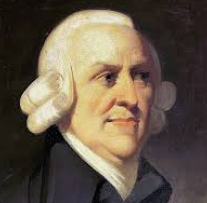
6 months 3 weeks ago
For in every country of the world, I believe, the avarice and injustice of princes and sovereign states, abusing the confidence of their subjects, have by degrees diminished the real quantity of metal, which had been originally contained in their coins.
▼
Source
source
Chapter IV, p. 34.
6 months 2 weeks ago
Our greatest stupidities may be very wise.
▼
Source
source
p. 39e

5 months 1 week ago
The vanity of the passing world and love are the two fundamental and heart-penetrating notes of true poetry. And they are two notes of which neither can be sounded without causing the other to vibrate. The feeling of the vanity of the passing world kindles love in us, the only thing that triumphs over the vain and transitory, the only thing that fills life again and eternalizes it.

5 months 6 days ago
The heart, oddly enough, seems to be the essential organ concerned. When we are in a hurry or doing something we dislike, we clench the heart, exactly like clenching a fist, and nothing can get in. When we are filled with a sense of multiplicity and excitement we somehow 'open' the heart and allow reality to flow in. But in that state we only need to entertain the shadow of some unpleasant thought for it to close again. And human beings are so naturally prone to mistrust that it is hard to maintain the openness for very long. Children on the other hand find it easy to slip into states of wonder and delight when the heart finally opens so wide that the whole world seems magical. the 'trick' of the peak experience lies in this ability to relax out of our usual defensive posture and to 'open the heart'.
▼
Source
source
p. 360
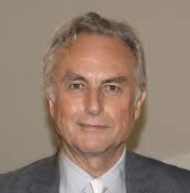
4 months 2 weeks ago
If it's really true, that the museum at Liberty University has dinosaur fossils which are labelled as being 3000 years old, then that is an educational disgrace. It is debauching the whole idea of a university, and I would strongly encourage any members of Liberty University who may be here...to leave and go to a proper university.
▼
Source
source
At Randolph-Macon Woman's College in Lynchburg, Virginia, (23 October 2006) Broadcasted by C-SPAN2
6 months 3 weeks ago
Poor David Hume is dying very fast, but with great cheerfulness and good humour and with more real resignation to the necessary course of things then any whining Christian ever dyed with pretended resignation to the will of God.
▼
Source
source
Letter to Alexander Wedderburn 14 August 1776. The Correspondence of Adam Smith edited by E.C. Mossner and Ian Simpson Ross, 2nd edition, Oxford University Press 1986. The Future Hope in Adam Smith's System, Paul Oslington

4 months 3 weeks ago
What is left when honor is lost?
▼
Source
source
Maxim 265

3 months 2 weeks ago
The great law of culture is: Let each become all that he was created capable of being.
▼
Source
source
Richter.
5 months 6 days ago
The everyday world demands our attention, and prevents us from sinking into ourselves. As a romantic, I have always resented this: I like to sink into myself. The problems and anxieties of living make it difficult. Well, now I had an anxiety that referred to something inside of me, and it reminded me that my inner world was just as real and important as the world around me.
▼
Source
source
p. 39
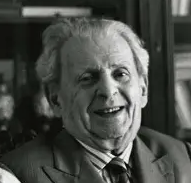
5 months 2 weeks ago
The ego involved in responsibility is me and no one else, me with whom one whould have liked to pair up a sister soul, from whom one would have substitution and sacrifice.
▼
Source
source
The Levinas reader by Levinas, Emmanuel p. 116
4 months 1 week ago
We have always thought that Mr. Darwin has unnecessarily hampered himself by adhering so strictly to his favourite "Natura non facit saltum." We greatly suspect that she does make considerable jumps in the way of variation now and then, and that these saltations give rise to some of the gaps which appear to exist in the series of known forms.

6 months 3 weeks ago
The fundamental defect of fathers, in our competitive society, is that they want their children to be a credit to them.
▼
Source
source
Ch. 14: Freedom Versus Authority in Education
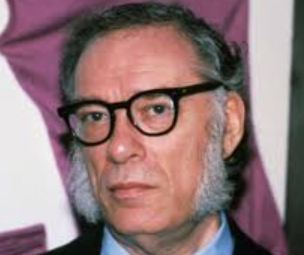
7 months 3 weeks ago
Someone once asked me, "If you had your choice, Dr. Asimov, would it be women or writing?" My answer was, "Well, I can write for twelve hours at a time without getting tired."

5 months 2 weeks ago
The lover who kills himself for a girl has an experience which is more complete and much more profound than the hero who overturns the world.

6 months 3 weeks ago
Never self-possessed, or prudent, love is all abandonment.
▼
Source
source
p. 158
5 months 1 week ago
An eternal purgatory, then, rather than a heaven of glory; an eternal ascent. If there is an end to all suffering, however pure and spiritualized we may suppose it to be, if there is an end to all desire, what is it that makes the blessed in paradise go on living? If in paradise they do not suffer for want of God, how shall they love Him? And if there, in the heaven of glory, while they behold God little by little and closer and closer, yet without ever wholly attaining Him, there does not always remain something more for them to know and desire, if there does not always remain a substratum of doubt, how shall they not fall asleep?

5 months 3 weeks ago
...if the Catholick religion is destroyd by the Infidels, it is a most contemptible and absurd Idea, that, this, or any Protestant Church, can survive that Event. ... in Ireland particularly, the Roman Catholic Religion should be upheld in high respect and veneration. ... I am more serious on the positive encouragement to be given to this religion...because the serious and earnest belief and practice of it by its professors forms, as things stand, the most effectual Barrier, if not the sole Barrier, against Jacobinism.
▼
Source
source
Letter to William Smith, Member of the Irish Parliament (29 January 1795), quoted in R. B. McDowell (ed.)
6 months 3 weeks ago
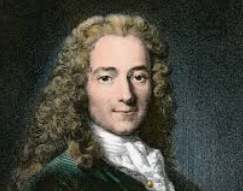
Man ought to be content, it is said; but with what?
▼
Source
source
Pensées, Remarques, et Observations de Voltaire; ouvrage posthume (1802)
6 months 5 days ago
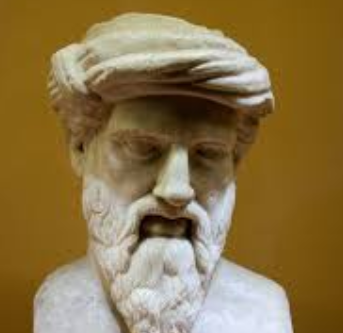
If thy fellows hurt thee in small things, suffer it! and be as bold with them!

4 months 3 weeks ago
In tetrad form, the artefact is seen to be not netural or passive, but an active logos or utterance of the human mind or body that transforms the user and his ground.
▼
Source
source
p. 99
6 months 1 week ago
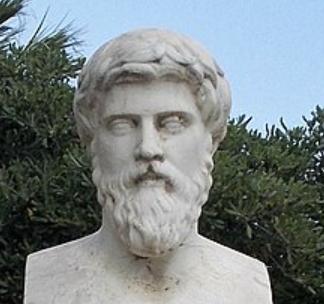
After the battle in Pharsalia, when Pompey was fled, one Nonius said they had seven eagles left still, and advised to try what they would do. "Your advice," said Cicero, "were good if we were to fight jackdaws."
▼
Source
source
Cicero

6 months 3 weeks ago
Every parting gives a foretaste of death, every reunion a hint of the resurrection.
▼
Source
source
Vol. 2, Ch. 26, § 310, as translated by Eric F. J. Payne
5 months 1 week ago
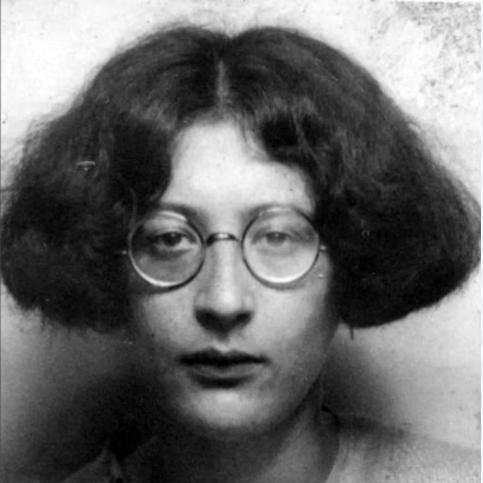
Conformity is an imitation of grace.
▼
Source
source
p. 146
3 months 1 week ago
In fact, when a nation has become free, it is extremely difficult to persuade them that their freedom is only to be preserved by perpetual and minute jealousy. They do not observe that there is a constant, perhaps an unconscious, effort on the part of their governors to diminish, and so ultimately to destroy, that freedom.
▼
Source
source
Characters of Mr. Fox (review of Characters of the late Charles James Fox, edited by Philopatris Varvicensis, 2 vols), in The Edinburgh Review

2 months 3 weeks ago
Instead of funding issues of paper on the hypothecation of specific redeeming taxes (the only method of anticipating, in a time of war, the resources of times of peace, tested by the experience of nations), we are trusting to tricks of jugglers on the cards, to the illusions of banking schemes for the resources of the war, and for the cure of colic to inflations of more wind.
▼
Source
source
Letter to José Correia da Serra (1814) ME 14:224

3 months 1 week ago
Who, then, can be more ignorant of nature than he who classes this cruel and hurtful vice as belonging to her best and most polished work?

6 months 3 weeks ago
For wherever violence is used, and injury done, though by hands appointed to administer Justice, it is still violence and injury, however colour'd with the Name, Pretences, or Forms of Law, the end whereof being to protect and redress the innocent, by an unbiassed application of it, to all who are under it; wherever that is not bona fide done, War is made upon the Sufferers, who having no appeal on Earth to right them, they are left to the only remedy in such Cases, an appeal to Heaven.
▼
Source
source
Two Treatises of Government. The Second Treatise. Chapter 3: The State of War, §20 p. 281 books.google
6 months 3 weeks ago
An intolerant sect has no right to complain when it is denied an equal liberty. ... A person's right to complain is limited to principles he acknowledges himself.
▼
Source
source
p. 217
6 months 3 weeks ago
I do not say this, that I think there should be no difference of opinions in conversation, nor opposition in men's discourses... 'Tis not the owning one's dissent from another, that I speak against, but the manner of doing it.
▼
Source
source
Sec. 145
2 months 3 weeks ago
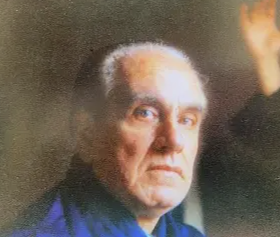
The equation state = politics becomes erroneous and deceptive at exactly the moment when state and society penetrate each other.

3 months 2 days ago
Although our case is different from that of ascetics who remove themselves from the world, the situation of the latest technological civilization might offer the incentive for commitments of this kind. In a large city, in mass society, among the almost unreal swarming of faceless beings, an essential sense of isolation or of detachment often occurs naturally, perhaps even more than in the solitude of moors and mountains.
▼
Source
source
p. 121
6 months 2 weeks ago
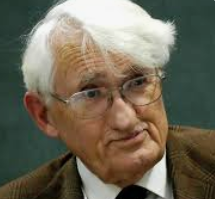
Philosophy's position with regard to science, which at one time could be designated with the name "theory of knowledge," has been undermined by the movement of philosophical thought itself. Philosophy was dislodged from this position by philosophy.
▼
Source
source
p. 4
5 months 6 days ago
The vitality of the ordinary members of society is dependent on its Outsiders.
▼
Source
source
Chapter Three, The Romantic Outsider

2 months 2 weeks ago
Do not act as if thou wert going to live ten thousand years. Death hangs over thee. While thou livest, while it is in thy power, be good.
▼
Source
source
IV. 17, trans. George Long
6 months 2 weeks ago
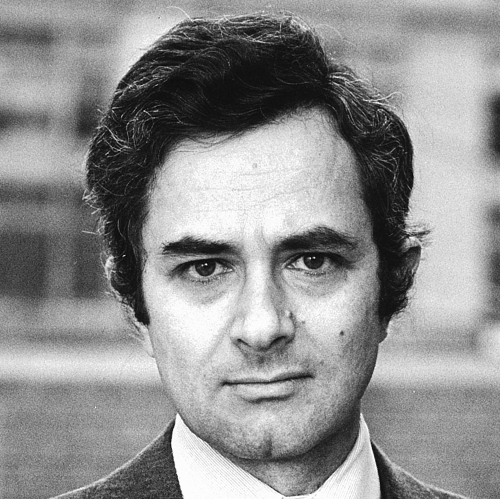
The ethical commonplaces of any period include ideas that may have been radical discoveries in a previous age. This is true of modern conceptions of liberty, equality, and democracy, and we are in the midst of ethical debates which will probably result two hundred years hence in a disseminated moral sensibility that people of our time would find very unfamiliar.
▼
Source
source
"Ethics without Biology" (1978), p. 143.
4 months 2 days ago
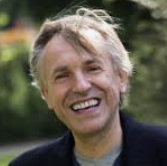
Humans are prone to status quo bias. So let's do a thought-experiment. Imagine we stumble across an advanced civilisation that has abolished predation, disease, famine, and all the horrors of primitive Darwinian life. The descendants of archaic lifeforms flourish unmolested in their wildlife parks - free living, but not "wild". Should we urge scrapping their regime of compassionate stewardship of the living world - and a return to asphyxiation, disembowelling and being eaten alive? Or is a happy biosphere best conserved intact? Reply to "Should humans wipe out all carnivorous animals so the succeeding generations of herbivores can live in peace?"
▼
Source
source
, Quora, 16 Jun. 2018
4 months 2 weeks ago
A writer who says that there are no truths, or that all truth is 'merely relative,' is asking you not to believe him. So don't.
▼
Source
source
"The Nature of Philosophy" (p. 6)
6 months 3 weeks ago
The world is his, who has money to go over it.
▼
Source
source
Wealth

6 months 3 weeks ago
Do you think that I count the days? There is only one day left, always starting over: it is given to us at dawn and taken away from us at dusk.
▼
Source
source
Act 10, sc. 2

6 months 3 weeks ago
But why,' (some ask), 'why, if you have a serious comment to make on the real life of men, must you do it by talking about a phantasmagoric never-never land of your own?' Because, I take it, one of the main things the author wants to say is that the real life of men is of that mythical and heroic quality. One can see the principle at work in his characterization. Much that in a realistic work would be done by 'character delineation' is here done simply by making the character an elf, a dwarf, or a hobbit. The imagined beings have their insides on the outside; they are visible souls. And Man as a whole, Man pitted against the universe, have we seen him at all till we see that he is like a hero in a fairy tale?
▼
Source
source
p. 89

7 months 1 day ago
That which is good for the enemy harms you, and that which is good for you harms the enemy.
▼
Source
source
Rule 1 from Machiavelli's Lord Fabrizio Colonna: libro settimo (Book 7) (Modern Italian uses nemico instead of nimico.)
2 months 2 weeks ago
It's unfortunate that this has happened. No. It's fortunate that this has happened and I've remained unharmed by it-not shattered by the present or frightened of the future. It could have happened to anyone. But not everyone could have remained unharmed by it.
▼
Source
source
IV, 49a
7 months 3 weeks ago
That which does not kill us makes us stronger.
CivilSimian.com created by AxiomaticPanic, CivilSimian, Kalokagathia