


6 months 3 weeks ago
The need of a constantly expanding market for its products chases the bourgeoisie over the whole surface of the globe. It must nestle everywhere, settle everywhere, establish connections everywhere.
▼
Source
source
Section 1, paragraph 19
3 months 4 days ago
Zen does not confuse spirituality with thinking about God while one is peeling potatoes. Zen spirituality is just to peel the potatoes. Paraphrase of original text which reads "It does not confuse spirituality with thinking about God while one is peeling potatoes. Zen spirituality is just to peel the potatoes.
▼
Source
source
The Way of Zen, Pt. 2, Ch. 2
7 months 3 weeks ago
Parmenides: Whatever the subject of your hypothesis, if you suppose that it is or is not, or that it experiences any other affection, you must consider what happens to it and to any other particular things you may choose, and to a greater number and to all in the same way; and you must consider other things in relation to themselves and to anything else you may choose in any instance, whether you suppose that the subject of your hypothesis exists or does not exist, if you are to train yourself completely to see the truth perfectly.

6 months 2 weeks ago
The constitution of madness as mental illness, at the end of the eighteenth century, bears witness to a rupture in a dialogue, gives the separation as already enacted, and expels from the memory all those imperfect words, of no fixed syntax, spoken falteringly, in which the exchange between madness and reason was carried out. The language of psychiatry, which is a monologue by reason about madness, could only have come into existence in such a silence.
▼
Source
source
Preface to 1961 edition

6 months 2 weeks ago
The human body is the best picture of the human soul.
▼
Source
source
Pt II, p. 178

5 months 3 weeks ago
Whatever is supreme in a state, ought to have, as much as possible, its judicial authority so constituted as not only not to depend upon it, but in some sort to balance it. It ought to give a security to its justice against its power. It ought to make its judicature, as it were, something exterior to the state.
7 months 3 weeks ago
A thinker sees his own actions as experiments and questions as attempts to find out something. Success and failure are for him answers above all.

5 months 2 weeks ago
From the same it proceedeth,that men gives different names, to one and the same thing, from the difference of their own passions: As they that approve a private opinion, call it Opinion; but they that mislike it, Haeresie: and yet haeresie signifies no more than private opinion; but has only agreater tincture of choler.
▼
Source
source
The First Part, Chapter 11, p. 50

6 months 3 weeks ago
Even serious students are misled by the myth of the subject.

4 months ago
The idea of a law of progress, or of an all but irresistible tendency to general improvement, is then merely a superstition, one of the tents of the modernist pseudo-religion of humanism. Even if such a law or tendency existed and were demonstrable, the liberal faith in progress would for Santayana be pernicious. For it leads to a corrupt habit of mind in which things are valued, not for their present excellence or perfection, but instrumentally, as leading to something better; and it insinuates into thought and feeling a sort of historical theodicy, in which past evil is justified as a means to present or future good. The idea of progress embodies a kind of time-worship (to adopt an expression used by Wyndham Lewis) in which the particularities of our world are seen and valued, not in themselves, but for what they might perhaps become, thereby leaving us destitute of the sense of the present and, at the same time, of the perspective of eternity.
▼
Source
source
'Santayana's Alternative' (p.67-8)
6 months 3 weeks ago
It is not for its own sake that men desire money, but for the sake of what they can purchase with it.
▼
Source
source
Chapter I, p. 471.

6 months 3 weeks ago
This actual world of what is knowable, in which we are and which is in us, remains both the material and the limit of our consideration.
▼
Source
source
Vol I, Ch. 4, The World As Will: Second Aspect, § 53, as translated by Eric F. J. Payne, 1958
7 months 1 week ago
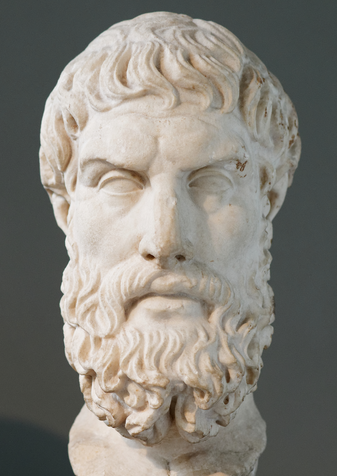
A happy and eternal being has no trouble himself and brings no trouble upon any other being; hence he is exempt from movements of anger and partiality, for every such movement implies weakness.

5 months 2 weeks ago
We say: he has no talent, only tone. But tone is precisely what cannot be invented - we're born with it. Tone is an inherited grace, the privilege some of us have of making our organic pulsations felt - tone is more than talent, it is its essence.

7 months 1 day ago
A good marriage would be between a blind wife and a deaf husband.
▼
Source
source
Book III, Ch. 5

5 months 6 days ago
What is so remarkable about Crowley the 'magician' is that he remains Crowley the scientist, and always applies the same probing intellectual curiosity to every field he surveys. This is ultimately the most impressive quality about his mind, and the one that might -- if he had concentrated on developing it to the full -- have brought him the fame that he craved. Crowley's tragedy was that he never concentrated long enough to develop anything to the full.
▼
Source
source
p. 150
7 months 1 week ago
For what is a child? Ignorance. What is a child? Want of instruction. For where a child has knowledge, he is no worse than we are.
▼
Source
source
Book II, ch. 1, 16
7 months 1 day ago
Tis a good word and a profitable desire, but withal absurd; for to make the handle bigger than the hand, the cubic longer than the arm, and to hope to stride further than our legs can reach, is both impossible and monstrous; or that man should rise above himself and humanity; for he cannot see but with his eyes, nor seize but with his hold. He shall be exalted, if God will lend him an extraordinary hand; he shall exalt himself, by abandoning and renouncing his own proper means, and by suffering himself to be raised and elevated by means purely celestial. It belongs to our Christian faith, and not to the stoical virtue, to pretend to that divine and miraculous metamorphosis.
▼
Source
source
Ch. 12

6 months 3 weeks ago
In the old dramas it was love that had to be sacrificed to painful duty. In the modern instance the sacrifice is at the shrine of what William James called "the Bitch Goddess, Success." Love is to be abandoned for the stern pursuit of newspaper notoriety and dollars.
▼
Source
source
"Silence is Golden," p. 61
2 months 1 week ago
The longing for guidance, for love and succor, provides the stimulus for the growth of a social or moral conception of God. This is the God of Providence, who protects, decides, rewards and punishes. This is the God who, according to man's widening horizon, loves and provides for the life of the race, or of mankind, or who even loves life itself. He is the comforter in unhappiness and in unsatisfied longing, the protector of the souls of the dead. This is the social or moral idea of God.
7 months 3 weeks ago
An atom blaster is a good weapon, but it can point both ways.
5 months 6 days ago
Yet it must be acknowledged that there is a fundamental difference between the sexual impulse in men and women. Her need is for a lover, a protector, a father for her children. His desire is for mastery, conquest, to be allowed to use her body for his own satisfaction. He feels like a bee, burying itself in a flower, apparently doing nothing for the flower but taking its sweetness. If he loves her, then his desire is mixed with a kind of pity.

5 months 4 weeks ago
But how shall we expect charity towards others, when we are uncharitable to ourselves? Charity begins at home, is the voice of the world, yet is every man his greatest enemy, and as it were, his own executioner.
▼
Source
source
Section 4
7 months 3 weeks ago
Inspect every piece of pseudoscience and you will find a security blanket, a thumb to suck, a skirt to hold. What does the scientist have to offer in exchange? Uncertainty! Insecurity!

7 months 2 days ago
I have turned my entire attention to Greek. The first thing I shall do, as soon as the money arrives, is to buy some Greek authors; after that, I shall buy clothes.
▼
Source
source
Letter to Jacob Batt (12 April 1500); Collected Works of Erasmus Vol 1 (1974)
3 months 2 weeks ago
One lives but once in the world.
▼
Source
source
Clavigo, Act I, sc. i
3 months 1 week ago
There is no greater drama in human record than the sight of a few Christians, scorned or oppressed by a succession of emperors, bearing all trials with a fierce tenacity, multiplying quietly, building order while their enemies generated chaos, fighting the sword with the word, brutality with hope, and at last defeating the strongest state that history has known. Caesar and Christ had met in the arena, and Christ had won.
▼
Source
source
Chapter 30, part 1, p. 652

4 months 3 weeks ago
Youth instinctively understand the present environment - the electric drama. It lives mythically and in depth.
5 months 1 week ago
It belongs to the self-respect of intellect to pursue every tangle of thought to its final unravelment.
▼
Source
source
Ch. 12: "Religion and Science", p. 258

6 months 3 weeks ago
Make yourself necessary to somebody. Do not make life hard to any.
▼
Source
source
Considerations by the Way

6 months 3 weeks ago
I do wish I believed in the life eternal, for it makes me quite miserable to think man is merely a kind of machine endowed, unhappily for himself, with consciousness.
▼
Source
source
Greek Exercises (1888); at the age of fifteen, Russell used to write down his reflections in this book, for fear that his people should find out what he was thinking.

2 months 2 weeks ago
The intelligence of the universe is social.
▼
Source
source
V, 30
6 months 1 week ago
For many, as Cranton tells us, and those very wise men, not now but long ago, have deplored the condition of human nature, esteeming life a punishment, and to be born a man the highest pitch of calamity; this, Aristotle tells us, Silenus declared when he was brought captive to Midas.
7 months 1 day ago
For truth itself has not the privilege to be spoken at all times and in all sorts.
▼
Source
source
Book III, Ch. 13. Of Experience
6 months 1 week ago
Do you count your birthdays with gratitude?
▼
Source
source
Book II, epistle ii, line 210
3 months 4 days ago
It is the fate of every truth to be an object of ridicule when it is first acclaimed. It was once considered foolish to suppose that black men were really human beings and ought to be treated as such. What was once foolish has now become a recognized truth. Today it is considered as exaggeration to proclaim constant respect for every form of life as being the serious demand of a rational ethic. But the time is coming when people will be amazed that the human race existed so long before it recognized that thoughtless injury to life is incompatible with real ethics. Ethics is in its unqualified form extended responsibility to everything that has life.
5 months 2 weeks ago
Give an inch, he'll take an ell.
▼
Source
source
Liberty and Necessity (no. 111)

6 months 3 weeks ago
The study a posteriori of the distribution of consciousness shows it to be exactly such as we might expect in an organ added for the sake of steering a nervous system grown too complex to regulate itself.
▼
Source
source
Ch. 5
5 months 4 weeks ago
Sleep is a death; oh, make me try By sleeping what it is to die, And as gently lay my head On my grave as now my bed.
▼
Source
source
Section 12
5 months 2 weeks ago
I have never said that human society ought to be aristocratic, but a great deal more than that. What I have said, and still believe with ever-increasing conviction, is that human society is always, whether it will or no, aristocratic by its very essence, to the extreme that it is a society in the measure that it is aristocratic, and ceases to be such when it ceases to be aristocratic. Of course I am speaking now of society and not of the State.
▼
Source
source
Chap.II: The Rise Of The Historic Level
4 months 3 weeks ago
Once introduced discontinuity, once challenge any of the properties of visual space, and as they flow from each other, the whole conceptual framework collapses.
▼
Source
source
p. 43
3 months 1 week ago
When I hear any man talk of an unalterable law, the only effect it produces upon me is to convince me that he is an unalterable fool.
▼
Source
source
Peter Plymley's Letters (1808), Letter IV


4 months 1 week ago
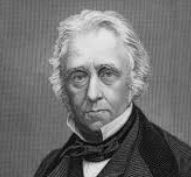
The ambassador of Russia and the grandees who accompanied him were so gorgeous that all London crowded to stare at them, and so filthy that nobody dared to touch them. They came to the court balls dropping pearls and vermin.
▼
Source
source
Vol. V, ch. 23
5 months 3 weeks ago
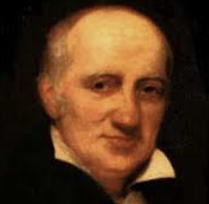
Anarchy, in its own nature, is an evil of short duration. The more horrible are the mischiefs it inflicts, the more does it hasten to a close.
▼
Source
source
Book 7, Ch. 5

6 months 3 weeks ago
I maintain that inversion is the effect of neither a prenatal choice nor an endocrinal malformation nor even the passive and determined result of complexes. It is an outlet that a child discovers when he is suffocating.

5 months 5 days ago
The time is come when women must do something more than the "domestic hearth," which means nursing the infants, keeping a pretty house, having a good dinner and an entertaining party.

3 months 2 weeks ago
From of old, a thousand thoughts, in his pilgrimings and wanderings, had been in this man: What am I? What is this unfathomable Thing I live in, which men name Universe? What is Life; what is Death? What am I to believe? What am I to do? The grim rocks of Mount Hara, of Mount Sinai, the stern sandy solitudes answered not. The great Heaven rolling silent overhead, with its blue-glancing stars, answered not. There was no answer. The man's own soul, and what of God's inspiration dwelt there, had to answer!
CivilSimian.com created by AxiomaticPanic, CivilSimian, Kalokagathia