


4 months 1 week ago
You could attach prices to thoughts. Some cost a lot, some a little. And how does one pay for thoughts? The answer, I think, is: with courage.
▼
Source
source
p. 52e

5 months 2 weeks ago
Even before the bomb, one did not breathe too easily in this tortured world. Now we are given a new source of anguish; it has all the promise of being our greatest anguish ever. There can be no doubt that humanity is being offered its last chance. Perhaps this is an occasion for the newspapers to print a special edition. More likely, it should be cause for a certain amount of reflection and a great deal of silence.
3 weeks 6 days ago
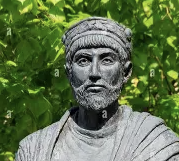
The good effects that emanate from the same source are equally diffused upon the earth. Different regions become partakers in these benefits in different ways; so that neither their production comes to an end, nor does the Deity confer his blessings upon the recipient world with any degree of variation. For where the substance is the same, so is the action thereof, in the case of Divine Powers; especially with him who is king of them all, namely, the Sun; of whom the motion is the most simple amongst all the bodies that move in a contrary direction to the world, which fact that most excellent philosopher, Aristotle, adduces to prove the superiority of that luminary to the others.
3 months 2 weeks ago
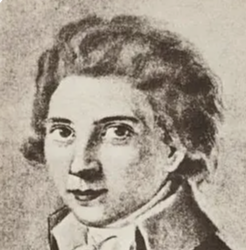
Irony is the form of paradox. Paradox is what is good and great at the same time.
▼
Source
source
Aphorism 48, as translated in Dialogue on Poetry and Literary Aphorisms (1968), p. 151

3 months 1 week ago
Do not tell lies, and do not do what you hate, for all things are plain in the sight of Heaven. For nothing hidden will not become manifest, and nothing covered will remain without being uncovered.
3 months 2 days ago
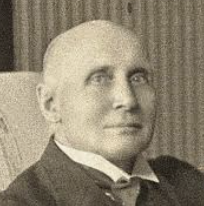
In a sense, all explanation must end in an ultimate arbitrariness.
▼
Source
source
Ch. 5: "The Romantic Reaction", p. 130

3 months ago
Yet its essence was the certitude that his life was not totally at the mercy of chance. Somehow, it was more important than that. This sense of power inside his head - which he could intensify by pulling a face and wrinkling up the muscles of his forehead - aroused a glow of optimism, an expectation of exciting events. He knew that for him, fate held something special in store.
▼
Source
source
p. 26


1 month 3 weeks ago
The serpent, the king, the tiger, the stinging wasp, the small child, the dog owned by other people, and the fool: these seven ought not to be awakened from sleep.

3 months 3 weeks ago
In democratic ages men rarely sacrifice themselves for another, but they show a general compassion for all the human race. One never sees them inflict pointless suffering, and they are glad to relieve the sorrows of others when they can do so without much trouble to themselves. They are not disinterested, but they are gentle.
▼
Source
source
Book Three, Chapter I.

4 months 2 weeks ago
The three great things that govern mankind are reason, passion and superstition. The first governs a few, the two last share the bulk of mankind and possess them in their turns. But superstition most powerfully produces the greatest mischief.
▼
Source
source
Journal entry (16 May 1681), quoted in Maurice Cranston, John Locke: A Biography (1957; 1985), p. 200

3 months 1 week ago
The initial revelation of any monastery: everything is nothing. Thus begin all mysticisms. It is less than one step from nothing to God, for God is the positive expression of nothingness.

4 months 2 weeks ago
They made me take cod liver oil: that is the height of luxury: a medicine to make you hungry while the others, in the street, would have sold themselves for a beefsteak. I saw them passing my window with their signs: "Give me bread".
▼
Source
source
Act 3, sc. 3
3 months ago
It was the normal working of the antisuccess mechanism. In our overcrowded modern world a hit record, a best-selling book, a successful film, can reach more people in a week than Shakespeare or Beethoven reached in a whole lifetime. And so fame has become the most romantic, the most desirable of all commodities, the dream for which a modern Faust might sell his soul to the Devil. Once attained, fame is never as easy to hold on to as some people believe. The people who achieve fame by some accident of fashion are usually forgotten within a week; the ones who remain on top have to work to stay there. But few people understand this. The result is that anyone who achieves sudden notoriety arouses envy and hostility. The greater the success, the greater the reaction.
▼
Source
source
p. 28

4 months 2 weeks ago
All exact science is dominated by the idea of approximation. When a man tells you that he knows the exact truth about anything, you are safe in inferring that he is an inexact man.
▼
Source
source
The Scientific Outlook (1931), Part I, chapter II, "Characteristics of the Scientific Method"

4 months 2 weeks ago
The evil effect of science upon men is principally this, that by far the greatest number of those who wish to display a knowledge of it accomplish no improvement at all of the understanding, but only a perversity of it, not to mention that it serves most of them as a tool of vanity.
▼
Source
source
Part III : Selection on Education from Kant's other Writings, Ch. I Pedagogical Fragments, # 52

4 months 2 weeks ago
The poet presents the imagination with images from life and human characters and situations, sets them all in motion and leaves it to the beholder to let these images take his thoughts as far as his mental powers will permit. This is why he is able to engage men of the most differing capabilities, indeed fools and sages together. The philosopher, on the other hand, presents not life itself but the finished thoughts which he has abstracted from it and then demands that the reader should think precisely as, and precisely as far as, he himself thinks. That is why his public is so small.
▼
Source
source
Vol. 2 "On Philosophy and the Intellect" as translated in Essays and Aphorisms (1970), as translated by R. J. Hollingdale

2 weeks 3 days ago
Our opinion here is that that place has been so deeply concerned in smuggling, that if it wants it is because it has illegally sent away what it ought to have retained for its own consumption.
▼
Source
source
Letter to Lieutenant Governor Levi Lincoln of Massachusetts (November 13, 1808) concerning a petition from the island of Nantucket for food during the American embargo.

4 months 2 weeks ago
Days of absence,
sad and dreary,
Clothed in sorrow's dark array,
Days of absence, I am weary: She I love is far away.
▼
Source
source
Day of Absence, reported in Bartlett's Familiar Quotations, 10th ed. (1919).

2 months 3 weeks ago
The best and safest method of philosophizing seems to be, first to enquire diligently into the properties of things, and to establish these properties by experiment, and then to proceed more slowly to hypothesis for the explanation of them. For hypotheses should be employed only in explaining the properties of things, but not assumed in determining them, unless so far as they may furnish experiments.
▼
Source
source
Letter to Ignatius Pardies (1672) Philosophical Transactions of the Royal Society (Feb. 1671/2) as quoted by William L. Harper
4 months 2 weeks ago
The real nature of the present revealed itself: it was what exists, all that was not present did not exist.
2 weeks ago
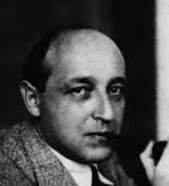
To-day, there are too many points of view of equal value and prestige, each showing the relativity of the other, to permit us to take any one position and to regard it as impregnable and absolute. Only this socially disorganized intellectual situation makes possible the insight, hidden until now by a generally stable social structure and the practicability of certain traditional norms, that every point of view is particular to a social situation.
4 months 2 weeks ago
The true function of logic ... as applied to matters of experience ... is analytic rather than constructive; taken a priori, it shows the possibility of hitherto unsuspected alternatives more often than the impossibility of alternatives which seemed prima facie possible. Thus, while it liberates imagination as to what the world may be, it refuses to legislate as to what the world is.
▼
Source
source
p. 8

4 months 2 weeks ago
The fate of the country does not depend on how you vote at the polls - the worst man is as strong as the best at that game; it does not depend on what kind of paper you drop into the ballot-box once a year, but on what kind of man you drop from your chamber into the street every morning.
▼
Source
source
"Slavery in Massachusetts", 1854

3 months 3 weeks ago
But the Quincunx of Heaven runs low, and 'tis time to close the five ports of knowledge. We are unwilling to spin out our awaking thoughts into the phantasmes of sleep, which often continueth præcogitations; making Cables of Cobwebbes and Wildernesses of handsome Groves. Beside Hippocrates hath spoke so little and the Oneirocriticall Masters, have left such frigid Interpretations from plants, that there is little encouragement to dream of Paradise it self. Nor will the sweetest delight of Gardens afford much comfort in sleep; wherein the dulnesse of that sense shakes hands with delectable odours; and though in the Bed of Cleopatra, can hardly with any delight raise up the ghost of a Rose.
▼
Source
source
Ch. 5
2 months 1 week ago
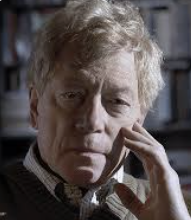
Conservatism starts from a sentiment that all mature people can readily share: the sentiment that good things are easily destroyed, but not easily created. This is especially true of the good things that come to us as collective assets: peace, freedom, law, civility, public spirit, the security of property and family life, in all of which we depend on the cooperation of others while having no means singlehandedly to obtain it. In respect of such things, the work of destruction is quick, easy, and exhilarating; the work of creation slow, laborious, and dull. That is one of the lessons of the twentieth century. It is also one reason why conservatives suffer such a disadvantage when it comes to public opinion. Their position is true but boring, that of their opponents exciting but false.

5 months 5 days ago
Suppose a person entering a house were to feel heat on the porch, and going further, were to feel the heat increasing, the more they penetrated within. Doubtless, such a person would believe there was a fire in the house, even though they did not see the fire that must be causing all this heat. A similar thing will happen to anyone who considers this world in detail: one will observe that all things are arranged according to their degrees of beauty and excellence, and that the nearer they are to God, the more beautiful and better they are.
▼
Source
source
Art. 1

4 months 1 week ago
Of all things the worst to teach the young is dalliance, for it is this that is the parent of those pleasures from which wickedness springs.
1 month 1 week ago
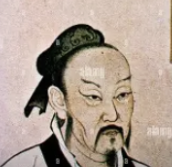
It would be better to be without the Shu-King than to believe every word of it.
▼
Source
source
"Knowledge and Wisdom", no. 131 · "Celebration and Worship", no. 587
4 weeks ago
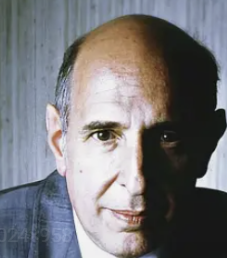
Only when the true ends of society have nothing to do with the sublime does "culture" become necessary as a veneer to cover over the void. Culture can at best appreciate the monuments of earlier faith; it cannot produce them.
▼
Source
source
"Commerce and Culture," p. 280.

5 months 2 weeks ago
I will not by suppression, or by performing tricks, try to produce the impression that the ordinary Christianity in the land and the Christianity of the New Testament are alike. "What Do I Want?"
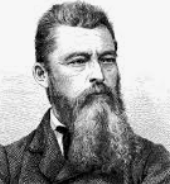
3 months 2 weeks ago
All presentation, all demonstration-and the presentation of thought is demonstration-has, according to its original determination-and this is all that matters to us-the cognitive activity of the other person as its ultimate aim.
▼
Source
source
Z. Hanfi, trans., in The Fiery Brook (1972), p. 67

2 months 2 weeks ago
Condemn me if you choose - I do that myself, - but condemn me, and not the path which I am following, and which I point out to those who ask me where, in my opinion, the path is.
▼
Source
source
"Letter to N.N.," quoted by Havelock Ellis in "The New Spirit" (1892) p. 226
3 months 1 week ago
Why trouble ye the woman? for she hath wrought a good work upon me. For ye have the poor always with you; but me ye have not always. For in that she hath poured this ointment on my body, she did it for my burial. Verily I say unto you, Wheresoever this gospel shall be preached in the whole world, there shall also this, that this woman hath done, be told for a memorial of her.
▼
Source
source
26:10-13 (KJV)
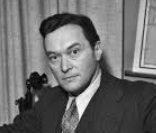
1 month 2 weeks ago
News and truth are not the same thing and must be clearly distinguished. The function of news is to signalize an event, the function of truth is to bring to light the hidden facts, to set them into relation with each other, and make a picture of reality on which men can act. Only at those points, where social conditions take recognizable and measurable shape, do the body of truth and the body of news coincide.
▼
Source
source
Ch. XXIV: "News, Truth, and a Conclusion", p. 358 The clause in bold is sometimes quoted on its own in the form, "The news and the truth are not the same thing."
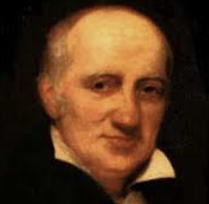
3 months 2 weeks ago
It is comparatively easy for the philosopher in his closet to invent imaginary schemes of policy, and to shew how mankind, if they were without passions and without prejudices, might best be united in the form of a political community. But, unfortunately, men in all ages are the creatures of passions, perpetually prompting them to defy the rein, and break loose from the dictates of sobriety and speculation.
▼
Source
source
History of the Commonwealth of England. From its Commencement, to the Restoration of Charles the Second. Volume the Fourth. Oliver, Lord Protector (1828), p. 579

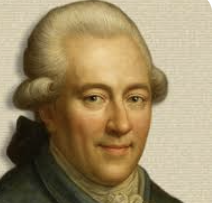
2 months 3 weeks ago
One cannot demand of a scholar that he show himself a scholar everywhere in society, but the whole tenor of his behavior must none the less betray the thinker, he must always be instructive, his way of judging a thing must even in the smallest matters be such that people can see what it will amount to when, quietly and self-collected, he puts this power to scholarly use.
▼
Source
source
J 85
2 months 3 days ago
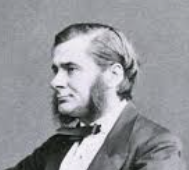
It is true that if philosophers have suffered their cause has been amply avenged. Extinguished theologians lie about the cradle of every science as the strangled snakes beside that of Hercules; and history records that whenever science and orthodoxy have been fairly opposed, the latter has been forced to retire from the lists, bleeding and crushed if not annihilated; scotched, if not slain. But orthodoxy is the Bourbon of the world of thought. It learns not, neither can it forget; and though, at present, bewildered and afraid to move, it is as willing as ever to insist that the first chapter of Genesis contains the beginning and the end of sound science... Darwiniana: the Origin of Species
▼
Source
source
1860
4 weeks ago
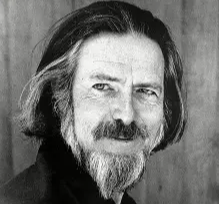
At about the age of eleven, I was reading the thrillers of Sax Rohmer and Edgar Wallace concerning Dr. Fu Manchu and other sophisticated Chinese villains, nurturing a secret admiration for these gentlemen because of their opposition to the suet-pudding heroism of our own culture, and because of their refined and mysterious style of life. While other boys dreamed of becoming generals, cowboys, mountain climbers, explorers, and engineers, I wanted to be a Chinese villain. I wanted servants carrying knives in their sleeves, appearing or vanishing without the slightest sound. I wanted a house with secret doors and passages, with Coromandel screens, with ancient scrolls, with ivory and lacquer boxes of exotic poisons, with exquisite brands of tea, with delicate blue porcelain, with jade idols and joss-sticks, and with sonorous gongs.
▼
Source
source
p. 63-64

3 months 2 weeks ago
The blindness of those who think it absurd to suppose that complex organic forms may have arisen by successive modifications out of simple ones becomes astonishing when we remember that complex organic forms are daily being thus produced. A tree differs from a seed immeasurably in every respect... Yet is the one changed in the course of a few years into the other: changed so gradually, that at no moment can it be said - Now the seed ceases to be, and the tree exists.
4 months 2 weeks ago
The best life is the one in which the creative impulses play the largest part and the possessive impulses the smallest.

2 weeks ago
Of Fronto, to how much envy and fraud and hypocrisy the state of a tyrannous king is subject unto, and how they who are commonly called [Eupatridas Gk.], i.e. nobly born, are in some sort incapable, or void of natural affection.
▼
Source
source
I, 8

4 months 2 weeks ago
Political Economy regards the proletarian ... like a horse, he must receive enough to enable him to work. It does not consider him, during the time when he is not working, as a human being. It leaves this to criminal law, doctors, religion, statistical tables, politics, and the beadle. ... (1) What is the meaning, in the development of mankind, of this reduction of the greater part of mankind to abstract labor? (2) What mistakes are made by the piecemeal reformers, who either want to raise wages and thereby improve the situation of the working class, or - like Proudhon - see equality of wages as the goal of social revolution?.
▼
Source
source
First Manuscript - Wages of Labour, p. 6.
2 months 2 weeks ago
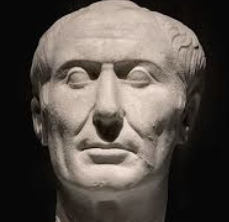
A beautiful face is a silent commendation.
▼
Source
source
Maxim 283
2 months 1 day ago
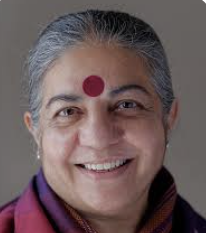
The business of grabbing and money-making, through a violent extractive economy that the 1% have built, is burdening the earth and humanity with unbearable and non-sustainable costs, and has brought us to the brink of extinction. We do not have to escape from the earth; we have to escape from the illusions that enslave our minds and make extinction look inevitable.

5 months 2 weeks ago
Pardon me, my friends, I have ventured to paint my happiness on the wall.
4 months 2 weeks ago
And now, at half-past ten o'clock, I hear the cockerels crow in Hubbard's barns, and morning is already anticipated. It is the feathered, wakeful thought in us that anticipates the following day.
▼
Source
source
July 11, 1851

3 months 2 weeks ago
The science of government being, therefore, so practical in itself, and intended for such practical purposes, a matter which requires experience, and even more experience than any person can gain in his whole life, however sagacious and observing he may be, it is with infinite caution that any man ought to venture upon pulling down an edifice which has answered in any tolerable degree for ages the common purposes of society, or on building it up again without having models and patterns of approved utility before his eyes.

4 months 2 weeks ago
So our self-feeling in this world depends entirely on what we back ourselves to be and do.
▼
Source
source
Ch. 10
CivilSimian.com created by AxiomaticPanic, CivilSimian, Kalokagathia