


5 months 3 weeks ago
Pardon me, my friends, I have ventured to paint my happiness on the wall.
2 months 3 weeks ago
Even though the model referred to satisfies the theory, etc., it is 'unintended'; and we recognize that it is unintended from the description through which it is given (as in the intuitionist case). Models are not lost noumenal waifs looking for someone to name them; they are constructions within our theory itself. and they have names from birth.
▼
Source
source
Models and Reality

4 months 3 weeks ago
Truth is a standard both of itself and of falsity.
▼
Source
source
Part II, Prop. XLIII, Scholium

2 months 2 weeks ago
It is always the psychic and social grounds, brought into play by each medium or technology, that readjust the balance of the hemispheres and of human sensibilities into equilibrium with those grounds.
▼
Source
source
p. 82

2 weeks 1 day ago
Whatever this is that I am, it is flesh and a little spirit and an intelligence. This that I am, whatever it be, is mere flesh and a little breathe and the ruling Reason, This Being of mine, whatever it really is, consists of a little flesh, a little breath, and the part which governs.
▼
Source
source
A little flesh, a little breath, and a Reason to rule all - that is myself. (Staniforth translation) II, 2
4 months 1 week ago
The public execution, then, has a juridico-political function. It is a ceremonial by which a momentarily injured sovereignty is reconstituted. It restores that sovereignty by manifesting it at its most spectacular. The public execution, however hasty and everyday, belongs to a whole series of great rituals in which power is eclipsed and restored (coronation, entry of the king into a conquered city, the submission of rebellious subjects); over and above the crime that has placed the sovereign in contempt, it deploys before all eyes an invincible force. Its aim is not so much to re-establish a balance as to bring into play, as its extreme point, the dissymmetry between the subject who has dared to violate the law and the all-powerful sovereign who displays his strength.
▼
Source
source
Chapter One, The Spectacle of the Scaffold
2 weeks 1 day ago
Whatever may happen to thee, it was prepared for thee from all eternity; and the implication of causes was from eternity spinning the thread of thy being, and of that which is incident to it. Alternate Translation: Whatever may befall you, it was preordained for you from everlasting.
▼
Source
source
X, 5



3 months 2 weeks ago
Ethical ideas and sentiments have to be considered as parts of the phenomena of life at large. We have to deal with man as a product of evolution, with society as a product of evolution, and with moral phenomena as products of evolution.
▼
Source
source
Ch. 1, Introductory
2 months 2 weeks ago
The imagination loves to trifle with what is not.
▼
Source
source
The Sea Fogs

4 months 2 weeks ago
Ever from one who comes to-morrow Men wait their good and truth to borrow.
▼
Source
source
Merlin's Song, II

2 weeks 4 days ago
England was, until we copied her, the only country on earth which ever, by a general law, gave a legal right to the exclusive use of an idea. In some other countries it is sometimes done, in a great case, and by a special and personal act, but, generally speaking, other nations have thought that these monopolies produce more embarrassment than advantage to society; and it may be observed that the nations which refuse monopolies of invention, are as fruitful as England in new and useful devices.

4 months 3 weeks ago
Lastly, there are Idols which have immigrated into men's minds from the various dogmas of philosophies, and also from wrong laws of demonstration. These I call Idols of the Theater, because in my judgment all the received systems are but so many stage plays, representing worlds of their own creation after an unreal and scenic fashion.
▼
Source
source
Aphorism 44
5 months 6 days ago
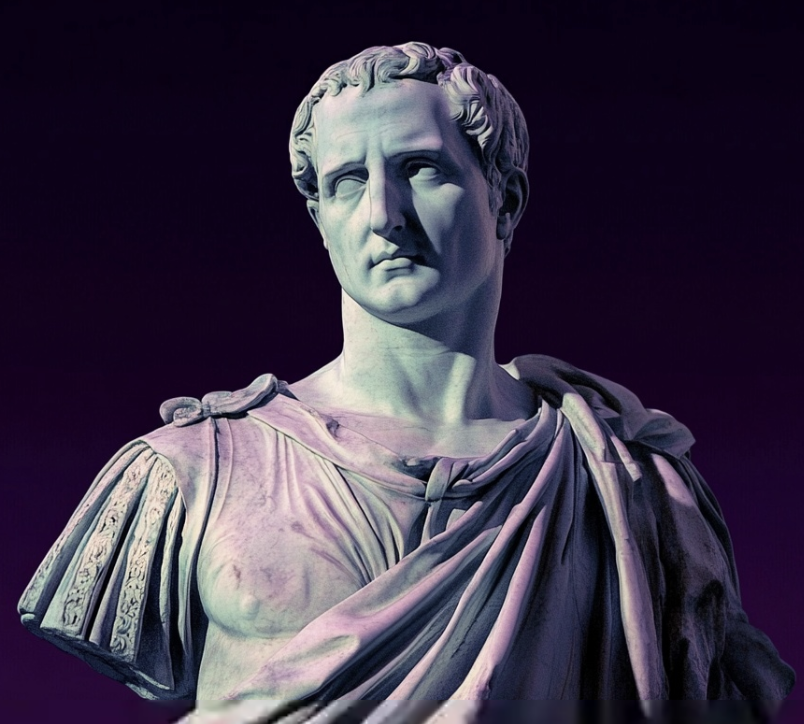
We should never take pleasure in causing pain to others, even to those who have wronged us, but rather strive to do good to all.

4 months 3 weeks ago
When speaking of the spiritual nature or the soul, we are referring to that which is "inner" or "new." When speaking of the bodily nature, or that which is flesh and blood, we are referring to that which is called "sensual," "outward," or "old." Paul writes in 2 Corinthians 4:16: "Even though our outer nature is wasting away, our inner nature is being renewed day by day."
▼
Source
source
p. 51
2 weeks 1 day ago
For thus it is, men of Athens, in truth: wherever a man has placed himself thinking it is the best place for him, or has been placed by a commander, there in my opinion he ought to stay and to abide the hazard, taking nothing into the reckoning, either death or anything else, before the baseness of deserting his post.
▼
Source
source
VII, 45
2 months 2 weeks ago
A moral point of view too often serves as a substitute for understanding in technological matters.
▼
Source
source
(p. 245)

3 months 2 weeks ago
I pride myself on my capacity to perceive the transitory character of everything. An odd gift which has spoiled all my joys; better: all my sensations.
2 weeks 4 days ago
The goodness and greatness of a man do not justify us in accepting a belief upon the warrant of his authority, unless there are reasonable grounds for supposing that he knew the truth of what he was saying. And there can be no grounds for supposing that a man knows that which we, without ceasing to be men, could not be supposed to verify.
3 months 2 weeks ago
How did this division of the nations come about, what was its basis? The division is in accordance with all the previous history of the nationalities in question. It is the beginning of the decision on the life or death of all these nations, large and small. All the earlier history of Austria up to the present day is proof of this and 1848 confirmed it. Among all the large and small nations of Austria, only three standard-bearers of progress took an active part in history, and still retain their vitality - the Germans, the Poles and the Magyars. Hence they are now revolutionary. All the other large and small nationalities and peoples are destined to perish before long in the revolutionary world storm. (Weltsturm). For that reason they are now counter-revolutionary.
▼
Source
source
The Magyar Struggle in Neue Rheinische Zeitung (13 January 1849).

3 months 1 day ago
As of old, the most enlightened, even, hope for a miracle from the twentieth-century deity, - suffrage. Life, happiness, joy, freedom, independence, - all that, and more, is to spring from suffrage. In her blind devotion woman does not see what people of intellect perceived fifty years ago: that suffrage is an evil, that it has only helped to enslave people, that it has but closed their eyes that they may not see how craftily they were made to submit.
1 month 3 days ago
Dean Swift's rule is as good for women as for men - never to talk above a half minute without pausing, and giving others an opportunity to strike in.
▼
Source
source
Parisian Morals and Manners, published in The Edinburgh Review (1843)

4 months 2 weeks ago
Reason, if consulted with, would advise, that their children's time should be spent in acquiring what might be useful to them when they come to be men, rather than to have their heads stuff'd with a deal of trash, a great part whereof they usually never do ('tis certain they never need to) think on again as long as they live: and so much of it as does stick by them they are only the worse for.
▼
Source
source
Sec. 94
5 months 3 weeks ago
Most men are too concerned with themselves to be malicious.

3 months 2 weeks ago
My Lords, to obtain empire is common; to govern it well has been rare indeed. To chastise the guilt of those who have been instruments of imperial sway over other nations by the high superintending justice of the sovereign state has not many striking examples among any people.
▼
Source
source
Speech in opening the impeachment of Warren Hastings (16 February 1788), quoted in The Works of the Right Honourable Edmund Burke, Volume the Ninth (1899), p. 398
2 months 4 days ago
There is no alleviation for the sufferings of mankind except veracity of thought and of action, and the resolute facing of the world as it is, when the garment of make-believe, by which pious hands have hidden its uglier features, is stripped off.
▼
Source
source
Autobiography
2 months 2 weeks ago
To spendthrifts money is so living and actual-it is such a thin veil between them and their pleasures! There is only one limit to their fortune-that of time; and a spendthrift with only a few crowns is the Emperor of Rome until they are spent. For such a person to lose his money is to suffer the most shocking reverse, and fall from heaven to hell, from all to nothing, in a breath.
▼
Source
source
A Lodging for the Night.

5 months 2 weeks ago
Socrates: The shoemaker, for example, uses a square tool, and a circular tool, and other tools for cutting?

1 month 3 days ago
Socrates is reported to have replied, when a certain person complained of having received no benefit from his travels: "It serves you right! You travelled in your own company!"
4 months 1 week ago
Absurdity destroys the and of the enumeration by making impossible the in where the things enumerated would be divided up.
▼
Source
source
Preface
1 month 3 weeks ago
Language steps in where the angels of experience fear to tread.
▼
Source
source
Chapter 1, The Faces of Silence, p. 5

2 weeks 1 day ago
Let us... take in our hands the staff of experience... To be blind and to think that one can do without this staff is the worst kind of blindness.
2 weeks 4 days ago
When angry, count ten before you speak; if very angry, an hundred.
3 months 2 weeks ago
The general co-operation of all members of society for the purpose of planned exploitation of the forces of production, the expansion of production to the point where it will satisfy the needs of all, the abolition of a situation in which the needs of some are satisfied at the expense of the needs of others, the complete liquidation of classes and their conflicts, the rounded development of the capacities of all members of society through the elimination of the present division of labor, through industrial education, through engaging in varying activities, through the participation by all in the enjoyments produced by all, through the combination of city and country - these are the main consequences of the abolition of private property.

3 months 5 days ago
There are, in fact, people who appear to think only with the brain, or with whatever may be the specific thinking organ; while others think with all the body and all the soul, with the blood, with the marrow of the bones, with the heart, with the lungs, with the belly, with the life. And the people who think only with the brain develop into definition-mongers; they become the professionals of thought.

2 weeks 4 days ago
The rule, acknowledged or not, seems to be that if we have great power we must use it. We would use a steam shovel to pick up a dime. We have experts who can prove there is no other way to do it.
▼
Source
source
The Loss of the Future
2 weeks 4 days ago
The two principles on which our conduct towards the Indians should be founded, are justice and fear. After the injuries we have done them, they cannot love us....
▼
Source
source
Letter to Benjamin Hawkins (13 August 1786) Lipscomb & Bergh ed. 5:390

4 months 3 weeks ago
The annual produce of the land and labour of any nation can be increased in its value by no other means, but by increasing either the number of its productive labourers, or the productive powers of those labourers who had before been employed.
▼
Source
source
Chapter III, p. 377.

4 months 2 weeks ago
The eye may see for the hand, but not for the mind.
2 months 4 days ago
We have always thought that Mr. Darwin has unnecessarily hampered himself by adhering so strictly to his favourite "Natura non facit saltum." We greatly suspect that she does make considerable jumps in the way of variation now and then, and that these saltations give rise to some of the gaps which appear to exist in the series of known forms.

3 months 1 day ago
Jung believed that alchemy is about the transmutation of the mind and the discovery of the self. Inevitably, he saw the male and female elements of the prima materia -- the king and queen of alchemy -- as the animus and anima; this seemed to indicate the (sic) alchemy is about psychological processes.
▼
Source
source
p. 103

2 months 3 weeks ago
I have not been able to discover the cause of those properties of gravity from phenomena, and I frame no hypotheses; for whatever is not deduced from the phenomena is to be called a hypothesis, and hypotheses, whether metaphysical or physical, whether of occult qualities or mechanical, have no place in experimental philosophy.
▼
Source
source
Letter to Robert Hooke (15 February 1676) [5 February 1676 (O.S.)]
1 month 1 week ago
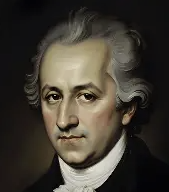
A noble person attracts noble people, and knows how to hold on to them.
▼
Source
source
Torquato Tasso, Act I, sc. i

4 months 2 weeks ago
These considerations did not make us overlook the folly of premature attempts to dispense with the inducements of private interest in social affairs, while no substitute for them has been or can be provided: but we regarded all existing institutions and social arrangements as being (in a phrase I once heard from Austin) "merely provisional," and we welcomed with the greatest pleasure and interest all socialistic experiments by select individuals (such as the Co-operative Societies), which, whether they succeeded or failed, could not but operate as a most useful education of those who took part in them, by cultivating their capacity of acting upon motives pointing directly to the general good, or making them aware of the defects which render them and others incapable of doing so.
▼
Source
source
(pp. 233-234)
4 months 3 weeks ago
Leave the ass burdened with laws behind in the valley. But your conscience, let it ascend with Isaac into the mountain.
▼
Source
source
Chapter 2, Verse 14
5 months 3 days ago
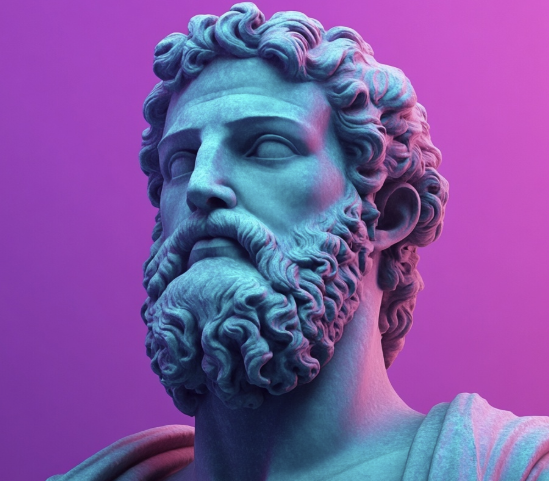
O slavish man! will you not bear with your own brother, who has God for his Father, as being a son from the same stock, and of the same high descent? But if you chance to be placed in some superior station, will you presently set yourself up for a tyrant?
▼
Source
source
Book I, ch. 13, 3, 4.

3 months 2 weeks ago
Nothing in the world is harder than speaking the truth and nothing easier than flattery. If there's the hundredth part of a false note in speaking the truth, it leads to a discord, and that leads to trouble. But if all, to the last note, is false in flattery, it is just as agreeable, and is heard not without satisfaction. It may be a coarse satisfaction, but still a satisfaction. And however coarse the flattery, at least half will be sure to seem true. That's so for all stages of development and classes of society.
CivilSimian.com created by AxiomaticPanic, CivilSimian, Kalokagathia