

7 months 4 days ago
When ethics thus moves into the domain of politics and becomes morality, the possibility of violence appears because of the threat of the application of such absolutist forms of thought. Further, although the moral agent must remain free in order to avoid the totalizing domination of the state, morality must still be grounded in the ethical relation of the face-to-face.
▼
Source
source
Steven Bindeman, Levinas: The Face of Otherness and the Ethics of Therapy


7 months 1 day ago
The ontological concept of truth is in the centre of a logic which may serve as a model of pre- technological rationality. It is the rationality of a two-dimensional universe of discourse which, contrasts with the of thought and behavior that develop in the execution of the technological project.
▼
Source
source
p. 130
7 months 2 weeks ago
The King that followeth Truth, and ruleth according to Justice, shall reign quietly: but he that doth the contrary, seeketh another to reign for him.

8 months 1 week ago
Admit it, it is your youth that you regret, more even than your crime; it is my youth you hate, even more than my innocence.
▼
Source
source
Electra to her mother Clytemnestra, Act 1

6 months 2 weeks ago
If we make a couple of discoveries here and there we need not believe things will go on like this for ever.... Just as we hit water when we dig in the earth, so we discover the incomprehensible sooner or later.
▼
Source
source
F 82
4 months 2 weeks ago
The most profound reason... why the metropolis conduces to the urge for the most individual personal existence... appears to me to be the following: the development of modern culture is characterized by the preponderance of what one may call the "objective spirit" over the "subjective spirit."
▼
Source
source
p. 421 as cited in: Kenneth Allan (2009) Explorations in Classical Sociological Theory: Seeing the Social World. p. 212
5 months 1 day ago
We sometimes imagine, under the influence of Spenglerian philosophy or some other kind of "historical morphology," that we live in a similar age [to the Romans], the last witnesses of a condemned civilization. But condemned by whom? Not by God, but by some supposed "historical laws." For although we do not know any historical laws, we are in fact able of inventing them quite freely, and such laws, once invented, can then be realized in the form of self-fulfilling prophecies.
▼
Source
source
Looking for the Barbarians

7 months 1 week ago
How often misused words generate misleading thoughts!
▼
Source
source
Ch. 8, Humanity
4 months 2 weeks ago
Do you suppose that God takes himself seriously? I know a Zen master, Joshu Sasaki, who has let it be known that the best form of meditation is to stand up with your hands on your hips and roar with laughter for ten minutes every morning. I have heard of a sophisticated shaman-type fellow who used to cure ringworm on cows just by pointing at the scars and laughing. Truly religious people always make jokes about their religion; their faith is so strong that they can afford it. Much of the secret of life consists in knowing how to laugh, and also how to breathe.
▼
Source
source
p. 6
5 months ago
The superior man has three things in which he delights, and to be ruler over the kingdom is not one of them. That his father and mother are both alive, and that the condition of his brothers affords no cause for anxiety;-this is one delight. That, when looking up, he has no occasion for shame before Heaven, and, below, he has no occasion to blush before men;-this is a second delight. That he can get from the whole kingdom the most talented individuals, and teach and nourish them;-this is the third delight.
▼
Source
source
7A:20, as translated by James Legge in The Chinese Classics, Vol. II (1861), p. 335
7 months 6 days ago
The political freedom of conscience and of the press, so far from being as it is commonly supposed an extension, is a new case of the limitation of rights and discretion. Conscience and the press ought to be unrestrained, not because men have a right to deviate from the exact line that duty prescribes, but because society, the aggregate of individuals, has no right to assume the prerogative of an infallible judge, and to undertake authoritatively to prescribe to its members in matters of pure speculation.
▼
Source
source
Vol. 1, bk 2 : Principles of Society , Ch. 5 : Of Rights

9 months 6 days ago
The machine is only a tool after all, which can help humanity progress faster by taking some of the burdens of calculations and interpretations off its back. The task of the human brain remains what it has always been; that of discovering new data to be analyzed, and of devising new concepts to be tested.
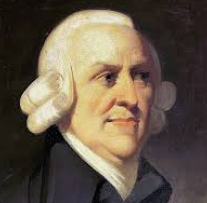
8 months 1 week ago
I perfectly agree with your Lordship too, that to crush the Industry of so great and so fine a province of the empire, in order to favour the monopoly of some particular towns in Scotland or England, is equally unjust and impolitic. The general opulence and improvement of Ireland might certainly, under proper management, afford much greater resources to the Government, than can ever be drawn from a few mercantile or manufacturing towns.
▼
Source
source
Letter to Henry Dundas (1 November 1779), quoted in Adam Smith, The Correspondence of Adam Smith, eds. E. C. Mossner and I. S. Ross (1987), p. 241

5 months 3 weeks ago
The man of science who commits himself to even one statement which turns out to be devoid of good foundation loses somewhat of his reputation among his fellows, and if he be guilty of the same error often he loses not only his intellectual, but his moral standing among them. For it is justly felt that errors of this kind have their root rather in the moral than in the intellectual nature.
▼
Source
source
The Evidence of the Miracle of the Resurrection
6 months 1 week ago
There is no aphrodisiac like innocence.
▼
Source
source
Chapter 5

6 months 1 week ago
Several times I asked myself, "Can it be that I have overlooked something, that there is something which I have failed to understand? Is it not possible that this state of despair is common to everyone?" And I searched for an answer to my questions in every area of knowledge acquired by man. For a long time I carried on my painstaking search; I did not search casually, out of mere curiosity, but painfully, persistently, day and night, like a dying man seeking salvation. I found nothing.
▼
Source
source
Pt. I, ch. 5
4 months 1 week ago
There is in the true man of science a desire stronger than the wish to have his beliefs upheld; namely, the desire to have them true.
▼
Source
source
[Lectures and essays (1879), vol. 2, p. 311]
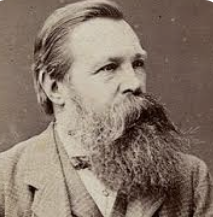
7 months 4 days ago
I forsook the company and the dinner-parties, the port-wine and champagne of the middle-classes, and devoted my leisure-hours almost exclusively to the intercourse with plain working men; I am both glad and proud of having done so. Glad, because thus I was induced to spend many a happy hour in obtaining a knowledge of the realities of life-many an hour, which else would have been wasted in fashionable talk and tiresome etiquette; proud, because thus I got an opportunity of doing justice to an oppressed and calumniated class of men who with all their faults and under all the disadvantages of their situation, yet command the respect of every one but an English money-monger.
▼
Source
source
p. 27

7 months 1 week ago
Only through blind Instinct, in which the only possible guidance of the Imperative is awanting, does the Power in Intuition remain undetermined; where it is schematised as absolute it becomes infinite; and where it is presented in a determinate form, as a principle, it becomes at least manifold. By the above-mentioned act of Intelligising, the Power liberates itself from Instinct, to direct itself towards Unity.

6 months 2 weeks ago
Poetry and imagination begin life. A child will fall on its knees on the gravel walk at the sight of a pink hawthorn in full flower, when it is by itself, to praise God for it.
7 months 1 week ago
This tendency towards a Christian-European Universal Monarchy has shown itself successively in the several States which could make pretensions to such a dominion, and, since the fall of the Papacy, it has become the sole animating principle of our History. We by no means seek to determine whether this notion of Universal Monarchy has ever been distinctly entertained as a definite plan .... Thus each State either strives to attain this Universal Christian Monarchy, or at least to acquire the power of striving after it;-to maintain the Balance of Power when it is in danger of being disturbed by another; and, in secret, for power, that it may eventually disturb it itself.
▼
Source
source
P. 213-214

7 months 4 days ago
Everything is nothing, including the consciousness of nothing.
4 months 1 week ago
When alterations in technical terms become necessary, it is desirable that the new term should contain in its form some memorial of the old one.
7 months 3 weeks ago
The great god Pan is dead.
▼
Source
source
Why the Oracles cease to give Answers (Tr. Goodwin)

8 months 3 weeks ago
The Catholic faith, I now realized could be maintained without presumption. This was especially true after I had heard one or two parts of the Old Testament explained allegorically, whereas before this, when I had interpreted them literally, they had killed me spiritually.
▼
Source
source
A. Outler, trans. (Dover: 2002), Book 5, Chapter 14, p. 81.
4 months 2 weeks ago
This mysterious something has been called God, the Absolute, Nature, Substance, Energy, Space, Ether, Mind, Being, the Void, the Infinite-names and ideas which shift in popularity and respectabilitywith the winds of intellectual fashion, of considering the universe intelligent or stupid, superhuman or subhuman, specific or vague. All of them might be dismissed as nonsense-noises if the notion of an underlying Ground of Being were no more than a product of intellectual speculation. But these names are often used to designate the content of a vivid and almost sensorily concrete experience-the "unitive" experience of the mystic, which, with secondary variations, is found in almost all cultures at all times. This experience is the transformed sense of self which I was discussing in the previous chapter, though in "naturalistic" terms, purified of all hocus-pocus about mind, soul, spirit, and other intellectually gaseous words.
▼
Source
source
p. 104-105

8 months 3 days ago
There is object proof that homosexuality is more interesting than heterosexuality. It's that one knows a considerable number of heterosexuals who would wish to become homosexuals, whereas one knows very few homosexuals who would really like to become heterosexuals.
▼
Source
source
As quoted in Who's Who in Contemporary Gay & Lesbian History: From World War II to the Present Day (2001) by Robert Aldrich and Gary Wotherspoon ISBN 041522974X
6 months 2 weeks ago
The lack of objectivity, as far as foreign nations are concerned, is notorious. From one day to another, another nation is made out to be utterly depraved and fiendish, while one's own nation stands for everything that is good and noble. Every action of the enemy is judged by one standard - every action of oneself by another. Even good deeds by the enemy are considered a sign of particular devilishness, meant to deceive us and the world, while our bad deeds are necessary and justified by our noble goals which they serve.

6 months 3 weeks ago
It is impossible to feel equal respect for things that are in fact unequal unless the respect is given to something that is identical in all of them. Men are unequal in all their relations with the things of this world, without exception. The only thing that is identical in all men is the presence of a link with the reality outside the world. All human beings are absolutely identical in so far as they can be thought of as consisting of a centre, which is an unquenchable desire for good, surrounded by an accretion of psychical and bodily matter.

7 months 1 week ago
In America, more than anywhere else in the world, care has been taken constantly to trace clearly distinct spheres of action for the two sexes, and both are required to keep in step, but along paths that are never the same.
▼
Source
source
Book Three, Chapter XII.

6 months 3 weeks ago
Barbusse has shown us that the Outsider is a man who cannot live in the comfortable, insulated world of the bourgeois, accepting what he sees and touches as reality.
▼
Source
source
Chapter one, The Country of the Blind
7 months 4 days ago
There is no false sensation.
8 months 1 week ago
The woman wants to dominate, the man wants to be dominated.
▼
Source
source
Kant, Immanuel (1996), page 220

5 months 3 days ago
After World War II, liberal rights were not something that were only deserved by white Europeans. ...There was a recognition that the black and brown peoples being held in colonial bondage could not consistently be held in that bondage, because liberalism was a universal doctrine. ...That's the other respect in which we can defend liberalism, a moral one.
▼
Source
source
10:30
6 months 1 week ago
Wealth is a great sin in the eyes of God. Poverty is a great sin in the eyes of man.
▼
Source
source
p. 86

7 months 1 day ago
The total victimization of the individual that takes place is encouraged for the specific benefit of the industrial and political bureaucracy. It therefore cannot be justified on the ground of the individual's true interest. National Socialist ideology simply states that true human existence consists in unconditional sacrifice, that it is of the essence of the individual's life to abbey and to serve-'service which never comes to an end because service and life coincide.'
▼
Source
source
P. 416

6 months 3 weeks ago
Sabbath rest does not follow creation; it brings creation to completion.
6 months 2 weeks ago
There are very many people who read simply to prevent themselves from thinking.
▼
Source
source
G 29

7 months 1 week ago
...no Monarchy limited or unlimited, nor any of the old Republics, can possibly be safe as long as this strange, nameless, wild, enthusiastic thing is established in the Center of Europe.
▼
Source
source
Letter to John Trevor (January 1791), quoted in Alfred Cobban and Robert A. Smith (eds.), The Correspondence of Edmund Burke, Volume VI: July 1789-December 1791 (1967), p. 218

6 months 1 week ago
I have not been able to discover the cause of those properties of gravity from phenomena, and I frame no hypotheses; for whatever is not deduced from the phenomena is to be called a hypothesis, and hypotheses, whether metaphysical or physical, whether of occult qualities or mechanical, have no place in experimental philosophy.
▼
Source
source
Letter to Robert Hooke (15 February 1676) [5 February 1676 (O.S.)]
8 months 3 weeks ago
Times are bad. Children no longer obey their parents, and everyone is writing a book.
▼
Source
source
As quoted in InfoWorld, Vol. 23, No. 16, 16 April 2001, p. 49. This had been attributed previously to many other sources from 1908 on, according to this analysis by Quote Investigator.

8 months 1 week ago
Government by majorities can be made less oppressive by devolution, by placing the decision of questions primarily affecting only a section of the community in the hands of that section, rather than of a Central Chamber. In this way, men are no longer forced to submit to decisions made in a hurry by people mostly ignorant of the matter in hand and not personally interested.
▼
Source
source
Ch VIII: The World As It Could Be Made

4 months 1 week ago
For the most trifling reasons, and sometimes for no conceivable reason at all, his majesty has rejected laws of the most salutary tendency. The abolition of domestic slavery is the great object of desire in those colonies where it was unhappily introduced in their infant state. But previous to the infranchisement of the slaves we have, it is necessary to exclude all further importations from Africa. Yet our repeated attempts to effect this by prohibitions, and by imposing duties which might amount to a prohibition, have been hitherto defeated by his majesty's negative: thus preferring the immediate advantages of a few British corsairs to the lasting interests of the American states, and to the rights of human nature deeply wounded by this infamous practice.
▼
Source
source
A Summary View of the Rights of British America
4 months 1 week ago
The progress of civilization necessitates the giving of greater and greater attention and intelligence to public affairs. And for this reason I am convinced that we make a great mistake in depriving one sex of voice in public matters, and that we could in no way so increase the attention, the intelligence and the devotion which may be brought to the solution of social problems as by enfranchising our women.
▼
Source
source
Ch. 21 : Conclusion
5 months 3 weeks ago
A man possessed of splendid talents, which he often abused, and of a sound judgment, the admonitions of which he often neglected; a man who succeeded only in an inferior department of his art, but who in that department succeeded pre-eminently.
▼
Source
source
p. 231
8 months 3 days ago
Without some redistribution of wealth and power, downward mobility and debilitating poverty will continue to drive people into desperate channels. And without principled opposition to xenophobias from above and below, these desperate channels will produce a cold-hearted and mean-spirited America no longer worth fighting for or living in.
▼
Source
source
(p79)
CivilSimian.com created by AxiomaticPanic, CivilSimian, Kalokagathia