

6 months 2 weeks ago
Meditation on any theme, if positive and honest, inevitably separates him who does the meditating from the opinion prevailing around him, from that which ... can be called "public" or "popular" opinion.
▼
Source
source
p. 15
4 months 4 days ago
We must not always attach too much importance to violent attacks on the bourgeoisie; they may be motivated by the desire to reform and to perfect capitalism.
▼
Source
source
p. 125

7 months 3 weeks ago
Capital is money: Capital is commodities. For the movement, in the course of which it adds surplus-value, is its own movement, its expansion, therefore, is automatic expansion. Because it is value, it has acquired the occult quality of being able to add value to itself. It brings forth living offspring, or, at the least, lays golden eggs.
▼
Source
source
Vol. I, Ch. 2, pg. 171.
8 months 1 day ago
There is, nevertheless, a certain respect and a general duty of humanity that ties us, not only to beasts that have life and sense, but even to trees and plants.
▼
Source
source
Book II, Ch. 11. Of Cruelty

3 months 2 weeks ago
As surgeons keep their instruments and knives always at hand for cases requiring immediate treatment, so shouldst thou have thy thoughts ready to understand things divine and human, remembering in thy every act, even the smallest, how close is the bond that unites the two.
▼
Source
source
III, 13

7 months 2 weeks ago
In its most general form, confinement was explained, or at least justified, by a will to avoid scandal. It thereby signalled an important change in the consciousness of evil. The Renaissance had let unreason in all its forms come out into the light of day, as public exposure gave evil the chance to redeem itself and to serve as an exemplum.
▼
Source
source
Part One: 5. The Insane

7 months 2 weeks ago
All of us, I believe, are fortunate to have been born.
▼
Source
source
"Death" (1970), p. 7.
11 months 4 weeks ago
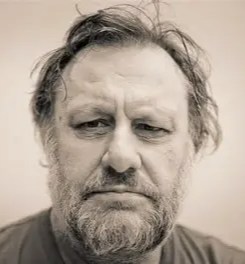
If we merely wait for the appropriate moment we will never live to see it, because this [appropriate moment] cannot arrive without the subjective conditions of the maturity of the revolutionary force being fulfilled - it can only arrive after a series of failed attempts.

8 months 6 days ago
Rules necessary for axioms. Not to demand in axioms any but things perfectly evident.

7 months 2 weeks ago
The world and life are one.
▼
Source
source
(5.621) Original German: Die Welt und das Leben sind Eins.

7 months 3 weeks ago
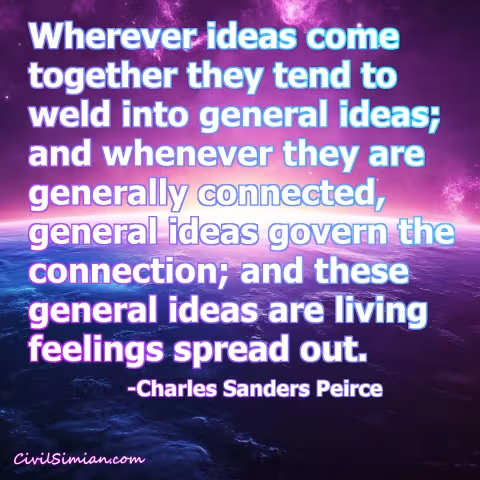
Accumulate, accumulate! That is Moses and the prophets!
▼
Source
source
Vol. I, Ch. 24, Section 3, pg. 652.

7 months 3 weeks ago
The Quaestor turned back the pages until he found himself among the Pensées. "We are not satisfied," he read, "with the life we have in ourselves and our own being; we want to live an imaginary life in other people's idea of us. Hence all our efforts are directed to seeming what we are not. We labor incessantly to preserve and embellish this imaginary being, and neglect that which is really ours." The Quaestor put down the book, ... and ruefully reflected that all his own troubles had arisen from this desire to seem what in fact he was not. To seem a man of action, when in fact he was a contemplative; to seem a politician, when nature had made him an introspective psychologist; to seem a wit, which God had intended him for a sage.
▼
Source
source
"Variations on a Philosopher" in Themes and Variations (1943), p. 2
6 months 1 week ago
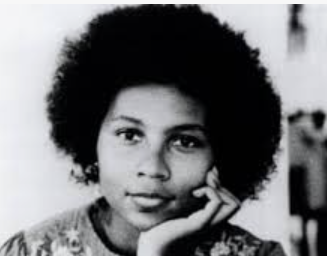
Feminism is the struggle to end sexist oppression. Therefore, it is necessarily a struggle to eradicate the ideology of domination that permeates Western culture on various levels, as well as a commitment to reorganizing society so that the self-development of people can take precedence over imperialism, economic expansion, and material desires.
4 months 4 days ago
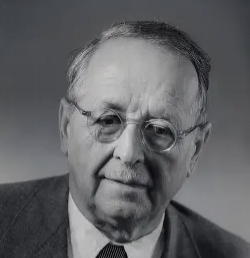
Above all, the ominous clouds of those phenomena that we are with varying success seeking to explain by means of the quantum of action, are throwing their shadows over the sphere of physical knowledge, threatening no one knows what new revolution.
▼
Source
source
Ch. 3 "Relativity of Space and Time"
7 months 2 weeks ago
If it recedes one day, leaving behind its works and signs on the shores of our civilization, the structuralist invasion might become a question or the historian of ideas, or perhaps even an object. But the historian would be deceived if he came to this pass: by the very act of considering the structuralist invasion as an object he would forget its meaning and would forget that what is at stake, first of all, is an adventure of vision, a conversion of the way of putting questions to any object posed before us, to historical objects-his own- in particular. And, unexpectedly among these, the literary objects.
▼
Source
source
Force and Signification

3 months 3 weeks ago
When the representative body have lost the confidence of their constituents, when they have notoriously made sale of their most valuable rights, when they have assumed to themselves powers which the people never put into their hands, then indeed their continuing in office becomes dangerous to the state, and calls for an exercise of the power of dissolution.
7 months 3 weeks ago
Civil government, so far as it is instituted for the security of property, is in reality instituted for the defence of the rich against the poor, or of those who have some property against those who have none at all.
▼
Source
source
Chapter I, Part II, 775.
7 months 2 weeks ago
We ourselves are the entities to be analyzed.
▼
Source
source
Macquarrie & Robinson translation


7 months 3 weeks ago
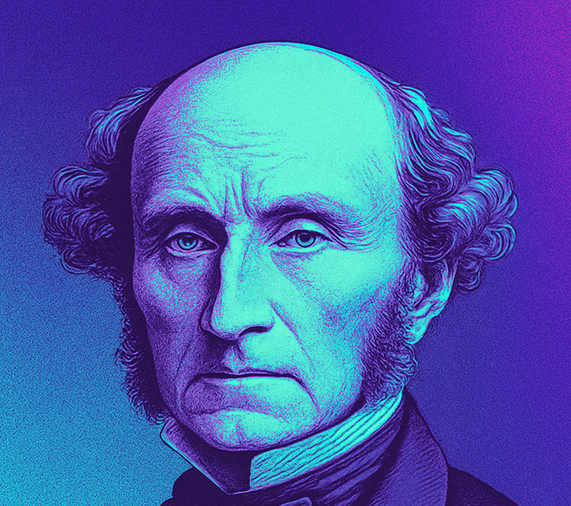
It appears... that a work similar in its object and general conception to that of Adam Smith, but adapted to the more extended knowledge and improved ideas of the present age, is the kind of contribution which Political Economy at present requires. The Wealth of Nations is in many parts obsolete, and in all, imperfect. Political Economy... has grown up almost from infancy since the time of Adam Smith; and the philosophy of society... has advanced many steps beyond the point at which he left it.
▼
Source
source
Preface, 1848
3 months 3 weeks ago
How absurd it must seem for an immortal soul to be destined for Heaven or Hell, and yet be sitting in a kitchen, as a maid, or to see oneself objectified as a mechanic! how falsely the usual sunrise waked us, the clock dial, the city street the job! How wrongfully people find themselves in these systems - our time isn't there, our space isn't there, our space isn't even here... the whole social story of waking, and certainly the day of the mechanic, is false.
▼
Source
source
Traces (1930), p. 27
7 months 2 weeks ago
Your questions refer to words; so I have to talk about words. You say: The point isn't the word, but its meaning, and you think of the meaning as a thing of the same kind as the word, though also different from the word. Here the word, there the meaning.
▼
Source
source
§ 120
3 months 3 weeks ago
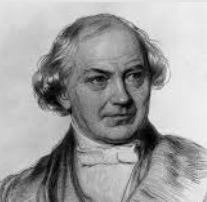
The Idea of Cause is expressed for purposes of science by these three Axioms:-'Every Event must have a Cause':-'Causes are measured by their Effects':-'Reaction is equal and opposite to Action'.

5 months 3 weeks ago
In the spiritual realm nothing is indifferent: what is not useful is harmful.
▼
Source
source
VII

7 months 3 weeks ago
A vivid thought brings the power to paint it; and in proportion to the depth of its source is the force of its projection.
▼
Source
source
p. 261

6 months 2 weeks ago
As first a man cannot lay down the right of resisting them, that assault him by force, to take away his life; because he cannot be understood to ayme thereby, at any Good to himself.
▼
Source
source
The First Part, Chapter 14, p. 66
5 months 2 weeks ago
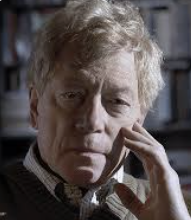
Without the background of a remembered faith modernism loses its conviction: it becomes routinised. For a long time now it has been assumed that there can be no authentic creation in the sphere of high art which is not is some way a 'challenge' to the ordinary public. Art must give offence, stepping out of the future fully armed against the bourgeois taste for kitsch and cliché. But the result of this is that offence becomes a cliché.
▼
Source
source
Avant-garde and Kitsch (p. 86)
7 months 3 weeks ago
A totally unmystical world would be a world totally blind and insane.
▼
Source
source
Grey Eminence, 1940
4 months 2 days ago
Himmler approved the idea of recruiting divisions of the Waffen-SS with volunteers from all nations under the banner of the struggle against Communist Russia and in defence of Europe and its civilisation. This was the restoration of the function that the Order of Teutonic Knights had in the beginning as guardian of the East and, at the same time, of the spirit that had animated the Freikorps, the voluntary groups that, on their own initiative, had fought against the Bolsheviks in the eastern regions and the Baltic countries after the end of the First World War. In the end, more than seventeen nations were represented in the Waffen-SS, often with their own complete divisions: French, Belgians, Dutch, Scandinavians, Ukrainians, Spaniards, even Swiss, with a total of about 800,000 men, of whom only a part came from the Germanic area.
7 months 3 weeks ago
Never read any book that is not a year old.
▼
Source
source
Books
6 months 2 weeks ago
Almost anything that consoles us is a fake.
▼
Source
source
The Sovereignty of Good (1970) p. 59.
6 months 3 weeks ago
Every beloved object is the center point of a paradise.
▼
Source
source
Fragment No. 51; Jeder geliebte Gegenstand ist der Mittelpunkt eines Paradieses. Variant translations:

7 months 3 weeks ago
The collective name for the ripe fruits of religion in a character is Saintliness. The saintly character is the character for which spiritual emotions are the habitual centre of the personal energy; and there is a certain composite photograph of universal saintliness, the same in all religions, of which the features can easily be traced.
▼
Source
source
Lectures XI, XII, AND XIII : "Saintliness"

4 months 2 weeks ago
Descend where you will into the lower class, in Town or Country, by what avenue you will, by Factory Inquiries, Agricultural Inquiries, by Revenue Returns, by Mining-Labourer Committees, by opening your own eyes and looking, the same sorrowful result discloses itself: you have to admit that the working body of this rich English Nation has sunk or is fast sinking into a state, to which, all sides of it considered, there was literally never any parallel.
3 months 3 weeks ago
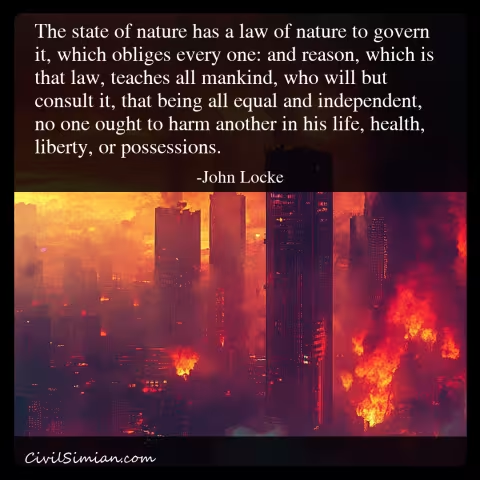
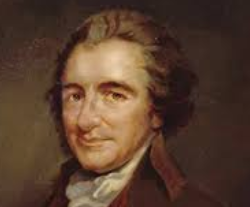
Our legislators are not sufficiently apprized of the rightful limits of their power; that their true office is to declare and enforce only our natural rights and duties, and to take none of them from us. No man has a natural right to commit aggression on the equal rights of another; and this is all from which the laws ought to restrain him; every man is under the natural duty of contributing to the necessities of the society; and this is all the laws should enforce on him; and, no man having a natural right to be the judge between himself and another, it is his natural duty to submit to the umpirage of an impartial third. When the laws have declared and enforced all this, they have fulfilled their functions, and the idea is quite unfounded, that on entering into society we give up any natural right.
▼
Source
source
Letter to Francis W. Gilmer (27 June 1816); The Writings of Thomas Jefferson edited by Ford, vol. 10, p. 32
7 months 3 weeks ago
The example of the Jews, in many things, may not be imitated by us; they had not only orders to cut off several nations altogether, but if they were obliged to war with others, and conquered them, to cut off every male; they were suffered to use polygamy and divorces, and other things utterly unlawful to us under clearer light.

5 months 3 weeks ago
Quite apart from assiduous efforts to restrict the use of violence as means rather than an end, the actualization of violence as a means can inadvertently become its own end, producing new violence, producing violence anew, reiterating the license, and licensing further violence. Violence does not exhaust itself in the realization of a just end; rather, it renews itself in directions that exceed both deliberate intention and instrumental schemes. In other words, by acting as if the use of violence can be a means to achieve a nonviolent end, one imagines that the practice of violence does not in the act posit violence as its own end. The technē is undermined by the praxis, and the use of violence only makes the world into a more violent place, by bringing more violence into the world.
▼
Source
source
p. 20
4 months 4 days ago
Here, lads, we live by the law of the taiga. But even here people manage to live. D'you know who are the ones the camps finish off? Those who lick other men's left-overs, those who set store by the doctors, and those who peach on their mates.
▼
Source
source
Kuziomin, in the Ralph Parker translation (1963).
5 months 2 weeks ago
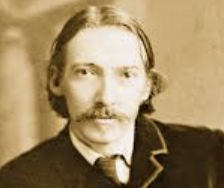
The true wisdom is to be always seasonable, and to change with a good grace in changing circumstances. To love playthings well as a child, to lead an adventurous and honourable youth, and to settle when the time arrives, into a green and smiling age, is to be a good artist in life and deserve well of yourself and your neighbour.
▼
Source
source
Crabbed Age and Youth.

6 months 1 week ago
When, as a result of what was called Enlightenment in the eighteenth century, the priests had in fact almost entirely lost this function of guidance. Their place was taken by writers and scientists. In both cases it is equally absurd. Mathematics, physics, and biology are as remote from spiritual guidance as the art of arranging words. When that function is usurped by literature and science it proves there is no longer any spiritual life.
▼
Source
source
"Morality and literature," pp. 164-165

6 months 4 weeks ago
I believe the world grows near its end, yet is neither old nor decayed, nor will ever perish upon the ruins of its own principles.
▼
Source
source
Section 45
7 months 3 weeks ago
But the chief design of this paper is not to disprove it, which many have sufficiently done; but to entreat Americans to consider.

5 months ago
With other beliefs crumbling, many seek to return to what they piously describe as "Enlightenment values". But these values were not as unambiguously benign as is nowadays commonly supposed.
▼
Source
source
2015
7 months 3 weeks ago
It had been, when I read it, only a vaguely pregnant piece of nonsense. Now it was all as clear as day, as evident as Euclid. Of course the Dharma-Body of the Buddha was the hedge at the bottom of the garden. At the same time, and no less obviously, it was these flowers, it was anything that I-or rather the blessed Not-I, released for a moment from my throttling embrace-cared to look at.
▼
Source
source
describing his experiment with mescaline, pp. 18-19
6 months 2 weeks ago
And in these foure things, Opinion of Ghosts, Ignorance of second causes, Devotion towards what men fear, and Taking of things Casuall for Prognostics, consisteth the Natural seed of Religion; which by reason of the different Fancies, Judgements, and Passions of severall men, hath grown up into ceremonies so different, that those which are used by one man, are for the most part ridiculous to another.
▼
Source
source
The First Part, Chapter 12, p. 54
CivilSimian.com created by AxiomaticPanic, CivilSimian, Kalokagathia