

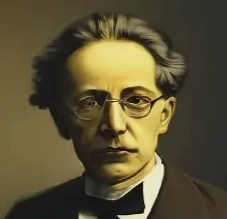
4 months 1 week ago
"Freedom" awakens your rage against everything that is not you; "egoism" calls you to joy over yourselves, to self-enjoyment.
▼
Source
source
Dover 2005, p. 163

6 months 1 week ago
We men do nothing but lie and make ourselves important. Speech was invented for the purpose of magnifying all of our sensations and impressions - perhaps so that we could believe in them.
▼
Source
source
Niebla [Mist]
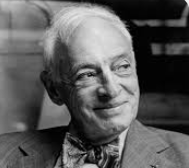
5 months 2 weeks ago
In an age of enormities, the emotions are naturally weakened. We are continually called upon to have feelings - about genocide, for instance, or about famine or the blowing up of passenger planes - and we are all aware that we are incapable of reacting appropriately. A guilty consciousness of emotional inadequacy or impotence makes people doubt their own human weight.
▼
Source
source
"The Distracted Public" (1990), p. 156

6 months 3 weeks ago
All writers, not ours alone but foreigners also, who have sought to represent Absolute Beauty, were unequal to the task, for it is an infinitely difficult one. The beautiful is the ideal ; but ideals, with us as in civilized Europe, have long been wavering. There is in the world only one figure of absolute beauty: Christ. That infinitely lovely figure is, as a matter of course, an infinite marvel.
▼
Source
source
Letter to his Niece Sofia Alexandrovna, Geneva, January 1, 1868. Ethel Golburn Mayne, Letters of Fyodor Michailovitch Dostoyevsky to His Family and Friends (1879), Dostoevsky's Letters XXXIX, p. 136
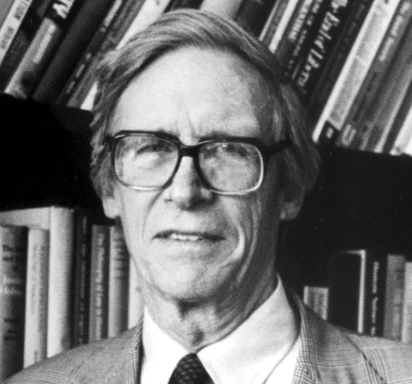
7 months 3 weeks ago
We must choose for others as we have reason to believe they would choose for themselves if they were at the age of reason and deciding rationally.
▼
Source
source
Chapter IV, Section 33, p. 209
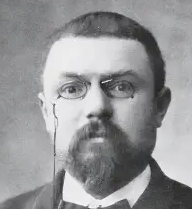
4 months 2 weeks ago
It is the sidereal day, that is, the duration of the rotation of the earth, which is the constant unit of time. ...However ...many astronomers ...think that the tides act as a check on our globe, and that the rotation of the earth is becoming slower and slower. Thus would be explained the apparent acceleration of the motion of the moon...

7 months 3 weeks ago
"The cardinal difficulty," said MacPhee, "in collaboration between the sexes is that women speak a language without nouns. If two men are doing a bit of work, one will say to the other, 'Put this bowl inside the bigger bowl which you'll find on the top shelf of the green cupboard.' The female for this is, 'Put that in the other one in there.' And then if you ask them, 'in where?' they say, 'in there, of course.' There is consequently a phatic hiatus."
▼
Source
source
Ch. 8 : Moonlight at Belbury, section 2

8 months 1 day ago
The world thought well of my schoolmaster guardian, because he was neither a liar, nor a scamp, nor a gambler; but he was coarse, avaricious, and ignorant; he knew nothing beyond the confused lessons which he taught to his classes. He imagined that in forcing a youth to become a monk he would be offering a sacrifice acceptable to God. He used to boast of the many victims which he devoted annually to Dominic and Francis and Benedict.
▼
Source
source
As quoted in Life and Letters of Erasmus: Lectures Delivered at Oxford 1893-4 (1899) by James Anthony Froude

6 months 2 weeks ago
It is debasing to die the way one does; it is intolerable to be exposed to an end over which we have no control, an end which lies in wait for us, overthrows us, casts us into the unnameable.

3 months 2 weeks ago
Men never respect what they have made themselves. This is why an elective king never possesses the moral power of a hereditary sovereign, because he is not noble enough, that is to say he does not possess that kind of greatness independent of men and that is the work of time.
▼
Source
source
p. 72
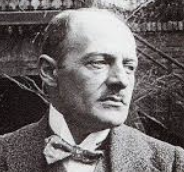
6 months 1 week ago
To its very core, the mind of ressentiment man is filled with envy, the impulse to detract, malice, and secret vindictiveness. These affects have become fixed attitudes, detached from all determinate objects. Independently of his will, this man's attention will be instinctively drawn by all events which can set these affects in motion. The ressentiment attitude even plays a role in the formation of perceptions, expectations, and memories. It automatically selects those aspects of experience which can justify the factual application of this pattern of feeling.
▼
Source
source
L. Coser, trans. (1973), p. 74
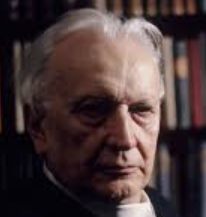
6 months 1 week ago
The general fellowship of our human situation has been rendered even more dubious than before, inasmuch as, though the old ties of caste have been loosened, a new restriction of the individual to some prescribed status in society is manifest. Less than ever, perhaps, is it possible for a man to transcend the limitations imposed by his social origins.
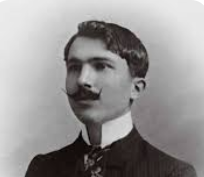
3 months 3 weeks ago
Every man has his own circle composed of trees, animals, men, ideas, and he is in duty bound to save this circle. He, and no one else. If he does not save it, he cannot be saved. These are the labors each man is given and is in duty bound to complete before he dies. He may not otherwise be saved. For his own soul is scattered and enslaved in these things about him, in trees, in animals, in men, in ideas, and it is his own soul he saves by completing these labors.
4 months 1 week ago
Because our time is struggling toward the word with which it may express its spirit, many names come to the fore and all make claim to being the right one. Without our assistance, time will not bring the right word to light; we must all work together on it. If, however, so much depends on us, we may reasonably ask what they have made of us and what they propose to make of us; we ask about the education through which they seek to make us creators of that word. Do they conscientiously cultivate our predisposition to become creators or do they treat us only as creatures whose nature simply permits training? Therefore we are concerned above all with what they make of us in the time of our plasticity; the school question is a life question.
▼
Source
source
p. 11

5 months 5 days ago
Being a planetary citizen does not need space travel. It means being conscious that we are part of the universe and of the earth. The most fundamental law is to recognise that we share the planet with other beings, and that we have a duty to care for our common home.
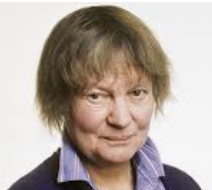
6 months 2 weeks ago
The chief requirement of the good life... is to live without any image of oneself.
▼
Source
source
The Bell (1958), ch. 9; 2001, p. 119.

7 months 3 weeks ago
Now, as there is an infinity of possible universes in the Ideas of God, and as only one of them can exist, there must be a sufficient reason for God's choice, which determines him toward one rather than another. And this reason can be found only in the fitness, or the degrees of perfection, that these worlds contain, since each possible thing has the right to claim existence in proportion to the perfection it involves.
▼
Source
source
La monadologie (53 & 54).

6 months 3 weeks ago
There are things I can't force. I must adjust. There are times when the greatest change needed is a change of my viewpoint.
▼
Source
source
As quoted in Cracking the Code of Our Physical Universe : The Key to a Whole New World of Enlightenment and Enrichment (2006) by Matthew M Radmanesh, p. 91


6 months 1 week ago
We are sorely deficient in talking with each other and listening to each other. We lack mobility, criticism and self-criticism. We incline to doctrinism. What makes it worse is that so many people do not really want to think. They want only slogans and obedience. They ask no questions and they give no answers, except by repeating drilled-in phrases. They can only assert and obey, neither probe nor apprehend. Thus they cannot be convinced, either. How shall we talk with people who will not go where others probe and think, where men seek independence in insight and conviction?
5 months 2 weeks ago
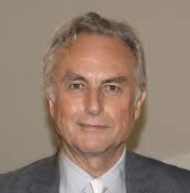
I am very conscious that you can't condemn people of an earlier era by the standards of ours. Just as we don't look back at the 18th and 19th centuries and condemn people for racism in the same way as we would condemn a modern person for racism, I look back a few decades to my childhood and see things like caning, like mild pedophilia, and can't find it in me to condemn it by the same standards as I or anyone would today.
▼
Source
source
Giles Whittell, "The world according to Richard Dawkins" (2013-09-07), The Times
3 months 3 weeks ago
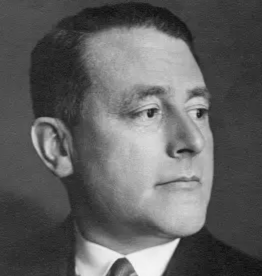
The concept of the state presupposes the concept of the political.

7 months 3 weeks ago
The ways by which you may get money almost without exception lead downward. To have done anything by which you earned money merely is to have been truly idle or worse. If the laborer gets no more than the wages which his employer pays him, he is cheated, he cheats himself.
▼
Source
source
p. 486
6 months 1 week ago
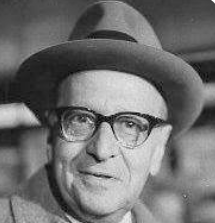
Leibniz's theory on the subject as substantia ideans in the sense of a causative agent of decision and acts stands much closer to a materialist interpretation of history than does a philosophy which reduces the thinking subject to the role of subsuming protocol sentences under general propositions and deducing other sentences from them.
▼
Source
source
p. 149.
4 months ago
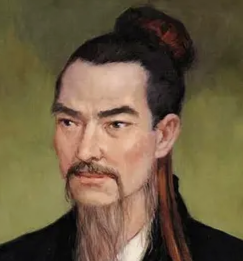
Now, as to universal love and mutual aid, they are beneficial and easy beyond a doubt. It seems to me that the only trouble is that there is no superior who encourages it. If there is a superior who encourages it, promoting it with rewards and commendations, threatening its reverse with punishments, I feel people will tend toward universal love and mutual aid like fire tending upward and water downwards - it will be unpreventable in the world.
▼
Source
source
Book 4; Universal Love III

8 months ago
I will follow the good side right to the fire, but not into it if I can help it.
▼
Source
source
Ch. 1
5 months 1 week ago
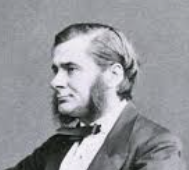
For myself I say deliberately, it is better to have a millstone tied round the neck and be thrown into the sea than to share the enterprises of those to whom the world has turned, and will turn, because they minister to its weaknesses and cover up the awful realities which it shudders to look at.
▼
Source
source
Aphorism #367, in Aphorisms and Reflections (1907) edited by Henrietta A. Huxley, his widow
8 months 1 week ago
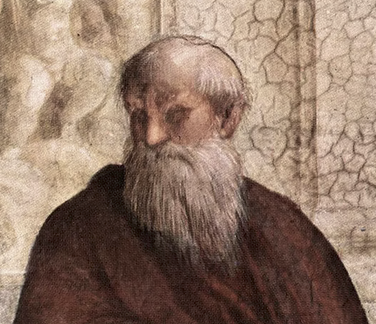
When the soul has descended into generation (from its first divine condition) she partakes of evil, and is carried a great way into a state the opposite of her first purity and integrity, to be entirely merged in which, is nothing more than to fall into a dark mire. ...The soul dies as much as it is possible for the soul to die: and the death to her is, while baptized or immersed in the present body, to descend into matter, and be wholly subjected by it; and after departing thence to lie there til it shall arise and turn its face away from the abhorrent filth. This is what is meant by falling asleep in Hades, of those who have come there.

4 months 1 week ago
If you wish to be loved, love.
▼
Source
source
Seneca quotes this in Epistulae Morales ad Lucilium; Epistle IX and attributes it to Hecato
6 months 6 days ago
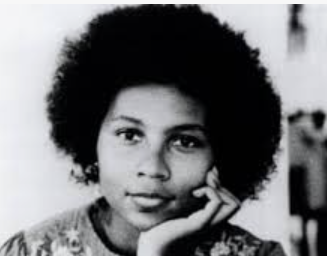
Hooks is a contentious writer, and I don't always agree with her contentions, but Ain't I a Woman has an intellectual vitality and daring that should set new standards for the discussion of race and sex.
▼
Source
source
Ellen Willis in No More Nice Girls: Countercultural Essays

7 months 3 weeks ago
Bad times have a scientific value. [...] We learn geology the morning after the earthquake, on ghastly diagrams of cloven mountains, upheaved plains, and the dry bed of the sea.
▼
Source
source
Considerations by the Way
3 months 3 weeks ago
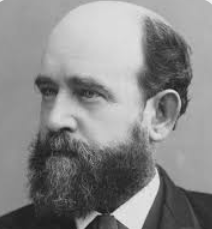
All large political questions are at bottom economic questions.
▼
Source
source
General Introduction

6 months 5 days ago
I have been taught that the land should belong to those who till the soil. With all of his deep-seated sympathies with the Arabs, our comrade cannot possibly deny that the Jews in Palestine have tilled the soil. Tens of thousands of them, young and deeply devout idealists, have flocked to Palestine, there to till the soil under the most trying pioneer conditions. They have reclaimed wastelands and have turned them into fertile fields and blooming gardens. Now I do not say that therefore Jews are entitled to more rights than the Arabs, but for an ardent socialist to say that the Jews have no business in Palestine seems to me rather a strange kind of socialism.
7 months 3 weeks ago
The title wise is, for the most part, falsely applied. How can one be a wise man, if he does not know any better how to live than other men? - if he is only more cunning and intellectually subtle?
▼
Source
source
p. 487
6 months 1 day ago
The criterion of efficiency dictates that choice of alternatives which produces the largest result for the given application of resources.
▼
Source
source
Simon (1945, p. 179); As cited in: Harry M. Johnson (1966) Sociology: A Systematic Introduction. p. 287.
4 months 3 days ago
Additionally, in the United States, we define manliness in terms of aggression. I think it must be because we're frightened. We put on a show of being tough guys, but it's completely unnecessary, you know. If you have what it takes, you don't need to put on an act, and you certainly don't need to beat nature into submission. Why be hostile to nature?
▼
Source
source
p. 8
7 months 1 week ago
Pay attention to your enemies, for they are the first to discover your mistakes.
▼
Source
source
§ 12

8 months 5 days ago
This right which you have, is not founded any more than his upon any quality or any merit in yourself which renders you worthy of it. Your soul and your body are, of themselves, indifferent to the state of boatman or that of duke; and there is no natural bond that attaches them to one condition rather than to another.
6 months 2 weeks ago
If just once you were depressed for no reason, you have been so all your life without knowing.
6 months 1 week ago
In the late eighteenth and the greater part of the nineteenth centuries appeared the first marked cultural shift in the attitude taken toward change. Under the names of indefinite perfectibility, progress, and evolution, the movement of things in the universe itself and of the universe as a whole began to take on a beneficent instead of hateful aspect.

6 months 3 weeks ago
Consider any individual at any period of his life, and you will always find him preoccupied with fresh plans to increase his comfort.
▼
Source
source
Book Three, Chapter XXI.
3 months 3 weeks ago
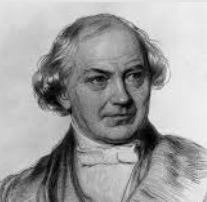
The basis of all Natural Systems of Classification is the Idea of Natural Affinity. The Principle which this Idea involves is this:-Natural arrangements, obtained from 'different' sets of characters, must 'coincide' with each other.

7 months 1 week ago
He who intends to enjoy life should not be busy about many things, and in what he does should not undertake what exceeds his natural capacity. On the contrary, he should have himself so in hand that even when fortune comes his way, and is apparently ready to lead him on to higher things, he should put her aside and not o'erreach his powers. For a being of moderate size is safer than one that bulks too big.

7 months 2 weeks ago
You could attach prices to ideas. Some cost a lot some little. ... And how do you pay for ideas? I believe: with courage.
▼
Source
source
p. 60e

5 months 2 weeks ago
Until now a culture has been a mechanical fate for societies, the automatic interiorization of their own technologies.
▼
Source
source
(p. 86)
6 months 2 weeks ago
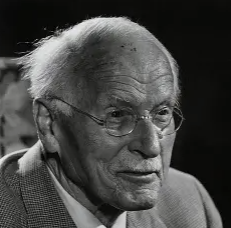
No one can flatter himself that he is immune to the spirit of his own epoch, or even that he possesses a full understanding of it. Irrespective of our conscious convictions, each one of us, without exception, being a particle of the general mass, is somewhere attached to, colored by, or even undermined by the spirit which goes through the mass. Freedom stretches only as far as the limits of our consciousness.
▼
Source
source
Paracelsus the Physician
4 months 1 week ago
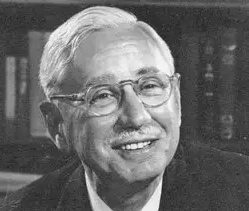
Life is that which can hold a purpose for three thousand years and never yield. The individual fails, but life succeeds. The individual is foolish, but life holds in its blood and seed the wisdom of generations. The individual dies, but life, tireless and undiscourageble, goes on, wondering, longing, planning, trying, mounting, longing.
▼
Source
source
Ch. 5 : On Death

3 months 2 weeks ago
It is not given to a cylinder to move everywhere by its own motion, nor yet to water nor to fire nor to anything else which is governed by nature or an irrational soul, for the things which check them and stand in the way are many. But intelligence and reason are able to go through everything that opposes them, and in such manner as they are formed by nature and as they choose. Place before thy eyes this facility with which the reason will be carried through all things, as fire upwards, as a stone downwards, as a cylinder down an inclined surface, and seek for nothing further. For all other obstacles either affect the body only, which is a dead thing; or, except for opinion and the yielding of reason itself, they do not crush nor do any harm of any kind; for if they did, he who felt it would immediately become bad.
▼
Source
source
X, 33

6 months 2 weeks ago
Power as is really divided, and as dangerously to all purposes, by sharing with another an Indirect Power, as a Direct one.
▼
Source
source
The Third Part, Chapter 42, p. 315
CivilSimian.com created by AxiomaticPanic, CivilSimian, Kalokagathia