


4 months 2 days ago
Life is one long struggle in the dark.
▼
Source
source
Book II, line 54 (tr. Rouse)

2 months 4 weeks ago
By Silence, the discretion of a man is known: and a fool, keeping Silence, seemeth to be wise.

3 months 3 weeks ago
Who does not in some sort live to others, does not live much to himself.
▼
Source
source
Book III, Ch. 10

1 month 4 weeks ago
Give us back our suffering, we cry to Heaven in our hearts - suffering rather than indifferentism; for out of nothing comes nothing. But out of suffering may come the cure. Better have pain than paralysis! A hundred struggle and drown in the breakers. One discovers the new world. But rather, ten times rather, die in the surf, heralding the way to that new world, than stand idly on the shore!
3 months 2 weeks ago
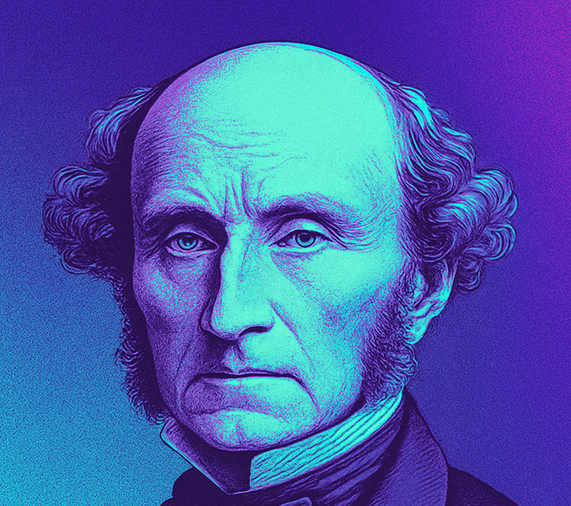
Nothing contributes more to nourish elevation of sentiments in a people, than the large and free character of their habitations.
▼
Source
source
(p. 55)
2 months 3 days ago
No particular experiences are linked with any particular statements in the interior of the field, except indirectly through considerations of equilibrium affecting the field as a whole.
▼
Source
source
"Two Dogmas of Empiricism"

2 days ago
Much must also be withdrawn into oneself: for a well-composed conversation of differences disturbs and renews the affections, and infuriates whatever is weak in the mind and has not been cared for...Loneliness will cure the hatred of the crowd, the boredom of solitude will be cured by the crowd.... A certain dullness and languor of the mind is born from constant toil....Nor would the desire of men so much tend to this, unless play and fun had a kind of natural voluptuousness. The frequent use of which will relieve all the weight of the soul and all the vigor.For sleep is also necessary for refreshment, but if you continue it day and night, death will result.

2 months 3 weeks ago
The most formidable of all the ills that threaten the future of the Union arises from the presence of a black population upon its territory; and in contemplating the cause of the present embarrassments, or the future dangers of the United States, the observer is invariably led to this as a primary fact.
▼
Source
source
Chapter XVIII.

2 months 1 week ago
I am the way and the truth and the life. No one comes to the Father except through me.
▼
Source
source
14:06


4 months 2 weeks ago
The pride connected with knowing and sensing lies like a blinding fog over the eyes and senses of men, thus deceiving them concerning the value of existence. For this pride contains within itself the most flattering estimation of the value of knowing. Deception is the most general effect of such pride, but even its most particular effects contain within themselves something of the same deceitful character.
2 months 2 weeks ago
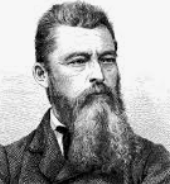
To theology, ... only what it holds sacred is true, whereas to philosophy, only what holds true is sacred.
▼
Source
source
Lecture II, R. Manheim, trans. (1967), p. 11

4 months 3 days ago
I too have sworn heedlessly and all the time, I have had this most repulsive and death-dealing habit. I'm telling your graces; from the moment I began to serve God, and saw what evil there is in forswearing oneself, I grew very afraid indeed, and out of fear I applied the brakes to this old, old, habit.
▼
Source
source
180:10:1

3 months 2 weeks ago
The universe is what it is, not what I choose that it should be.
▼
Source
source
The Value of Free Thought: How to Become a Truth-seeker and Break the Chains of Mental Slavery (1944), p. 24

2 months 1 week ago
Tolerance - the function of an extinguished ardor - tolerance cannot seduce the young.

3 months 2 weeks ago
Whensoever therefore the legislative shall transgress this fundamental rule of society; and either by ambition, fear, folly or corruption, endeavour to grasp themselves, or put into the hands of any other, an absolute power over the lives, liberties, and estates of the people; by this breach of trust they forfeit the power the people had put into their hands for quite contrary ends, and it devolves to the people, who have a right to resume their original liberty, and, by the establishment of a new legislative, (such as they shall think fit) provide for their own safety and security, which is the end for which they are in society.
▼
Source
source
Second Treatise of Civil Government, Ch. XIX, sec. 222
2 weeks ago
News and truth are not the same thing and must be clearly distinguished. The function of news is to signalize an event, the function of truth is to bring to light the hidden facts, to set them into relation with each other, and make a picture of reality on which men can act. Only at those points, where social conditions take recognizable and measurable shape, do the body of truth and the body of news coincide.
▼
Source
source
Ch. XXIV: "News, Truth, and a Conclusion", p. 358 The clause in bold is sometimes quoted on its own in the form, "The news and the truth are not the same thing."
3 months 2 weeks ago
The true function of logic ... as applied to matters of experience ... is analytic rather than constructive; taken a priori, it shows the possibility of hitherto unsuspected alternatives more often than the impossibility of alternatives which seemed prima facie possible. Thus, while it liberates imagination as to what the world may be, it refuses to legislate as to what the world is.
▼
Source
source
p. 8

1 week 1 day ago
Find in any country the Ablest Man that exists there; raise him to the supreme place, and loyally reverence him: you have a perfect government for that country; no ballot-box, parliamentary eloquence, voting, constitution-building, or other machinery whatsoever can improve it a whit.
2 months 1 week ago
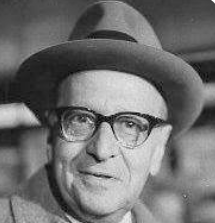
Pragmatism, in trying to turn experimental physics into a prototype of all science and to model all spheres of intellectual life after the techniques of the laboratory, is the counterpart of modern industrialism, for which the factory is the prototype of human existence, and which models all branches of culture after production on the conveyor belt.
▼
Source
source
p. 50.
2 months 2 weeks ago
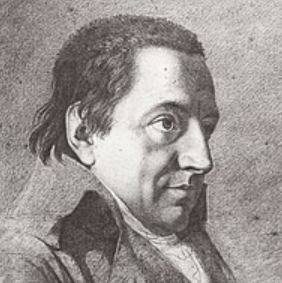
The determination to print them (his lectures), and to communicate them to the General Public, must also speak for itself; and should it not do so, any other recommendation of them would be thrown away. Thus, with respect to the appearance of this work, I have nothing further to say to the Public, than that I have nothing to say.
▼
Source
source
Preface

1 month 4 weeks ago
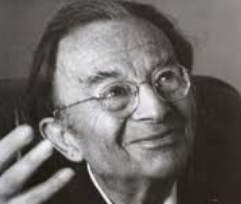
I believe that if an individual is not on the path to transcending his society and seeing in what way it furthers or impedes the development of human potential, he cannot enter into intimate contact with his humanity. If the tabus, restrictions, distorted values appear "natural" to him, this is a clear indication that he cannot have a real knowledge of human nature. I believe that society, while having a function both stimulating and inhibiting at the same time, has always been in conflict with humanity. Only when the purpose of society is identified with that of humanity will society cease to paralyze man and encourage his dominance.
2 months 1 week ago
Every utopia about to be realized resembles a cynical dream.

1 month 3 weeks ago
There are two kinds of people, killers, and everybody else.

3 months 3 weeks ago
Again, we should notice the force, effect, and consequences of inventions, which are nowhere more conspicuous than in those three which were unknown to the ancients; namely, printing, gunpowder, and the compass. For these three have changed the appearance and state of the whole world; first in literature, then in warfare, and lastly in navigation: and innumerable changes have been thence derived, so that no empire, sect, or star, appears to have exercised a greater power and influence on human affairs than these mechanical discoveries.
▼
Source
source
Aphorism 129

2 months 1 week ago
Such abstraction which refuses to accept the given universe of facts as the final context of validation, such "transcending" analysis of the facts in the light of their arrested and denied possibilities, pertains to the very structure of social theory.
▼
Source
source
p. xliii
2 months 1 week ago
When people come to me saying they want to kill themselves, I tell them, "What's your rush? You can kill yourself any time you like. So calm down. Suicide is a positive act." And they do calm down.

3 months 1 week ago
Education is an ornament for the prosperous, a refuge for the unfortunate.
▼
Source
source
Freeman (1948), p. 161

2 months ago
It was not until the ant and Veig had passed each other that Niall realized that he had been reading the ant's mind. It was a sensation like actually being the ant, as if he had momentarily taken possession of its body. And while he had been inside the ant's body, he had also become aware of all the other ants in the nest. It was a bewildering feeling, as if his mind had shattered into thousands of fragments, yet each fragment remained a coherent part of the whole.
▼
Source
source
p. 57

3 months 1 week ago
For a thinking man is where Wisdom is at home.
▼
Source
source
Ahunuvaiti Gatha; Yasna 30, 9.
3 months 2 weeks ago
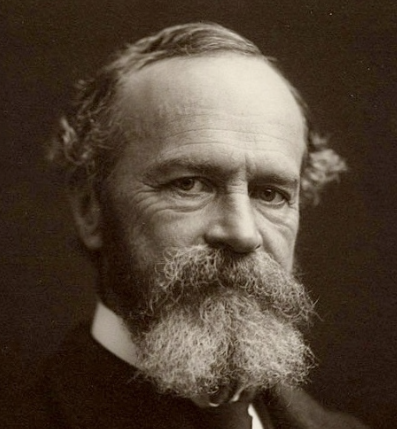
There must be something solemn, serious, and tender about any attitude which we denominate religious. If glad, it must not grin or snicker; if sad, it must not scream or curse. It is precisely as being solemn experiences that I wish to interest you in religious experiences. ... The divine shall mean for us only such a primal reality as the individual feels impelled to respond to solemnly and gravely, and neither by a curse nor a jest.
▼
Source
source
Lecture II, "Circumscription of the Topic"
2 months 1 week ago
Having destroyed the social power of the nobility and the guildmasters, the bourgeois also destroyed their political power. Having raised itself to the actual position of first class in society, it proclaims itself to be also the dominant political class. This it does through the introduction of the representative system which rests on bourgeois equality before the law and the recognition of free competition, and in European countries takes the form of constitutional monarchy. In these constitutional monarchies, only those who possess a certain capital are voters - that is to say, only members of the bourgeoisie. These bourgeois voters choose the deputies, and these bourgeois deputies, by using their right to refuse to vote taxes, choose a bourgeois government.

2 months 3 days ago
The aim is to replace economic oligarchies by the State, which has a will-to-power of its own and is quite as little concerned with the public good; and a will-to-power, moreover, which is not economic but military and therefore much more dangerous to any good folk who have a taste for staying alive. And on the bourgeois side what on earth is the sense of objecting to State control in economic affairs if one accepts private monopolies which have all the economic and technical disadvantages of State monopolies and possibly some others as well?
▼
Source
source
p. 230

4 months 2 days ago
If a person gave your body to any stranger he met on his way, you would certainly be angry. And do you feel no shame in handing over your own mind to be confused and mystified by anyone who happens to verbally attack you?
▼
Source
source
(28) [tr. Elizabeth Carter]

4 months ago
Rules necessary for axioms. Not to demand in axioms any but things perfectly evident.

2 months 2 weeks ago
The power of perpetuating our property in our families is one of the most valuable and interesting circumstances belonging to it, and that which tends most to the perpetuation of society itself. It makes our weakness subservient to our virtue; it grafts benevolence even upon avarice. The possession of family wealth and of the distinction which attends hereditary possessions (as most concerned in it,) are the natural securities for this transmission.

2 months 1 day ago
When contemporary feminist movement first began, feminist writings and scholarship by black women was groundbreaking. The writings of black women like Cellestine Ware, Toni Cade Bambara, Michele Wallace, Barbara Smith, and Angela Davis, to name a few, were all works that sought to articulate, define, speak to and against the glaring omissions in feminist work, the erasure of black female presence.
▼
Source
source
Teaching to Transgress: Education as the Practice of Freedom

3 months 3 weeks ago
The universal propensity to believe in invisible, intelligent power, if not an original instinct, being at least a general attendant of human nature, may be considered as a kind of mark or stamp, which the divine workman has set upon his work; and nothing surely can more dignify mankind, than to be thus selected from all other parts of the creation, and to bear the image or impression of the universal Creator. But consult this image, as it appears in the popular religions of the world. How is the deity disfigured in our representations of him! What caprice, absurdity, and immorality are attributed to him! How much is he degraded even below the character, which we should naturally, in common life, ascribe to a man of sense and virtue!
▼
Source
source
Part XV - General corollary
2 months 1 week ago
Men do not sufficiently realise that their future is in their own hands. Theirs is the task of determining first of all whether they want to go on living or not. Theirs is the responsibility, then, for deciding if they want merely to live, or intend to make just the extra effort required for fulfilling, even on their refractory planet, the essential function of the universe, which is a machine for the making of gods.

2 months 2 weeks ago
In the present state of society it appears necessary to go back to first principles in search of the most simple truths, and to dispute with some prevailing prejudice every inch of ground. To clear my way, I must be allowed to ask some plain questions, and the answers will probably appear as unequivocal as the axioms on which reasoning is built; though, when entangled with various motives of action, they are formally contradicted either by the words or conduct of men.
▼
Source
source
Ch. 1, opening

1 month 2 weeks ago
The vicomte was a nice-looking young man with soft features and polished manners, who evidently considered himself a celebrity but out of politeness modestly placed himself at the disposal of the circle in which he found himself. Anna Pávlovna was obviously serving him up as a treat to her guests. As a clever maître d'hôtel serves up as a specially choice delicacy a piece of meat that no one who had seen it in the kitchen would have cared to eat, so Anna Pávlovna served up to her guests, first the vicomte and then the abbé, as peculiarly choice morsels. The group about Mortemart immediately began discussing the murder of the Duc d'Enghien. The vicomte said that the Duc d'Enghien had perished by his own magnanimity, and that there were particular reasons for Buonaparte's hatred of him.
▼
Source
source
Bk. I, Ch. III

3 weeks 3 days ago
Like other human freedoms, the freedoms embodied in market institutions are justified inasmuch as they meet human needs. Insofar as they fail to do this they can reasonably be altered. This is true not only of the rights that are involved in market institutions. It is true of all human rights.
▼
Source
source
'Modus Vivendi' (p.36)

3 months 3 weeks ago
The annual produce of the land and labour of any nation can be increased in its value by no other means, but by increasing either the number of its productive labourers, or the productive powers of those labourers who had before been employed.
▼
Source
source
Chapter III, p. 377.
1 month 1 week ago
A faculty for idleness implies a catholic appetite and a strong sense of personal identity.
▼
Source
source
An Apology for Idlers.
3 months 2 weeks ago
The foundation of irreligious criticism is: Man makes religion, religion does not make man.
1 month 2 weeks ago
"If he is this good at acting crazy, it's because he is." Nor is military psychology mistaken in this regard: in this sense, all crazy people simulate, and this lack of distinction is the worst kind of subversion. It is against this lack of distinction that classical reason armed itself in all its categories. But it is what today again outflanks them, submerging the principle of truth.
▼
Source
source
"The Precession of Simulacra," p. 4

3 months 2 weeks ago
It is very strange that men should deny a creator and yet attribute to themselves the power of creating eels.
▼
Source
source
From the Philosophic Dictionary, as quoted in The life of Pasteur, 1902
2 months 1 week ago
There can be no movement toward a consummating close unless there is a progressive massing of values, a cumulative effect. This result cannot exist without conservation of the import of what has gone before. Moreover, to secure the needed continuity, the accumulated experience must be such as to create suspense and anticipation of resolution. Accumulation is at the same time preparation, as with each phase of the growth of a living embryo. Only that is carried on which is led to; otherwise there is arrest and a break. For this reason consummation is relative; instead of occurring once for all at a given point, it is recurrent. The final end is anticipated by rhythmic pauses, while that end is final only in an external way. For as we turn from reading a poem or novel or seeing a picture the effect presses forward in further experiences, even if only subconsciously.
▼
Source
source
p. 143
2 days ago
Most men ebb and flow in wretchedness between the fear of death and the hardships of life; they are unwilling to live, and yet they do not know how to die.
CivilSimian.com created by AxiomaticPanic, CivilSimian, Kalokagathia