


6 days ago
Speech is human, silence is divine, yet also brutish and dead: therefore we must learn both arts.
▼
Source
source
Notebooks (1830).

2 months 1 week ago
I am for the most part so convinced that everything is lacking in basis, consequence, justification, that if someone dared to contradict me, even the man I most admire, he would seem to me a charlatan or a fool.

3 months 2 weeks ago
Yet a man may love a paradox, without losing either his wit or his honesty.
▼
Source
source
"Walter Savage Landor", from The Dial, xii, 1841

2 months 2 weeks ago
And what is it in us that is mellowed by civilization? All it does, I'd say, is to develop in man a capacity to feel a greater variety of sensations. And nothing, absolutely nothing else. And through this development, man will yet learn how to enjoy bloodshed. Why, it has already happened....Civilization has made man, if not always more bloodthirsty, at least more viciously, more horribly bloodthirsty.
▼
Source
source
Part 1, Chapter 7

2 months 1 week ago
Our mass media have little difficulty in selling particular interests as those of all sensible men. The political needs of society become individual needs and aspirations, their satisfaction promotes business and the commonweal, and the whole appeals to be the very embodiment of Reason.
▼
Source
source
p. xli

1 month 1 week ago
Primitivism has become the vulgar cliche of much modern art and speculation.
▼
Source
source
(p. 77)

3 months 2 weeks ago
Of course a war is entertaining. The immediate fear and suffering of the humans is a legitimate and pleasing refreshment for our myriads of toiling workers. But what permanent good does it do us unless we make use of it for bringing souls to Our Father Below? When I see the temporal suffering of humans who finally escape us, I feel as if I had been allowed to taste the first course of a rich banquet and then denied all the rest. It is worse than not to have tasted it at all. The Enemy, true to His barbarous methods of warfare, allows us to see the short misery of His favourites only to tantalize and torment us - to mock the incessant hunger, which, during this present phase of great conflict, His blockade is admittedly imposing.
▼
Source
source
Letter V
2 months 1 week ago
I have no ideas, only obsessions. Anybody can have ideas. Ideas have never caused anybody's downfall.

2 months 2 weeks ago
Patriotism is an ephemeral motive that scarcely ever outlasts the particular threat to society that aroused it.

3 months 2 weeks ago
The executive of the modern State is but a committee for managing the common affairs of the whole bourgeoisie.
▼
Source
source
As quoted in the Communist Manifesto (1848) p. 7

1 month 4 weeks ago
For me [fiction] is a manner of philosophizing ... Philosophy may be only a shadow of the reality it tries to grasp, but the novel is altogether more satisfactory. I am almost tempted to say that no philosopher is qualified to do his job unless he is also a novelist ... I would certainly exchange any of the works of Whitehead or Wittgenstein for the novels they ought to have written.
▼
Source
source
p. 160-1
1 month 1 week ago
Tocqueville predicted that in democratic countries the public would demand larger and larger doses of excitement and increasingly stronger stimulants from its writers. He probably did not expect that public to dramatize itself so extensively, to make the world scene everybody's theatre, or, in the developed countries, to take to alcohol and drugs in order to get relief from the horrors of ceaseless intensity, the torment of thrills and distractions. A great many writers have done little more than meet the mounting demand for thrills. I think that this demand has, in the language of marketing, peaked.
▼
Source
source
The Distracted Public

3 months 2 weeks ago
Although I consider our political world to be the best of which we have any historical knowledge, we should beware of attributing this fact to democracy or to freedom. Freedom is not a supplier who delivers goods to our door. Democracy does not ensure that anything is accomplished - certainly not an economic miracle. It is wrong and dangerous to extol freedom by telling people that they will certainly be all right once they are free. How someone fares in life is largely a matter of luck or grace, and to a comparatively small degree perhaps also of competence, diligence, and other virtues. The most we can say of democracy or freedom is that they give our personal abilities a little more influence on our well-being.
1 month 4 days ago
I finished the Iliad to-day... I never admired the old fellow so much, or was so strongly moved by him. What a privilege genius like his enjoys! I could not tear myself away. I read the last five books at a stretch during my walk to-day, and was at last forced to turn into a bypath, lest the parties of walkers should see me blubbering for imaginary beings, the creations of a ballad-maker who has been dead two thousand seven hundred years. What is the power and glory of Caesar and Alexander to that? Think what it would be to be assured that the inhabitants of Monomotapa would weep over one's writings.
▼
Source
source
Anno Domini 4551! Letter to his niece Margaret (August 1851), quoted in George Otto Trevelyan, The Life and Letters of Lord Macaulay, Volume II (1876), pp. 186-187
1 month 2 weeks ago
I can calculate the motions of erratic bodies, but not the madness of a multitude.
▼
Source
source
As quoted in "Mammon and the Money Market", in The Church of England Quarterly Review (1850), p. 142
2 months 1 week ago
Executions, far from being useful examples to the survivors, have, I am persuaded, a quite contrary effect, by hardening the heart they ought to terrify. Besides, the fear of an ignominious death, I believe, never deterred anyone from the commission of a crime, because in committing it the mind is roused to activity about present circumstances.
▼
Source
source
Letter 19
1 month 4 weeks ago
The history of other cultures is non-existent until it erupts in confrontation with the United States.
▼
Source
source
Chap 4, Sect 2
4 months 5 days ago
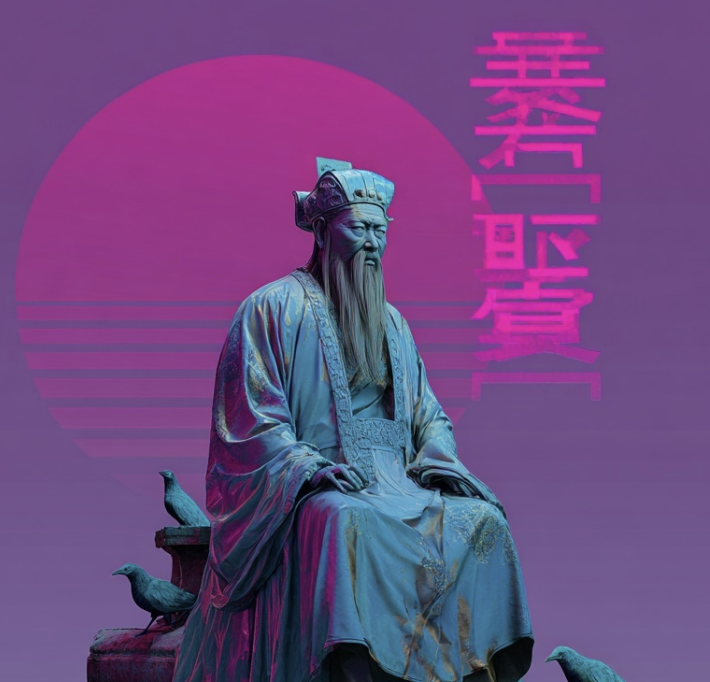
At fifteen my heart was set on learning; at thirty I stood firm; at forty I had no more doubts; at fifty I knew the will of heaven; at sixty my ear was obedient; at seventy I could follow my heart's desire without overstepping the boundaries of what was right.
1 month 1 week ago
It's been suggested that if the super-naturalists really had the powers they claim, they'd win the lottery every week. I prefer to point out that they could also win a Nobel Prize for discovering fundamental physical forces hitherto unknown to science. Either way, why are they wasting their talents doing party turns on television?By all means let's be open-minded, but not so open-minded that our brains drop out.

3 weeks 1 day ago
The belief in unity that has fuelled so many utopian dreams is an effort to reconcile the irreconcilable that ends in repression. Berlin suggests we renounce this venerable faith, and learn how to live with intractable conflict.
▼
Source
source
'Isaiah Berlin: The Value of Decency' (p.106-7)
2 months 1 week ago
One of the biggest paradoxes of our world: memories vanish when we want to remember, but fix themselves permanently in the mind when we want to forget.
3 months 2 weeks ago
If this labourer were in possession of his own means of production, and was satisfied to live as a labourer, he need not work beyond beyond the time necessary for the reproduction of his means of subsistence, say 8 hours a day.
▼
Source
source
Vol. I, Ch. 11, pg. 336.

2 months 2 weeks ago
Manners are of more importance than laws. The law can touch us here and there, now and then. Manners are what vex or soothe, corrupt or purify, exalt or debase, barbarize or refine us, by a constant, steady, uniform, insensible operation like that of the air we breathe in.
▼
Source
source
No. 1, p. 172 in The Works of the Right Honourable Edmund Burke: A New Edition, v. VIII. London: F. C. and J. Rivington, 1815

3 months 1 week ago
There are two godheads: the world and my independent I. I am either happy or unhappy, that is all. It can be said: good or evil do not exist. A man who is happy must have no fear. Not even in the face of death. Only a man who lives not in time but in the present is happy.
▼
Source
source
Journal entry (8 July 1916), p. 74e

3 months 2 weeks ago
Science, ever since the time of the Arabs, has had two functions: (1) to enable us to know things, and (2) to enable us to do things.
1 month 4 days ago
It will hardly be disputed, I suppose, that the department of literature in which the Eastern writers stand highest is poetry. And I certainly never met with any orientalist who ventured to maintain that the Arabic and Sanscrit poetry could be compared to that of the great European nations. But when we pass from works of imagination to works in which facts are recorded and general principles investigated, the superiority of the Europeans becomes absolutely immeasurable. It is, I believe, no exaggeration to say that all the historical information which has been collected from all the books written in the Sanscrit language is less valuable than what may be found in the most paltry abridgments used at preparatory schools in England. In every branch of physical or moral philosophy, the relative position of the two nations is nearly the same.
1 month 2 weeks ago
Disneyland exists in order to hide that it is the "real" country, all of "real" America that is Disneyland (a bit like prisons are there to hide that it is the social in its entirety, in its banal omnipresence, that is carceral). Disneyland is presented as imaginary in order to make us believe that the rest is real.
▼
Source
source
"The Precession of Simulacra," p. 12
2 months 1 week ago
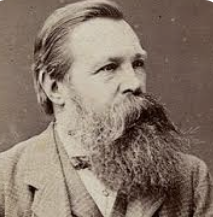
The proletariat is that class in society which lives entirely from the sale of its labor and does not draw profit from any kind of capital; whose weal and woe, whose life and death, whose sole existence depends on the demand for labor - hence, on the changing state of business, on the vagaries of unbridled competition.
3 months 2 weeks ago
There is an almost universal tendency, perhaps an inborn tendency, to suspect the good faith of a man who holds opinions that differ from our own opinions. ... It obviously endangers the freedom and the objectivity of our discussion if we attack a person instead of attacking an opinion or, more precisely, a theory.
▼
Source
source
"The Importance of Critical Discussion" in On the Barricades: Religion and Free Inquiry in Conflict (1989) by Robert Basil
7 months 3 weeks ago
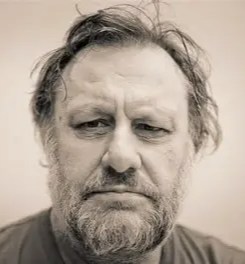
Tibetan prayer wheels: you write a prayer on a paper, put the rolled paper on a wheel, and turn it automatically, without thinking. In this way, the wheel itself is praying for me, instead of me - or more precisely, I myself am praying through the medium of the wheel. The beauty of it all is that in my psychological inferiority I can think about whatever I want, I can yield to the most dirty and obscene fantasies, and it does not matter because - to use a good old Stalinist expression - 'whatever I am thinking, objectively I am praying.'
1 month 1 week ago
In fact writing a computer program is a pretty good way to summarize knowledge about any set of rules.
▼
Source
source
Chapter 2, "Silken Fetters" (p. 58)
2 months 2 weeks ago
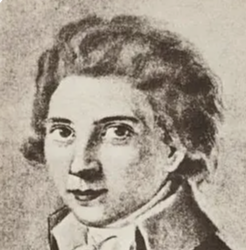
The mind understands something only insofar as it absorbs it like a seed into itself, nurtures it, and lets it grow into blossom and fruit. Therefore scatter holy seeds into the soil of the spirit.
▼
Source
source
"Ideas," Lucinde and the Fragments, P. Firchow, trans. (1991), § 5

4 months 1 week ago
The fact is that I've never called myself a genius, and I think the term has been cheapened by overuse into meaninglessness. If other people want to call me that, that's their problem.

Just now
If any one is angry with you, meet his anger by returning benefits for it: a quarrel which is only taken up on one side falls to the ground: it takes two men to fight.
▼
Source
source
De Ira (On Anger): Book 2, cap. 34, line 5.

3 months 2 weeks ago
To some extent, mythology is only the most ancient history and biography. So far from being false or fabulous in the common sense, it contains only enduring and essential truth, the I and you, the here and there, the now and then, being omitted. Either time or rare wisdom writes it. Before printing was discovered, a century was equal to a thousand years. The poet is he who can write some pure mythology to-day without the aid of posterity.
6 days ago
The infinite, absolute character of Virtue has passed into a finite, conditional one; it is no longer a worship of the Beautiful and Good; but a calculation of the Profitable.
2 months 1 week ago
The preposterous distinction of rank, which render civilization a curse, by dividing the world between voluptuous tyrants and cunning envious dependents, corrupt, almost equally, every class of people, because respectability is not attached to the discharge of the relative duties of life, but to the station, and when the duties are not fulfilled, the affections cannot gain sufficient strength to fortify the virtue of which they are the natural reward. Still there are some loop-holes out of which a man may creep, and dare to think and act for himself; but for a woman it is an herculean task, because she has difficulties peculiar to her sex to overcome, which require almost super-human powers.
▼
Source
source
Ch. 9
3 months 2 weeks ago
We have two bits of evidence about the Somebody. One is the universe He has made. If we used that as our only clue, I think we should have to conclude that He was a great artist (for the universe is a very beautiful place), but also that He is quite merciless and no friend to man (for the universe is a very dangerous and terrifying place.) ...The other bit of evidence is that Moral Law which He has put in our minds. And this is a better bit of evidence than the other, because it is inside information. You find out more about God from the Moral Law than from the universe in general just as you find out more about a man by listening to his conversation than by looking at a house he has built.
▼
Source
source
Book I, Chapter 5, "We Have Cause to Be Uneasy"

4 months 2 weeks ago
Knowledge can in part be set aside, and one can then go further in order to collect new; the natural scientist can set aside insects and flowers and then go further, but if the existing person sets aside the decision in existence, it is eo ipso lost, and he is changed.
2 months 1 week ago
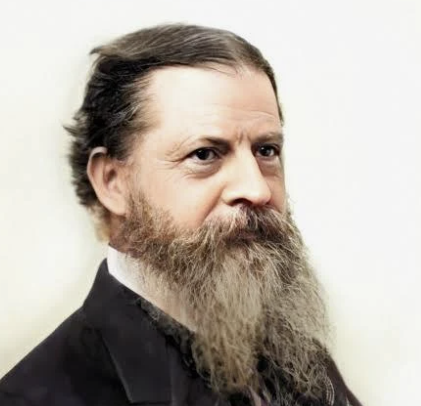
Time with its continuity logically involves some other kind of continuity than its own. Time, as the universal form of change, cannot exist unless there is something to undergo change, and to undergo a change continuous in time, there must be a continuity of changeable qualities.

3 months 3 weeks ago
When you see a person squirming in the clutches of the Law, say to him: "Brother, get things straight. You let the Law talk to your conscience. Make it talk to your flesh.
▼
Source
source
Chapter 2, Verse 19

1 month 2 weeks ago
How good is it to remember one's insignificance: that of a man among billions of men, of an animal amid billions of animals; and one's abode, the earth, a little grain of sand in comparison with Sirius and others, and one's life span in comparison with billions on billions of ages. There is only one significance, you are a worker. The assignment is inscribed in your reason and heart and expressed clearly and comprehensibly by the best among the beings similar to you. The reward for doing the assignment is immediately within you. But what the significance of the assignment is or of its completion, that you are not given to know, nor do you need to know it. It is good enough as it is. What else could you desire?
▼
Source
source
Last Diaries (1979) edited by Leon Stilman, p. 77

3 months 3 weeks ago
There is another ground of hope that must not be omitted. Let men but think over their infinite expenditure of understanding, time, and means on matters and pursuits of far less use and value; whereof, if but a small part were directed to sound and solid studies, there is no difficulty that might not be overcome.
▼
Source
source
Aphorism 111

3 months 2 weeks ago
There must be something solemn, serious, and tender about any attitude which we denominate religious. If glad, it must not grin or snicker; if sad, it must not scream or curse. It is precisely as being solemn experiences that I wish to interest you in religious experiences. ... The divine shall mean for us only such a primal reality as the individual feels impelled to respond to solemnly and gravely, and neither by a curse nor a jest.
▼
Source
source
Lecture II, "Circumscription of the Topic"
Just now
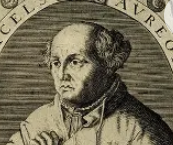
The art of medicine has its roots in the heart. If your heart is false, then also the doctor in you is false. If it is fair, then also the doctor is fair.
4 months 1 week ago
Science fiction offers its writers chances of embarrassment that no other form of fiction does.

4 months 5 days ago
Of all the means which wisdom acquires to ensure happiness throughout the whole of life, by far the most important is friendship.
2 months 1 week ago
Being is continuous becoming.
▼
Source
source
P. 136
2 months 2 days ago
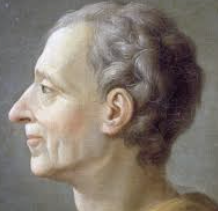
A man should be mourned at his birth, not at his death.
▼
Source
source
No. 40. (Usbek writing to Ibben)

2 months 2 weeks ago
Nothing seems at first sight less important than the outward form of human actions, yet there is nothing upon which men set more store: they grow used to everything except to living in a society which has not their own manners.
▼
Source
source
Book Three, Chapter XIV.
CivilSimian.com created by AxiomaticPanic, CivilSimian, Kalokagathia