


4 months 2 weeks ago
Seek first God's Kingdom, that is, become like the lilies and the birds, become perfectly silent - then shall the rest be added unto you.
1 month 1 week ago
Quiet minds cannot be perplexed or frightened but go on in fortune or misfortune at their own private pace, like a clock during a thunderstorm.
▼
Source
source
'La Fère of Cursed Memory', 15th vignette of An Inland Voyage (1878), in Collected Memoirs, Travel Sketches and Island Literature of Robert Louis Stevenson, Stevenson, e-artnow

4 months 1 week ago
Never let your sense of morals prevent you from doing what is right.
1 month 1 week ago
One naturally regrets not being an expert or one of those insiders who thoroughly understand. It's hell to be an amateur. A little reflection calms your sorrow, however. The experts in their own little speedboat, the rest of us floating with the rest of mankind in a great barge - that is the picture.
▼
Source
source
The Day They Signed the Treaty (1979), p. 224

3 months 2 weeks ago
Never give children a chance of imagining that anything exists in isolation. Make it plain from the very beginning that all living is relationship. Show them relationships in the woods, in the fields, in the ponds and streams, in the village and in the country around it. Rub it in.

3 months 2 weeks ago
Those services which the community will most readily pay for it is most disagreeable to render. You are paid for being something less than a man.
▼
Source
source
p. 486

3 months 2 weeks ago
There is room in the world, no doubt, and even in old countries, for a great increase of population, supposing the arts of life to go on improving, and capital to increase. But even if innocuous, I confess I see very little reason for desiring it. The density of population necessary to enable mankind to obtain, in the greatest degree, all the advantages both of co-operation and of social intercourse, has, in all the most populous countries, been attained. If the earth must lose that great portion of its pleasantness which it owes to things that the unlimited increase of wealth and population would extirpate from it, for the mere purpose of enabling it to support a larger but not a better or a happier population, I sincerely hope, for the sake of posterity, that they will be content to be stationary, long before necessity compels them to it..
▼
Source
source
Book IV, Chapter VI, §3, p. 516

3 months 2 weeks ago
If slavery, barbarism and desolation are to be called peace, men can have no worse misfortune. No doubt there are usually more and sharper quarrels between parents and children, than between masters and slaves ; yet it advances not the art of household management to change a father's right into a right of property, and count children but as slaves. Slavery, then, and not peace, is furthered by handing the whole authority to one man.
▼
Source
source
Ch. 6, On Monarchy

1 week 2 days ago
Be afraid of the Chinese. I mean, the Chinese shoot down satellites in space; they hack into Google's computers; the Osama bin Laden people can't make their underwear blow up.
▼
Source
source
On The Colbert Report (2 May 2011), answering the question of who Americans should be scared of now that bin Laden is dead

3 months 2 weeks ago
Days of absence,
sad and dreary,
Clothed in sorrow's dark array,
Days of absence, I am weary: She I love is far away.
▼
Source
source
Day of Absence, reported in Bartlett's Familiar Quotations, 10th ed. (1919).

2 months 1 week ago
Take, eat; this is my body. And he took the cup, and gave thanks, and gave it to them, saying, Drink ye all of it; For this is my blood of the new testament, which is shed for many for the remission of sins. But I say unto you, I will not drink henceforth of this fruit of the vine, until that day when I drink it new with you in my Father's kingdom.
▼
Source
source
26:26-29 (KJV)
4 days ago
The invention and spread of contraceptives is the proximate cause of our changing morals. The old moral code restricted sexual experience to marriage, because copulation could not be effectively separated from parentage, and parentage could be made responsible only through marriage. But to-day the dissociation of sex from reproduction has created a situation unforeseen by our fathers. All the relations of men and women are being changed by this one factor; and the moral code of the future will have to take account of these new facilities which invention has placed at the service of ancient desires.
▼
Source
source
Our Changing Morals, in The Mansions of Philosophy: A Survey of Human Life and Destiny (1929), Ch. 5. p. 119
1 month 2 weeks ago
The public health authorities never mention the main reason many Americans have for smoking heavily, which is that smoking is a fairly sure, fairly honorable form of suicide.
▼
Source
source
Preface (p. xi)

3 months 1 week ago
One of the ideas I had discussed in The Poverty of Historicism was the influence of a prediction upon the event predicted. I had called this the "Oedipus effect", because the oracle played a most important role in the sequence of events which led to the fulfilment of its prophecy. ... For a time I thought that the existence of the Oedipus effect distinguished the social from the natural sciences. But in biology, too-even in molecular biology-expectations often play a role in bringing about what has been expected.
▼
Source
source
Page 29

3 months 2 weeks ago
We have, in fact, two kinds of morality side by side; one which we preach but do not practise, and another which we practise but seldom preach.
▼
Source
source
Ch. 8: Eastern and Western Ideals of Happiness

3 months 3 weeks ago
It was truly very good reason that we should be beholden to God only, and to the favour of his grace, for the truth of so noble a belief, since from his sole bounty we receive the fruit of immortality, which consists in the enjoyment of eternal beatitude.... The more we give and confess to owe and render to God, we do it with the greater Christianity.
▼
Source
source
Ch. 12

2 months 2 weeks ago
People talk sometimes of a bestial cruelty, but that's a great injustice and insult to the beasts; a beast can never be so cruel as a man, so artistically cruel. The tiger only tears and gnaws, that's all he can do. He would never think of nailing people by the ears, even if he were able to do it.
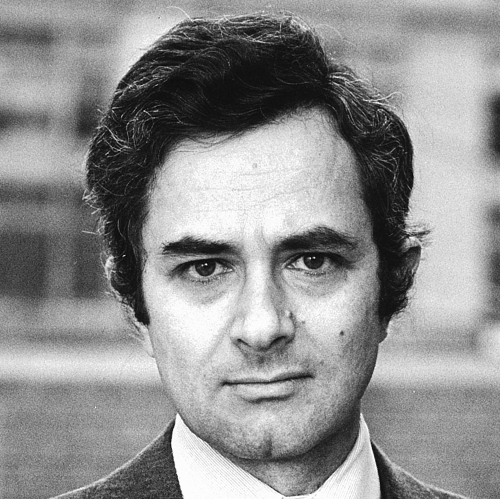
3 months 5 days ago
Every subjective phenomenon is essentially connected with a single point of view, and it seems inevitable that an objective physical theory will abandon that point of view.
▼
Source
source
p. 167.

4 months 1 week ago
Nothing can discourage the appetite for divinity in the heart of man.
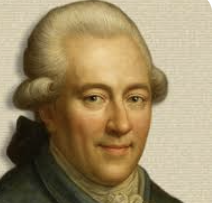
1 month 3 weeks ago
To err is human also in so far as animals seldom or never err, or at least only the cleverest of them do so.
▼
Source
source
G 30
3 months 2 weeks ago
Assembled in a crowd, people lose their powers of reasoning and their capacity for moral choice.
▼
Source
source
Chapter 5 (p. 42)

3 weeks 2 days ago
[H]uman nature as encoded in our DNA isn't immutable. Mankind's barbaric track-record to date is an unreliable guide to the future. If Homo sapiens' nastier alleles and their more sinister combinations can be silenced or edited out of the genome, and new improved code-sequences inserted instead, then the pessimists will be confounded. A major discontinuity in the development of life lies ahead. Providentially, we've learned that the DNA-driven world isn't written in God-given proprietary code it would be hubris to tamper with, but in bug-ridden open source amenable to improvement.
▼
Source
source
Utopian Pharmacology: Mental Health in the Third Millennium MDMA and Beyond, BLTC Research, last updated 2020
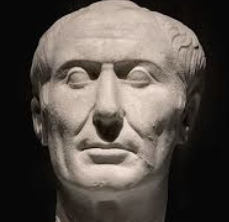
1 month 1 week ago
To do two things at once is to do neither.
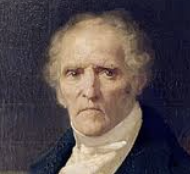
1 week 3 days ago
There is a class of writers who are ever boasting of the progress of civilization and of the human mind in modern times. If we were to credit their pretensions, we should be led to believe that the science of society had reached its highest degree of perfection, because old metaphysical and economic theories have been somewhat refined upon.In answer to their boasts of social progress, it is not sufficient to refer to the deeply-rooted social evils which exist, and which prey upon our boasted civilized social order. We will mention but a single one, the frightful increase of national debts and of taxation.
▼
Source
source
The Theory of Social Organization. Harmonian Man: Selected Writings of Charles Fourier
4 months 2 weeks ago
God creates out of nothing. Wonderful you say. Yes, to be sure, but He does what is still more wonderful: He makes saints out of sinners.

3 months 2 weeks ago
No society can surely be flourishing and happy, of which the greater part of the members are poor and miserable. It is but equity, besides, that they who feed, cloath and lodge the whole body of the people, should have such a share of the produce of their own labour as to be themselves tolerably well fed, clothed, and lodged.
▼
Source
source
Chapter VIII, p. 94.

2 months 1 week ago
To hope is to contradict the future.

2 months ago
Truth is sought not because it is truth but because it is good.
▼
Source
source
p. 213
4 days ago
Nothing in all literature is so depressing as the "Dissertations" of the slave [Epictetus], unless it be the "Meditations" of the Emperor [Marcus Aurelius] ...[after some excerpts from the two books]..... In such passages we feel the proximity of Christianity and its dauntless martyrs; indeed were not the Christian ethic of self-denial, the Christian political ideal of an almost communistic brotherhood of man, and the Christian eschatology of the final conflagration of all the world, fragments of Stoic doctrine floating on the stream of thought? In Epictetus the Greco-Roman soul has lost its paganism, and is ready for a new faith".
2 months ago
It is within science itself, and not in some prior philosophy, that reality is to be identified and described.
▼
Source
source
Theories and Things, Cambridge, MA: Harvard University Press. 1981

3 months 2 weeks ago
It is very important to note that some 2,500 years ago at the least Pythagoras went from Samos to the Ganges to learn geometry...But he would certainly not have undertaken such a strange journey had the reputation of the Brahmins' science not been long established in Europe...
▼
Source
source
Voltaire, Fragments historiques sur l'Inde. Quoted in Gewali, Salil (2013). Great Minds on India. New Delhi: Penguin Random House.
1 month 3 weeks ago
We often have need of a profound philosophy to restore to our feelings their original state of innocence, to find our way out of the rubble of things alien to us, to begin to feel for ourselves and to speak ourselves, and I might almost say to exist ourselves. Even if my philosophy does not extend to discovering anything new, it does nevertheless possess the courage to regard as questionable what has long been thought true.
▼
Source
source
B 49
4 months 1 week ago
Maman used to say that you can always find something to be happy about.


1 month 3 weeks ago
Thinking men and women the world over are beginning to realize that patriotism is too narrow and limited a conception to meet the necessities of our time.
3 months 3 weeks ago
One man will say a thing of himself without comprehending its excellence, in which another will discern a marvelous series of conclusions, which makes us affirm that it is no longer the same expression, and that he is no more indebted for it to the one from whom he has learned it, than a beautiful tree belongs to the one who cast the seed, without thinking of it, or knowing it, into the fruitful soil which caused its growth by its own fertility.

7 months 2 weeks ago
I already am eating from the trash can all the time. The name of this trash can is ideology. The material force of ideology makes me not see what I am effectively eating.
1 month 3 weeks ago
There are two ways in which a science develops; in response to problems which is itself creates, and in response to problems that are forced on it from the outside.
▼
Source
source
Chapter 1, An Absent Family Of Ideas, p. 4.

3 months 2 weeks ago
To discover the various use of things is the work of history.
▼
Source
source
Vol. I, Ch. 1, Section 1, pg. 42.

1 month 2 weeks ago
We are to admit no more causes of natural things than such as are both true and sufficient to explain their appearances.
▼
Source
source
"Rules of Reasoning in Philosophy" : Rule I

4 months 2 days ago
Down in adoration falling,Lo! the sacred Host we hail;Lo! o'er ancient forms departing,Newer rites of grace prevail;Faith for all defects supplying,Where the feeble senses fail.
▼
Source
source
Pange, Lingua, stanza 5 (Tantum Ergo)
2 months 1 week ago
Judge not, that you be not judged. For with what judgment you judge, you will be judged; and with the measure you use, it will be measured back to you. And why do you look at the speck in your brother's eye, but do not consider the plank in your own eye? Or how can you say to your brother, 'Let me remove the speck from your eye'; and look, a plank is in your own eye? Hypocrite! First remove the plank from your own eye, and then you will see clearly to remove the speck from your brother's eye.
▼
Source
source
Matthew 7:1-5 (NKJV) (Also Luke 6:37-42)
2 months 5 days ago
When all these things are lacking there is no culture; there is in the strictest sense of the word, barbarism. And let us not deceive ourselves, this is what is beginning to appear in Europe under the progressive rebellion of the masses. The traveller who arrives in a barbarous country knows that in that territory there are no ruling principles to which it is possible to appeal. Properly speaking, there are no barbarian standards. Barbarism is the absence of standards to which appeal can be made.
▼
Source
source
Chap. VIII: The Masses Intervene In Everything, And Why Their Intervention Is Solely By Violence
1 month 4 weeks ago
The new tinge to modern minds is a vehement and passionate interest in the relation of general principles to irreducible and stubborn facts. All the world over and at all times there have been practical men, absorbed in 'irreducible and stubborn facts'; all the world over and at all times there have been men of philosophic temperament, who have been absorbed in the weaving of general principles. It is this union of passionate interest in the detailed facts with equal devotion to abstract generalisation which forms the novelty of our present society.
▼
Source
source
Ch. 1: "The Origins of Modern Science", pp. 3-4

5 days ago
"By what method or methods can the able men from every rank of life be gathered, as diamond-grains from the general mass of sand: the able men, not the sham-able;-and set to do the work of governing, contriving, administering and guiding for us!" It is the question of questions. All that Democracy ever meant lies there: the attainment of a truer and truer Aristocracy, or Government again by the Best.
2 months 1 week ago
Erect I make a resolution; prone I revoke it.
2 months 1 week ago
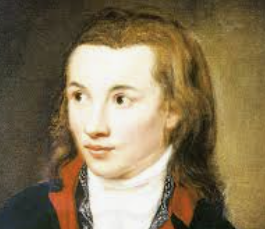
It depends only on the weakness of our organs and of our self-excitement (Selbstberuhrung), that we do not see ourselves in a Fairy-world. All Fabulous Tales (Mahrchen) are merely dreams of that home world, which is everywhere and nowhere. The higher powers in us, which one day as Genies, shall fulfil our will, are, for the present, Muses, which refresh us on our toilsome course with sweet remembrances.

3 months 3 weeks ago
Faith looks to the word and the promise; that is, to the truth. But hope looks to that which the word has promised, to the gift.
▼
Source
source
p. 221
3 months 2 weeks ago
For my part, while I am as convinced a Socialist as the most ardent Marxian, I do not regard Socialism as a gospel of proletarian revenge, nor even, primarily, as a means of securing economic justice. I regard it primarily as an adjustment to machine production demanded by considerations of common sense, and calculated to increase the happiness, not only of proletarians, but of all except a tiny minority of the human race.
▼
Source
source
Ch. 7: The Case for Socialism
CivilSimian.com created by AxiomaticPanic, CivilSimian, Kalokagathia