


2 months ago
If a young girl is being forced into a brothel she will not talk about her rights. In such a situation the word would sound ludicrously inadequate.
▼
Source
source
p. 63

3 months 2 weeks ago
The animals are much more content with mere existence than we are; the plants are wholly so; and man is so according to how dull and insensitive he is. The animal's life consequently contains less suffering but also less pleasure than the human's, the direct reason being that on the one hand it is free from care and anxiety and the torments that attend them, but on the other is without hope and therefore has no share in that anticipation of a happy future which, together with the enchanting products of the imagination which accompany it, is the source of most of our greatest joys and pleasures. The animal lacks both anxiety and hope because its consciousness is restricted to what is clearly evident and thus to the present moment: the animal is the present incarnate.
▼
Source
source
Vol. 2 "On the Suffering of the World" as translated in Essays and Aphorisms (1970), as translated by R. J. Hollingdale

1 week 3 days ago
The political program of nation building in countries like Afghanistan and Iraq is one central example of the productive project of biopower and war. Nothing could be more postmodernist and antiessentialist than this notion of nation building.

5 days ago
For is not a Symbol ever, to him who has eyes for it, some dimmer or clearer revelation of the God-like? B
▼
Source
source
k. III, ch. 3.

1 month 1 week ago
Although the medium is the message, the controls go beyond programming. The restraints are always directed to the "content," which is always another medium. The content of the press is literary statement, as the content of the book is speech, and the content of the movie is the novel. So the effects of radio are quite independent of its programming.
▼
Source
source
(p. 267)

3 months 2 weeks ago
Clever tyrants are never punished.
▼
Source
source
Mérope, act V, scene V, 1743

3 months 2 weeks ago
I do not wish to kill nor to be killed, but I can foresee circumstances in which both these things would be by me unavoidable. We preserve the so-called peace of our community by deeds of petty violence every day. Look at the policeman's billy and handcuffs! Look at the jail! Look at the gallows! Look at the chaplain of the regiment! We are hoping only to live safely on the outskirts of this provisional army. So we defend ourselves and our hen-roosts, and maintain slavery. I know that the mass of my countrymen think that the only righteous use that can be made of Sharp's rifles and revolvers is to fight duels with them, when we are insulted by other nations, or to hunt Indians, or shoot fugitive slaves with them, or the like. I think that for once the Sharp's rifles and the revolvers were employed in a righteous cause. The tools were in the hands of one who could use them.
3 weeks 2 days ago
In future, nerve cell responsiveness to naturally occurring endogenous opioids can be increased via receptor enrichment in the brain too. In principle, we can modulate their lifelong "overexpression", intermittently heightened (or gently diminished) by whatever kinds of personal and environmental contingencies we judge fit. Both functionally and anatomically, our reward pathways can be made "bigger and better". But intelligent emotional self-mastery will involve re-engineering the mind-brain so we derive the most intense rewards from activities we deem most lastingly worthwhile: i.e. prioritising our higher-order desires over legacy first-order appetites. Natural selection has "encephalised" our emotions to benefit our genes. Rational agents can "re-encephalise" our emotions to benefit us.
▼
Source
source
Utopian Neuroscience, BLTC Research, 2019
2 months 6 days ago
O world, thou choosest not the better part! It is not wisdom to be only wise, And on the inward vision close the eyes, But it is wisdom to believe the heart. Columbus found a world, and had no chart, Save one that faith deciphered in the skies; To trust the soul's invincible surmise Was all his science and his only art.
▼
Source
source
O World, Thou Choosest Not

2 months 2 weeks ago
The territorial aristocracy of former ages was either bound by law, or thought itself bound by usage, to come to the relief of its serving-men and to relieve their distresses. But the manufacturing aristocracy of our age first impoverishes and debases the men who serve it and then abandons them to be supported by the charity of the public.
▼
Source
source
Book Two, Chapter XX.
3 months 2 weeks ago
This proof can at most, therefore, demonstrate the existence of an architect of the world, whose efforts are limited by the capabilities of the material with which he works, but not of a creator of the world, to whom all things are subject.
▼
Source
source
A 627, B 655 (Physico-Theological Proof Impossible)

1 month 2 weeks ago
It is not sufficient to observe our mysteries in the seclusion of our lodge-we must act-act! We are drowsing, but we must act. (Pierre raised his notebook and began to read.) For the dissemination of pure truth and to secure the triumph of virtue," he read, "we must cleanse men from prejudice, diffuse principles in harmony with the spirit of the times, undertake the education of the young, unite ourselves in indissoluble bonds with the wisest men, boldly yet prudently overcome superstitions, infidelity, and folly, and form of those devoted to us a body linked together by unity of purpose and possessed of authority and power.
1 month 2 weeks ago
Photography and cinema contributed in large part to the secularization of history, to fixing it in its visible, "objective" form at the expense of the myths that once traversed it. Today cinema can place all its talent, all its technology in the service of reanimating what it itself contributed to liquidating. It only resurrects ghosts, and it itself is lost therein.
▼
Source
source
"History: A Retro Scenario," p. 48

3 months 2 weeks ago
All is riddle, and the key to a riddle is another riddle.
▼
Source
source
Illusions

4 months 2 weeks ago
I have just now come from a party where I was its life and soul; witticisms streamed from my lips, everyone laughed and admired me, but I went away - yes, the dash should be as long as the radius of the earth's orbit ----------- and wanted to shoot myself.
3 months 3 weeks ago
By God's grace, I know Satan very well. If Satan can turn God's Word upside down and pervert the Scriptures, what will he do with my words -- or the words of others?
▼
Source
source
Confession Concerning Christ's Supper, Part 3. Robert E. Smith, tr. Dr. Martin Luthers Werke: Kritische Gesamtsusgabe. (Weimar: Herman Boehlaus Nachfolger, 1909), pp. 499-500.
1 week 3 days ago
All wars today tend to be netwars.
▼
Source
source
55

2 months 2 weeks ago
It is so by nature that the plant will develop with regularity, that the animal will move purposefully, and that human beings will think. Why should I take exception to recognizing also the last as the expression of an original force of nature, as I do the first and the second?
▼
Source
source
P. Preuss, trans. (1987), p. 11

1 month 3 weeks ago
Society creates the victims that it afterwards vainly attempts to get rid of.
2 months 2 weeks ago
By and large the literature of a democracy will never exhibit the order, regularity, skill, and art characteristic of aristocratic literature; formal qualities will be neglected or actually despised. The style will often be strange, incorrect, overburdened, and loose, and almost always strong and bold. Writers will be more anxious to work quickly than to perfect details. Short works will be commoner than long books, wit than erudition, imagination than depth. There will be a rude and untutored vigor of thought with great variety and singular fecundity. Authors will strive to astonish more than to please, and to stir passions rather than to charm taste.
▼
Source
source
Book One, Chapter XIII.
2 months 2 weeks ago
In the same way as philosophy loses sight of its true object and appropriate matter, when either it passes into and merges in theology, or meddles with external politics, so also does it mar its proper form when it attempts to mimic the rigorous method of mathematics.
▼
Source
source
Philosophy of Life, Lecture 1
3 months 1 week ago
No one deserves his greater natural capacity nor merits a more favorable starting place in society.
▼
Source
source
Chapter II, Section 17, pg. 102

3 months 1 week ago
If there is a kind of "proof" of the sincerity of the parrhesiastes, it is his courage... Saying something dangerous-different from what the majority believes-is a strong indication that he is a parrhesiastes.

3 months 1 week ago
The past is the luxury of proprietors.
3 months 2 weeks ago
I am here to plead his cause with you. I plead not for his life, but for his character - his immortal life; and so it becomes your cause wholly, and is not his in the least. Some eighteen hundred years ago Christ was crucified; this morning, perchance, Captain Brown was hung. These are the two ends of a chain which is not without its links. He is not Old Brown any longer; he is an angel of light.
3 months 2 weeks ago
Rhodora! if the sages ask thee why This charm is wasted on the earth and sky, Tell them, dear, that, if eyes were made for seeing, Then beauty is its own excuse for Being.
▼
Source
source
The Rhodora
2 months 6 days ago
As also the great number of Corporations; which are as it were many lesser Common-wealths in the bowels of a greater, like wormes in the entrayles of a natural man.
▼
Source
source
The Second Part, Chapter 29, p. 174

2 months 6 days ago
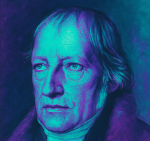
We have reached the point where the Objective Logic turns into the Subjective Logic, or, where subjectivity emerges as the true form of objectivity. We may sum up Hegel's analysis in the following schema: The true form of reality requires freedom. Freedom requires self-consciousness and knowledge of the truth. Self-consciousness and knowledge of the truth are the essentials of the subject. The form of reality must be conceived as subject.
▼
Source
source
P. 154-155
3 months 2 weeks ago
The Few assume to be the deputies, but they are often only the despoilers of the Many.
▼
Source
source
Pt. IV, sec. 3, ch. 3
1 month 1 week ago
My method is vertical rather than horizontal so the scenery does not change but the texture does.
▼
Source
source
Letter to The Listener October 1971, Letters of Marshall McLuhan (1987), p. 318

3 months 2 weeks ago
I should like to believe my people's religion, which was just what I could wish, but alas, it is impossible. I have really no religion, for my God, being a spirit shown merely by reason to exist, his properties utterly unknown, is no help to my life. I have not the parson's comfortable doctrine that every good action has its reward, and every sin is forgiven. My whole religion is this: do every duty, and expect no reward for it, either here or hereafter.
▼
Source
source
Greek Exercises (1888), written two days after his sixteenth birthday.
6 days ago
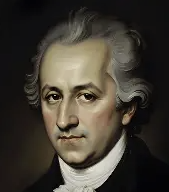
We can't form our children on our own concepts; we must take them and love them as God gives them to us.
▼
Source
source
Hermann und Dorothea
1 week 2 days ago
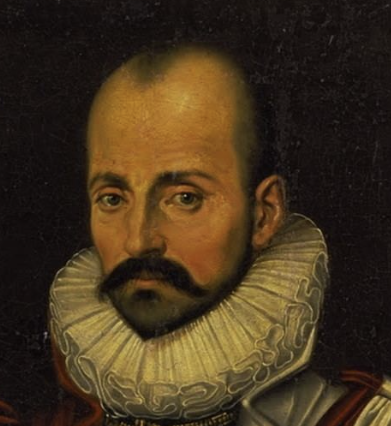
Do not imagine that there is any bird more easily caught by decoy, nor any fish sooner fixed on the hook by wormy bait, than are all these poor fools neatly tricked into servitude by the slightest feather passed, so to speak, before their mouths. Truly it is a marvelous thing that they let themselves be caught so quickly at the slightest tickling of their fancy. Plays, farces, spectacles, gladiators, strange beasts, medals, pictures, and other such opiates, these were for ancient peoples the bait toward slavery, the price of their liberty, the instruments of tyranny. By these practices and enticements the ancient dictators so successfully lulled their subjects under the yoke, that the stupefied peoples, fascinated by the pastimes and vain pleasures flashed before their eyes, learned subservience as naïvely, but not so creditably, as little children learn to read by looking at bright picture books.
▼
Source
source
Part 2
2 months ago
The prestige which constitutes three-fourths of might is first of all made up of that superb indifference which the powerful have for the weak, an indifference so contagious that it is communicated even to those who are its object.
▼
Source
source
in The Simone Weil Reader, p. 168
4 months 2 weeks ago
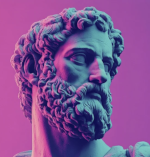
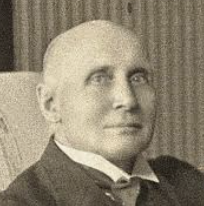
I have gained this by philosophy ... I do without being ordered what some are constrained to do by their fear of the law.
1 month 4 weeks ago
For the kingdom of heaven is with us today.
3 months 2 weeks ago
I heartily accept the motto, "That government is best which governs least"; and I should like to see it acted up to more rapidly and systematically. Carried out, it finally amounts to this, which also I believe - "That government is best which governs not at all"; and when men are prepared for it, that will be the kind of government which they will have.
5 days ago
To the wild deep-hearted man all was yet new, not veiled under names or formulas; it stood naked, flashing in on him there, beautiful, awful, unspeakable. Nature was to this man, what to the Thinker and Prophet it forever is, preternatural. This green flowery rock-built earth, the trees, the mountains, rivers, many-sounding seas;-that great deep sea of azure that swims overhead; the winds sweeping through it; the black cloud fashioning itself together, now pouring out fire, now hail and rain.
3 months 2 weeks ago
In all affairs - love, religion, politics, or business - it's a healthy idea, now and then, to hang a question mark on the things you have long taken for granted.
▼
Source
source
As quoted in The Reader's Digest, Vol. 37 (1940), p. 90; no specific source given.
2 months 1 week ago
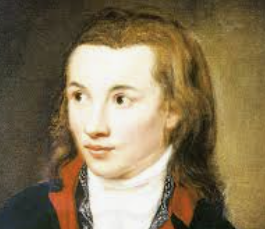
It depends only on the weakness of our organs and of our self-excitement (Selbstberuhrung), that we do not see ourselves in a Fairy-world. All Fabulous Tales (Mahrchen) are merely dreams of that home world, which is everywhere and nowhere. The higher powers in us, which one day as Genies, shall fulfil our will, are, for the present, Muses, which refresh us on our toilsome course with sweet remembrances.
6 days ago
Young Schopenhauer, a zealous and thorough-going Kantian, tried to explain that light would cease to exist along with the seeing eye. "What!" he said, according to Schopenhauer's own report, "looking at him with his Jove-like eyes,"-"You should rather say that you would not exist if the light could not see you?"
▼
Source
source
As quoted by Friedrich Jodl, "Goethe and Kant," The Monist (1901) f. Edward C. Hegeler, ed. Paul Carus, Vol. 11, p. 264. As translated from Professor Jodl's MS. by W. H. Carruth, of the University of Kansas.

3 months 2 weeks ago
The sentiments of men often differ with regard to beauty and deformity of all kinds, even while their general discourse is the same ... In all matters of opinion and science, the case is opposite: The difference among men is there oftener found to lie in generals than in particulars; and to be less in reality than in appearance.
6 days ago
The social conditions that nourished and made use of this ideology can still revive; perhaps - who knows? - the virus is dormant, waiting for the next opportunity. Dreams about the perfect society belong to the enduring stock of civilization.
▼
Source
source
New Preface, p. vi
2 months 1 week ago
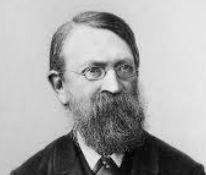
I know of nothing more terrible than the poor creatures who have learned too much. Instead of the sound powerful judgement which would probably have grown up if they had learned nothing, their thoughts creep timidly and hypnotically after words, principles and formulae, constantly by the same paths. What they have acquired is a spider's web of thoughts too weak to furnish sure supports, but complicated enough to provide confusion.
▼
Source
source
On the Relative Educational Value of the Classics and the Mathematico-Physical Sciences in Colleges and High Schools, an address in (16 April 1886)
3 months 2 weeks ago
By the rude bridge that arched the flood, Their flag to April's breeze unfurled, Here once the embattled farmers stood, And fired the shot heard round the world.
▼
Source
source
Hymn sung at the Completion of the Battle Monument
3 months 1 day ago
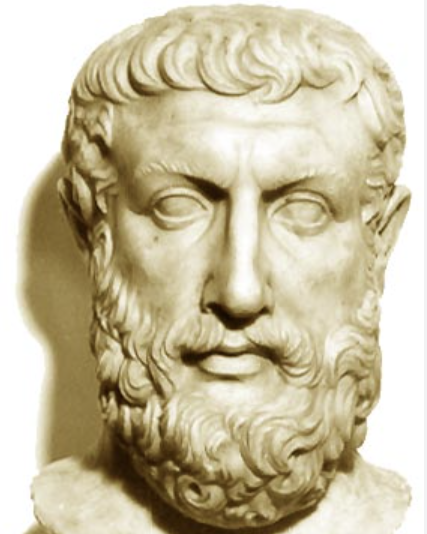
There is one story left, one road: that it is. And on this road there are very many signs that, being, is uncreated and imperishable, whole, unique, unwavering, and complete.
▼
Source
source
Frag. B 8.1-4, quoted by Simplicius, Commentary on the Physics, 144
3 months 2 weeks ago
Poetry is the mysticism of mankind.
2 months ago
If anyone possesses this faculty, then his attention is in reality directed beyond the world, whether he is aware of it or not. The link which attaches the human being to the reality outside the world is, like the reality itself, beyond the reach of human faculties. The respect that it makes us feel as soon as it is recognized cannot be shown to us by evidence or testimony.
3 months 2 weeks ago
The church is a sort of hospital for men's souls, and as full of quackery as the hospital for their bodies. Those who are taken into it live like pensioners in their Retreat or Sailors' Snug Harbor, where you may see a row of religious cripples sitting outside in sunny weather.
▼
Source
source
Pearls of Thought (1881) p. 43
3 months 3 weeks ago
No proceeding is better than that which you have concealed from the enemy until the time you have executed it. To know how to recognize an opportunity in war, and take it, benefits you more than anything else. Nature creates few men brave, industry and training makes many. Discipline in war counts more than fury.
▼
Source
source
Book 7
CivilSimian.com created by AxiomaticPanic, CivilSimian, Kalokagathia