


3 months 3 days ago
Men have fashioned an image of Chance as an excuse for their own stupidity. For Chance rarely conflicts with intelligence, and most things in life can be set in order by an intelligent sharpsightedness.
▼
Source
source
Freeman (1948), p. 155
1 month 1 week ago
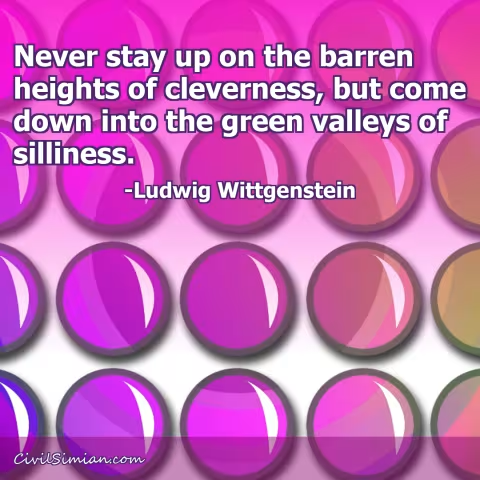
There has been progress in design, but not progress in accomplishment.
▼
Source
source
Chapter 7 "Constructive Evolution" (p. 186)

2 months 2 weeks ago
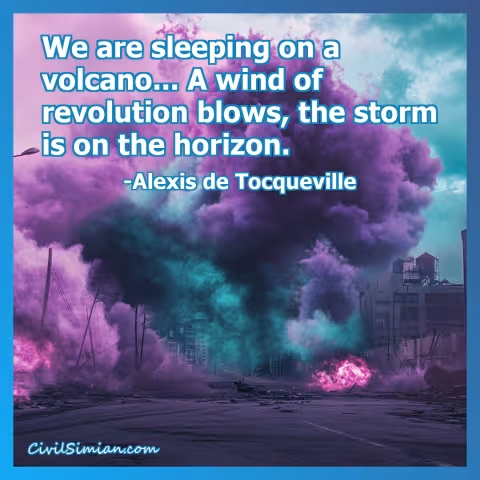
Genius is present in every age, but the men carrying it within them remain benumbed unless extraordinary events occur to heat up and melt the mass so that it flows forth.

3 months 2 weeks ago
It would be too ridiculous to go about seriously to prove that wealth does not consist in money, or in gold and silver; but in what money purchases, and is valuable only for purchasing. Money no doubt, makes always a part of the national capital; but it has already been shown that it generally makes but a small part, and always the most unprofitable part of it.
▼
Source
source
Chapter I, p. 470.

4 months 2 weeks ago
But it is better perhaps to examine next the universal good, and to enquire in what sense the expression is used. Though such an investigation is likely to be difficult, because the persons who have introduced these ideas are our friends. Yet it will perhaps appear the best, and indeed the right course, at least for the preservation of truth, to do away with private feelings, especially as we are philosophers; for since both are dear to us, we are bound to prefer the truth.

3 months 2 weeks ago
The question of "unreality," which confronts us at this point, is a very important one. Misled by grammar, the great majority of those logicians who have dealt with this question have dealt with it on mistaken lines. They have regarded grammatical form as a surer guide in analysis than, in fact, it is. And they have not known what differences in grammatical form are important.
▼
Source
source
Ch. 16: Descriptions
2 months 1 week ago
The Doctrine of a Perfect God; in whose nature nothing arbitrary or changeable can have a place; in whose Highest Being we all live, and in this Life may, and ought at all times to be, blessed;-this Doctrine, which ignorant men think they have sufficiently demolished when they have proclaimed it to be Mysticism, is by no means Mysticism, for it has an immediate reference to human action, and in deed to the inmost spirit which ought to inspire and guide all our actions. It can only become Mysticism when it is associated with the pretext that the insight into this truth proceeds from a certain inward and mysterious light, which is not accessible to all men, but is only bestowed upon a few favourites chosen from among the rest:-in which pretext the Mysticism consists, for it betrays a presumptuous contemplation of personal merit, and a pride in mere sensuous Individuality.
▼
Source
source
p, 122-123

1 month 1 week ago
All state obligations are against the conscience of a Christian: the oath of allegiance, taxes, law proceedings and military service.
▼
Source
source
Chapter VII, Significance of Compulsory Service

4 months 2 weeks ago
My dear reader, read aloud, if possible! If you do so, allow me to thank you for it: if you not only do it yourself, if you also influence others to do it, allow me to thank each one of them, and you again and again!
3 weeks 5 days ago
I kept looking at the flowers in a vase near me: lavender sweet peas, fragile winged and yet so still, so perfectly poised, apart, and complete. They are self-sufficient, a world in themselves, a whole - perfect. Is that then, perfection? Is what those sweet peas had what I have, occasionally in moments like that? But flowers always have it - poise, completion, fulfillment, perfection; I only occasionally, like that moment. For that moment I and the sweet peas had an understanding.

3 months 1 week ago
It is true: Man is the microcosm: I am my world.
▼
Source
source
Journal entry (12 October 1916), p. 84e

4 months 1 week ago
One does not decide the truth of a thought according to whether it is right-wing or left-wing.

1 month 1 week ago
The "tragic flaw" is not a detail of characterization, a mere "fly in the ointment", but a structural feature of ordinary consciousness.
▼
Source
source
(p.45)
3 months 3 days ago
Neither art nor wisdom may be attained without learning.
2 months 6 days ago
There is nothing impossible in the existence of the supernatural: its existence seems to me decidedly probable.
▼
Source
source
The Genteel Tradition at Bay
1 month 3 weeks ago
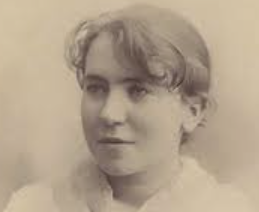
The history of the American kings of capital and authority is the history of repeated crimes, injustice, oppression, outrage, and abuse, all aiming at the suppression of individual liberties and the exploitation of the people. A vast country, rich enough to supply all her children with all possible comforts, and insure well-being to all, is in the hands of a few, while the nameless millions are at the mercy of ruthless wealth gatherers, unscrupulous lawmakers, and corrupt politicians.The reign of these kings is holding mankind in slavery, perpetuating poverty and disease, maintaining crime and corruption; it is fettering the spirit of liberty, throttling the voice of justice, and degrading and oppressing humanity. It is engaged in continual war and slaughter, devastating the country and destroying the best and finest qualities of man; it nurtures superstition and ignorance, sows prejudice and strife, and turns the human family into a camp of Ishmaelites.
3 months 2 weeks ago
The qualities most useful to ourselves are, first of all, superior reason and understanding, by which we are capable of discerning the remote consequences of all our actions, and of foreseeing the advantage or detriment which is likely to result from them: and secondly, self-command, by which we are enabled to abstain from present pleasure or to endure present pain, in order to obtain a greater pleasure or to avoid a greater pain in some future time. In the union of those two qualities consists the virtue of prudence, of all the virtues that which is most useful to the individual.
▼
Source
source
Chap. II.
4 months 1 week ago
Like great works, deep feelings always mean more than they are conscious of saying.
2 months 2 weeks ago
Shakespeare's fault is not the greatest into which a poet may fall. It merely indicates a deficiency of taste.
3 months 4 weeks ago
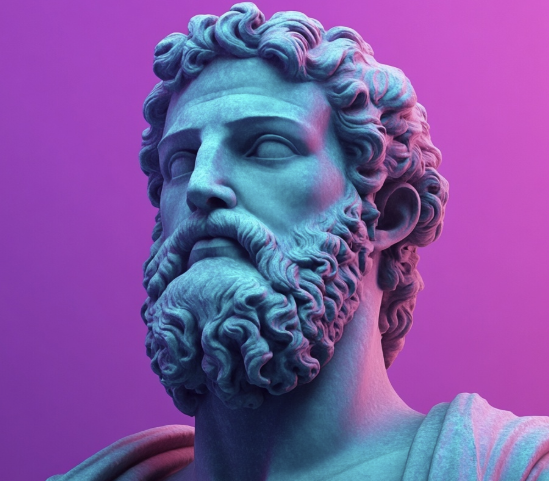
The propositions which are true and evident must of necessity be employed even by those who contradict them.
▼
Source
source
Book II, ch. 20, 1
1 week 2 days ago
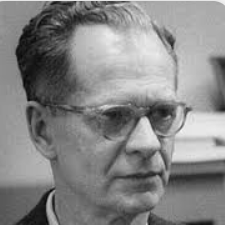
We shouldn't teach great books; we should teach a love of reading. Knowing the contents of a few works of literature is a trivial achievement. Being inclined to go on reading is a great achievement.
▼
Source
source
As quoted in B. F. Skinner : The Man and His Ideas (1968) by Richard Isadore Evans, p. 73

3 months 2 weeks ago
Of all the things that are beyond my power, I value nothing more highly than to be allowed the honor of entering into bonds of friendship with people who sincerely love truth. For, of things beyond our power, I believe there is nothing in the world which we can love with tranquility except such men.
▼
Source
source
Spinoza, Correspondence, 146, Letter xix

3 months 2 weeks ago
The history of all hitherto existing society is the history of class struggles.
▼
Source
source
Section 1, paragraph 1, lines 1-2.
2 months 6 days ago
Beauty as we feel it is something indescribable: what it is or what it means can never be said.
▼
Source
source
Pt. IV, Expression; § 67: "Conclusion.", p. 267

4 months 2 weeks ago
The Philology of Christianity. How little Christianity cultivates the sense of honesty can be inferred from the character of the writings of its learned men. They set out their conjectures as audaciously as if they were dogmas, and are but seldom at a disadvantage in regard to the interpretation of Scripture. Their continual cry is: am right, for it is written and then follows an explanation so shameless and capricious that a philologist, when he hears it, must stand stock-still between anger and laughter, asking himself again and again: Is it possible? Is it honest? Is it even decent?It is only those who never or always attend church that underestimate the dishonesty with which this subject is still dealt in Protestant pulpits; in what a clumsy fashion the preacher takes advantage of his security from interruption; how the Bible is pinched and squeezed; and how the people are made acquainted with every form of the art of false reading.
1 month 6 days ago
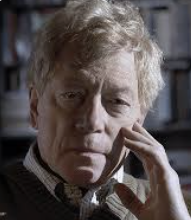
National loyalty is founded in the love of place, of the customs and traditions that have been inscribed in the landscape and of the desire to protect these good things through a common law and a common loyalty.

4 months 1 week ago
The Law of conservation of energy tells us we can't get something for nothing, but we refuse to believe it.

4 days ago
"No man in this fashionable London of yours," friend Sauerteig would say, "speaks a plain word to me. Every man feels bound to be something more than plain; to be pungent withal, witty, ornamental. His poor fraction of sense has to be perked into some epigrammatic shape, that it may prick into me;-perhaps (this is the commonest) to be topsyturvied, left standing on its head, that I may remember it the better! Such grinning inanity is very sad to the soul of man. Human faces should not grin on one like masks; they should look on one like faces! I love honest laughter, as I do sunlight; but not dishonest: most kinds of dancing too; but the St.-Vitus kind not at all! A fashionable wit, ach Himmel, if you ask, Which, he or a Death's- head, will be the cheerier company for me? pray send not him!"
2 months ago
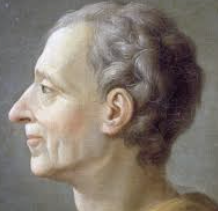
You have to study a great deal to know a little.
▼
Source
source
I
1 month 2 weeks ago
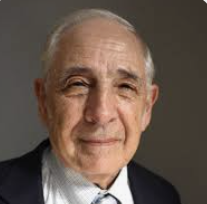
In the performance of an illocutionary act in the literal utterance of a sentence, the speaker intends to produce a certain effect by means of getting the hearer to recognize his intention to produce that effect; and furthermore, if he is using the words literally, he intends this recognition to be achieved in virtue of the fact that the rules for using the expressions he utters associate the expression with the production of that effect.
▼
Source
source
P. 45.

3 months 2 weeks ago
Here am I who have written on all sorts of subjects calculated to excite hostility, moral, political, and religious, and yet I have no enemies - except, indeed, all the Whigs, all the Tories, and all the Christians.
▼
Source
source
Statement to a friend shortly before his death, as recounted in Men of Letters by Lord Henry Brougham

3 months 1 week ago
Rational and kindly behavior tends to produce good results and these results remain good even when the behavior which produced them was itself produced by a pill.
▼
Source
source
"Brave New World Revisited" (1956), in Moksha: Writings on Psychedelics and the Visionary Experience (1977), p. 99
1 month 3 weeks ago
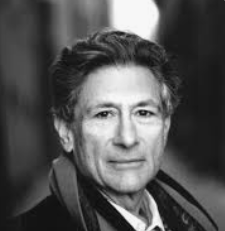
Ideas, cultures, and histories cannot seriously be understood or studied without their force, or more precisely their configurations of power, also being studied.
2 months 6 days ago
In the Gospels, for instance, we sometimes find the kingdom of heaven illustrated by principles drawn from observation of this world rather than from an ideal conception of justice; ... They remind us that the God we are seeking is present and active, that he is the living God; they are doubtless necessary if we are to keep religion from passing into a mere idealism and God into the vanishing point of our thought and endeavour.
▼
Source
source
Interpretations of Poetry and Religion (1900), p. 54
1 month 4 weeks ago
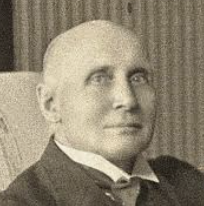
It is in literature that the concrete outlook of humanity receives its expression.
▼
Source
source
Ch. 5: "The Romantic Reaction", p. 106

3 months 2 weeks ago
The question here is not, "How conscience ought to be guided? For Conscience is its own General and Leader; it is therefore enough that each man have one. What we want to know is, how conscience can be her own Ariadne, and disentangle herself from the mazes even of the most raveled and complicated casuistical theology. Here is an ethical proposition that stands in need of no proof: No Action May At Any Time Be Hazarded On The Uncertainty That Perchance It May Not Be Wrong (Quod dubitas, ne feceris! Pliny - which you doubt, then neither do) Hence the Consciousness, that Any Action I am about to perform is Right, is in itself a most immediate and imperative duty. What actions are right, - what wrong - is a matter for the understanding, not for conscience.
▼
Source
source
p. 251 Book IV, Part 2, Section 4
3 months 3 weeks ago
If we do not secure the foundation, we cannot secure the edifice.
3 months 2 weeks ago
It is obvious that "obscenity" is not a term capable of exact legal definition; in the practice of the Courts, it means "anything that shocks the magistrate."
▼
Source
source
Ch. 10: Recrudescence of Puritanism
3 months 2 weeks ago
But though all the general rules of art are founded only on experience and on the observation of the common sentiments of human nature, we must not imagine, that, on every occasion, the feelings of men will be conformable to these rules.
4 months 2 weeks ago
To the contemporary, Christ can only say: I will offer myself as a sacrifice for the sins of the world and for yours also. Is this easier to believe now than when he has done it, has offered himself? Or is the comfort greater because of his saying that he will do it than it is because of his having done it? There is no greater love than this, that someone lays down his life for another, but when is it easier to believe, and when is the comfort greater: when the loving one says he will do it, or when he has done it?

3 months 3 weeks ago
Nothing is terrible except fear itself.
▼
Source
source
De Augmentis Scientiarum, Book II, "Fortitudo"
1 month 3 weeks ago
A schoolteacher or professor cannot educate individuals, he educates only species.
▼
Source
source
J 10

2 months 1 week ago
To tell the truth, I couldn't care less about the relativity of knowledge, simply because the world does not deserve to be known.
1 month 4 weeks ago
Familiar things happen, and mankind does not bother about them. It requires a very unusual mind to undertake the analysis of the obvious.
▼
Source
source
Ch. 1: "The Origins of Modern Science", p. 6

2 months 2 weeks ago
Who knows whether the best of men be known, or whether there be not more remarkable persons forgot, than any that stand remembered in the known account of time? Without the favour of the everlasting register, the first man had been as unknown as the last, and Methuselah's long life had been his only chronicle.Oblivion is not to be hired. The greater part must be content to be as though they had not been, to be found in the register of God, not in the record of man. Twenty seven names make up the first story before the flood, and the recorded names ever since contain not one living century. The number of the dead long exceedeth all that shall live. The night of time far surpasseth the day, and who knows when was the Æquinox? Every hour adds unto that current arithmetick, which scarce stands one moment.
▼
Source
source
Chapter V
4 months 2 weeks ago
.... In a word, acts of any kind produce habits or characters of the same kind. Hence we ought to make sure that our acts are of a certain kind; for the resulting character varies as they vary. It makes no small difference, therefore, whether a man be trained in his youth up in this way or that, but a great difference, or rather all the difference.
3 months 2 weeks ago
For wherever violence is used, and injury done, though by hands appointed to administer Justice, it is still violence and injury, however colour'd with the Name, Pretences, or Forms of Law, the end whereof being to protect and redress the innocent, by an unbiassed application of it, to all who are under it; wherever that is not bona fide done, War is made upon the Sufferers, who having no appeal on Earth to right them, they are left to the only remedy in such Cases, an appeal to Heaven.
▼
Source
source
Two Treatises of Government. The Second Treatise. Chapter 3: The State of War, §20 p. 281 books.google
CivilSimian.com created by AxiomaticPanic, CivilSimian, Kalokagathia