

1 month 1 week ago
There are people in the world who desperately want not to have to believe in Darwinism.
▼
Source
source
Chapter 9 "Puncturing Punctuationism" (p. 250)

3 months 2 weeks ago
Three passions, simple but overwhelmingly strong, have governed my life: the longing for love, the search for knowledge, and unbearable pity for the suffering of mankind. These passions, like great winds, have blown me hither and thither, in a wayward course, over a deep ocean of anguish, reaching to the very verge of despair.
3 months 4 weeks ago
Christ is not valued at all unless He be valued above all.
▼
Source
source
p. 395

2 months 1 week ago
To try curing someone of a "vice," of what is the deepest thing he has, is to attack his very being, and this is indeed how he himself understands it, since he will never forgive you for wanting him to destroy himself in your way and not his.
1 month 1 week ago
Too much straightforwardness is foolish against a shameless person.
▼
Source
source
Maxim 123
2 months 2 weeks ago
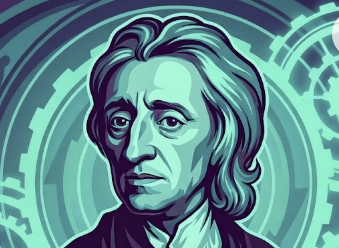
I entirely agree with you, as to the ill tendency of the affected doubts of some philosophers, and fantastical conceit of others. I am even so far gone of late in this way of think, that I have quitted several of the sublime notions I had got in their schools for vulgar opinions. And I give it you on my word, since this revolt from metaphysical notions to the plain dictates of nature and common sense, I find my understanding strangely enlightened, so that I can now easily comprehend a great many thing which before were all mystery and riddle.
▼
Source
source
Said by Philonous (Berkeley) to Hylas in the opening of dialog 1 with reference to the recent surge philosophic endeavors (Locke, Newton, et al) that seemed to lead to skepticism about the existence of the world.
3 months 2 weeks ago
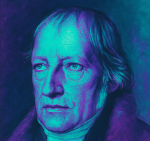
The Indians, whom we call barbarous, observe much more decency and civility in their discourses and conversation, giving one another a fair silent hearing till they have quite done; and then answering them calmly, and without noise or passion. And if it be not so in this civiliz'd part of the world, we must impute it to a neglect in education, which has not yet reform'd this antient piece of barbarity amongst us.
▼
Source
source
Sec. 145
3 months 2 weeks ago
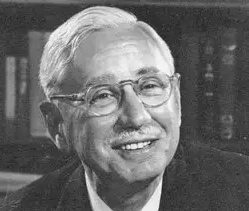
The beginning of religion, more precisely its content, is the concept of religion itself, that God is the absolute truth, the truth of all things, and subjectively that religion alone is the absolutely true knowledge.
2 months 1 week ago
To claim you are more detached, more alien to everything than anyone, and to be merely a fanatic of indifference!
3 days ago
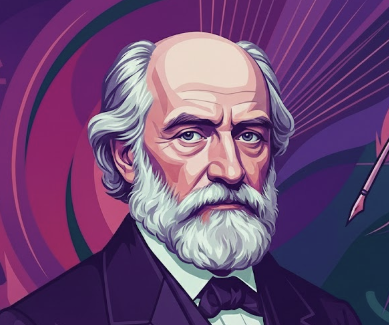
Nothing in all literature is so depressing as the "Dissertations" of the slave [Epictetus], unless it be the "Meditations" of the Emperor [Marcus Aurelius] ...[after some excerpts from the two books]..... In such passages we feel the proximity of Christianity and its dauntless martyrs; indeed were not the Christian ethic of self-denial, the Christian political ideal of an almost communistic brotherhood of man, and the Christian eschatology of the final conflagration of all the world, fragments of Stoic doctrine floating on the stream of thought? In Epictetus the Greco-Roman soul has lost its paganism, and is ready for a new faith".

2 months 1 week ago
A difficulty which confronts the synechistic philosophy is this. In considering personality, that philosophy is forced to accept the doctrine of a personal God; but in considering communication, it cannot but admit that if there is a personal God, we must have a direct perception of that person and indeed be in personal communication with him. Now, if that be the case, the question arises how it is possible that the existence of this being should ever have been doubted by anybody. The only answer that I can at present make is that facts that stand before our face and eyes and stare us in the face are far from being, in all cases, the ones most easily discerned. That has been remarked since time immemorial.

2 months 6 days ago
I am Alpha and Omega, the beginning and the end, the first and the last.
▼
Source
source
Revelation 22:13
3 months 2 weeks ago
We, on the contrary, now send to the Brahmans English clergymen and evangelical linen-weavers, in order out of sympathy to put them right, and to point out to them that they are created out of nothing, and that they ought to be grateful and pleased about it. But it is Just the same as if we fired a bullet at a cliff. " In India, our religions wIll never at any time take root; the ancient wisdom of the human race will not be supplanted by the events in Galilee. On the contrary, Indian Wisdom flows back to Europe, and will produce a fundamental change in our knowledge and thought.
▼
Source
source
Schopenhauer, Arthur The world as will and representation. Translated from the German by E. F. J. Payne. New York, Dover Publications [c1969 - Volume I, & 63 p. 356-357. quoted in Londhe, S. (2008).

3 months 3 weeks ago
No wind serves him who addresses his voyage to no certain port.
▼
Source
source
Book II, Ch. 1
3 months 2 weeks ago
Ordinary language is totally unsuited for expressing what physics really asserts, since the words of everyday life are not sufficiently abstract. Only mathematics and mathematical logic can say as little as the physicist means to say.
▼
Source
source
The Scientific Outlook, 1931

3 months 1 week ago
I am well aware of how anarchic much of what I say may sound. Expressing myself thus abstractly and briefly, I may seem to despair of the very notion of truth. But I beseech you to reserve your judgment until we see it applied to the details which lie before us. I do indeed disbelieve that we or any other mortal men can attain on a given day to absolutely incorrigible and unimprovable truth about such matters of fact as those with which religions deal. But I reject this dogmatic ideal not out of a perverse delight in intellectual instability. I am no lover of disorder and doubt as such. Rather do I fear to lose truth by this pretension to possess it already wholly.
▼
Source
source
Lectures XIV and XV, "The Value of Saintliness"
2 months 2 weeks ago
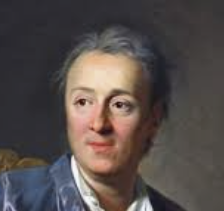
The general interest of the masses might take the place of the insight of genius if it were allowed freedom of action.

4 days ago
They indicate the saddest spiritual paralysis, and mere death-life of the souls of men: more godless theory, I think, was never promulgated in this Earth. A false man found a religion? Why, a false man cannot build a brick house!
3 months 2 weeks ago
Mark what 'tis his mind aims at in the question, and not what words he expresses it in: and when you have informed and satisfied him in that, you shall see how his thoughts will enlarge themselves, and how by fit answers he may be led on farther than perhaps you could have imagine. For knowledge is grateful to the understanding, as light to the eyes.
▼
Source
source
Sec. 118
3 months 1 week ago
I myself believe that the evidence for God lies primarily in inner personal experiences.
▼
Source
source
Lecture III, Some Metaphysical Problems Pragmatically Considered
4 months 3 days ago
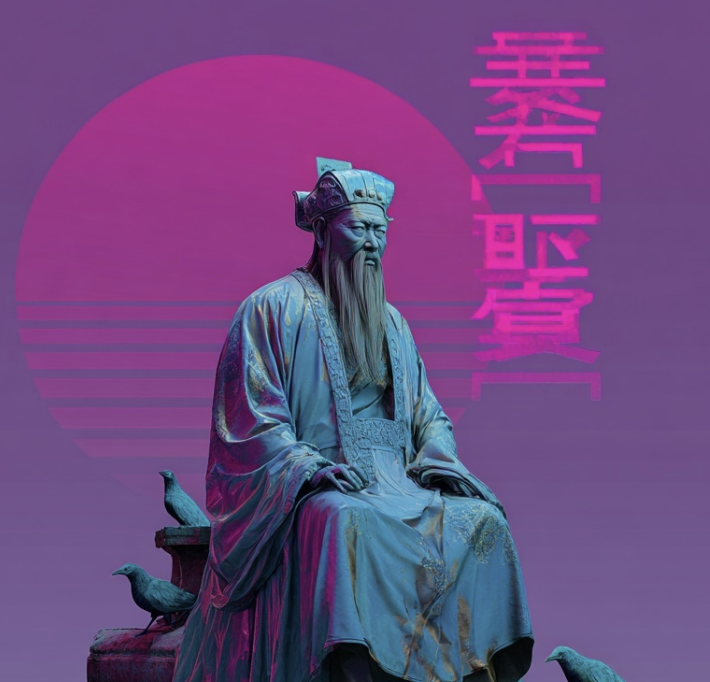
To no one but the Son of Heaven does it belong to order ceremonies, to fix the measures, and to determine the written characters.
4 months 2 weeks ago
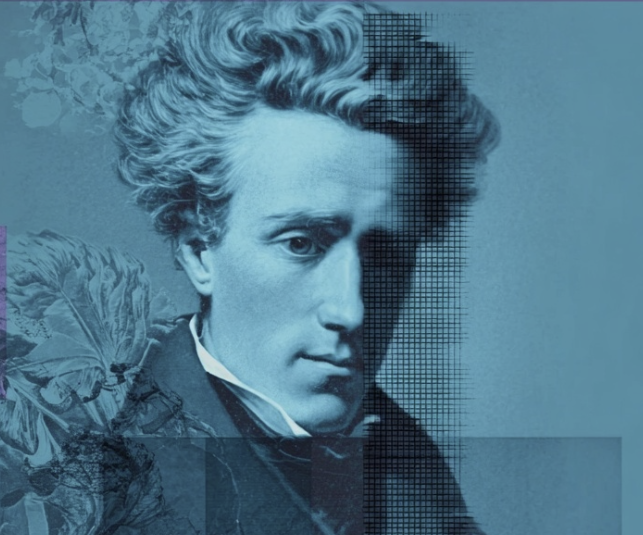
How close men, despite all their knowledge, usually live to madness? What is truth but to live for an idea? When all is said and done, everything is based on a postulate; but not until it no longer stands on the outside, not until one lives in it, does it cease to be a postulate.
2 months 6 days ago
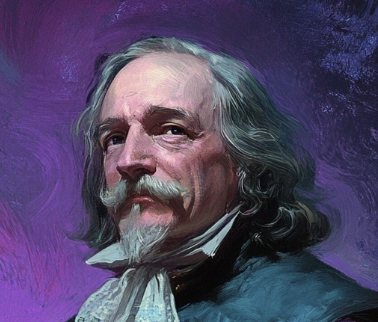
For Warre, consisteth not in Battell onely, or the act of fighting; but in a tract of time, wherein the Will to contend by Battell is sufficiently known: and therefore the notion of Time, is to be considered in the nature of Warre; as it is in the nature of Weather.
▼
Source
source
The First Part, Chapter 13, p. 62
3 weeks 1 day ago
In future, nerve cell responsiveness to naturally occurring endogenous opioids can be increased via receptor enrichment in the brain too. In principle, we can modulate their lifelong "overexpression", intermittently heightened (or gently diminished) by whatever kinds of personal and environmental contingencies we judge fit. Both functionally and anatomically, our reward pathways can be made "bigger and better". But intelligent emotional self-mastery will involve re-engineering the mind-brain so we derive the most intense rewards from activities we deem most lastingly worthwhile: i.e. prioritising our higher-order desires over legacy first-order appetites. Natural selection has "encephalised" our emotions to benefit our genes. Rational agents can "re-encephalise" our emotions to benefit us.
▼
Source
source
Utopian Neuroscience, BLTC Research, 2019
3 months 2 weeks ago
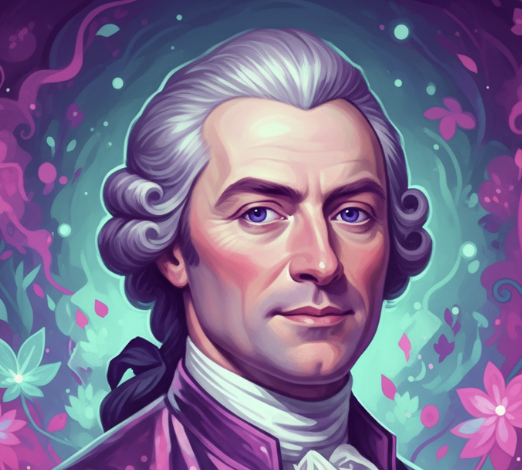
The superfluous, a very necessary thing.
▼
Source
source
Variant translation: The superfluous is very necessary, Le Mondain, 1736
4 weeks 1 day ago
It is quite true that, to the best of my judgment, the argumentation which applies to brutes holds equally good of men; and, therefore, that all states of consciousness in us, as in them, are immediately caused by molecular changes of the brain-substance. It seems to me that in men, as in brutes, there is no proof that any state of consciousness is the cause of change in the motion of the matter of the organism. If these positions are well based, it follows that our mental conditions are simply the symbols in consciousness of the changes which takes place automatically in the organism; and that, to take an extreme illustration, the feeling we call volition is not the cause of a voluntary act, but the symbol of that state of the brain which is the immediate cause of that act.

3 months 1 week ago
We do not count a man's years until he has nothing else to count.
▼
Source
source
Old Age
4 months 2 weeks ago
My doubt goes like this: How could the Loving One have the heart to let human beings become so guilty that they got his murder on their consciences?
2 months 4 days ago
Machiavelli is the complete contrary of a machiavellian, since he describes the tricks of power and "gives the whole show away." The seducer and the politician, who live in the dialectic and have a feeling and instinct for it, try their best to keep it hidden.
▼
Source
source
p. 59
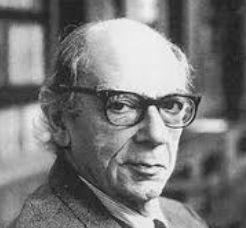
2 months 5 days ago
Those, no doubt, are in some way fortunate who have brought themselves, or have been brought by others, to obey some ultimate principle before the bar of which all problems can be brought. Single-minded monists, ruthless fanatics, men possessed by an all-embracing coherent vision do not know the doubts and agonies of those who cannot wholly blind themselves to reality.
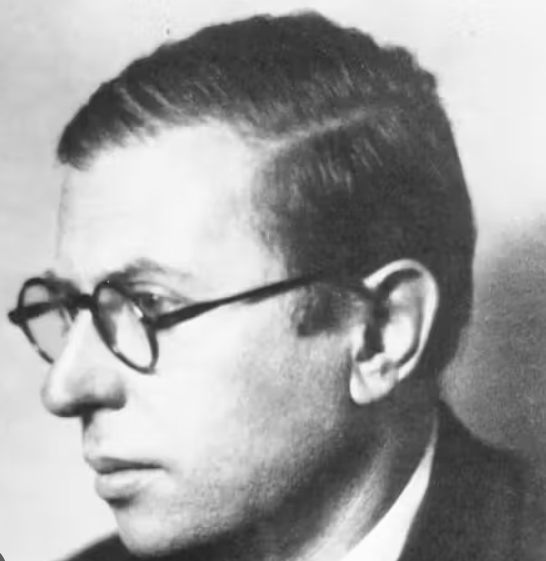
3 months 1 week ago
His obedience is real since he really and truly fulfills his mission, since he runs real risks in order to carry out the beloved's orders. But, on the other hand, it is imaginary because he submits only to a creature of his mind.
▼
Source
source
p. 152
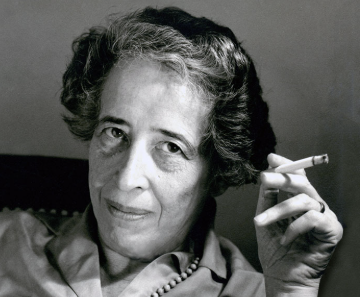
3 months 1 week ago
Man cannot be free if he does not know that he is subject to necessity, because his freedom is always won in his never wholly successful attempts to liberate himself from necessity.
▼
Source
source
The Human Condition (1958), part 3, chapter 16
2 months 1 week ago
All morning, I did nothing but repeat: "Man is an abyss, man is an abyss." - I could not, alas, find anything better.

3 months 3 weeks ago
The world thought well of my schoolmaster guardian, because he was neither a liar, nor a scamp, nor a gambler; but he was coarse, avaricious, and ignorant; he knew nothing beyond the confused lessons which he taught to his classes. He imagined that in forcing a youth to become a monk he would be offering a sacrifice acceptable to God. He used to boast of the many victims which he devoted annually to Dominic and Francis and Benedict.
▼
Source
source
As quoted in Life and Letters of Erasmus: Lectures Delivered at Oxford 1893-4 (1899) by James Anthony Froude
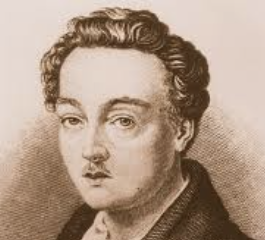
2 months 1 week ago
The statue of Freedom has not been cast yet, the furnace is hot, we can all still burn our fingers.
▼
Source
source
Act I.
3 months 3 weeks ago
For my own part, I may desire in general to be other than I am; I may condemn and dislike my whole form, and beg of Almighty God for an entire reformation, and that He will please to pardon my natural infirmity: but I ought not to call this repentance, methinks, no more than the being dissatisfied that I am not an angel or Cato. My actions are regular, and conformable to what I am and to my condition; I can do no better; and repentance does not properly touch things that are not in our power; sorrow does.. I imagine an infinite number of natures more elevated and regular than mine; and yet I do not for all that improve my faculties, no more than my arm or will grow more strong and vigorous for conceiving those of another to be so.
▼
Source
source
Ch. 2

2 months ago
"The bitterest sorrow that man can know is to aspire to do much and to achieve nothing"... so Herodotus relates that a Persian said to a Theban at a banquet (book ix., chap. xvi.). And it is true. With knowledge and desire we can embrace everything , or almost everything; with the will nothing, or almost nothing. And contemplation is not happiness - no! not if this contemplation implies impotence. And out of this collision between our knowledge and our power pity arises.
1 week 2 days ago
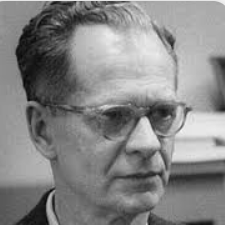
The strengthening of behavior which results from reinforcement is appropriately called "conditioning". In operant conditioning we "strengthen" an operant in the sense of making a response more probable or, in actual fact, more frequent.
▼
Source
source
Science and Human Behavior
1 month 1 week ago
Many of us saw religion as harmless nonsense. Beliefs might lack all supporting evidence but, we thought, if people needed a crutch for consolation, where's the harm? September 11th changed all that. Revealed faith is not harmless nonsense, it can be lethally dangerous nonsense. Dangerous because it gives people unshakeable confidence in their own righteousness. Dangerous because it gives them false courage to kill themselves, which automatically removes normal barriers to killing others. Dangerous because it teaches enmity to others labelled only by a difference of inherited tradition. And dangerous because we have all bought into a weird respect, which uniquely protects religion from normal criticism. Let's now stop being so damned respectful!
▼
Source
source
When asked how the world had changed following the September 11, 2001 attacks Has the world changed?, The Guardian
3 months 2 weeks ago
"Let us work without reasoning," said Martin; "it is the only way to make life endurable."
2 months 4 days ago
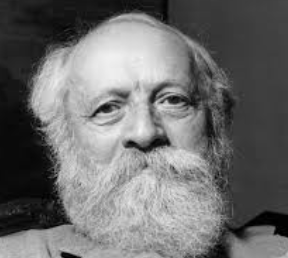
To win a truly great life for the people of Israel, a great peace is necessary, not a fictitious peace, the dwarfish peace that is no more than a feeble intermission, but a true peace with the neighboring peoples, which alone can render possible a common development of this portion of the earth as the vanguard of the awakening Near East.
▼
Source
source
"Our Reply" (September 1945), as published in A Land of Two Peoples : Martin Buber on Jews and Arabs (1983) edited by Paul Mendes-Flohr, p. 178

3 months 4 weeks ago
Life is one long struggle in the dark.
▼
Source
source
Book II, line 54 (tr. Rouse)


3 months 2 weeks ago
All honour to those who can abnegate for themselves the personal enjoyment of life, when by such renunciation they contribute worthily to increase the amount of happiness in the world; but he who does it, or professes to do it, for any other purpose, is no more deserving of admiration than the ascetic mounted on his pillar. He may be an inspiriting proof of what men can do, but assuredly not an example of what they should.
▼
Source
source
Ch. 2
3 months 1 week ago
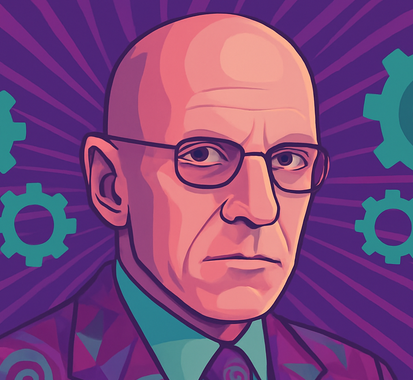
A utopia of judicial reticence: take away life, but prevent the patient from feeling it; deprive the prisoner of all rights, but do not inflict pain; impose penalties free of all pain. Recourse to psycho-pharmacology and to various physiological 'disconnectors', even if it is temporary, is a logical consequence of this 'non-corporal' penalty.
▼
Source
source
Chapter One, The Spectacle of the Scaffold

2 months 1 week ago
It would be an endless task to trace the variety of meannesses, cares, and sorrows, into which women are plunged by the prevailing opinion that they were created rather to feel than reason, and that all the power they obtain, must be obtained by their charms and weakness.
▼
Source
source
Ch. 4

2 months 2 weeks ago
Our philosophy... reduceth to a single origin and relateth to a single end, and maketh contraries to coincide so that there is one primal foundation both of origin and of end. From this coincidence of contraries, we deduce that ultimately it is divinely true that contraries are within contraries; wherefore it is not difficult to compass the knowledge that each thing is within every other.
▼
Source
source
As translated by Dorothea Waley Singer


3 months 4 days ago
Follow your desire as long as you live and do not perform more than is ordered; do not lessen the time of following desire, for the wasting of time is an abomination to the spirit... When riches are gained, follow desire, for riches will not profit if one is sluggish.
▼
Source
source
Maxim no. 11.
2 months 6 days ago
So that every Crime is a sinne; but not every sinne a Crime.
▼
Source
source
The Second Part, Chapter 27, p. 151
CivilSimian.com created by AxiomaticPanic, CivilSimian, Kalokagathia