

2 months 1 week ago
Philosophy ... bears witness to the deepest love of reflection, to absolute delight in wisdom.
▼
Source
source
"Logological Fragments," Philosophical Writings, M. Stolijar, trans. (Albany: 1997) #12
3 months 2 weeks ago
For a work to become immortal it must possess so many excellences that it will not be easy to find a man who understands and values them all; so that there will be in all ages men who recognise and appreciate some of these excellences; by this means the credit of the work will be retained throughout the long course of centuries and ever-changing interests, for, as it is appreciated first in this sense, then in that, the interest is never exhausted.

2 months 2 weeks ago
The severe Schools shall never laugh me out of the Philosophy of Hermes, that this visible world is but a picture of the invisible.
▼
Source
source
Section 12

2 months 2 weeks ago
That there is no such thing as what philosophers call material substance, I am seriously persuaded: but if I were made to see any thing absurd or skeptical in this, I should then have the same reason to renounce this, that I imagine I have now to reject the contrary opinion.
▼
Source
source
Philonous to Hylas

4 months 1 week ago
"The real saint", Baudelaire pretends to think, "is he who flogs and kills people for their own good." His argument will be heard. A race of real saints is beginning to spread over the earth for the purposes of confirming these curious conclusions about rebellion.

1 month 1 week ago
Advertising is the greatest art form of the twentieth century.
▼
Source
source
quoted in Advertising Age, Sep. 3, 1976

2 months 1 week ago
Reality is a creation of our excesses.
3 months 1 week ago
There is object proof that homosexuality is more interesting than heterosexuality. It's that one knows a considerable number of heterosexuals who would wish to become homosexuals, whereas one knows very few homosexuals who would really like to become heterosexuals.
▼
Source
source
As quoted in Who's Who in Contemporary Gay & Lesbian History: From World War II to the Present Day (2001) by Robert Aldrich and Gary Wotherspoon ISBN 041522974X
1 month 1 week ago
Every technology contrived and "outered" by man has the power to numb human awareness during the period of its first interiorization.
▼
Source
source
(p. 174)
3 months 3 days ago
Even if I could by gradual degrees be transformed into a bat, nothing in my present constitution enables me to imagine what the experiences of such a future stage of myself thus metamorphosed would be like. The best evidence would come from the experience of bats, if we only knew what they were like.
▼
Source
source
p. 169.
2 months 4 days ago
Thought without language, says Lavelle, would not be a purer thought; it would be no more than the intention to think. And his last book offers a theory of expressiveness which makes of expression not "a faithful image of an already realized interior being, but the very means by which it is realized."
▼
Source
source
p. 8
3 months 3 days ago
One should attend to one's enemies, for they are the first persons to detect one's errors.
▼
Source
source
§ 5
3 days ago
There is no greater drama in human record than the sight of a few Christians, scorned or oppressed by a succession of emperors, bearing all trials with a fierce tenacity, multiplying quietly, building order while their enemies generated chaos, fighting the sword with the word, brutality with hope, and at last defeating the strongest state that history has known. Caesar and Christ had met in the arena, and Christ had won.
▼
Source
source
Chapter 30, part 1, p. 652

3 weeks 5 days ago
Economic reforms based on the idea of limitless growth in a limited world, can only be maintained by the powerful grabbing the resources of the vulnerable. The resource grab that is essential for "growth" creates a culture of rape-the rape of the earth, of local self-reliant economies, and of women.
▼
Source
source
On economic reforms in India and rape in India, from "Vandana Shiva: Our Violent Economy is Hurting Women " article in Yes Magazine

3 months 2 weeks ago
We need a science to save us from science.
▼
Source
source
NY Times Magazine, as reported in High Points in the Work of the High Schools of New York City, Vol. 34 (1952), p. 46
3 months 3 weeks ago
The most manifest sign of wisdom is a continual cheerfulness; her state is like that in the regions above the moon, always clear and serene.
▼
Source
source
Book I, Ch. 26
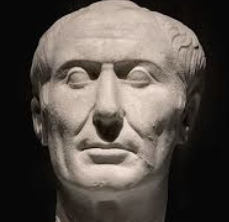
1 month 1 week ago
Prosperity makes friends, adversity tries them.
▼
Source
source
Maxim 872
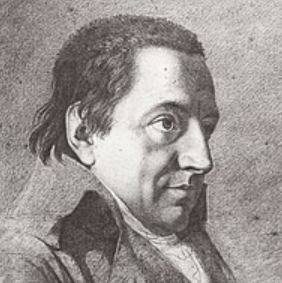
2 months 1 week ago
Marriage is a union between two persons - one man and one woman. A woman who has given herself up to one, can not give herself up to a second, for her whole dignity requires that she should belong only to this one.
▼
Source
source
p. 406

3 months 3 weeks ago
An armed insurrection ... would hinder and bring into disrepute this spiritual insurrection.
▼
Source
source
p. 68

4 months 2 days ago
The flesh receives as unlimited the limits of pleasure; and to provide it requires unlimited time. But the mind, intellectually grasping what the end and limit of the flesh is, and banishing the terrors of the future, procures a complete and perfect life, and we have no longer any need of unlimited time. Nevertheless the mind does not shun pleasure, and even when circumstances make death imminent, the mind does not lack enjoyment of the best life.
3 months 3 weeks ago
What does it mean to have a god? or, what is God? Answer: A god means that from which we are to expect all good and to which we are to take refuge in all distress, so that to have a God is nothing else than to trust and believe Him from the [whole] heart; as I have often said that the confidence and faith of the heart alone make both God and an idol. If your faith and trust be right, then is your god also true; and, on the other hand, if your trust be false and wrong, then you have not the true God; for these two belong together faith and God. That now, I say, upon which you set your heart and put your trust is properly your god.
▼
Source
source
Large Catechism 1.1-3, F. Bente and W.H.T. Dau, tr. Triglot Concordia: The Symbolical Books of the Ev. Lutheran Church(St. Louis: Concordia Publishing House, 1921), 565.

2 months ago
The greatest height of heroism to which an individual, like a people, can attain is to know how to face ridicule; better still, to know how to make oneself ridiculous and not to shrink from the ridicule.

3 months 1 week ago
Fascism is not defined by the number of its victims, but by the way it kills them.
▼
Source
source
On the Execution of Julius and Ethel Rosenberg, Libération
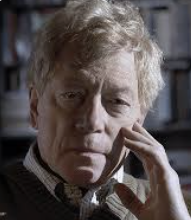
1 month 6 days ago
The strange superstition has arisen in the Western world that we can start all over again, remaking human nature, human society, and the possibilities of happiness; as though the knowledge and experience of our ancestors were now entirely irrelevant.
▼
Source
source
Gentle Regrets: Thoughts from a Life
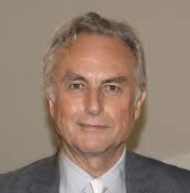
1 month 1 week ago
The population of the US is nearly 300 million, including many of the best educated, most talented, most resourceful, humane people on earth. By almost any measure of civilised attainment, from Nobel prize-counts on down, the US leads the world by miles. You would think that a country with such resources, and such a field of talent, would be able to elect a leader of the highest quality. Yet, what has happened? At the end of all the primaries and party caucuses, the speeches and the televised debates, after a year or more of non-stop electioneering bustle, who, out of that entire population of 300 million, emerges at the top of the heap? George Bush.
▼
Source
source
"Bin Laden's victory " The Guardian

4 months 1 week ago
Knowledge is the food of the soul; and we must take care, my friend, that the Sophist does not deceive us when he praises what he sells, like the dealers wholesale or retail who sell the food of the body; for they praise indiscriminately all their goods, without knowing what are really beneficial or hurtful.


3 months 2 weeks ago
Nothing more strikingly betrays the credulity of mankind than medicine. Quackery is a thing universal, and universally successful. In this case it becomes literally true that no imposition is too great for the credulity of men.
▼
Source
source
Pearls of Thought (1881) p. 218
3 months 3 weeks ago
A faithful and good servant is a real godsend; but truly 'tis a rare bird in the land.
▼
Source
source
156

2 months 2 weeks ago
It looks to me to be narrow and pedantic to apply the ordinary ideas of criminal justice to this great public contest. I do not know the method of drawing up an indictment against a whole people.
1 month 1 week ago
It is a bad plan that admits of no modification.
▼
Source
source
Maxim 469
3 months 2 weeks ago
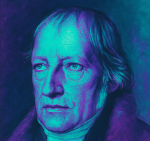
The beginning of religion, more precisely its content, is the concept of religion itself, that God is the absolute truth, the truth of all things, and subjectively that religion alone is the absolutely true knowledge.


3 months 1 week ago
The man described for us, whom we are invited to free, is already in himself the effect of a subjection much more profound than himself. A 'soul' inhabits him and brings him to existence...the soul is the effect and instrument of political anatomy; the soul is the prison of the body.
2 months 1 week ago
The determination to print them (his lectures), and to communicate them to the General Public, must also speak for itself; and should it not do so, any other recommendation of them would be thrown away. Thus, with respect to the appearance of this work, I have nothing further to say to the Public, than that I have nothing to say.
▼
Source
source
Preface

1 month 3 weeks ago
We have all experienced the moments that William James calls melting moods, when it suddenly becomes perfectly obvious that life is infinitely fascinating. And the insight seems to apply retrospectively. Periods of my life that seemed confusing and dull at the time now seem complex and rather charming. It is almost as if some other person a more powerful and mature individual has taken over my brain. This higher self views my problems and anxieties with kindly detachment, but entirely without pity. Looking at problems through his eyes, I can see I was a fool to worry about them.
▼
Source
source
pp. 2-3
3 months 2 weeks ago
Since Adam and Eve ate the apple, man has never refrained from any folly of which he was capable. The End.
▼
Source
source
Full text of Russell's book History of the World in Epitome , written in 1959

2 months 2 weeks ago
What is Europe really but a sterile trunk which owes everything to oriental grafts?
▼
Source
source
Letter of 18 December 1806 to Windischmann, quoted by Rene Gerard, L'Orient et la pensée romantique allemande, Paris 1963,, p. 213. quoted in Poliakov, L. (1974).

3 months 1 week ago
Whatever you do, He will make good of it. But not the good He had prepared for you if you had obeyed him.
3 months 2 weeks ago
There are various, nay, incredible faiths; why should we be alarmed at any of them? What man believes, God believes.
2 months 1 week ago
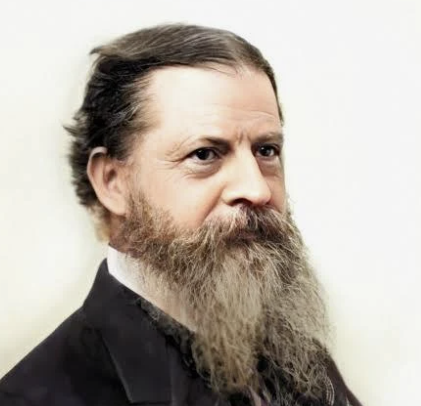
Second, by this and other means we are driven to perceive, what is quite evident in itself, that instantaneous feelings flow together in a continuum of feeling, which has in a modified degree the peculiar vivacity of feeling and has gained generality. And in reference to such general ideas, or continua of feeling, the difficulties about resemblance and suggestion and reference to the external, cease to have any force.
2 months 2 weeks ago
Custom reconciles us to every thing.
▼
Source
source
Part IV Section XVIII
3 months 2 weeks ago
Intellect is invisible to the man who has none.
▼
Source
source
Our Relation to Others, § 23
1 month 3 weeks ago
I believe in the possible realization of a world in which man can be much, even if he has little; a world in which the dominant motivation of existence is not consumption; a world in which "man" is the end, first and last; a world in which man can find the way of giving a purpose to his life as well as the strength to live free and without illusions.
2 months 2 weeks ago
Burden not the back of Aries, Leo, or Taurus, with thy faults, nor make Saturn, Mars, or Venus, guilty of thy Follies.
▼
Source
source
Part III, Section VII
4 months 1 week ago
Zeus, the god of gods, who rules according to law, and is able to see into such things, perceiving that an honourable race was in a woeful plight, and wanting to inflict punishment on them, that they might be chastened and improve, collected all the gods into their most holy habitation, which, being placed in the centre of the world, beholds all created things.
4 months 1 day ago
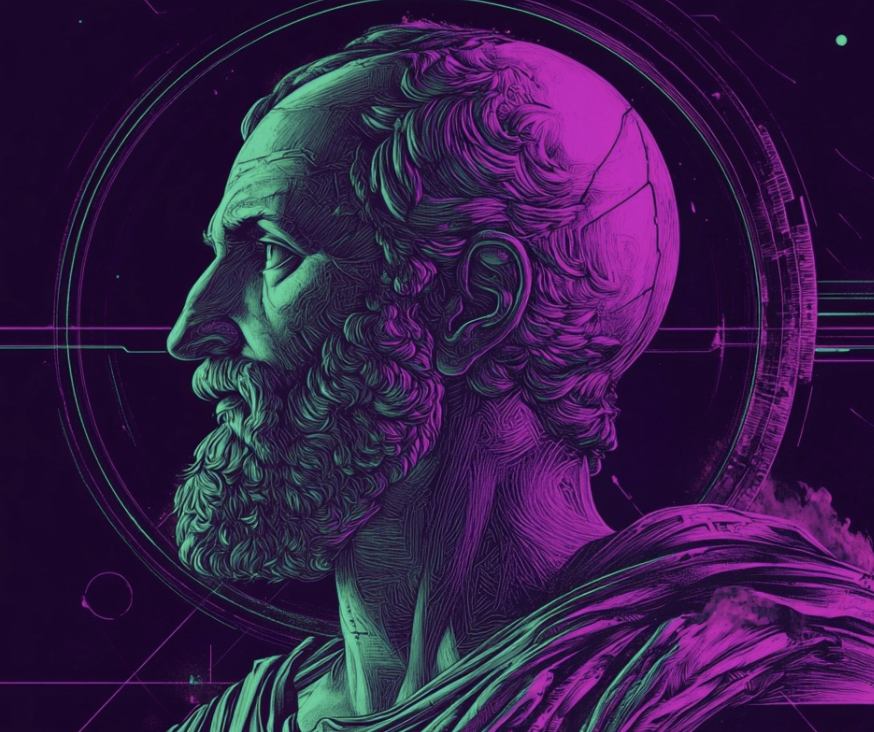
We may treat of the Soul as in the body whether it be set above it or actually within it since the association of the two constitutes the one thing called the living organism, the Animate. Now from this relation, from the Soul using the body as an instrument, it does not follow that the Soul must share the body's experiences: a man does not himself feel all the experiences of the tools with which he is working.
4 months 1 week ago
He kept the middle way, that's all: he was the type of man for whom one has an affection of the mild but steady order - which is the kind that wears best.
4 months 2 weeks ago
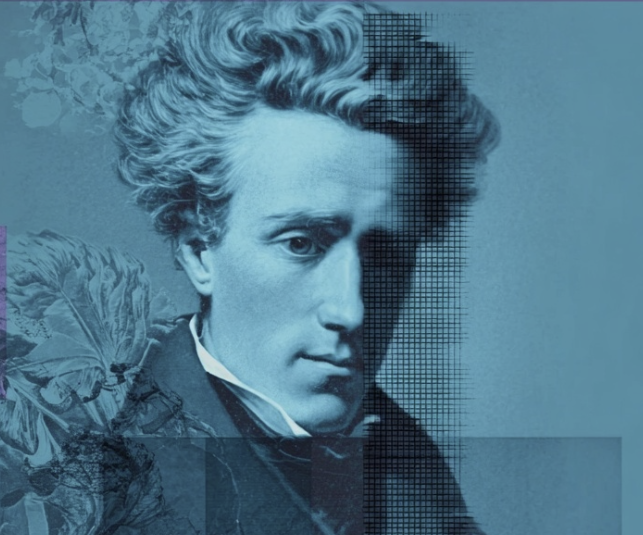
If it were so, as conceited sagacity, proud of not being deceived, thinks, that we should believe nothing that we cannot see with our physical eyes, then we first and foremost ought to give up believing in love. ... We can be deceived by believing what is untrue, but we certainly are also deceived by not believing what is true. ... Which deception is more dangerous?
CivilSimian.com created by AxiomaticPanic, CivilSimian, Kalokagathia