


2 months 1 week ago
Time: That which man is always trying to kill, but which ends in killing him.
▼
Source
source
Definitions, as quoted in The Dictionary of Essential Quotations (1983) by Kevin Goldstein-Jackson, p. 154
1 month 3 weeks ago
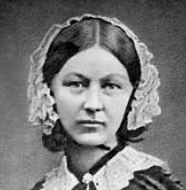
You ask me why I do not write something... I think one's feelings waste themselves in words; they ought all to be distilled into actions and into actions which bring results.
▼
Source
source
Letter to a friend, quoted in The Life of Florence Nightingale (1913) by Edward Tyas Cook, p. 94

1 month 3 weeks ago
First we have to believe, and then we believe.
▼
Source
source
K 55
3 months 2 weeks ago
As all those have shown who have discussed civil institutions, and as every history is full of examples, it is necessary to whoever arranges to found a Republic and establish laws in it, to presuppose that all men are bad and that they will use their malignity of mind every time they have the opportunity; and if such malignity is hidden for a time, it proceeds from the unknown reason that would not be known because the experience of the contrary had not been seen, but time, which is said to be the father of every truth, will cause it to be discovered.
▼
Source
source
Book 1, Ch. 3
2 weeks 6 days ago
When one is gripped by excruciating physical pain, one is always shocked at just how frightful it can be.
▼
Source
source
"The Abolitionist Project", Talks given at the FHI (Oxford University) and the Charity International Happiness Conference, 2007

2 months 1 week ago
Law and arbitrary power are in eternal enmity. Name me a magistrate, and I will name property; name me power, and I will name protection. It is a contradiction in terms, it is blasphemy in religion, it is wickedness in politics, to say that any man can have arbitrary power. In every patent of office the duty is included. For what else does a magistrate exist? To suppose for power is an absurdity in idea. Judges are guided and governed by the eternal laws of justice, to which we are all subject. We may bite our chains, if we will, but we shall be made to know ourselves, and be taught that man is born to be governed by law; and he that will substitute will in the place of it is an enemy to God.
▼
Source
source
Speech in opening the impeachment of Warren Hastings (16 February 1788), quoted in The Works of the Right Honourable Edmund Burke, Volume the Ninth (1899), p. 458

3 months 1 week ago
In democratic countries, the most important private organizations are economic. Unlike secret societies, they are able to exercize their terrorism without illegality, since they do not threaten to kill their enemies, but only to starve them.
▼
Source
source
Ch. 12: Powers and forms of governments

4 months 1 week ago
Idleness is only fatal to the mediocre.

3 months 2 weeks ago
IV. Every tax ought to be contrived as both to take out and to keep out of the pockets of the people as little as possible, over and above what it brings into the public treasury of the state.
▼
Source
source
Chapter II, Part II, p. 893.

2 months 2 weeks ago
Are we not madder than those first inhabitants of the plain of Sennar? We know that the distance separating the earth from the sky is infinite, and yet we do not stop building our tower.
▼
Source
source
No. 4

4 months 1 week ago
Therefore create me! You, the most esteemed, cultured public, are in possession of nervus rerum gerendarum [the moving force to accomplish something]. Just a word from you, a promise to purchase what I write, or, if it is possible, so that everything can be in order immediately, a little advance payment, and I am an author; I shall remain one as long as this favor lasts.
4 months 1 week ago
What is a rebel? A man who says no.
▼
Source
source
Chapter 1

3 months 1 week ago
The Communist Party has one objective: the creation of a socialist economy; and one means: the utilization of the class struggle.
▼
Source
source
Hugo, Act 5, sc. 3
2 months 1 week ago
What, then, is the animal? First of all, a system of plant-souls. The unity of those plant-souls, which unity nature itself produces, is the soul of the animal. Its world is therefore partly that of the plants - its nourishment, for instance, it receives partly through synthesis from vegetable, and through analysis from animal nature - and partly that of the animals, whereof we shall speak directly. Each product of nature is an organically in-itself completed totality in space, like the plant. Hence, the unknown x which we are looking for must also be such a whole or totality, and in so far it must also have a principle of organization, a sphere and central point of this organization ; in short, the same which we have called the soul of the plant, which thus remains common to both. ... The animal is a system of plant-souls, and the plant is a separated, isolated part of an animal. Both reciprocally affect each other.
▼
Source
source
P. 502, 503, 504

3 months 1 day ago
False men and shams talk big and do nothing.

2 months 1 week ago
Second, by this and other means we are driven to perceive, what is quite evident in itself, that instantaneous feelings flow together in a continuum of feeling, which has in a modified degree the peculiar vivacity of feeling and has gained generality. And in reference to such general ideas, or continua of feeling, the difficulties about resemblance and suggestion and reference to the external, cease to have any force.

2 months 1 week ago
Volumes might be written upon the impiety of the pious.
▼
Source
source
Pt. I, The Unknowable; Ch. V, The Reconciliation
3 months 2 days ago
Those who claim to care about the wellbeing of human beings and the preservation of our environment should become vegetarians for that reason alone. They would thereby increase the amount of grain available to feed people elsewhere, reduce pollution, save water and energy, and cease contributing to the clearing of forests; moreover, since a vegetarian diet is cheaper than one based on meat dishes, they would have more money available to devote to famine relief, population control, or whatever social or political cause they thought most urgent. ... when nonvegetarians say that "human problems come first" I cannot help wondering what exactly it is that they are doing for human beings that compels them to continue to support the wasteful, ruthless exploitation of farm animals.
▼
Source
source
Ch. 6: Speciesism Today

1 month 3 weeks ago
Has not authority from time immemorial stamped every step of progress as treasonable?

1 month 3 weeks ago
It was not until the ant and Veig had passed each other that Niall realized that he had been reading the ant's mind. It was a sensation like actually being the ant, as if he had momentarily taken possession of its body. And while he had been inside the ant's body, he had also become aware of all the other ants in the nest. It was a bewildering feeling, as if his mind had shattered into thousands of fragments, yet each fragment remained a coherent part of the whole.
▼
Source
source
p. 57
4 months 1 week ago
That which distinguishes the Christian narrow way from the common human narrow way is the voluntary. Christ was not someone who coveted earthly things but had to be satisfied with poverty, no, he chose poverty.
3 weeks 6 days ago
The great end of life is not knowledge but action.
▼
Source
source
"Technical Education"

3 months 1 week ago
We can act as if there were a God; feel as if we were free; consider Nature as if she were full of special designs; lay plans as if we were to be immortal; and we find then that these words do make a genuine difference in our moral life.
▼
Source
source
Lecture III, "The Reality of the Unseen"
4 months 1 week ago
Even Plato assumes that the genuinely perfect condition of man means no sex distinction (and how strange this is for people like Feuerbach who are so occupied with affirming sex-differentiation, regarding which they would do best to appeal to paganism). He assumes that originally there was only the masculine (and when there is no thought of femininity, sex-distinction is undifferentiated), but through degeneration and corruption the feminine appeared. He assumes that base and cowardly men became women in death, but he still gives them hope of being elevated again to masculinity. He thinks that in the perfect life the masculine, as originally, will be the only sex, that is, that sex-distinction is a matter of indifference. So it is in Plato, and this, the idea of the state notwithstanding, was the culmination of his philosophy. How much more so, then, the Christian view.

3 months 1 week ago
Great men, great nations, have not been boasters and buffoons, but perceivers of the terror of life, and have manned themselves to face it.
▼
Source
source
Fate

1 month 4 days ago
A novel is balanced between a few true impressions and the multitude of false ones that make up most of what we call life. It tells us that for every human being there is a diversity of existences, that the single existence is itself an illusion in part, that these many existences signify something, tend to something, fulfill something; it promises us meaning, harmony, and even justice.
▼
Source
source
Nobel Prize lecture

3 months 1 week ago
Fools have a habit of believing that everything written by a famous author is admirable. For my part I read only to please myself and like only what suits my taste.
1 month 3 weeks ago
The word 'definition' has come to have a dangerously reassuring sound, owing no doubt to its frequent occurrence in logical and mathematical writings.
▼
Source
source
"Two dogmas of Empiricism", p. 26

2 days ago
Every pitifulest whipster that walks within a skin has had his head filled with the notion that he is, shall be, or by all human and divine laws ought to be, 'happy.' His wishes, the pitifulest whipster's, are to be fulfilled for him; his days, the pitifulest whipster's, are to flow on in an ever-gentle current of enjoyment, impossible even for the gods. The prophets preach to us, Thou shalt be happy; thou shalt love pleasant things, and find them. The people clamor, Why have we not found pleasant things? ...God's Laws are become a Greatest Happiness Principle. There is no religion; there is no God; man has lost his soul.
▼
Source
source
Bk. III, ch. 4.
3 months 2 weeks ago
The government of an exclusive company of merchants is, perhaps, the worst of all governments for any country whatever.
▼
Source
source
Chapter VII, Part Second, p. 619.

3 months 1 week ago
The second doctrine of the Perennial Philosophy - that it is possible to know the Divine Ground by a direct intuition higher than discursive reasoning - is to be found in all the great religions of the world. A philosopher who is content merely to know about the ultimate Reality - theoretically and by hearsay - is compared by Buddha to a herdsman of other men's cows. Mohammed uses an even homelier barnyard metaphor. For him the philosopher who has not realized his metaphysics is just an ass bearing a load of books. Christian, Hindu, Taoist teachers wrote no less emphatically about the absurd pretensions of mere learning and analytic reasoning.

2 months 1 week ago
A gentleman, even if he loses everything he owns, must show no emotion. Money must be so far beneath a gentleman that it is hardly worth troubling about.
1 month 3 weeks ago
The lack of objectivity, as far as foreign nations are concerned, is notorious. From one day to another, another nation is made out to be utterly depraved and fiendish, while one's own nation stands for everything that is good and noble. Every action of the enemy is judged by one standard - every action of oneself by another. Even good deeds by the enemy are considered a sign of particular devilishness, meant to deceive us and the world, while our bad deeds are necessary and justified by our noble goals which they serve.

1 month 1 week ago
Let us try to teach generosity and altruism, because we are born selfish. Let us understand what our own selfish genes are up to, because we may then at least have a chance to upset their designs, something that no other species has ever aspired to do.
▼
Source
source
Ch. 1. Why Are People?

1 month 1 week ago
Violence, whether spiritual or physical, is a quest for identity and the meaningful.
▼
Source
source
The less identity, the more violence. "Violence in the media." Canadian Forum. Volume 56, 1976, p. 9
3 months 6 days ago
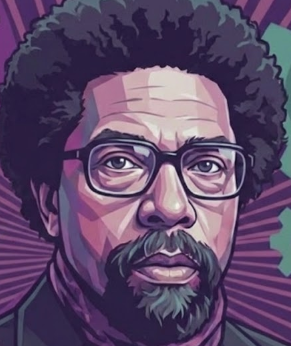
Well, as you know, I was blessed to do over a hundred events for my dear brother [Bernie Sanders]. And this is the first time I've had a chance to publicly endorse him again, but yes, indeed. I'll be in his corner that we're going to win this time. And it has to do with the Martin Luther King like criteria of assessing a candidate namely the issues of militarism, poverty, materialism, and racism, xenophobia in all of its forms that includes any kind of racism as you know against black people, brown people, yellow people, anybody, Arabs, Muslims, Jews, Palestinians, Kashmirians, Tibetans and so forth. So that there's no doubt that the my dear brother Bernie stands shoulders above any of the other candidates running in the Democratic primary when it comes to that Martin Luther King-like standards or criteria.
▼
Source
source
Quoted in: Cornel West on Bernie, Trump, and Racism, The Intercept, Mehdi Hasan,
4 months 1 week ago
Truth, like light, blinds. Falsehood, on the contrary, is a beautiful twilight that enhances every object.
2 months 1 week ago
Nor is there any embarrassment in the fact that we're ridiculous, isn't it true? For it's actually so, we are ridiculous, light-minded, with bad habits, we're bored, we don't know how to look, how to understand, we're all like that, all, you, and I, and they! Now, you're not offended when I tell you to your face that you're ridiculous? And if so, aren't you material? You know, in my opinion it's sometimes even good to be ridiculous, if not better: we can the sooner forgive each other, the sooner humble ourselves; we can't understand everything at once, we can't start right out with perfection! To achieve perfection, one must first begin by not understanding many things! And if we understand too quickly, we may not understand well. This I tell you, you, who have already been able to understand. .. and not understand ... so much. I'm not afraid for you now.
▼
Source
source
Part 4, Chapter ?
2 months 3 days ago
If, as I believe, the ends of men are many, and not all of them are in principle compatible with each other, then the possibility of conflict - and of tragedy - can never wholly be eliminated from human life, either personal or social. The necessity of choosing between absolute claims is then an inescapable characteristic of the human condition. This gives its value to freedom as Acton conceived of it - as an end in itself, and not as a temporary need, arising out of our confused notions and irrational and disordered lives, a predicament which a panacea could one day put right.
2 months 1 week ago
I could never stand more than three months of dreaming at a time without feeling an irresistible desire to plunge into society. To plunge into society meant to visit my superior, Anton Antonich Syetochkin. He was the only permanent acquaintance I have had in my life, and I even wonder at the fact myself now. But I even went to see him only when that phase came over me, and when my dreams had reached such a point of bliss that it became essential to embrace my fellows and all mankind immediately. And for that purpose I needed at least one human being at hand who actually existed. I had to call on Anton Antonich, however, on Tuesday - his at-home day; so I always had to adjust my passionate desire to embrace humanity so that it might fall on a Tuesday.
▼
Source
source
Part 2, Chapter 2

3 months 1 week ago
And then one babbles - 'if only I could bear it, or the worst of it, or any of it, instead of her.' But one can't tell how serious that bid is, for nothing is staked on it. If it suddenly became a real possibility, then, for the first time, we should discover how seriously we had meant it. But is it ever allowed? It was allowed to One, we are told, and I find I can now believe again, that He has done vicariously whatever can be done. He replies to our babble, 'you cannot and dare not. I could and dared.'

2 weeks 4 days ago
Before Christianity suicide was not in any way troubling. Our lives were our own, and when we tired of them we were at liberty to end them. One might think that as Christianity has declined, this freedom would be reclaimed. Instead secular creeds have sprung up, in which each person's life belongs to everyone else. To hand back the gift of life because it does not please is still condemned as a kind of blasphemy, though the offended deity is now humanity instead of God.
▼
Source
source
Sweet Morality (p. 231-2)
3 months 1 day ago
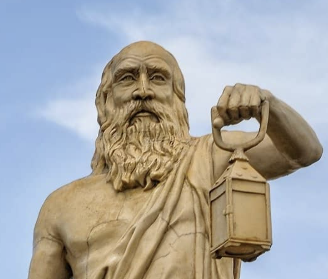
On reaching Athens he fell in with Antisthenes. Being repulsed by him, because he never welcomed pupils, by sheer persistence Diogenes wore him out. Once when he stretched out his staff against him, the pupil offered his head with the words, "Strike, for you will find no wood hard enough to keep me away from you, so long as I think you've something to say."
▼
Source
source
Diogenes Laërtius, vi. 21,
3 months 1 week ago
In the deepest heart of all of us there is a corner in which the ultimate mystery of things works sadly.
▼
Source
source
"Is Life Worth Living?"
2 months 1 week ago
What each individual wills is obstructed by everyone else, and what emerges is something that no one willed.
▼
Source
source
Letter to Jean-Richard Bloch
1 month 3 weeks ago
The most perfect ape cannot draw an ape; only man can do that; but, likewise, only man regards the ability to do this as a sign of superiority.
▼
Source
source
J 115
1 month 3 weeks ago
It is within science itself, and not in some prior philosophy, that reality is to be identified and described.
▼
Source
source
Theories and Things, Cambridge, MA: Harvard University Press. 1981
3 months 2 weeks ago
The human understanding when it has once adopted an opinion (either as being the received opinion or as being agreeable to itself) draws all things else to support and agree with it. And though there be a greater number and weight of instances to be found on the other side, yet these it either neglects and despises, or else by some distinction sets aside and rejects, in order that by this great and pernicious predetermination the authority of its former conclusions may remain inviolate.
▼
Source
source
Aphorism 46
CivilSimian.com created by AxiomaticPanic, CivilSimian, Kalokagathia