

1 month 2 weeks ago
Administration is not unlike play-acting. The task of the good actor is to know and play his role, although different roles may differ greatly in content. The effectiveness of the performance will depend on the effectiveness of the play and the effectiveness with which it is played. The effectiveness of the administrative process will vary with the effectiveness of the organization and the effectiveness with which its members play their parts.
▼
Source
source
p. 252; As cited in: Herbert Simon (1996) The Sciences of the Artificial. page xii.

3 months 1 week ago
The process of being brought up, however well it is done, cannot fail to offend.

2 months 1 week ago
Dreams, as we all know, are very queer things: some parts are presented with appalling vividness, with details worked up with the elaborate finish of jewellery, while others one gallops through, as it were, without noticing them at all, as, for instance, through space and time. Dreams seem to be spurred on not by reason but by desire, not by the head but by the heart, and yet what complicated tricks my reason has played sometimes in dreams, what utterly incomprehensible things happen to it!

4 months 1 week ago
The direction of the world overwhelms me at this time. In the long run, all the continents (yellow, black and brown) will spill over onto Old Europe. They are hundreds and hundreds of millions. They are hungry and they are not afraid to die. We no longer know how to die or how to kill. We could preach, but Europe believes in nothing. So, we must wait for the year 1000 or a miracle. For my part, I find it harder and harder to live before a wall.
4 months 1 week ago
Nature does not do anything in vain.
1 month ago
Many evils, no doubt, were produced by the civil war. They were the price of our liberty.
▼
Source
source
p. 39
3 months 3 weeks ago
Rules for Axioms. I. Not to omit any necessary principle without asking whether it is admittied, however clear and evident it may be. II. Not to demand, in axioms, any but things that are perfectly evident in themselves.
1 month 1 week ago
Life is short, but its ills make it seem long.
▼
Source
source
Maxim 124

1 month 1 week ago
By phonemic transformation into visual terms, the alphabet became a universal, abstract, static container of meaningless sounds.

4 months 1 week ago
For it is the chief characteristic of the religion of science, that it works, and that such curses as that of Aporat's are really deadly.
3 months 1 week ago
The First [Friend] is the alter ego, the man who first reveals to you that you are not alone in the world by turning out (beyond hope) to share all your most secret delights. There is nothing to be overcome in making him your friend; he and you join like raindrops on a window. But the Second Friend is the man who disagrees with you about everything... Of course he shares your interests; otherwise he would not become your friend at all. But he has approached them all at a different angle. he has read all the right books but has got the wrong thing out of every one... How can he be so nearly right, and yet, invariably, just not right? He is as fascinating (and infuriating) as a woman.
1 month 2 weeks ago
Even Darwin's natural selection only predicts that survivors will be fit enough, that is, fitter than their losing competitors; it postulates satisficing, not optimizing.
▼
Source
source
p. 166; As cited in Ronald J. Baker (2010, p. 122).
1 month 1 week ago
I suppose it is written that any one who sets up for a bit of a philosopher, must contradict himself to his very face. For here have I fairly talked myself into thinking that we have the whole thing before us at last; that there is no answer to the mystery, except that there are as many as you please; that there is no centre to the maze because, like the famous sphere, its centre is everywhere; and that agreeing to differ with every ceremony of politeness, is the only "one undisturbed song of pure concent" to which we are ever likely to lend our musical voices.
▼
Source
source
Crabbed Age and Youth.
1 month 1 week ago
Darwin's 'survival of the fittest' is really a special case of a more general law of survival of the stable. The universe is populated by stable things. The universe is populated by stable things. A stable thing is a collection of atoms that is permanent enough or common enough to deserve a name. It may be a unique collection of atoms, such as the Matterhorn, that lasts long enough to be worth naming. Or it may be a class of entities, such as rain drops, that come into existence at a sufficiently high rate to deserve a collective name, even if any one of them is short-lived.
▼
Source
source
Ch. 2. The replicators
2 weeks 6 days ago
The educated man is the man who does not live in immediate intuition, but in his recollection so that little is new to him any longer.
▼
Source
source
Chapter 4, Philosophy As Writing: The Case Of Hegel, p. 74

3 months 2 weeks ago
It should be noted that children at play are not playing about; their games should be seen as their most serious-minded activity. Variants: It should be noted that the games of children are not games, and must be considered as their most serious actions. For truly it is to be noted, that children's plays are not sports, and should be deemed as their most serious actions.
▼
Source
source
Book I, Ch. 23
3 months 2 weeks ago
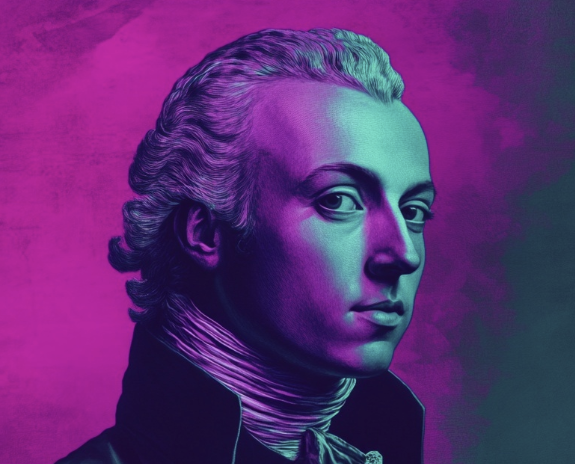
Man has his own inclinations and a natural will which, in his actions, by means of his free choice, he follows and directs. There can be nothing more dreadful than that the actions of one man should be subject to the will of another; hence no abhorrence can be more natural than that which a man has for slavery. And it is for this reason that a child cries and becomes embittered when he must do what others wish, when no one has taken the trouble to make it agreeable to him. He wants to be a man soon, so that he can do as he himself likes.
▼
Source
source
Part III : Selection on Education from Kant's other Writings, Ch. I Pedagogical Fragments, # 62
3 months 2 weeks ago
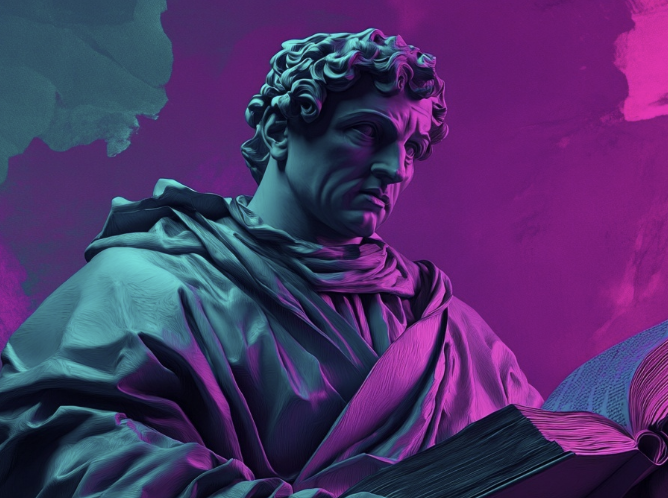
Heretics cannot themselves appear good unless they depict the Church as evil, false, and mendacious. They alone wish to be esteemed as the good, but the Church must be made to appear evil in every respect.
▼
Source
source
Dictata super Psalterium (Dictations on the Psalter). This is Luther's first major work from the years 1513 to 1515.

2 months 4 days ago
Everyone who has left houses or brothers or sisters or father or mother or children or fields for my sake will receive a hundred times as much and will inherit eternal life.
▼
Source
source
19:29

3 months 1 week ago
The entire history of social improvement has been a series of transitions, by which one custom or institution after another, from being a supposed primary necessity of social existence, has passed into the rank of an universally stigmatized injustice and tyranny. So it has been with the distinctions of slaves and freemen, nobles and serfs, patricians and plebeians; and so it will be, and in part already is, with the aristocracies of colour, race, and sex.
▼
Source
source
Ch. 5

2 months 1 week ago
Though we may prefer ourselves to the universe, we nonetheless loathe ourselves much more than we suspect. If the wise man is so rare a phenomenon, it is because he seems unshaken by the aversion which, like all beings, he must feel for himself.

3 months 1 week ago
These numerous points at which money is withdrawn from circulation and accumulated in numerous individual hoards or potential money-capitals appears as so many obstacles to circulation, because they immobilise the money and deprive it of its capacity to circulate for a certain time.
▼
Source
source
Vol. II, Ch. XXI, p. 497.

3 months 1 week ago
What we are destroying is nothing but houses of cards and we are clearing up the ground of language on which they stood.
▼
Source
source
§ 118
4 months 1 week ago
"The real saint", Baudelaire pretends to think, "is he who flogs and kills people for their own good." His argument will be heard. A race of real saints is beginning to spread over the earth for the purposes of confirming these curious conclusions about rebellion.
3 months 1 week ago
So we do sometimes think because it has been found to pay.
▼
Source
source
§ 470

2 weeks 4 days ago
Like other human freedoms, the freedoms embodied in market institutions are justified inasmuch as they meet human needs. Insofar as they fail to do this they can reasonably be altered. This is true not only of the rights that are involved in market institutions. It is true of all human rights.
▼
Source
source
'Modus Vivendi' (p.36)
3 months 1 week ago
I live in the Managerial Age, in a world of "Admin." The greatest evil is not now done in those sordid "dens of crime" that Dickens loved to paint. It is not done even in concentration camps and labour camps. In those we see its final result. But it is conceived and ordered (moved, seconded, carried, and minuted) in clean, carpeted, warmed, and well-lighted offices, by quiet men with white collars and cut fingernails and smooth-shaven cheeks who do not need to raise their voice. Hence, naturally enough, my symbol for Hell is something like the bureaucracy of a police state or the offices of a thoroughly nasty business concern.
▼
Source
source
1961 Preface

1 month 3 weeks ago
The soul was not made to dwell in a thing; and when forced to it, there is no part of that soul but suffers violence.
▼
Source
source
in The Simone Weil Reader, p. 155
3 months 1 week ago
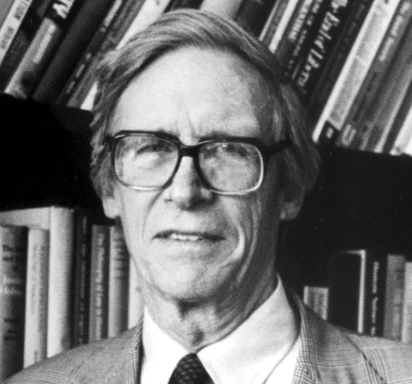
That persons have opposing interests and seek to advance their own conception of the good is not at all the same thing as their being moved by envy and jealousy.
▼
Source
source
Chapter IX, Section 81, p. 540
2 months 4 weeks ago
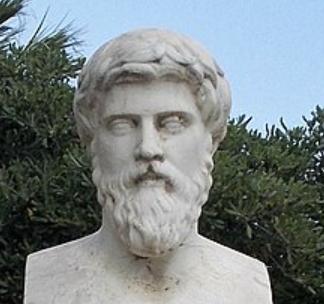
To Harmodius, descended from the ancient Harmodius, when he reviled Iphicrates [a shoemaker's son] for his mean birth, "My nobility," said he, "begins in me, but yours ends in you."
▼
Source
source
54 Iphicrates

1 month 4 weeks ago
From whatever side the matter is regarded, it is always found that reason confronts our longing for personal immortality and contradicts it. And the truth is, in all strictness, that reason is the enemy of life.

1 month 3 weeks ago
By relieving the brain of all unnecessary work, a good notation sets it free to concentrate on more advanced problems, and in effect increases the mental power of the race..
▼
Source
source
ch. 5

3 months 1 week ago
The supreme maxim in scientific philosophising is this: wherever possible, logical constructions are to be substituted for inferred entities.
▼
Source
source
Quoted in Hawes The Logic of Contemporary English Realism (1923), p. 110
2 months 1 week ago
I know that my birth is fortuitous, a laughable accident, and yet, as soon as I forget myself, I behave as if it were a capital event, indispensable to the progress and equilibrium of the world.

2 months 2 weeks ago
It is easy to see that, even in the freedom of early youth, an American girl never quite loses control of herself; she enjoys all permitted pleasures without losing her head about any of them, and her reason never lets the reins go, though it may often seem to let them flap.
▼
Source
source
Book Three, Chapter IX.
2 months 2 weeks ago
As for me, I am deeply a democrat; this is why I am in no way a socialist. Democracy and socialism cannot go together. You can't have it both ways.
▼
Source
source
Notes for a Speech on Socialism (1848).
1 week ago
As for civilization, from which at last we are about to escape, so far from being the social destiny of man, it is only a transient stage - a state of temporary evil with which globes are afflicted during the first ages of their career; it is for the human race a disease of infancy, like teething; but it is a disease which has been prolonged in our globe at least twenty centuries beyond its natural term, owing to the neglect on the part of the ancient philosophy to study association and passional attraction.
2 months 2 days ago
Man is always something more than what he knows of himself. He is not what he is simply once and for all, but is a process...

3 months 3 weeks ago
The superfluities of the rich are the necessaries of the poor. They who possess superfluities, possess the goods of others.
▼
Source
source
Patrologia Latina, vol. 37, p. 1922
2 weeks 6 days ago
All art is autobiographical; the pearl is the oyster's autobiography.
▼
Source
source
On the autobiographical nature of his films, in The Atlantic

2 days ago
Is it not a right glorious thing, and set of things, this that Shakspeare has brought us? For myself, I feel that there is actually a kind of sacredness in the fact of such a man being sent into this Earth.
3 months 1 week ago
Among human beings, the subjection of women is much more complete at a certain level of civilization than it is among savages. And the subjection is always reinforced by morality.
▼
Source
source
Ch. 15: Power and moral codes
2 months 1 week ago
An anxious man constructs his terrors, then installs himself within them: a stay-at-home in a yawning chasm.
2 months 2 days ago
In most cases, to be reasonable means not to be obstinate, which in turn points to conformity with reality as it is. The principle of adjustment is taken for granted. When the idea of reason was conceived, it was intended to achieve more than the mere regulation of the relation between means and ends: it was regarded as the instrument for understanding the ends, for determining them.
▼
Source
source
p. 10.

3 months 1 week ago
In the highest civilization, the book is still the highest delight. He who has once known its satisfactions is provided with a resource against calamity.
▼
Source
source
Quotation and Originality

3 months 1 week ago
The total possible consciousness may be split into parts which co-exist but mutually ignore each other.
▼
Source
source
Ch. 8
2 weeks 6 days ago
It's easy to support the status quo if one is not another of its victims.
▼
Source
source
Reply to Meet the people who want to turn predators into herbivores, TreeHugger, 4 Dec. 2015
3 months 1 week ago
In this third period (as it may be termed) of my mental progress, which now went hand in hand with hers, my opinions gained equally in breadth and depth, I understood more things, and those which I had understood before, I now understood more thoroughly. I had now completely turned back from what there had been of excess in my reaction against Benthamism. I had, at the height of that reaction, certainly become much more indulgent to the common opinions of society and the world, and more willing to be content with seconding the superficial improvement which had begun to take place in those common opinions, than became one whose convictions on so many points, differed fundamentally from them. I was much more inclined, than I can now approve, to put in abeyance the more decidedly heretical part of my opinions, which I now look upon as almost the only ones, the assertion of which tends in any way to regenerate society.
▼
Source
source
(p. 229)

2 months 3 weeks ago
The wind is blowing, adore the wind.
▼
Source
source
Symbol 8
2 months 3 days ago
Every thinker puts some portion of an apparently stable world in peril and no one can wholly predict what will emerge in its place.
▼
Source
source
Ch. VI: Nature, Mind and the Subject
CivilSimian.com created by AxiomaticPanic, CivilSimian, Kalokagathia