

2 months 1 week ago
"I exist" does not follow from "there is a thought now." The fact that a thought occurs at a given moment does not entail that any other thought has occurred at any other moment, still less that there has occurred a series of thoughts sufficient to constitute a single self. As Hume conclusively showed, no one event intrinsically points to any other. We infer the existence of events which we are not actually observing, with the help of general principle. But these principles must be obtained inductively. By mere deduction from what is immediately given we cannot advance a single step beyond. And, consequently, any attempt to base a deductive system on propositions which describe what is immediately given is bound to be a failure.
▼
Source
source
p. 47.

1 month 1 week ago
Never did Christ utter a single word attesting to a personal resurrection and a life beyond the grave.
▼
Source
source
My Religion (1884), Ch. 8

3 months 1 week ago
Wherever we turn we find that the real obstacles to peace are human will and feeling, human convictions, prejudices, opinions. If we want to get rid of war we must get rid first of all of its psychological causes. Only when this has been done will the rulers of the nations even desire to get rid of the economic and political causes.
▼
Source
source
Ch. 9, p. 138 [2012 reprint]

2 weeks 4 days ago
The belief in unity that has fuelled so many utopian dreams is an effort to reconcile the irreconcilable that ends in repression. Berlin suggests we renounce this venerable faith, and learn how to live with intractable conflict.
▼
Source
source
'Isaiah Berlin: The Value of Decency' (p.106-7)
2 months 6 days ago
Some propose mere welfare measures - while others come forward with grandiose systems of reform which, under the pretense of re-organizing society, are in fact intended to preserve the foundations, and hence the life, of existing society. Communists must unremittingly struggle against these bourgeois socialists because they work for the enemies of communists and protect the society which communists aim to overthrow.
1 month 1 week ago
Vanity dies hard; in some obstinate cases it outlives the man.
▼
Source
source
Prince Otto, reported in Bartlett's Familiar Quotations, 10th ed. (1919).

2 months 3 weeks ago
By the air which I breathe, and by the water which I drink, I will not endure to be blamed on account of this discourse.
▼
Source
source
As reported by Heraclides Ponticus (c. 360 BC), and Diogenes Laërtius, in Lives and Opinions of Eminent Philosophers, "Pythagoras", Sect. 6, in the translation of C. D. Yonge

1 month 3 weeks ago
No sacrifice is lost for a great ideal!
▼
Source
source
(p. 135)

3 months 1 week ago
Philosophers should consider the fact that the greatest happiness principle can easily be made an excuse for a benevolent dictatorship. We should replace it by a more modest and more realistic principle - the principle that the fight against avoidable misery should be a recognized aim of public policy, while the increase of happiness should be left, in the main, to private initiative.
▼
Source
source
As quoted in 1,001 Pearls of Wisdom (2006) by David Ross

4 months 1 week ago
"My field," said Goethe, "is time." That is indeed the absurd speech. What, in fact, is the Absurd Man? He who, without negating it, does nothing for the eternal. Not that nostalgia is foreign to him. But he prefers his courage and his reasoning. The first teaches him to live without appeal and to get along with what he has; the second informs him of his limits. Assured of his temporally limited freedom, of his revolt devoid of future, and of his mortal consciousness, he lives out his adventure within the span of his lifetime.

3 months 2 weeks ago
A man of understanding has lost nothing, if he has himself.
▼
Source
source
Ch. 39
1 month 4 days ago
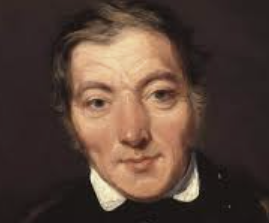
It is therefore, the interest of all, that every one, from birth, should be well educated, physically and mentally, that society may be improved in its character, - that everyone should be beneficially employed, physically and mentally, that the greatest amount of wealth may be created, and knowledge attained, - that everyone should be placed in the midst of those external circumstances that will produce the greatest number of pleasurable sensations, through the longest life, that man may be made truly intelligent, moral and happy, and be thus prepared to enter upon the coming Millennium.
▼
Source
source
A Development of the Principles & Plans on which to establish self-supporting Home Colonies
1 month 1 week ago
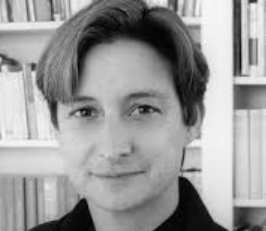
When the world fails us, when we ourselves become worldless in the social sense, the body suffers and shows its precarity; that mode of demonstrating precarity is itself, or carries with it, a political demand and even an expression of outrage. To be a body differentially exposed to harm or to death is precisely to exhibit a form of precarity, but also to suffer a form of inequality that is unjust. So, the situation of many populations who are increasingly subject to unlivable precarity raises for us the question of global obligations. If we ask why any of us should care about those who suffer at a distance from us, the answer is not to be found in paternalistic justifications, but in the fact that we inhabit the world together in relations of interdependency. Our fates are, as it were, given over to one another.
▼
Source
source
p. 50
2 months 3 days ago
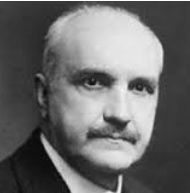
It is not politics that can bring true liberty to the soul; that must be achieved, if at all, by philosophy;
▼
Source
source
"The Irony of Liberalism"
1 month 1 week ago
Further acquaintance with the labors of the Quakers and their works - with Fox, Penn, and especially the work of Dymond (published in 1827) - showed me not only that the impossibility of reconciling Christianity with force and war had been recognized long, long ago, but that this irreconcilability had been long ago proved so clearly and so indubitably that one could only wonder how this impossible reconciliation of Christian teaching with the use of force, which has been, and is still, preached in the churches, could have been maintained in spite of it.
▼
Source
source
Chapter I, The Doctrine of Non-resistance to Evil by Force has been Professed by a Minority of Men from the Very Foundation of Christianity
4 months 1 day ago
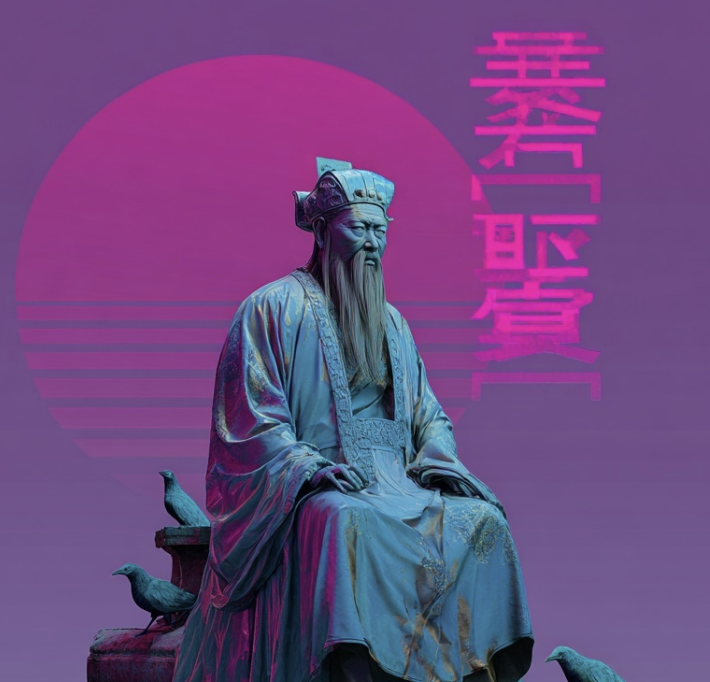
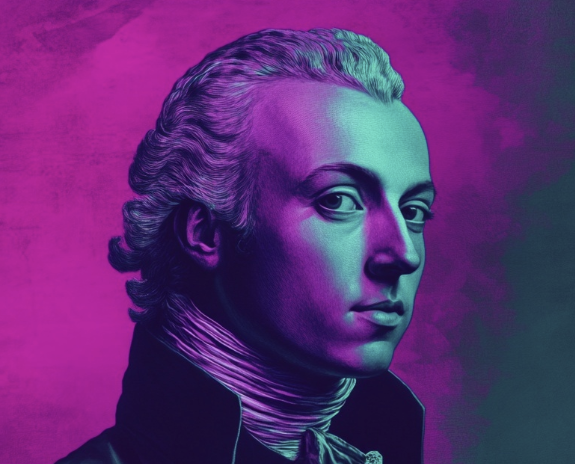
The superior man governs men, according to their nature, with what is proper to them, and as soon as they change what is wrong, he stops.
3 months 2 weeks ago
Habit... makes the endurance of evil easy (which, under the name of patience, is falsely honored as a virtue), because sensations of the same type, when continued without alteration for a long time, draw our attention away from the senses so that we are scarcely conscious of them at all. On the other hand, habit also makes the consciousness and the remembrance of good that has been received more difficult, which then gradually leads to ingratitude (a real vice). [...] Acquired habit deprives good actions of their moral value because it undermines mental freedom and, moreover, it leads to thoughtless repetitions of the same acts (monotony), and thus becomes ridiculous.
▼
Source
source
Kant, Immanuel (1996), pages 34-35
1 month 3 weeks ago
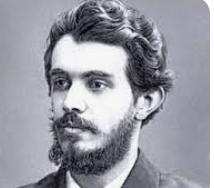
I see myself immersed in the depths of human existence and standing in the face of the ineffable mystery of the world and of all that is. And in that situation, I am made poignantly and burningly aware that the world cannot be self-sufficient, that there is hidden in some still greater depth a mysterious, transcendent meaning. This meaning is called God. Men have not been able to find a loftier name, although they have abused it to the extent of making it almost unutterable. God can be denied only on the surface; but he cannot be denied where human experience reaches down beneath the surface of flat, vapid, commonplace existence.
▼
Source
source
As translated in In Love with Eternity : Philosophical Essays and Fragments (2005) by Richard Schain, p. 47

4 months 1 week ago
There are limits beyond which your folly will not carry you. I am glad of that. In fact, I am relieved.

3 months 2 weeks ago
If I had as clear an idea of ghosts, as I have of a triangle or a circle, I should not in the least hesitate to affirm that they had been created by God; but as the idea I possess of them is just like the ideas, which my imagination forms of harpies, gryphons, hydras, &c., I cannot consider them as anything but dreams, which differ from God as totally as that which is not differs from that which is.
▼
Source
source
Letter to Hugo Boxel (October 1674) The Chief Works of Benedict de Spinoza (1891) Tr. R. H. M. Elwes, Vol. 2, Letter 58 (54).

3 months 1 week ago
""You do not love the mind of your race, nor the body. Any kind of creature will please you if only it is begotten by your kind as they now are. It seems to me, Thick One, what you really love is no completed creature but the very seed itself: for that is all that is left".
▼
Source
source
Oyarsa
2 months 4 weeks ago
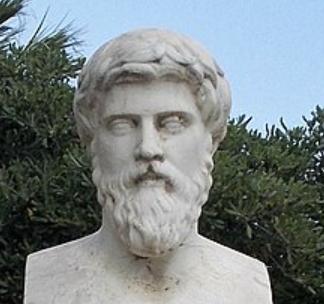
Aristodemus, a friend of Antigonus, supposed to be a cook's son, advised him to moderate his gifts and expenses. "Thy words," said he, "Aristodemus, smell of the apron."
▼
Source
source
44 Antigonus I
3 months 1 week ago
"And I say also this. I do not think the forest would be so bright, nor the water so warm, nor love so sweet, if there were no danger in the lakes."
▼
Source
source
Hyoi, p. 76
3 months 1 week ago
Our aim as scientists is objective truth; more truth, more interesting truth, more intelligible truth. We cannot reasonably aim at certainty. Once we realize that human knowledge is fallible, we realize also that we can never be completely certain that we have not made a mistake.

4 months ago
Of all the means which wisdom acquires to ensure happiness throughout the whole of life, by far the most important is friendship.

3 months 2 weeks ago
In a word, human life is more governed by fortune than by reason; is to be regarded more as a dull pastime than as a serious occupation; and is more influenced by particular humour, than by general principles. Shall we engage ourselves in it with passion and anxiety? It is not worthy of so much concern. Shall we be indifferent about what happens? We lose all the pleasure of the game by our phlegm and carelessness. While we are reasoning concerning life, life is gone; and death, though perhaps they receive him differently, yet treats alike the fool and the philosopher.
▼
Source
source
Part I, Essay 18: The Sceptic

3 months 1 week ago
Life seems to me essentially passion, conflict, rage... It is only intellect that keeps me sane; perhaps this makes me overvalue intellect against feeling.
▼
Source
source
Letter to Lady Ottoline Morrell in 1912, as quoted in Clark The life of Bertrand Russell (1976), p. 174

3 months 1 day ago
Satisfaction linked with dishonor or with harm to others is a prison for the seeker.
▼
Source
source
Vahishto-Ishti Gatha; Yasna 53, 6.
3 months 2 weeks ago
The mariner of old said to Neptune in a great tempest, "O God! thou mayest save me if thou wilt, and if thou wilt thou mayest destroy me; but whether or no, I will steer my rudder true."
▼
Source
source
Book II, Ch. 16. Of Glory
5 days ago
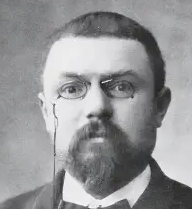
Thought is only a flash between two long nights, but this flash is everything.
▼
Source
source
Quoted in H. L. Mencken, A New Dictionary of Quotations
1 month 4 days ago
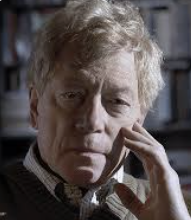
I've never been an optimist but that's fine because pessimists have the possibility of being agreeably surprised, and that's a reason for being pessimistic, but I've always defended a certain kind of pessimism because what is known as optimism is really a collection of illusions and I think one must recognise what all religious people know, which is that human beings are imperfect and fallen and there's no way in which they can alone surmount the problems which they themselves create.
▼
Source
source
From an interview with George Eaton "The Roger Scruton interview: the full transcript", New Statesman
3 months 1 day ago
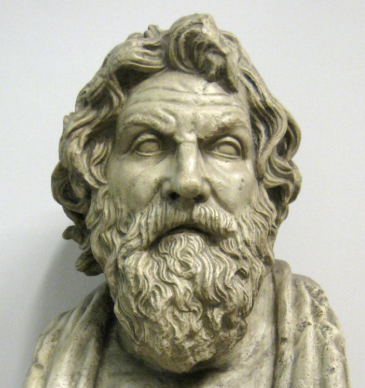
When he was asked what advantage had accrued to him from philosophy, his answer was, "The ability to hold converse with myself."
▼
Source
source
§ 4

2 months 1 week ago
Lucidity's task: to attain a correct despair, an Olympian ferocity.
4 months 1 week ago
The opposite of an idealist is too often a man without love.
4 months 1 week ago
Great novelists are philosopher-novelists who write in images instead of arguments.

3 months 2 weeks ago
It is too difficult to think nobly when one thinks only of earning a living.
▼
Source
source
Variant translation: It is too difficult to think nobly when one only thinks to get a living.
1 month 1 week ago
There is only one enduring happiness in life-to live for others.
▼
Source
source
Part 1, chapter 2
2 days ago
We must now ask how changes of this sort can come about, considering first discoveries, or novelties of fact, and then inventions, or novelties of theory. That distinction between discovery and invention or between fact and theory will, however, immediately prove to be exceedingly artificial.
▼
Source
source
p. 52

2 days ago
I take the liberty of asserting that there is one valid reason, and only one, for either punishing a man or rewarding him in this world; one reason, which ancient piety could well define: That you may do the will and commandment of God with regard to him; that you may do justice to him. This is your one true aim in respect of him; aim thitherward, with all your heart and all your strength and all your soul, thitherward, and not elsewhither at all! This aim is true, and will carry you to all earthly heights and benefits, and beyond the stars and Heavens. All other aims are purblind, illegitimate, untrue; and will never carry you beyond the shop-counter, nay very soon will prove themselves incapable of maintaining you even there. Find out what the Law of God is with regard to a man; make that your human law, or I say it will be ill with you, and not well!

1 month 1 week ago
War is never anything less than accelerated technological change.
▼
Source
source
(p. 102)

3 months 2 weeks ago
When you see a person squirming in the clutches of the Law, say to him: "Brother, get things straight. You let the Law talk to your conscience. Make it talk to your flesh.
▼
Source
source
Chapter 2, Verse 19
1 month 1 week ago
"He who exalts himself shall be humbled; and he who humbles himself shall be exalted." (Matthew 23:12) The person who exalts himself ... will be humbled, because a person who considers himself to be good, intelligent, and kind will not even try to become better, smarter, kinder. The humble person will be exalted, because he considers himself bad and will try to become better, kinder, and more reasonable.
▼
Source
source
p. 110

2 months 1 week ago
It is the function of a judge not to make but to declare the law, according to the golden mete-wand of the law and not by the crooked cord of discretion.
▼
Source
source
Preface to Brissot's Address

3 months 1 week ago
I die adoring God, loving my friends, not hating my enemies, and detesting superstition.
▼
Source
source
Déclaration de Voltaire, note to his secretary, Jean-Louis Wagnière, 28 February 1778
1 month 3 weeks ago
Those who have a spark of self-respect left, prefer open defiance, prefer crime to the emaciated, degraded position of poverty.
3 months 1 week ago
Without the aid of trained emotions the intellect is powerless against the animal organism. I had sooner play cards against a man who was quite skeptical about ethics, but bred to believe that 'a gentleman does not cheat,' than against an irreproachable moral philosopher who had been brought up among sharpers. In battle it is not syllogisms that will keep the reluctant nerves and muscles to their post in the third hour of the bombardment.
3 months 1 week ago
I have always thought respectable people scoundrels, and I look anxiously at my face every morning for signs of my becoming a scoundrel.
▼
Source
source
Quoted in Alan Wood Bertrand Russell: The Passionate Skeptic: A Biography, Vol. 2 (1958), p. 233

8 months 3 days ago
A common goal...
Issue:
Because of subgrouping, physical separation, different types of genetics and other cultural factors, as well as limited isolation people subjectively deviate from their universal human necessity. They become aware of it when they are exposed to difference regularly.
Solution:
With controlled information delivery, as well as a clear ideological goal like universality, we can clear away the noise of chaos to understand deterministic goals directly.

1 month 3 weeks ago
There is a physical, not moral, impossibility of supplying the wants of the intellect in the state of civilisation at which we have arrived. The stimulus, the training, the time, are all three wanting to us; or, in other words, the means and inducements are not there. Look at the poor lives we lead. It is a wonder that we are so good as we are, not that we are so bad. In looking round we are struck with the power of the organisations we see, not with their want of power. Now and then, it is true, we are conscious that there is an inferior organisation, but, in general, just the contrary.
CivilSimian.com created by AxiomaticPanic, CivilSimian, Kalokagathia