


3 months 1 week ago
None but a coward dares to boast that he has never known fear.
▼
Source
source
Attributed to Russell in M. Kumar Dictionary of Quotations, p. 76, but actually said by Marshal Lannes, according to The London Literary Gazette and Journal of Belles Lettres, Arts, Sciences (1824), p. 664

3 months 1 week ago
Beauty is the mark God sets upon virtue.
▼
Source
source
Beauty
2 months 1 week ago
Situation seems to be the mould in which men's characters are formed.
▼
Source
source
Letter 23

4 months 1 week ago
Ideas are cheap. It's only what you do with them that counts.

3 months 1 week ago
The progress from an absolute to a limited monarchy, from a limited monarchy to a democracy, is a progress toward a true respect for the individual.
3 months 1 week ago
So much of our time is spent in preparation, so much in routine and so much in retrospect, that the amount of each person's genius is confined to a very few hours.
▼
Source
source
Quoted in Simon Brown (ed.) The New England Farmer, vol. 9 (January 1857) p. 18
1 month ago
There were gentlemen and there were seamen in the navy of Charles II. But the seamen were not gentlemen, and the gentlemen were not seamen.
▼
Source
source
Vol. I, ch. 2
3 months 1 week ago
Neither of us cares a straw for popularity. A proof of this is for example, that, because of aversion to any personality cult, I have never permitted the numerous expressions of appreciation from various countries with which I was pestered during the existence of the International to reach the realm of publicity, and have never answered them, except occasionally by a rebuke. When Engels and I first joined the secret Communist Society we made it a condition that everything tending to encourage superstitious belief in authority was to be removed from the statutes.
▼
Source
source
Remarks against personality cults from a letter to W. Blos (10 November 1877).

1 month 1 week ago
When the evolutionary process shifts from biology to software technology the body becomes the old hardware environment. The human body is now a probe, a laboratory for experiments.
▼
Source
source
(p. 180)

2 months 1 week ago
The moment we believe we've understood everything grants us the look of a murderer.

2 months 3 weeks ago
Evil destroyeth itself.
3 months 1 week ago
Reason nevertheless prevails in world history.
2 months 3 weeks ago
Man know thyself; then thou shalt know the Universe and God.
▼
Source
source
As quoted in Fragments of Reality: Daily Entries of Lived Life (2006) by Peter Cajander, p. 109
3 weeks 3 days ago
I've had letters from Chinese scientists at the peak of the SARS epidemic who said the problem is a hybridization between the viruses planted into GMO feed, which is then fed to animals, then the virus jumped from the animals to humans. We're going to see more and more of these kinds of risks. I think the whole issue of the H1N1 virus was the fact that it had genes for three influenza types--human, chicken, pig. All of these crossings are becoming possible because of the crossing of genes across species barriers.
▼
Source
source
On the SARS epidemic, as quoted in "A Visit to My Kitchen: Vandana Shiva", The Huffington Post
4 months 1 week ago
If I were to imagine a girl deeply in love and some man who wanted to use all his reasoning powers and knowledge to ridicule her passion, well, there's surely no question of the enamoured girl having to choose between keeping her wealth and being ridiculed. No, but if some extremely cool and calculating man calmly told the young girl, "I will explain to you what love is," and the girl admitted that everything he told her was quite correct, I wonder if she wouldn't choose his miserable common sense rather than her wealth?
2 months 1 week ago
What place do we occupy in the "universe"? A point, if that! Why reproach ourselves when we are evidently so insignificant? Once we make this observation, we grow calm at once: henceforth, no more bother, no more frenzy, metaphysical or otherwise. And then that point dilates, swells, substitutes itself for space. And everything begins all over again.
3 months 2 weeks ago
The logic now in use serves rather to fix and give stability to the errors which have their foundation in commonly received notions than to help the search for truth. So it does more harm than good.
▼
Source
source
Aphorism 7
3 months 1 week ago
The degree of one's emotion varies inversely with one's knowledge of the facts - the less you know the hotter you get.
▼
Source
source
Attributed to Russell in Distilled Wisdom (1964) by Alfred Armand Montapert, p. 145

2 days ago
Complete, at the same time, was his confidence in his own judgment when it spoke to him decisively. He was one of those few that could believe and know as well as inquire and be of opinion. When I remember how much he admired intellectual force, how much he had of it himself, and yet how unconsciously and contentedly he gave others credit for superiority, I again see the healthy spirit of the genuine man.
2 weeks 6 days ago
The reason for sketching what's technically feasible with the tools of synthetic biology is that only after human complicity in the persistence of suffering in the biosphere is acknowledged can we hope to have an informed socio-political debate on the morality of its perpetuation. No serious ethical discussion of free-living animal suffering can begin in the absence of recognition of human responsibility for nonhuman well-being.
▼
Source
source
Compassionate Biology: How CRISPR-based gene drives" could cheaply, rapidly and sustainably reduce suffering throughout the living world", BLTC Research, 2016
3 months 4 weeks ago
I will speak in a low voice, just so as to let the judges hear me. For men are not wanting who would be glad to excite that people against me and against every eminent man; and I will not assist them and enable them to do so more easily.
▼
Source
source
Cicero, The Orations of Marcus Tullius Cicero; Translation by C.D. Yonge., 1856.
1 month 3 weeks ago
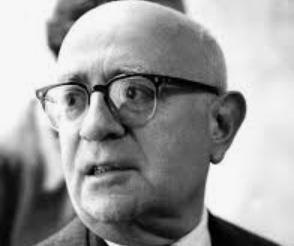
The conflicts that tear society apart resemble the distinction between the concept and the particular facts subordinated to it. ... Whatever refuses to abide by the unity imposed by the principle of dominion manifests itself not as something indifferent to that principle, but as an infringement of logic: as a contradiction.
▼
Source
source
p. 169
1 week 1 day ago
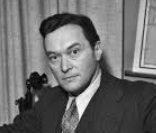
Democracy is a meaningless word unless it signifies that differences of opinion have been expressed, represented, and even satisfied in the decision.
▼
Source
source
Ch. IV: "The Line of Least Resistance", pp. 47-48

2 months 1 week ago
It is better to be unhappy and know the worst, than to be happy in a fool's paradise!
▼
Source
source
Part 4, Chapter 5
4 months 1 week ago
Scientists have pushed back the horizon of time from the biblical 6,000 years to 4,600,000,000 years for the age of Earth a 760,000-fold increase.
5 days ago
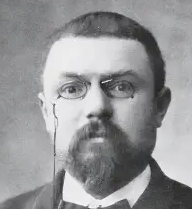
Logic teaches us that on such and such a road we are sure of not meeting an obstacle; it does not tell us which is the road that leads to the desired end. For this, it is necessary to see the end from afar, and the faculty which teaches us to see is intuition. Without it, the geometrician would be like a writer well up in grammar but destitute of ideas.
▼
Source
source
Part II. Ch. 2 : Mathematical Definitions and Education, p. 130
3 months 2 weeks ago
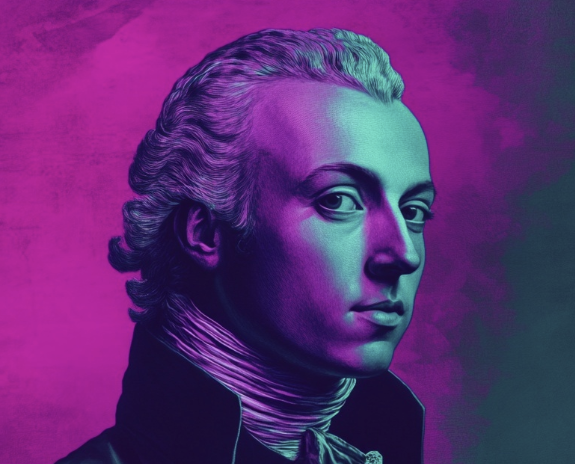
As the analysis of a substantial composite terminates only in a part which is not a whole, that is, in a simple part, so synthesis terminates only in a whole which is not a part, that is, the world.

2 months 2 weeks ago
If it be of the highest importance to man, as an individual, that his religion should be true, the case of society is not the same. Society has no future life to hope for or to fear; and provided the citizens profess a religion, the peculiar tenets of that religion are of very little importance to its interests. Variant translation: Though it is very important for man as an individual that his religion should be true, that is not the case for society. Society has nothing to fear or hope from another life; what is most important for it is not that all citizens profess the true religion but that they should profess religion.
▼
Source
source
Chapter XVII.

2 months 1 week ago
Some decent regulated pre-eminence, some preference (not exclusive appropriation) given to birth, is neither unnatural, nor unjust, nor impolitic.
1 month 2 weeks ago
Rationality requires a choice among all possible alternative behaviors. In actual behavior, only a very few of all these possible alternatives come to mind.
3 months 2 weeks ago
I have no knowledge of myself as I am, but merely as I appear to myself.
▼
Source
source
B 158
2 months 1 week ago
In every man sleeps a prophet, and when he wakes there is a little more evil in the world

2 months 3 weeks ago
All the good are friends of one another.
▼
Source
source
As quoted in Stromata, v. 14. by Clement of Alexandria
4 months 1 week ago
If self-knowledge does not lead to knowing oneself before God - well, then there is something to what purely human self-observation says, namely, this self-knowledge leads to a certain emptiness that produces dizziness. Only by being before God can one totally come to oneself in the transparency of soberness.
2 months 3 days ago
Give an inch, he'll take an ell.
▼
Source
source
Liberty and Necessity (no. 111)
2 days ago
The inventive genius of great England will not forever sit patient with mere wheels and pinions, bobbins, straps and billy-rollers whirring in the head of it. The inventive genius of England is not a Beaver's, or a Spinner's or Spider's genius: it is a Man's genius, I hope, with a God over him!
7 months 2 weeks ago
When we observe a thing, we see too much in it, we fall under the spell of the wealth of empirical detail which prevents us from clearly perceiving the notional determination which forms the core of the thing. The problem is thus not that of how to grasp the multiplicity of determinations, but rather to abstract from them, how to constrain our gaze and teach it to grasp only the notional determinism.
1 month 2 weeks ago
If by motivation we mean whatever it is that causes someone to follow a particular course of action, then every action is motivated - by definition. But in most human behavior the relation between motives and action is not simple; it is mediated by a whole chain of events and surrounding conditions. We observe a man scratching his arm. His motive (or goal)? To relieve an itch.
▼
Source
source
p. 265.
1 month 1 week ago
Darwin's 'survival of the fittest' is really a special case of a more general law of survival of the stable. The universe is populated by stable things. The universe is populated by stable things. A stable thing is a collection of atoms that is permanent enough or common enough to deserve a name. It may be a unique collection of atoms, such as the Matterhorn, that lasts long enough to be worth naming. Or it may be a class of entities, such as rain drops, that come into existence at a sufficiently high rate to deserve a collective name, even if any one of them is short-lived.
▼
Source
source
Ch. 2. The replicators
3 months 1 week ago
We are and irrefutable arbiters of value, and in the world of value Nature is only a part. Thus in this world we are greater than Nature. In the world of values, Nature in itself is neutral, neither good nor bad deserving of neither admiration nor censure. It is we who create value and our desires which confer value. In this realm we are kings, and we debase our kingship if we bow down to Nature. It is for us to determine our good life, not for Nature - not even for Nature personified as God.
3 months 3 weeks ago
If there is something more excellent than the truth, then that is God; if not, then truth itself is God.
2 months 1 week ago
"War," says Machiavel, "ought to be the only study of a prince;" and by a prince he means every sort of state, however constituted. "He ought," says this great political doctor, "to consider peace only as a breathing-time, which gives him leisure to contrive, and furnishes ability to execute military plans." A meditation on the conduct of political societies made old Hobbes imagine that war was the state of nature.

1 month 3 weeks ago
We might liken the 'two selves' to Laurel and Hardy. Ollie is the objective mind, 'you'. Stan is the subjective mind, the 'hidden you'. But Stan happens to be in control of your energy supply. So if you wake up feeling low and discouraged, you (Ollie) tend to transmit your depression to Stan, who fails to send you energy, which makes you feel lower than ever. This vicious circle is the real cause of most mental illness.
▼
Source
source
p. 121

3 months 1 week ago
The human imagination has seldom had before it an object so sublimely ordered as the medieval cosmos. If it has an aesthetic fault, it is perhaps, for us who have known romanticism, a shade too ordered. For all its vast spaces it might in the end afflict us with a kind of claustrophobia. Is there nowhere any vagueness? No undiscovered by-ways? No twilight? Can we never really get out of doors?
▼
Source
source
The Discarded Image: An Introduction to Medieval and Renaissance Literature, 1964
2 weeks 6 days ago
It is hard to imagine an experience more horrific than being eaten alive. Most of us would prefer not to imagine what it must feel like. Note that the photographer here had to persuade the park ranger to violate the park rules and put the baby elephant out of his misery.By analogy, suppose it were lawful to visit Third World countries for photoshoots but illegal to "interfere" and help a stricken human baby. Is there a fundamental difference between "ethical" intervention to help humans and "sentimental" pleas to "interfere" and help non-humans? Should we encourage the preservation of life-forms such as the hyena in their current guise? Or do the value judgements underlying the "science" of conservation biology need to be re-examined?
▼
Source
source
"Hyenas Eat Baby Elephant Alive: The Case for Intervention"

2 months 1 week ago
The blindness of those who think it absurd to suppose that complex organic forms may have arisen by successive modifications out of simple ones becomes astonishing when we remember that complex organic forms are daily being thus produced. A tree differs from a seed immeasurably in every respect... Yet is the one changed in the course of a few years into the other: changed so gradually, that at no moment can it be said - Now the seed ceases to be, and the tree exists.

2 months 2 weeks ago
How can even the lowest mind, if he reflects at all the marvels of this earth and sky, the brilliant fashioning of plants and animals, remain blind to the fact that this wonderful world with its settled order must have a maker to design, determine and direct it?
▼
Source
source
Tibawi, A.L. (ed. and tr.). (1965) Al-Risala al-Qudsiyya (The Jerusalem Epistle) "Al-Ghazali's Tract on Dogmatic Theology". In: The Islamic Quarterly, 9:3-4 (1965), 3-4.
1 month 3 weeks ago
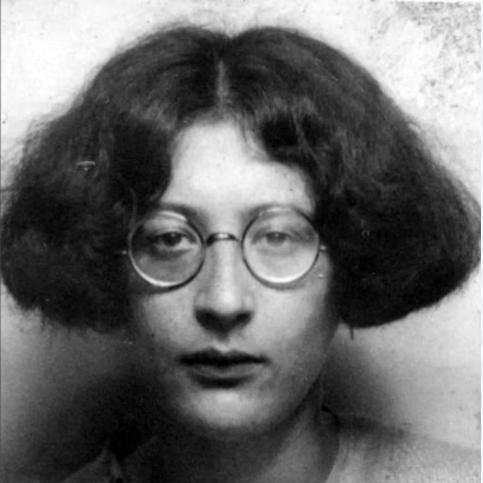
There is nothing that comes closer to true humility than the intelligence. It is impossible to feel pride in one's intelligence at the moment when one really and truly exercises it.
▼
Source
source
As quoted in the Introduction (by Siân Miles) p. 35
1 month 3 weeks ago
If countries were named after the words you first hear when you go there, England would have to be called Damn It.
▼
Source
source
F 33

2 months 3 days ago
I will destroy this house, and no one will be able to build it....
CivilSimian.com created by AxiomaticPanic, CivilSimian, Kalokagathia