

3 months 3 weeks ago
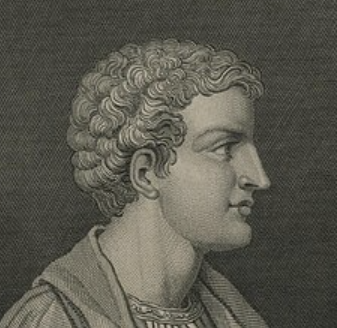
He wins every hand who mingles profit with pleasure, by delighting and instructing the reader at the same time.
▼
Source
source
Line 343


3 months 6 days ago
The First thing that strikes a traveler in the United States is the innumerable multitude of those who seek to emerge from their original condition; and the second is the rarity of lofty ambition to be observed in the midst of the universally ambitious stir of society. No Americans are devoid of a yearning desire to rise, but hardly any appear to entertain hopes of great magnitude or to pursue very lofty aims. All are constantly seeking to acquire property, power, and reputation.
▼
Source
source
Book Three, Chapter XIX.
3 months 3 weeks ago
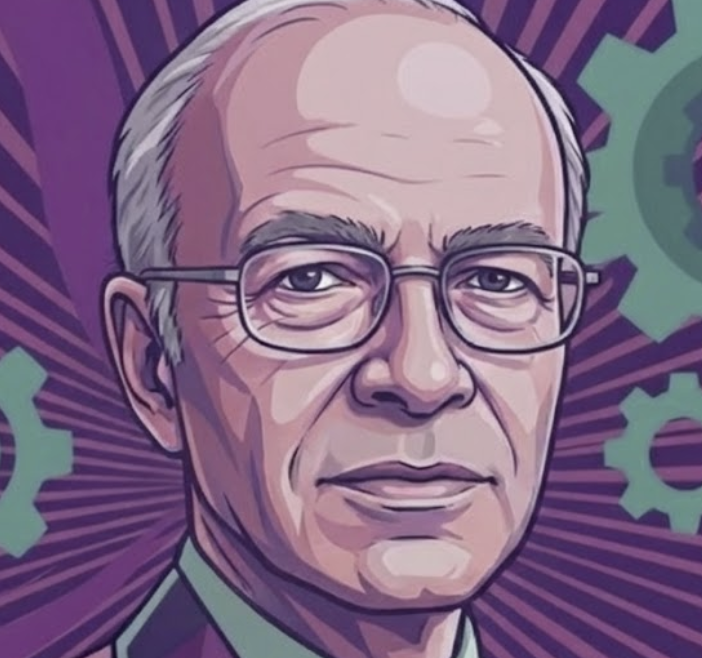
Philosophy is not politics, and we do our best, within our all-too-human limitations, to seek the truth, not to score points against opponents. There is little satisfaction in gaining an easy triumph over a weak opponent while ignoring better arguments against your views.
▼
Source
source
'Last Generation': A Response, The New York Times, June 16, 2010.
3 months 3 weeks ago
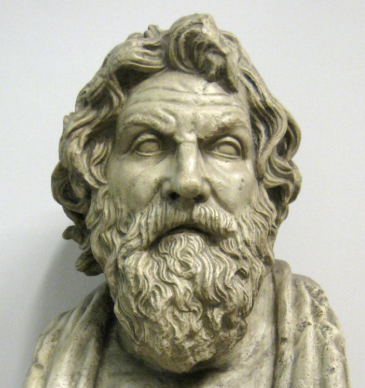
Virtue is the same for a man and for a woman.
▼
Source
source
§ 5

3 months 3 weeks ago
Fame and wealth without wisdom are unsafe possessions.

4 months 3 weeks ago
Luxurious food and drinks, in no way protect you from harm. Wealth beyond what is natural, is no more use than an overflowing container. Real value is not generated by theaters, and baths, perfumes or ointments, but by philosophy.
1 month 2 weeks ago
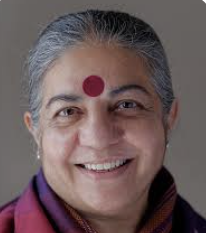
Properties perceived in nature will depend on how one looks and how one looks depends on the economic interest one has in the resources of nature. The value of profit maximization is thus linked to reductionist systems, while the value of life and the maintenance of life is linked to holistic and ecological systems.
▼
Source
source
Staying Alive: Women, Ecology, and Development

3 months 3 weeks ago
Water and navigation had that role to play. Locked in the ship from which he could not escape, the madman was handed over to the thousand-armed river, to the sea where all paths cross, and the great uncertainty that surrounds all things. A prisoner in the midst of the ultimate freedom, on the most open road of all, chained solidly to the infinite crossroads. He is the Passenger par excellence, the prisoner of the passage. It is not known where he will land, and when he lands, he knows not whence he came. His truth and his home are the barren wasteland between two lands that can never be his own. [...] One thing is certain: the link between water and madness is deeply rooted in the dream of the Western man.
▼
Source
source
Part One: 1. Stultifera Navis
4 months 2 days ago
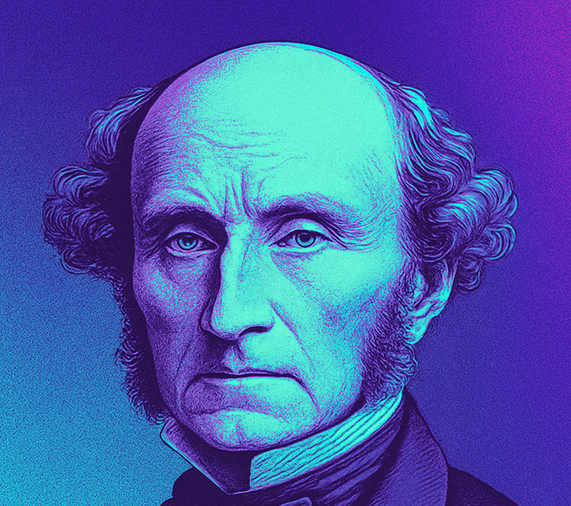
I never turned recreant to intellectual culture, or ceased to consider the power and practice of analysis as an essential condition both of individual and of social improvement. But I thought that it had consequences which required to be corrected, by joining other kinds of cultivation with it. The maintenance of a due balance among the faculties, now seemed to me of primary importance. The cultivation of the feelings became one of the cardinal points in my ethical and philosophical creed.
▼
Source
source
(pp. 143-144)
2 months 3 weeks ago
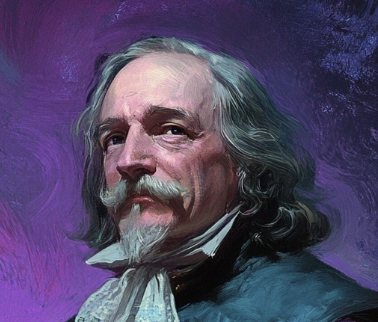
So that in the first place, I put for a general inclination of all mankind a perpetual and restless desire of Power after power, that ceaseth only in Death. And the cause of this is not always that a man hopes for a more intensive delight than he has already attained to, or that he cannot be content with a moderate power: but because he cannot assure the power and means to live well, which he hath present, without the acquisition of more.
▼
Source
source
The First Part, Chapter 11, p. 47

3 months 1 week ago
Power is the near neighbour of necessity.
▼
Source
source
As quoted in Aurea Carmina (8) by Hierocles of Alexandria, as translated in Dictionary of Quotations (1906) by Thomas Benfield Harbottle, p. 356
2 months 3 weeks ago
And the Science of them, is the true and onely Moral Philosophy. For Moral Philosophy is nothing else but the Science of what is Good, and Evill, in the conversation, and Society of mankind. Good, and Evill, are names that signify our Appetites, and Aversions; which in different tempers, customes, and doctrines of men, are different.
▼
Source
source
The First Part, Chapter 15, p. 79
4 months 2 days ago
Their worship was not paid to the demon which such a being as they imagined would really be, but to their own idea of excellence. The evil is, that such a belief keeps the ideal wretchedly low; and opposes the most obstinate resistance to all thought which has a tendency to raise it higher. Believers shrink from every train of ideas which would lead the mind to a clear conception and an elevated standard of excellence, because they feel (even when they do not distinctly see) that such a standard would conflict with many of the dispensations of nature, and with much of what they are accustomed to consider as the Christian creed.
▼
Source
source
(p. 42)

2 months 3 weeks ago
Get hold of yourself, be confident once more, don't forget that it is not given to just anyone to have idolized discouragement without succumbing to it.
3 weeks 3 days ago
If the gist of the controversy were to be expressed in a single sentence, one might say that the mechanists represented the opposition of the natural sciences to philosophic interference, while the dialecticians stood for the supremacy of philosophy over the sciences and thus reflected the characteristic tendency of Soviet ideological development. The mechanists' outlook might be called negative, while the dialecticians ascribed immense importance to philosophy and regarded themselves as specialists. The mechanists, however, had a much better idea of what science was about. The dialecticians were ignoramuses in this sphere and confined themselves to general formulas about the philosophical need to "generalize" and unify the sciences; on the other hand, they knew more than the mechanists about the history of philosophy. (Eventually the party condemned both camps, and created a dialectical synthesis of both forms of ignorance.)
▼
Source
source
(pg. 64)

4 months ago
Our responsibility is much greater than we might have supposed, because it involves all mankind.
▼
Source
source
Existentialism and Human Emotions

2 months 1 day ago
As soon as men live entirely in accord with the law of love natural to their hearts and now revealed to them, which excludes all resistance by violence, and therefore hold aloof from all participation in violence - as soon as this happens, not only will hundreds be unable to enslave millions, but not even millions will be able to enslave a single individual.
▼
Source
source
V

4 months 2 days ago
Perhaps I am more than usually jealous with respect to my freedom. I feel that my connection with and obligation to society are still very slight and transient. Those slight labors which afford me a livelihood, and by which it is allowed that I am to some extent serviceable to my contemporaries, are as yet commonly a pleasure to me, and I am not often reminded that they are a necessity. So far I am successful. But I foresee, that, if my wants should be much increased, the labor required to supply them would become a drudgery. If I should sell both my forenoons and afternoons to society, as most appear to do, I am sure, that, for me, there would be nothing left worth living for. I trust that I shall never thus sell my birthright for a mess of pottage.
▼
Source
source
p. 486

4 months 1 day ago
Technological progress has merely provided us with more efficient means for going backwards.
▼
Source
source
Ch. 1, p. 9 [2012 reprint]. Also in "Tomorrow and Tomorrow and Tomorrow" in Adonis and the Alphabet (1956); later in Collected Essays (1959), p. 293

2 months 2 weeks ago
We have all experienced the moments that William James calls melting moods, when it suddenly becomes perfectly obvious that life is infinitely fascinating. And the insight seems to apply retrospectively. Periods of my life that seemed confusing and dull at the time now seem complex and rather charming. It is almost as if some other person a more powerful and mature individual has taken over my brain. This higher self views my problems and anxieties with kindly detachment, but entirely without pity. Looking at problems through his eyes, I can see I was a fool to worry about them.
▼
Source
source
pp. 2-3


3 months 1 day ago
If insistence on them tends to unsettle established systems ... self-evident truths are by most people silently passed over; or else there is a tacit refusal to draw from them the most obvious inferences.
▼
Source
source
Ethics (New York:1915), § 14, pp. 38-39
2 months 3 weeks ago
Without God, everything is nothingness; and with God? Supreme nothingness.
3 months 1 week ago
The soul of man is divided into three parts, intelligence, reason, and passion. Intelligence and passion are possessed by other animals, but reason by man alone.
▼
Source
source
As reported by Alexander Polyhistor, and Diogenes Laërtius in Lives and Opinions of Eminent Philosophers, "Pythagoras", Sect. 30, in the translation of C. D. Yonge

4 months 1 week ago
Wherever you encounter truth, look upon it as Christianity.
▼
Source
source
As quoted in Erasmus of Rotterdam (1934) by Stefan Zweig, Eden Paul, and Cedar Paul, p. 91; reprinted in Erasmus - The Right to Heresy (2008) by Stefan Zweig, p. 62
4 months 1 day ago
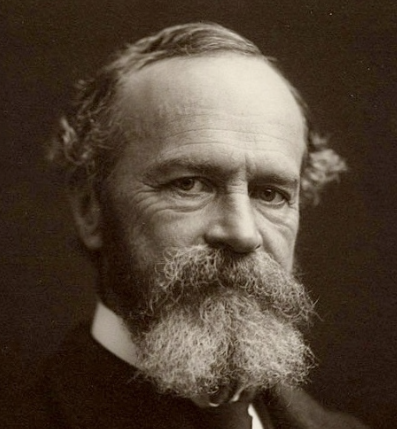
The sentiment of reality can indeed attach itself so strongly to our object of belief that our whole life is polarized through and through, so to speak, by its sense of the existence of the thing believed in, and yet that thing, for the purpose of definite description, can hardly be said to be present to our mind at all.
▼
Source
source
Lecture III, "The Reality of the Unseen"
1 day ago
The Perception of Time involves a constant and latent kind of memory, which may be termed a 'Sense of Succession'. The Perception of Number also involves this Sense of Succession, although in small numbers we appear to apprehend the units simultaneously and not successively.
2 months 1 week ago
Care and responsibility are constituent elements of love, but without respect for and knowledge of the beloved person, love deteriorates into domination and possessiveness. Respect is not fear and awe; it denotes, in accordance with the root of the word (respicere = to look at), the ability to see a person as he is, to be aware of his individuality and uniqueness. To respect a person is not possible without knowing him; care and responsibility would be blind if they were not guided by the knowledge of the person's individuality.
▼
Source
source
Ch. 3; in Ch. 2 of his later work The Art of Loving (1956) a similar statement is made :
4 months 1 day ago
If belief consists in an emotional reaction of the entire man on an object, how can we believe at will? We cannot control our emotions.... But gradually our will can lead us to the same results by a very simple method: we need only in cold blood act as if the thing in question were real, and keep acting as if it were real, and it will infallibly end by growing into such a connection with our life that it will become real. It will become so knit with habit and emotion that our interests in it will be those which characterize belief.
▼
Source
source
Ch. 21

1 month 3 weeks ago
I am often accused of expressing contempt and despising religious people. I don't despise religious people, I despise what they stand for. I like to quote the British journalist Johann Hari who said, "I have so much respect for you, that I cannot respect your ridiculous ideas."
▼
Source
source
Reason Rally, National Mall, Washington, DC, 2012-03-24 Richard Dawkins and his Foundation at the Reason Rally, YouTube, 7 April 2012
4 months 1 day ago
A belief in hell and the knowledge that every ambition is doomed to frustration at the hands of a skeleton have never prevented the majority of human beings from behaving as though death were no more than an unfounded rumour, and survival a thing beyond the bounds of possibility.
▼
Source
source
Themes and Variations, 1950

4 months 4 weeks ago
To be happy, we must not be too concerned with others.
4 months 2 days ago
The law will never make men free; it is men who have got to make the law free.
▼
Source
source
"Slavery in Massachusetts", 1854


4 months ago
The Christian is in a different position from other people who are trying to be good. They hope, by being good, to please God if there is one; or-if they think there is not-at least they hope to deserve approval from good men. But the Christian thinks any good he does comes from the Christ-life inside him. He does not think God will love us because we are good, but that God will make us good because He loves us; just as the roof of a greenhouse does not attract the sun because it is bright, but becomes bright because the sun shines on it.
▼
Source
source
Book II, Chapter 5, "The Practical Conclusion"

2 months 3 weeks ago
When it is evening, ye say, It will be fair weather: for the sky is red. And in the morning, It will be foul weather to day: for the sky is red and lowring. O ye hypocrites, ye can discern the face of the sky; but can ye not discern the signs of the times? A wicked and adulterous generation seeketh after a sign; and there shall no sign be given unto it, but the sign of the prophet Jonas.
▼
Source
source
16:2-4 (KJV)
2 months 3 weeks ago
If someone incessantly drops the word "life," you know he's a sick man.

1 month 4 weeks ago
The new science of communication is percept, not concept.
▼
Source
source
(p. 259)

5 months 4 days ago
This is the mistake which I seem to make eternally, that I imagine the sufferings of others as far greater than they really are. Ever since my childhood, the proposition, my greatest dangers lie in pity, has been confirmed again and again.
2 months 3 weeks ago
Self-knowledge - the bitterest knowledge of all and also the kind we cultivate least: what is the use of catching ourselves out, morning to night, in the act of illusion, pitilessly tracing each act back to its root, and losing case after case before our own tribunal?
4 months ago
He came in sight of a pass guarded by armed men. 'you cannot pass ... Do you not know that all this country belongs to the Spirit of the Age? ... Here Enlightenment, take this fugitive to our Master.'
▼
Source
source
Pilgrim's Regress 44-45
1 month 3 weeks ago
The argument of this book is that we, and all other animals, are machines created by our genes.
▼
Source
source
Ch. 1. Why Are People?
1 month 4 weeks ago
Our book technology has Gutenberg at one end and the Ford assembly lines at the other. Both are obsolete.
▼
Source
source
(p. 99)
3 months 3 weeks ago
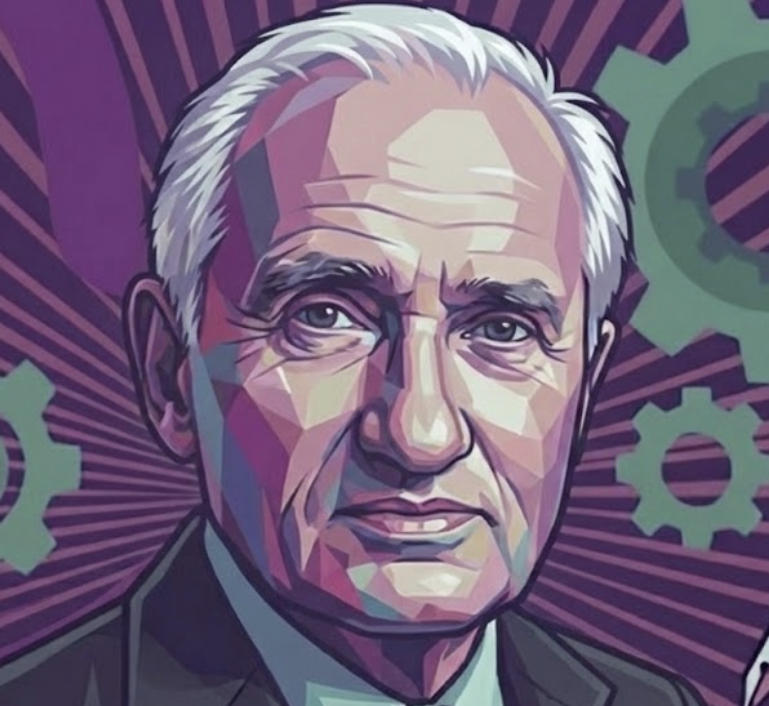
Although objectively greater demands are placed on this authority, it operates less as a public opinion giving a rational foundation to the exercise of political and social authority, the more it is generated for the purpose of an abstract vote that amounts to no more than an act of acclamation within a public sphere temporarily manufactured for show or manipulation.
▼
Source
source
p. 222

2 weeks 2 days ago
And we cannot change this order of things; but what we can do is to acquire stout hearts, worthy of good men, thereby courageously enduring chance and placing ourselves in harmony with Nature.

2 months 2 weeks ago
The dominant, almost general, idea of revolution - particularly the Socialist idea - is that revolution is a violent change of social conditions through which one social class, the working class, becomes dominant over another class, the capitalist class. It is the conception of a purely physical change, and as such it involves only political scene shifting and institutional rearrangements. Bourgeois dictatorship is replaced by the "dictatorship of the proletariat" - or by that of its "advance guard," the Communist Party. Lenin takes the seat of the Romanovs, the Imperial Cabinet is rechristened Soviet of People's Commissars, Trotsky is appointed Minister of War, and a labourer becomes the Military Governor General of Moscow. That is, in essence, the Bolshevik conception of revolution, as translated into actual practice.
2 months 1 week ago
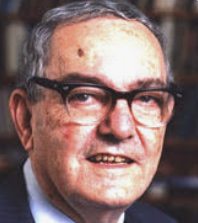
By public administration is meant, in common usage, the activities of the executive branches of national, state, and local governments; independent boards and commissions set up by the congress and state legislatures; government corporations, and certain agencies of a specialized character. Specifically excluded are judicial and legislative agencies within the government and nongovernmental administration.
▼
Source
source
p. 7
4 months ago
Eh bien, continuons... Well, let's get on with it.
2 days ago
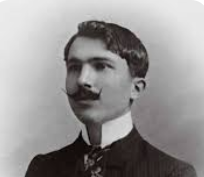
Who holds a sword is tempted, who has youth must play,he who does not fear death on earth does not fear God.
▼
Source
source
Odysseus, Book VIII, line 560
CivilSimian.com created by AxiomaticPanic, CivilSimian, Kalokagathia