

2 months 3 weeks ago
Imminent seems the collapse of that which for millennium has constituted man's universe. The new world which has arisen as an apparatus for supply of the necessaries of life compels everything and everyone to serve it. It annihilates whatever it has no place for person seems to be going undergoing absorption into that which is nothing more than a means to an end, into that which is devoid of purpose of significance.

4 months 1 day ago
We see then, commodities are in love with money, but "the course of true love never did run smooth".
▼
Source
source
Vol. I, Ch. 3, Section 2, pg. 121.
Just now
The Logic of Induction is the 'Criterion of Truth' inferred from Facts, as the Logic of Deduction is the 'Criterion of Truth' deduced from necessary Principle. In Art, Truth is a means to an end; in Science, it is the only end.

4 months ago
In fact, it is as difficult to appropriate the thoughts of others as it is to invent.
▼
Source
source
Quotation and Originality
4 months 1 day ago
Though they may think the proof incomplete that the universe is a work of design, and though they assuredly disbelieve that it can have an Author and Governor who is absolute in power as well as perfect in goodness, they have that which constitutes the principal worth of all religions whatever, an ideal conception of a Perfect Being, to which they habitually refer as the guide of their conscience; and this ideal of Good is usually far nearer to perfection than the objective Deity of those, who think themselves obliged to find absolute goodness in the author of a world so crowded with suffering and so deformed by injustice as ours.
▼
Source
source
(p. 46)

4 months 2 weeks ago
The Path is not far from man. When men try to pursue a course, which is far from the common indications of consciousness, this course cannot be considered The Path.

4 months ago
A thing is important if anyone think it important.
▼
Source
source
Ch. 28, Note 35

3 months 4 weeks ago
Quietism is the attitude of people who say, "let others do what I cannot do." The doctrine I am presenting before you is precisely the opposite of this, since it declares that there is no reality except in action. It goes further, indeed, and adds, "Man is nothing else but what he purposes, he exists only in so far as he realizes himself, he is therefore nothing else but the sum of his actions, nothing else but what his life is." Hence we can well understand why some people are horrified by our teaching.
▼
Source
source
p. 41
1 month 4 weeks ago
Society in shipwreck is a comfort to all.
▼
Source
source
Maxim 144
4 months ago
Children are all foreigners.
▼
Source
source
September 25, 1839

3 months 4 weeks ago
Do not allow your dreams of a beautiful world to lure you away from the claims of men who suffer here and now.
▼
Source
source
p. 485

4 months 3 weeks ago
Autumn is a second Spring when every leaf is a flower.
4 months 1 day ago
In early times, the great majority of the male sex were slaves, as well as the whole of the female. And many ages elapsed, some of them ages of high cultivation, before any thinker was bold enough to question the rightfulness, and the absolute social necessity, either of the one slavery or of the other.
▼
Source
source
Ch. 1

2 months 3 weeks ago
Are ye also yet without understanding? Do not ye yet understand, that whatsoever entereth in at the mouth goeth into the belly, and is cast out into the draught? But those things which proceed out of the mouth come forth from the heart; and they defile the man. For out of the heart proceed evil thoughts, murders, adulteries, fornications, thefts, false witness, blasphemies: These are the things which defile a man: but to eat with unwashen hands defileth not a man.
▼
Source
source
15:16-20 (KJV)

1 month 4 weeks ago
At electric speed, all forms are pushed to the limits of their potential.
▼
Source
source
p. 109

2 months 1 week ago
This perversion of the ethical values soon crystallized into the all-dominating slogan of the Communist Party: THE END JUSTIFIES ALL MEANS. Similarly in the past the Inquisition and the Jesuits adopted this motto and subordinated to it all morality. It avenged itself upon the Jesuits as it did upon the Russian Revolution. In the wake of this slogan followed lying, deceit, hypocrisy and treachery, murder, open and secret. It should be of utmost interest to students of social psychology that two movements as widely separated in time and ideas as Jesuitism and Bolshevism reached exactly similar results in the evolution of the principle that the end justifies all means. The historic parallel, almost entirely ignored so far, contains a most important lesson for all coming revolutions and for the whole future of mankind.
1 month 2 weeks ago
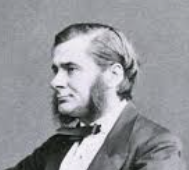
Within the last half century, the labours of such men as Von Baer, Rathke, Reichert, Bischof, and Remak, have almost completely unravelled... the successive stages of development which... are now as well known to the embryologist as are the steps of the metamorphosis of the silk-worm moth to the school boy.
▼
Source
source
Ch.2, p. 75
4 months 1 week ago
Some will object that the Law is divine and holy. Let it be divine and holy. The Law has no right to tell me that I must be justified by it.
▼
Source
source
Chapter 2
3 months 4 weeks ago
It is too early to love. We will buy the right to do so by shedding blood.
▼
Source
source
Act 1

2 months 3 weeks ago
The lord of that servant will come in a day when he looketh not for him, and at an hour when he is not aware, and will cut him in sunder, and will appoint him his portion with the unbelievers.
▼
Source
source
Luke 12:46 (KJV)
3 weeks ago
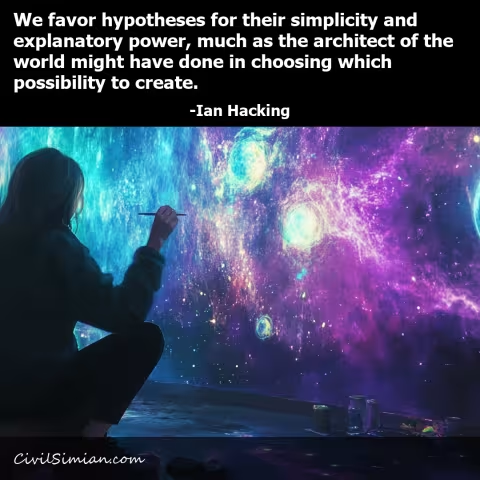
We must now ask how changes of this sort can come about, considering first discoveries, or novelties of fact, and then inventions, or novelties of theory. That distinction between discovery and invention or between fact and theory will, however, immediately prove to be exceedingly artificial.
▼
Source
source
p. 52
4 months 2 days ago
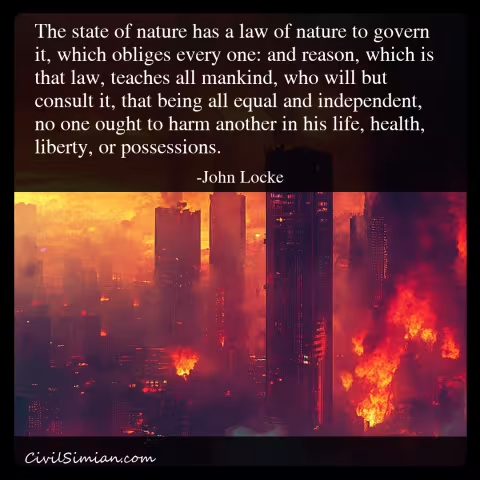
Men being, as has been said, by nature, all free, equal and independent, no one can be put out of this estate, and subjected to the political power of another, without his own consent.
▼
Source
source
Second Treatise of Government, Ch. VIII, sec. 95
1 month 3 weeks ago
Is there anything in life so disenchanting as attainment?
▼
Source
source
The Suicide Club, The Adventure of the Hansom Cabs.

2 months 1 week ago
In the empire of signs, the soul, psychology, is erased. There is no soul to infect the holy seriousness of ritual play.
4 months 3 weeks ago
Capital punishment is the most premeditated of murders, to which no criminal's deed, however calculated, can be compared. For there to be an equivalency, the death penalty would have to punish a criminal who had warned his victim of the date on which he would inflict a horrible death on him and who, from that moment onward, had confined him at his mercy for months. Such a monster is not to be encountered in private life.
2 months 1 week ago
An army and navy represents the people's toys.
4 months ago
Four snakes gliding up and down a hollow for no purpose that I could see - not to eat, not for love, but only gliding.
▼
Source
source
April 11, 1834
4 months ago
An unlearned carpenter of my acquaintance once said in my hearing: "There is very little difference between one man and another; but what little there is, is very important." This distinction seems to me to go to the root of the matter.
▼
Source
source
"The Importance of Individuals"

3 months 3 weeks ago
Beware an act of avarice; it is bad and incurable disease.
▼
Source
source
Maxim no. 19.

4 months 4 days ago
The natural price, therefore, is, as it were, the central price, to which the prices of all commodities are continually gravitating.
▼
Source
source
Chapter VII, p. 69.
4 months 4 days ago
Thus the labour of a manufacture adds, generally, to the value of the materials which he works upon, that of his own maintenance, and of his masters profits. The labour of a menial servant, on the contrary, adds to the value of nothing.
▼
Source
source
Chapter III, p. 364 (see Proverbs 14-23 KJV).
4 months 2 weeks ago
Some of their faults people readily admit, but others not so readily.
▼
Source
source
Book II, ch. 21, 1
2 months 1 week ago
One of the principal motifs of Nietzsche's work is that Kant had not carried out a true critique because he was not able to pose the problem of critique in terms of values.
▼
Source
source
p. 1
3 weeks 1 day ago
If you let people follow their feelings, they will be able to do good. This is what is meant by saying that human nature is good.
▼
Source
source
Book 6, pt. 1, v. 6
3 months 4 weeks ago
Ah! yes, I know: those who see me rarely trust my word: I must look too intelligent to keep it.
▼
Source
source
Act 2, sc. 3
4 months 1 week ago
As all those have shown who have discussed civil institutions, and as every history is full of examples, it is necessary to whoever arranges to found a Republic and establish laws in it, to presuppose that all men are bad and that they will use their malignity of mind every time they have the opportunity; and if such malignity is hidden for a time, it proceeds from the unknown reason that would not be known because the experience of the contrary had not been seen, but time, which is said to be the father of every truth, will cause it to be discovered.
▼
Source
source
Book 1, Ch. 3
3 weeks 2 days ago
The true, prescriptive artist strives after artistic truth; the lawless artist, following blind instinct, after an appearance of naturalness. The one leads to the highest peaks of art, the other to its lowest depths.
▼
Source
source
Propylaea (1798) Introduction
2 months 3 weeks ago
If you know these things, happy you are if you do them.
▼
Source
source
13:17, New World Translation of the Holy Scriptures
Just now
We collect individuals into 'kinds' by applying to them the Idea of Likeness.
3 months 3 weeks ago
If it recedes one day, leaving behind its works and signs on the shores of our civilization, the structuralist invasion might become a question or the historian of ideas, or perhaps even an object. But the historian would be deceived if he came to this pass: by the very act of considering the structuralist invasion as an object he would forget its meaning and would forget that what is at stake, first of all, is an adventure of vision, a conversion of the way of putting questions to any object posed before us, to historical objects-his own- in particular. And, unexpectedly among these, the literary objects.
▼
Source
source
Force and Signification

1 month 1 week ago
From a Darwinian point of view, human beliefs are adaptations to our part of the world. No doubt much of what we believe must be roughly accurate, or else we would not have survived. But the beliefs we have evolved might latch on to the world only enough to help us stumble our way through it, and then only for the time being. Human belief-systems could be useful illusions, appearing and disappearing as they prove to be more or less advantageous in the random walk of natural selection. Might not evolution be one of these illusions? Scientific naturalism is the theory that human beliefs are evolutionary adaptations whose survival has nothing to do with their truth. But in that case scientific naturalism is self-defeating, since on its own premises scientific theories cannot be known to be true.
▼
Source
source
Cross-correspondences (p. 69)

4 months 1 day ago
Philosophy seems to me on the whole a rather hopeless business.
▼
Source
source
Letter to Gilbert Murray, December 28, 1902
CivilSimian.com created by AxiomaticPanic, CivilSimian, Kalokagathia