


3 months 5 days ago
I can cure the gout or stone in some, sooner than Divinity, Pride, or Avarice in others.
▼
Source
source
Section 9

4 months 2 days ago
A country cannot subsist well without liberty, nor liberty without virtue.
▼
Source
source
As quoted in A Dictionary of Thoughts: Being a Cyclopedia of Laconic Quotations from the Best Authors of the World, Both Ancient and Modern (1908) by Tryon Edwards, p. 301.

3 months 1 week ago
No evil is honorable; but death is honorable; therefore death is not evil.
▼
Source
source
As quoted in Epistles No. 82, by Seneca the Younger

3 months 2 weeks ago
Cato instigated the magistrates to punish all offenders, saying that they that did not prevent crimes when they might, encouraged them. Of young men, he liked them that blushed better than those who looked pale.
▼
Source
source
Cato the Elder

3 months 3 weeks ago
If a lion could talk, we could not understand him.
▼
Source
source
Pt II, p. 223 of the 1968 English edition

3 months 1 week ago
Rejoice not in another man's misfortune!
2 weeks 5 days ago
Life is that which can hold a purpose for three thousand years and never yield. The individual fails, but life succeeds. The individual is foolish, but life holds in its blood and seed the wisdom of generations. The individual dies, but life, tireless and undiscourageble, goes on, wondering, longing, planning, trying, mounting, longing.
▼
Source
source
Ch. 5 : On Death

1 month 3 weeks ago
Never promise more than you can perform.
▼
Source
source
Maxim 528
4 months 2 weeks ago
The way which the superior man pursues, reaches wide and far, and yet is secret. Common men and women, however ignorant, may intermeddle with the knowledge of it; yet in its utmost reaches, there is that which even the sage does not know. Common men and women, however much below the ordinary standard of character, can carry it into practice; yet in its utmost reaches, there is that which even the sage is not able to carry into practice. Great as heaven and earth are, men still find some things in them with which to be dissatisfied. Thus it is that, were the superior man to speak of his way in all its greatness, nothing in the world would be found able to embrace it, and were he to speak of it in its minuteness, nothing in the world would be found able to split it.
3 months 3 weeks ago
Our elucidations of the preliminary concept of phenomenology show that its essential character does not consist in its actuality as a philosophical "movement." Higher than actuality stands possibility. We can understand phenomenology solely by seizing upon it as a possibility.
▼
Source
source
Introduction: The Exposition of the Question of the Meaning of Being (Stambaugh translation)

4 months 3 weeks ago
Nothing is harder to understand than a symbolic work. A symbol always transcends the one who makes use of it and makes him say in reality more than he is aware of expressing.

2 months 3 weeks ago
Ye have heard that it hath been said, Thou shalt love thy neighbour, and hate thine enemy. But I say unto you, Love your enemies, bless them that curse you, do good to them that hate you, and pray for them which despitefully use you, and persecute you; That ye may be the children of your Father which is in heaven: for he maketh his sun to rise on the evil and on the good, and sendeth rain on the just and on the unjust.
▼
Source
source
Matthew 5:43-45 (KJV)
4 months 3 weeks ago
One does not discover the absurd without being tempted to write a manual of happiness. "What! — by such narrow ways — ?" There is but one world, however. Happiness and the absurd are two sons of the same earth. They are inseparable. It would be a mistake to say that happiness necessarily springs from the absurd discovery. It happens as well that the feeling of the absurd springs from happiness.
2 weeks 1 day ago
A people cannot be free otherwise than at the individual's expense; for it is not the individual that is the main point in this liberty, but the people. The freer the people, the more bound the individual; the Athenian people, precisely at its freest time, created ostracism, banished the atheists, poisoned the most honest thinker.
▼
Source
source
Cambridge 1995, p. 190

4 months ago
In some lyceums they tell me that they have voted to exclude the subject of religion. But how do I know what their religion is, and when I am near to or far from it? I have walked into such an arena and done my best to make a clean breast of what religion I have experienced, and the audience never suspected what I was about.
▼
Source
source
p. 490
2 months 1 week ago
There are people who believe everything is sane and sensible that is done with a solemn face. ... It is no great art to say something briefly when, like Tacitus, one has something to say; when one has nothing to say, however, and none the less writes a whole book and makes truth ... into a liar - that I call an achievement.
▼
Source
source
E 59 Variant translation: There are people who think that everything one does with a serious face is sensible…

4 months ago
A habit of basing convictions upon evidence, and of giving to them only that degree of certainty which the evidence warrants, would, if it became general, cure most of the ills from which the world is suffering. But at present, in most countries, education aims at preventing the growth of such a habit, and men who refuse to profess belief in some system of unfounded dogmas are not considered suitable as teachers of the young.
▼
Source
source
preface xxiii-xxiv

1 month 6 days ago
Tyranny offers relief from the burden of sanity and a licence to enact forbidden impulses of hatred and violence. By acting on these impulses and releasing them in their subjects tyrants give people a kind of happiness, which as individuals they may be incapable of achieving.
▼
Source
source
An Old Chaos: What a Tyrant Can Do For You (p. 57)

3 months 4 days ago
He was as great as a man can be without morality.
▼
Source
source
Said of Napoleon (1842)

1 month 3 weeks ago
The unformulated message of an assembly of news items from every quarter of the globe is that the world today is one city. All war is civil war. All suffering is our own.
▼
Source
source
p. 291

3 months ago
Dreams, as we all know, are very queer things: some parts are presented with appalling vividness, with details worked up with the elaborate finish of jewellery, while others one gallops through, as it were, without noticing them at all, as, for instance, through space and time. Dreams seem to be spurred on not by reason but by desire, not by the head but by the heart, and yet what complicated tricks my reason has played sometimes in dreams, what utterly incomprehensible things happen to it!

2 months 1 week ago
The poor, stupid, free American citizen! Free to starve, free to tramp the highways of this great country, he enjoys universal suffrage, and, by that right, he has forged chains about his limbs. The reward that he receives is stringent labor laws prohibiting the right of boycott, of picketing, in fact, of everything, except the right to be robbed of the fruits of his labor.
4 months 1 week ago
These two states which it is necessary to know together in order to see the whole truth, being known separately, lead necessarily to one of these two vices, pride or indolence, in which all men are invariably led before grace, since if they do not remain in their disorders through laxity, they forsake them through vanity, so true is that which you have just repeated to me from St. Augustine, and which I find to a great extent; for in fact homage is rendered to them in many ways.
1 month 3 weeks ago
One touch of nature makes the whole world tin.
2 months 1 week ago
The two most far-reaching critical theories at the beginning of the latest phase of industrial society were those of Marx and Freud. Marx showed the moving powers and the conflicts in the social-historical process. Freud aimed at the critical uncovering of the inner conflicts. Both worked for the liberation of man, even though Marx's concept was more comprehensive and less time-bound than Freud's.
▼
Source
source
The Art of Being" Pt. 3

5 months ago
Is there anything we cannot contrive to call the demands of the times, and is there anything that does not acquire a certain prestige by being the demand of the times? But for decisive religious categories to become the demand for the times is eo ipso a contradiction. “The times” is too abstract a category to be able as claimant to demand the decisive religious categories that belong specifically to individuality and particularity; loud collective demands en mass for what can be shared only by the single individual in particularity, in solitariness, in silence, cannot be made.
▼
Source
source
Two Ages: The Age of Revolution and the Present Age. A Literary Review.
1 month 3 weeks ago
Learn to see in another's calamity the ills which you should avoid.
▼
Source
source
Maxim 120

3 months 3 weeks ago
The task of universal pragmatics is to identify and reconstruct universal conditions of possible mutual understanding.
▼
Source
source
p. 21

5 months 2 days ago
If you have hitherto believed that life was one of the highest value and now see yourselves disappointed, do you at once have to reduce it to the lowest possible price?
4 months ago
In history, we are concerned with what has been and what is; in philosophy, however, we are concerned not with what belongs exclusively to the past or to the future, but with that which is, both now and eternally - in short, with reason.
▼
Source
source
As translated by H. B. Nisbet, 1975

4 months ago
The writers by whom, more than by any others, a new mode of political thinking was brought home to me, were those of the St. Simonian school in France. In 1829 and 1830 I became acquainted with some of their writings. They were then only in the earlier stages of their speculations. They had not yet dressed out their philosophy as a religion, nor had they organized their scheme of Socialism. They were just beginning to question the principle of hereditary property. I was by no means prepared to go with them even this length; but I was greatly struck with the connected view which they for the first time presented to me, of the natural order of human progress; and especially with their division of all history into organic periods and critical periods.
▼
Source
source
(p. 163)
3 months 3 weeks ago
I believe it might interest a philosopher, one who can think himself, to read my notes. For even if I have hit the mark only rarely, he would recognize what targets I had been ceaselessly aiming at.

3 months 4 weeks ago
The consciousness of being betrayed is to the collective consciousness of a sacred group what a certain form of schizophrenia is to the individual...it is a form of madness.
▼
Source
source
p. 193

4 months 3 days ago
Man can, indeed, act contrarily to the decrees of God, as far as they have been written like laws in the minds of ourselves or the prophets, but against that eternal decree of God, which is written in universal nature, and has regard to the course of nature as a whole, he can do nothing.
▼
Source
source
Ch. 2, Of Natural Right
4 months ago
The philosophy of nature must not be unduly terrestrial; for it, the earth is merely one of the smaller planets of one of the smaller stars of the Milky Way. It would be ridiculous to warp the philosophy of nature in order to bring out results that are pleasing to the tiny parasites of this insignificant planet. Vitalism as a philosophy, and evolutionism, show, in this respect, a lack of sense of proportion and logical relevance. They regard the facts of life, which are personally interesting to us, as having a cosmic significance, not a significance confined to the earth's surface. Optimism and pessimism, as cosmic philosophies, show the same naive humanism; the great world, so far as we know it from the philosophy of nature, is neither good nor bad, and is not concerned to make us happy or unhappy. All such philosophies spring from self-importance and are best corrected by a little astronomy.
4 months 1 week ago
Nothing is more common than good things: the point in question is only to discriminate them; and it is certain that they are all natural and within our reach and even known to all mankind.

3 months ago
Nothing is so fatal to Religion as indifference which is, at least, half Infidelity.
▼
Source
source
Letter to William Smith, Member of the Irish Parliament (29 January 1795), quoted in R. B. McDowell (ed.)
2 months 2 weeks ago
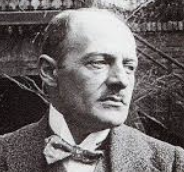
To its very core, the mind of ressentiment man is filled with envy, the impulse to detract, malice, and secret vindictiveness. These affects have become fixed attitudes, detached from all determinate objects. Independently of his will, this man's attention will be instinctively drawn by all events which can set these affects in motion. The ressentiment attitude even plays a role in the formation of perceptions, expectations, and memories. It automatically selects those aspects of experience which can justify the factual application of this pattern of feeling.
▼
Source
source
L. Coser, trans. (1973), p. 74
2 months 3 weeks ago
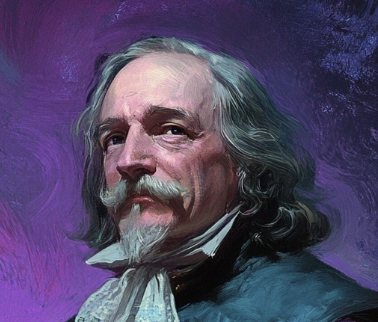
The passion of laughter is nothing else but a sudden glory arising from sudden conception of some eminency in ourselves, by comparison with the infirmities of others, or with our own formerly...
▼
Source
source
The Elements of Law, Natural and Politic Pt. I Human Nature (1640) Ch. 9
2 months 3 weeks ago
His disciples said to Him, "When will the Kingdom come?" Jesus said, "It will not come by waiting for it. It will not be a matter of saying 'Here it is' or 'There it is.' Rather, the Kingdom of the Father is spread out upon the earth, and men do not see it."

4 months 3 days ago
All registers which, it is acknowledged, ought to be kept secret, ought certainly never to exist.
▼
Source
source
Chapter II, Part II, Appendix to Articles I and II, p. 935.
2 months 3 weeks ago
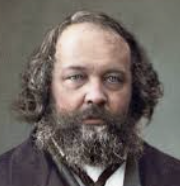
I hate Communism because it is the negation of liberty and because humanity is for me unthinkable without liberty. I am not a Communist, because Communism concentrates and swallows up in itself for the benefit of the State all the forces of society, because it inevitably leads to the concentration of property in the hands of the State, whereas I want the abolition of the State, the final eradication of the principle of authority and the patronage proper to the State, which under the pretext of moralizing and civilizing men has hitherto only enslaved, persecuted, exploited and corrupted them. I want to see society and collective or social property organized from below upwards, by way of free association, not from above downwards, by means of any kind of authority whatsoever.
▼
Source
source
As quoted in Michael Bakunin (1937) by E.H. Carr, p. 356

2 months 2 weeks ago
Love is a contradiction if there is no God.
1 month 3 weeks ago
The sculptural qualities of the image dim down the purely personal identity.
▼
Source
source
(p. 369)

2 weeks ago
Two elements must therefore be rooted out once for all-the fear of future suffering, and the recollection of past suffering; since the latter no longer concerns me, and the former concerns me not yet.
CivilSimian.com created by AxiomaticPanic, CivilSimian, Kalokagathia