


1 month 6 days ago
The irony of the post-Cold War period is that the fall of communism was followed by the rise of another utopian ideology. In American and Britain, and to a lesser extent other Western countries, a type of market fundamentalism became the guiding philosophy. The collapse of American power that is underway is the predictable upshot.

2 weeks 6 days ago
Mark at present so much; what the essence of Scandinavian and indeed of all Paganism is: a recognition of the forces of Nature as godlike, stupendous, personal Agencies,-as Gods and Demons. Not inconceivable to us. It is the infant Thought of man opening itself, with awe and wonder, on this ever-stupendous Universe. To me there is in the Norse system something very genuine, very great and manlike. A broad simplicity, rusticity, so very different from the light gracefulness of the old Greek Paganism, distinguishes this Scandinavian System. It is Thought; the genuine Thought of deep, rude, earnest minds, fairly opened to the things about them; a face-to-face and heart-to-heart inspection of the things,-the first characteristic of all good Thought in all times. Not graceful lightness, half-sport, as in the Greek Paganism; a certain homely truthfulness and rustic strength, a great rude sincerity, discloses itself here.
3 weeks 5 days ago
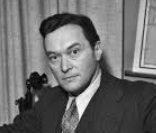
Looking back we can see how indirectly we know the environment in which nevertheless we live. We can see that the news of it comes to us now fast, now slowly; but that whatever we believe to be a true picture, we treat as if it were the environment itself.
▼
Source
source
Ch. I: "The World Outside and the Pictures in Our Heads", p. 4

4 months 1 week ago
What can only be taught by the rod and with blows will not lead to much good; they will not remain pious any longer than the rod is behind them.
▼
Source
source
The Great Catechism. Second Command

4 months 1 day ago
People are often reproached because their desires are directed mainly to money and they are fonder of it than of anything else. Yet it is natural and even inevitable for them to love that which, as an untiring Proteus, is ready at any moment to convert itself into the particular object of our fickle desires and manifold needs. Thus every other blessing can satisfy only one desire and one need; for instance, food is good only to the hungry, wine only for the healthy, medicine for the sick, a fur coat for winter, women for youth, and so on. Consequently, all these are only ... relatively good. Money alone is the absolutely good thing because it meets not merely one need in concreto, but needs generally in abstracto.
▼
Source
source
E. Payne, trans. (1974) Vol. 1, p. 347

3 months ago
Their principles always go to the extreme. They who go with the principles of the ancient Whigs, which are those contained in Mr. Burke's book, never can go too far. ... The opinions maintained in that book never can lead to an extreme, because their foundation is laid in an opposition to extremes.
▼
Source
source
p. 470

3 months ago
I think the devil doesn't exist, but man has created him, he has created him in his own image and likeness.

5 months ago
I do not know, my listener, what your crime, your guilt, your sins are, but surely we are all more or less of the guilt of loving only little. Take comfort, then, in these words just as I take comfort in them.
1 week 2 days ago
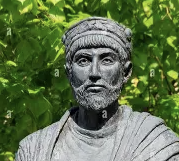
Who then is the Mother of the Gods? She is the Source of the Intelligible and Creative Powers, which direct the visible ones; she that gave birth to and copulated with the mighty Jupiter: she that exists as a great goddess next to the Great One, and in union with the Great Creator; she that is dispenser of all life; cause of all birth; most easily accomplishing all that is made; generating without passion; creating all that exists in concert with the Father; herself a virgin, without mother, sharing the throne of Jupiter, the mother in very truth of all the gods; for by receiving within herself the causes of all the intelligible deities that be above the world, she became the source to things the objects of intellect.

4 months 3 weeks ago
Well, then, arrest him. You can accuse him of something or other afterward.
2 months 2 weeks ago
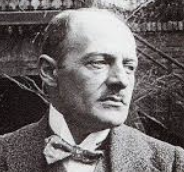
In ressentiment morality, love for the "small," the "poor," the "weak," and the "oppressed" is really disguised hatred, repressed envy, an impulse to detract, etc., directed against the opposite phenomena: "wealth," "strength," "power," "largesse." When hatred does not dare to come out into the open, it can be easily expressed in the form of ostensible love-love for something which has features that are the opposite of those of the hated object. This can happen in such a way that the hatred remains secret. When we hear that falsely pious, unctuous tone (it is the tone of a certain "socially-minded" type of priest), sermonizing that love for the "small" is our first duty, love for the "humble" inspirit, since God gives "grace" to them, then it is often only hatred posing as Christian love.
▼
Source
source
L. Coser, trans. (1961), pp. 96-97

4 months ago
In former days, men sold themselves to the Devil to acquire magical powers. Nowadays they acquire those powers from science, and find themselves compelled to become devils. There is no hope for the world unless power can be tamed, and brought into the service, not of this or that group of fanatical tyrants, but of the whole human race, white and yellow and black, fascist and communist and democrat; for science has made it inevitable that all must live or all must die.
▼
Source
source
Ch. 2: Leaders and Followers

3 months 4 weeks ago
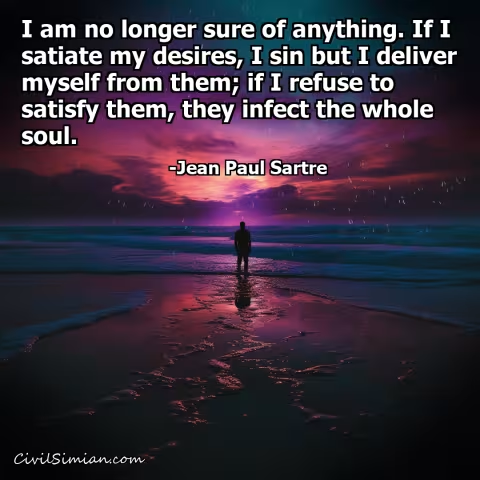
I exist, that is all, and I find it nauseating.

4 months 2 weeks ago
What is the first business of one who practices philosophy? To get rid of self-conceit. For it is impossible for anyone to begin to learn that which he thinks he already knows.
▼
Source
source
Book II, ch. 17, 1.

4 months 1 day ago
An army of principles will penetrate where an army of soldiers cannot; it will succeed where diplomatic management would fall: it is neither the Rhine, the Channel, nor the ocean that can arrest its progress: it will march on the horizon of the world, and it will conquer.
▼
Source
source
Means by Which the Fund Is to Be Created

4 months 2 days ago
I freely admit that the remembrance of David Hume was the very thing that many years ago first interrupted my dogmatic slumber and gave a completely different direction to my researches in the field of speculative philosophy.

4 months 1 week ago
We were halves throughout, and to that degree that, methinks, by outliving him I defraud him of his part.
▼
Source
source
Ch. 27. Of Friendship, tr. Cotton, rev. W. Hazlitt, 1842

2 months 2 weeks ago
The ultimate metaphysical principle is the advance from disjunction to conjunction, creating a novel entity other than the entities given in disjunction.
▼
Source
source
Pt. I, ch. 2, sec. 2.
2 months 2 weeks ago
I have always noticed that deeply and truly religious persons are fond of a joke, and I am suspicious of those who aren't.
▼
Source
source
As quoted in Church and Home, Vol. 1 (1964) by United Methodist Church, and Evangelical United Brethren Church, p. 21.

5 months 2 days ago
No one talks more passionately about his rights than he who in the depths of his soul doubts whether he has any. By enlisting passion on his side he wants to stifle his reason and its doubts: thus he will acquire a good conscience and with it success among his fellow men.

2 months 2 weeks ago
The simultaneous existence of opposite virtues in the soul - like pincers to catch hold of God.
▼
Source
source
p. 92
2 months 3 weeks ago
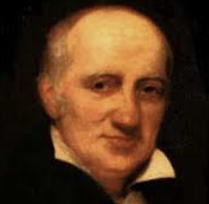
No man must encroach upon my province nor I upon his. He may advise me, moderately and without perniciousness, but he must not expect to dictate to me. He may censure me freely and without reserve but he should remember that I am to act by my deliberation and not his. He may exercise a republican boldness in judging, but he must not be peremptory and imperious in prescribing. Force may never be resorted to but, in the most extraordinary and imperious emergency.
▼
Source
source
Book II, "Of Rights"

4 months ago
The possession and the exercise of political, and among others of electoral, rights, is one of the chief instruments both of moral and of intellectual training for the popular mind; and all governments must be regarded as extremely imperfect, until every one who is required to obey the laws, has a voice, or the prospect of a voice, in their enactment and administration.
▼
Source
source
Thoughts on Parliamentary Reform (1859), p. 22

2 weeks ago
Remember, however, before all else, to strip things of all that disturbs and confuses, and to see what each is at bottom; you will then comprehend that they contain nothing fearful except the actual fear.
▼
Source
source
Line 12
3 weeks 4 days ago
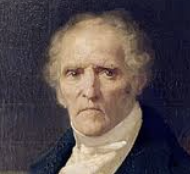
The familial union presents as well a mixture of inconvenient ages and characters that inhibit conversation. Morality engenders a frigid atmosphere, as in all places where it reigns.
▼
Source
source
Oeuvres completetes de Charles Fourier
2 months 2 weeks ago
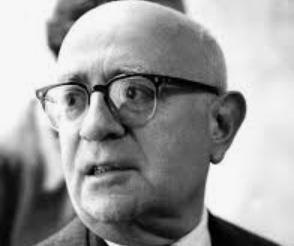
Whoever is versed in the jargon does not have to say what he thinks, does not even have to think it properly. The jargon takes over this task.
▼
Source
source
p. 9

2 months 1 week ago
Nowadays three witty turns of phrase and a lie make a writer.
▼
Source
source
D 25

2 months 1 day ago
Perhaps the promise of phallus is always dissatisfying in some way.
▼
Source
source
"The Lesbian Phallus and the Morphological Imaginary" (1993), later published in The Judith Butler Reader (2004) edited by Sarah Salih with Judith Butler

2 months 3 weeks ago
I am an orphan, alone; nevertheless I am found everywhere. I am one, but opposed to myself. I am youth and old man at one and the same time. I have known neither father nor mother, because I have had to be fetched out of the deep like a fish, or fell like a white stone from heaven. In woods and mountains I roam, but I am hidden in the innermost soul of man. I am mortal for everyone, yet I am not touched by the cycle of aeons.
▼
Source
source
Combining alchemical assertions
2 months 2 weeks ago
The necessity for power is obvious, because life cannot be lived without order; but the allocation of power is arbitrary because all men are alike, or very nearly. Yet power must not seem to be arbitrarily allocated, because it will not then be recognized as power. Therefore prestige, which is illusion, is of the very essence of power.
▼
Source
source
p. 235

1 month 3 weeks ago
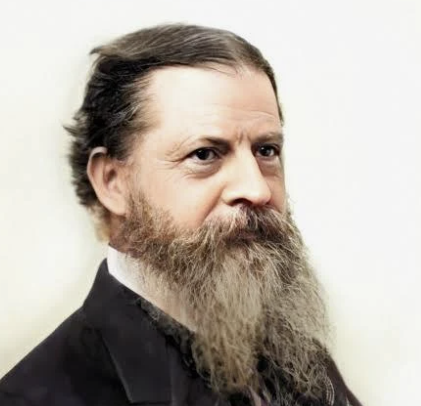
Logic is figure without a ground.
▼
Source
source
(p. 241)
2 months 3 weeks ago
Some minds will jump here jump to the conclusion that a past idea cannot in any sense be present. But that is hasty and illogical. How extravagant too, to pronounce our whole knowledge of the past to be mere delusion! Yet it would seem that the past is completely beyond the bounds of possible experience as a Kantian thing-in-itself.

2 months 4 weeks ago
The plea of anger or of drunkenness - as having placed the criminal for the moment beyond the control of his reason - relieves him from the charge of premeditated and malicious intent; but a rational legislation will rather provide more severe than milder punishment for such cases, particularly if such a state of mind is habitual with the accused; for a single unlawful act may well constitute an exception from an otherwise blameless life. But a person who pleads, "I habitually get so angry or so drunk as not to be any longer master of my senses!" confesses thereby that he changes himself into a beast on a fixed principle, and that he is, therefore, not fit to live among rational beings.
▼
Source
source
P. 351



2 months 3 weeks ago
Pursued by our origins...we all are.

3 months 4 days ago
After having thus successively taken each member of the community in its powerful grasp and fashioned him at will, the government then extends its arm over the whole community. It covers the surface of society with a network of small, complicated rules, minute and uniform, through which the most original minds and the most energetic characters cannot penetrate, to rise above the crowd. The will of man is not shattered, but softened, bent, and guided; men are seldom forced by it to act, but they are constantly restrained from acting. Such a power does not destroy, but it prevents existence: it does not tyrannize, but it compresses, enervates, extinguishes, and stupefies a people, till each nation is reduced to nothing better than a flock of timid and industrious animals, of which the government is the shepherd.
▼
Source
source
Book Four, Chapter VI.
3 months ago
So to be patriots as not to forget we are gentlemen.

4 months ago
The speaker with whom I was most struck, though I dissented from nearly every word he said, was Thirlwall, the historian, since Bishop of St. David's, then a Chancery barrister, unknown except by a high reputation for eloquence acquired at the Cambridge Union before the era of Austin and Macaulay. His speech was in answer to one of mine. Before he had uttered ten sentences, I set him down as the best speaker I had ever heard, and I have never since heard any one whom I placed above him.
▼
Source
source
(p. 125)
3 months ago
They who bow to the enemy abroad will not be of power to subdue the conspirator at home.
▼
Source
source
p. 18
1 month 3 days ago
Whatever the practical origins of aesthetic discernment may have been, it has been used to create great works of art. When the very loftiest human creations are seen to derive from humble origins and functions, what needs revision is not our esteem for these creations but our notion of nobility.
▼
Source
source
The Nature of Rationality (1993), Ch. V : Instrumental Rationality and Its Limits; Rationality's Imagination, p. 181
2 months 2 weeks ago
When we desire to lead men to God, we must not simply overthrow their idols. In each of these images we must seek to discover what divine quality he who carved it sought.
▼
Source
source
p. 117

4 months 3 days ago
As to the Approbation or Esteem of those Blockheads who call themselves the Public, & whom a Bookseller, a Lord, a Priest, or a Party can guide, I do most heartily despise it.
▼
Source
source
Letter 138, To Gilbert Elliot of Minto; August 9, 1757

1 month 3 weeks ago
Such delusions of grandeur to think that a God with a hundred billion galaxies on his mind would give a tuppenny damn who you sleep with, or indeed whether you believe in him.
▼
Source
source
Richard Dawkins debates Rowan Williams

2 months 4 weeks ago
Unlike private enterprise which quickly modifies its actions to meet emergencies - unlike the shopkeeper who promptly finds the wherewith to satisfy a sudden demand - unlike the railway company which doubles its trains to carry a special influx of passengers; the law-made instrumentality lumbers on under all varieties of circumstances at its habitual rate. By its very nature it is fitted only for average requirements, and inevitably fails under unusual requirements.
▼
Source
source
Vol. 3, Ch. VII, Over-Legislation
2 months 3 weeks ago
To be or not to be...Neither one nor the other.

1 month 4 weeks ago
The whole life of the upper classes is a constant inconsistency. The more delicate a man's conscience is, the more painful this contradiction is to him.
▼
Source
source
Chapter V, Contradiction Between our Life and our Christian Conscience

2 months 1 week ago
An elaborated culture has a density, complexity, and historical-semantic value that is so strong as to make politics possible... Gramsci's insight is to have recognised that subordination, fracturing, diffusion, reproducing, as much as producing, creating, forcing, guiding, are necessary aspects of elaboration.
▼
Source
source
Quoted in Richard Middleton, Studying Popular Music (Philadelphia: Open University Press, 1990, ISBN 0-335-15275-9), p. 248

2 months 3 weeks ago
Poetry heals the wounds inflicted by reason.
▼
Source
source
As quoted in Quote, Unquote (1989) by Jonathan Williams, p. 136
CivilSimian.com created by AxiomaticPanic, CivilSimian, Kalokagathia