

3 weeks 2 days ago
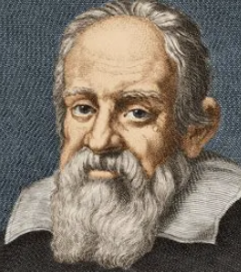
I am certainly interested in a tribunal in which, for having used my reason, I was deemed little less than a heretic. Who knows but men will reduce me from the profession of a philosopher to that of historian of the Inquisition! But they behave to me in order that I may become the ignoramus and the fool of Italy...
▼
Source
source
p. 244

4 months 3 days ago
The retinue of a grandee in China or Indostan accordingly is, by all accounts, much more numerous and splendid than that of the richest subjects of Europe.
▼
Source
source
Chapter XI, Part III, Third Period, p. 240.

3 months 4 weeks ago
People seem not to see that their opinion of the world is also a confession of character.
▼
Source
source
Worship
4 months 3 days ago
The annual produce of the land and labour of any nation can be increased in its value by no other means, but by increasing either the number of its productive labourers, or the productive powers of those labourers who had before been employed.
▼
Source
source
Chapter III, p. 377.
3 months 4 weeks ago
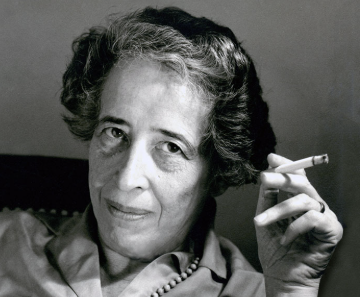
Man cannot be free if he does not know that he is subject to necessity, because his freedom is always won in his never wholly successful attempts to liberate himself from necessity.
▼
Source
source
The Human Condition (1958), part 3, chapter 16

5 months 2 days ago
In Germany there is much complaining about my "eccentricities." But since it is not known where my center is, it won't be easy to find out where or when I have thus far been "eccentric." That I was a philologist, for example, meant that I was outside my center (which fortunately does not mean that I was a poor philologist). Likewise, I now regard my having been a Wagnerian as eccentric. It was a highly dangerous experiment; now that I know it did not ruin me, I also know what significance it had for me — it was the most severe test of my character.
2 months 2 days ago
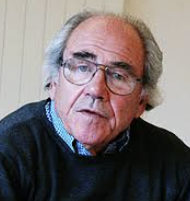
For it is with the same imperialism that present-day simulators try to make the real, all of the real, coincide with their simulation models.
▼
Source
source
"The Precession of Simulacra," pp. 1-2

2 months 3 weeks ago
A heart without music is like beauty without melancholy.

3 months ago
Pain and suffering are always inevitable for a large intelligence and a deep heart. The really great men must, I think, have great sadness on Earth.

2 weeks 6 days ago
A loving heart is the beginning of all knowledge.
▼
Source
source
Article on Biography.
1 week 3 days ago
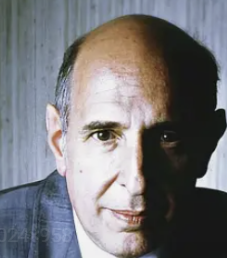
The distinction between private and public undermines the unity of spiritual strength, draining the public of the transcendent energies while trivializing them because the merely private life provides no proper stage for their action.
▼
Source
source
"Commerce and Culture," p. 280.
1 month 1 week ago
Dialogue never ends not for lack of time or opportunity but for essential reasons.
▼
Source
source
Chapter 7, Vigilance and Interruption, p. 121

4 months 1 day ago
Let us maintain inviolably equality in the sacred right of suffrage: public security can never have a basis more solid.
▼
Source
source
Author's Inscription: French Edition

3 months ago
It is an advantage to all narrow wisdom and narrow morals that their maxims have a plausible air; and, on a cursory view, appear equal to first principles. They are light and portable. They are as current as copper coin; and about as valuable. They serve equally the first capacities and the lowest; and they are, at least, as useful to the worst men as to the best. Of this stamp is the cant of not man, but measures; a sort of charm by which many people get loose from every honourable engagement.
1 month 3 weeks ago
No tears are shed, when an enemy dies.
▼
Source
source
Maxim 376

1 month 3 weeks ago
It is always the psychic and social grounds, brought into play by each medium or technology, that readjust the balance of the hemispheres and of human sensibilities into equilibrium with those grounds.
▼
Source
source
p. 82

3 months 4 weeks ago
Intellectuals cannot be good revolutionaries; they are just good enough to be assassins.
▼
Source
source
Act 5, sc. 3
3 weeks 2 days ago
Indeed, I think we may concede to our Academician, without flattery, his claim that in the principle [principio, i. e., accelerated motion] laid down in this treatise he has established a new science dealing with a very old subject. Observing with what ease and clearness he deduces from a single principle the proofs of so many theorems, I wonder not a little how such a question escaped the attention of Archimedes, Apollonius, Euclid and so many other mathematicians and illustrious philosophers, especially since so many ponderous tomes have been devoted to the subject of motion.
▼
Source
source
(Galileo referred to himself as the/our Academician in his dialogue) Sagredo, Third Day P. 242
2 months 3 weeks ago
I'd rather offer my life as a sacrifice than be necessary to anything.
3 months 4 weeks ago
The state of society is one in which the members have suffered amputation from the trunk, and strut about so many walking monsters,-a good finger, a neck, a stomach, an elbow, but never a man.
▼
Source
source
par. 5

3 months 4 weeks ago
What a monument of human smallness is this idea of the philosopher king. What a contrast between it and the simplicity of humaneness of Socrates, who warned the statesmen against the danger of being dazzled by his own power, excellence, and wisdom, and who tried to teach him what matters most - that we are all frail human beings. What a decline from this world of irony and reason and truthfulness down to Plato's kingdom of the sage whose magical powers raise him high above ordinary men; although not quite high enough to forgo the use of lies, or to neglect the sorry trade of every shaman - the selling of spells, of breeding spells, in exchange for power over his fellow-men.
▼
Source
source
Vol. 1, Ch 8 "The Philosopher King"
2 months 3 weeks ago
The secret is that only that which can destroy itself is truly alive.
▼
Source
source
Psychology and Alchemy

3 months 6 days ago
Abstract terms (however useful they may be in argument) should be discarded in meditation, and the mind should be fixed on the particular and the concrete, that is, on the things themselves.
▼
Source
source
Paragraph 4
2 weeks 6 days ago
This worthy man, whose nephew is still minister of Eskdalemuir (and author of a book on the Jews), proved the greatest blessing to that household. My father would, in any case, have saved himself. Of the other brothers, it may be doubted whether William Brown was not the primary preserver. They all learned to he masons from him, or from one another; instead of miscellaneous laborers and hunters, became regular tradesmen, the best in all their district, the skilfullest and faithfullest, and the best-rewarded every way. Except my father, none of them attained a decisive religiousness. But they all had prudence and earnestness, love of truth, industry, and the blessings it brings.

4 months ago
I feel like that intellectual but plain-looking lady who was warmly complimented on her beauty. In accepting his Nobel Prize, in December 1950; Russell denied that he had contributed anything in particular to literature.
▼
Source
source
Quoted in LIFE, Editorials: "A great mind is still annoying and adorning our age", 26 May 1952
2 months 3 weeks ago
Words ... are little houses, each with its cellar and garret. Common sense lives on the ground floor, always ready to engage in 'foreign commerce' on the same level as the others, as the passers-by, who are never dreamers. To go upstairs in the word house is to withdraw step by step; while to go down to the cellar is to dream, it is losing oneself in the distant corridors of an obscure etymology, looking for treasures that cannot be found in words. To mount and descend in the words themselves-this is a poet's life. To mount too high or descend too low is allowed in the case of poets, who bring earth and sky together.
▼
Source
source
Ch. 6

4 months 3 weeks ago
Writing is an addiction more powerful than alcohol, than nicotine, than crack. I could not conceive of not writing.

4 months 1 day ago
It is a serious question among them whether they [Africans] are descended from monkeys or whether the monkeys come from them. Our wise men have said that man was created in the image of God. Now here is a lovely image of the Divine Maker: a flat and black nose with little or hardly any intelligence. A time will doubtless come when these animals will know how to cultivate the land well, beautify their houses and gardens, and know the paths of the stars: one needs time for everything.
▼
Source
source
Les Lettres d'Amabed (1769): Septième Lettre d'Amabed
Just now
God confronts me with terror and love - for I am His only hope - and says: "This Ecstatic, who gives birth to all things, who rejoices in them all and yet destroys them, this Ecstatic is my Son!"

1 month 3 weeks ago
Another force driving progressive evolution is the so-called "arms-race." Prey animals evolve faster running speeds because predators do. Consequently predators have to evolve even faster running speeds, and so on, in an escalating spiral. Such arms races probably account for the spectacularly advanced engineering of eyes, ears, brains, bat "radar" and all the other high-tech weaponry that animals display.

3 months 4 weeks ago
The really important facts were that spatial relationships had ceased to matter very much and that my mind was perceiving the world in terms of other than spatial categories. At ordinary times the eye concerns itself with such problems as where? - how far? - how situated in relation to what? In the mescaline experience the implied questions to which the eye responds are of another order. Place and distance cease to be of much interest. The mind does its perceiving in terms of intensity of existence, profundity of significance, relationships within a pattern."
4 months 2 days ago
Nature has placed mankind under the governance of two sovereign masters, pain and pleasure. It is for them alone to point out what we ought to do, as well as to determine what we shall do. On the one hand the standard of right and wrong, on the other the chain of causes and effects, are fastened to their throne. They govern us in all we do, in all we say, in all we think: every effort we can make to throw off our subjection, will serve but to demonstrate and confirm it. In words a man may pretend to abjure their empire: but in reality he will remain subject to it all the while. The principle of utility recognizes this subjection, and assumes it for the foundation of that system, the object of which is to rear the fabric of felicity by the hands of reason and of law. Systems which attempt to question it, deal in sounds instead of sense, in caprice instead of reason, in darkness instead of light.
▼
Source
source
Ch. 1: Of the Principle of Utility

3 months 2 weeks ago
Of practical wisdom these are the three fruits: to deliberate well, to speak to the point, to do what is right.
2 months 1 week ago
I must also call your attention to the fact that it is crucial for my viewpoint that human behavior is to a large extent charged with a considerable amount of energy, but that in contrast to Freud I do not consider this energy to be sexual, but the vital energy within any organism which, according to biological laws, gives man the desire to live, and that means to adapt himself to the social necessities of his society. To go back to what I consider to be the misunderstanding, it has never been my position that society only deforms or manifests that which is already there. If we make the distinction between human necessities in general and human desires in particular then indeed, society creates particular desires which, however, follow the general laws of the necessities rooted in human nature.

2 months 2 weeks ago
May we not imagine that possibly this earthly life of ours is to the other life what sleeping is to waking? May not all our life be a dream and death an awakening? But an awakening to what? And supposing that everything is but the dream of God and that God one day will awaken? Will He remember His dream?

3 months 5 days ago
I am in no way facetious, nor disposed for the mirth and galliardize of company, yet in one dream I can compose a whole Comedy, behold the action, apprehend the jests, and laugh myself awake at the conceits thereof.
▼
Source
source
Section 11

4 months 2 weeks ago
All people respect and love their own parents and children, as well as the parents and children of others.
3 months 4 weeks ago
This inner revolution is realistic because it maintains itself deliberately within the framework of existing institutions; the oppressed reckon with the real situation.
▼
Source
source
p. 66
4 months 3 days ago
Society and conversation, therefore, are the most powerful remedies for restoring the mind to its tranquillity, if, at any time, it has unfortunately lost it; as well as the best preservatives of that equal and happy temper, which is so necessary to self-satisfaction and enjoyment. Men of retirement and speculation, who are apt to sit brooding at home over either grief or resentment, though they may often have more humanity, more generosity, and a nicer sense of honour, yet seldom possess that equality of temper which is so common among men of the world.
▼
Source
source
Section I, Chap. III.
2 months 3 weeks ago
Society is eliminating the prerogatives and privileges of feudal. aristocratic culture together with its content. The fact that the transcending truths of the fine arts, the aesthetics of life and thought, were accessible only to the few wealthy and educated was the fault of a repressive society. But this fault is not corrected by paperbacks, general education, long-playing records, and the abolition of formal dress in the theater and concert hall. The cultural privileges expressed the injustice of freedom, the contradiction between ideology and reality, the separation of intellectual from material productivity; but they also provided a protected realm in which the tabooed truths could survive in abstract integrity-remote from the society which suppressed them.
▼
Source
source
pp. 64-65
1 week 3 days ago
The old view was that delicacy of language was part of the nature, the sacred nature, of eros and that to speak about it in any other way would be to misunderstand it. What has disappeared is the risk and the hope of human connectedness embedded in eros. Ours is a language that reduces the longing for an other to the need for individual, private satisfaction and safety.
▼
Source
source
pp. 13-14.
3 months ago
The effect of liberty to individuals is, that they may do what they please: we ought to see what it will please them to do, before we risk congratulations.

4 months 1 day ago
Nothing is so common as to imitate one's enemies, and to use their weapons.
▼
Source
source
"Oracles", 1770
4 months ago
I don't care for the applause one gets by saying what others are thinking; I want actually to change people's thoughts. Power over people's minds is the main personal desire of my life; and this sort of power is not acquired by saying popular things.
▼
Source
source
Letter to Lucy Martin Donnelly, February 10, 1916
1 month 3 weeks ago
In advanced age, and in cases of disability from accident, natural infirmity or any other cause, the individual shall be supported by the colony, and receive every comfort which kindness can administer.
2 months 2 weeks ago
Error is the price we pay for progress.
2 months 2 weeks ago
Ressentiment must therefore be strongest in a society like ours, where approximately equal rights (political and otherwise) or formal social equality, publicly recognized, go hand in hand with wide factual differences in power, property, and education.
▼
Source
source
L. Coser, trans. (1973), p. 50
3 months ago
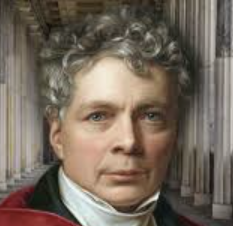
There was a time when religion was kept secret from popular belief within the mystery cults like a holy fire, sharing a common sanctuary with philosophy. The legends of antiquity name the earliest philosophers as the originators of these mystery cults, from which the most enlightened among the later philosophers, notably Plato, liked to educe their divine teachings. At that time philosophers still had the courage and the right to discuss the singly great themes, the only ones worthy of philosophizing and rising above common knowledge.
▼
Source
source
P. 7

2 months 1 week ago
In fact, the real problem with the thesis of A Genealogy of Morals is that the noble and the aristocrat are just as likely to be stupid as the plebeian. I had noted in my teens that major writers are usually those who have had to struggle against the odds -- to "pull their cart out of the mud," as I put it -- while writers who have had an easy start in life are usually second rate -- or at least, not quite first-rate. Dickens, Balzac, Dostoevsky, Shaw, H. G. Wells, are examples of the first kind; in the twentieth century, John Galsworthy, Graham Greene, Evelyn Waugh, and Samuel Beckett are examples of the second kind. They are far from being mediocre writers; yet they tend to be tinged with a certain pessimism that arises from never having achieved a certain resistance against problems.
▼
Source
source
p. 188
CivilSimian.com created by AxiomaticPanic, CivilSimian, Kalokagathia