


2 weeks ago
The shortest way to wealth is through the contempt of wealth.

2 months 3 weeks ago
But I say unto you, That whosoever is angry with his brother without a cause shall be in danger of the judgment: and whosoever shall say to his brother, Raca, shall be in danger of the council: but whosoever shall say, Thou fool, shall be in danger of hell fire.
▼
Source
source
5:22, King James Version.
1 week 3 days ago
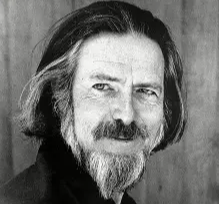
The most strongly enforced of all known taboos is the taboo against knowing who or what you really are behind the mask of your apparently separate, independent, and isolated ego.
▼
Source
source
Inside Information

4 months 2 weeks ago
The necessary connexion of movement and time is real and time is something the soul constructs in movement.

5 months ago
I can understand myself in believing, although in addition I can in a relative misunderstanding comprehend the human aspect of this life: but comprehend faith or comprehend Christ, I cannot.
2 months 2 weeks ago
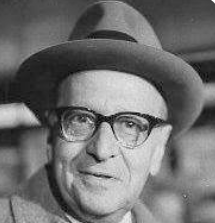
Answers determined by the social division of labor become truth as such.
▼
Source
source
p. 50: Describing the pragmatist view
4 months 2 days ago
A whole from necessary substances is impossible. The whole, therefore, of substances is a whole of contingent things, and the world consists essentially of only contingent things.

1 month 1 week ago
I do not allow myself to be overcome by hopelessness, no matter how tough the situation. I believe that if you just do your little bit without thinking of the bigness of what you stand against, if you turn to the enlargement of your own capacities, just that in itself creates new potential.

5 months ago
Homer has taught all other poets the art of telling lies skillfully.

2 months 1 week ago
An elaborated culture has a density, complexity, and historical-semantic value that is so strong as to make politics possible... Gramsci's insight is to have recognised that subordination, fracturing, diffusion, reproducing, as much as producing, creating, forcing, guiding, are necessary aspects of elaboration.
▼
Source
source
Quoted in Richard Middleton, Studying Popular Music (Philadelphia: Open University Press, 1990, ISBN 0-335-15275-9), p. 248

3 months 4 weeks ago
Wisdom: The first error is that of the southern people, and it consists in holding that these eastern and western places are real places. ... give no quarter to that thought, whether it threatens you with fear, or tempts you with hopes. For this is Superstition and all who believe it will come in the end to the swamps to the south and the jungles to the far south.
▼
Source
source
Part of the same error is to think that the Landlord is a real man: Pilgrim's Regress 117

2 months 1 week ago
As man loses touch with his 'inner being', his instinctive depths, he finds himself trapped in the world of consciousness, that is to say, in the world of other people. Any poet knows this truth; when other people sicken him, he turns to hidden resources of power inside himself, and he knows then that other people don't matter a damn. He knows the 'secret life' inside him is the reality; other people are mere shadows in comparison. but the 'shadows' themselves cling to one another. 'Man is a political animal', said Aristotle, telling one of the greatest lies in human history. Man has more in common with the hills, or with the stars, than with other men.
▼
Source
source
p. 170

4 months 2 weeks ago
The kingdom, its states, and its families, may be perfectly ruled; dignities and emoluments may be declined; naked weapons may be trampled under the feet; but the course of the Mean cannot be attained to.

3 weeks 3 days ago
Experience suggests that if men cannot struggle on behalf of a just cause because that just cause was victorious in an earlier generation, then they will struggle against the just cause. They will struggle for the sake of struggle. They will struggle, in other words, out of a certain boredom: for they cannot imagine living in a world without struggle. And if the greater part of the world in which they live is characterized by peaceful and prosperous liberal democracy, then they will struggle against that peace and prosperity, and against democracy. p. 330

4 months 3 days ago
The proposal of any new law or regulation of commerce which comes from this order, ought always to be listened to with great precaution, and ought never to be adopted till after having been long and carefully examined, not only with the most scrupulous, but with the most suspicious attention. It comes from an order of men, whose interest is never exactly the same with that of the public, who have generally an interest to deceive and even to oppress the public, and who accordingly have, upon many occasions, both deceived and oppressed it.
▼
Source
source
Chapter XI, Part III, Conclusion of the Chapter, p. 292.

4 months ago
I trust that some may be as near and dear to Buddha, or Christ, or Swedenborg, who are without the pale of their churches. It is necessary not to be Christian to appreciate the beauty and significance of the life of Christ. I know that some will have hard thoughts of me, when they hear their Christ named beside my Buddha, yet I am sure that I am willing they should love their Christ more than my Buddha, for the love is the main thing, and I like him too.

1 month 1 week ago
One cannot collect all the beautiful shells on the beach. One can collect only a few, and they are more beautiful if they are few.
▼
Source
source
p. 114

3 months ago
Nothing is so fatal to Religion as indifference which is, at least, half Infidelity.
▼
Source
source
Letter to William Smith, Member of the Irish Parliament (29 January 1795), quoted in R. B. McDowell (ed.)

4 months ago
Men fear thought as they fear nothing else on earth - more than ruin, more even than death. Thought is subversive and revolutionary, destructive and terrible; thought is merciless to privilege, established institutions, and comfortable habits; thought is anarchic and lawless, indifferent to authority, careless of the well-tried wisdom of the ages. Thought looks into the pit of hell and is not afraid. It sees man, a feeble speck, surrounded by unfathomable depths of silence; yet it bears itself proudly, as unmoved as if it were lord of the universe. Thought is great and swift and free, the light of the world, and the chief glory of man.
▼
Source
source
pp. 178-179

4 months 1 week ago
All that is under heaven, says the sage, runs one law and one fortune.
▼
Source
source
Ch. 12, tr. Cotton, rev. W. Carew Hazlitt, 1877
4 months 1 week ago
Truly man is a marvellously vain, diverse, and undulating object. It is hard to found any constant and uniform judgement on him.
▼
Source
source
Ch. 1. That Men by various Ways arrive at the same End (tr. Donald M. Frame)Cotton, rev. W. Hazlitt, 1842
3 months 4 days ago
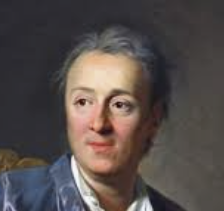
There is no kind of harassment that a man may not inflict on a woman with impunity in civilized societies.
▼
Source
source
"On Women" (1772), as translated in Selected Writings (1966) edited by Lester G. Crocker
3 weeks 2 days ago
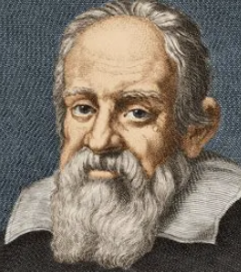
I cannot sufficiently admire the eminence of those men's wits, that have received and held it to be true, and with the sprightliness of their judgments offered such violence to their own senses, as that they have been able to prefer that which their reason dictated to them, to that which sensible experiments represented most manifestly to the contrary. ...I cannot find any bounds for my admiration, how that reason was able in Aristarchus and Copernicus, to commit such a rape on their senses, as in despite thereof to make herself mistress of their credulity.
▼
Source
source
Thomas Salusbury translation (1661) p. 301 as quoted by Edwin Arthur Burtt, The Metaphysical Foundations of Modern Physical Science

2 months 2 weeks ago
But the truth is that my work - I was going to say my mission - is to shatter the faith of men here, there, and everywhere, faith in affirmation, faith in negation, and faith in abstention in faith, and this for the sake of faith in faith itself; it is to war against all those who submit, whether it be to Catholicism, or to rationalism, or to agnosticism; it is to make all men live the life of inquietude and passionate desire.

2 months 4 weeks ago
If insistence on them tends to unsettle established systems ... self-evident truths are by most people silently passed over; or else there is a tacit refusal to draw from them the most obvious inferences.
▼
Source
source
Ethics (New York:1915), § 14, pp. 38-39
2 months 3 weeks ago
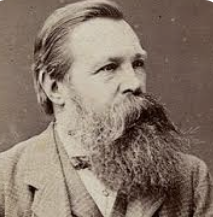
When all capital, all production, all exchange have been brought together in the hands of the nation, private property will disappear of its own accord, money will become superfluous, and production will so expand and man so change that society will be able to slough off whatever of its old economic habits may remain.
2 months 1 week ago
The progress of human knowledge depends on maintaining that touch of scepticism even about the most "unquestionable" truths. A century ago, Darwin's theory of evolution by natural selection was regarded as scientifically unshakeable; today, most biologists have their reservations about it. Fifty years ago, Freud's sexual theory of neurosis was accepted by most psychiatrists; today, it is widely recognized that his methods were highly questionable. At the turn of this century, a scientist who questioned Newton's theory of gravity would have been regarded as insane; twenty years later, it had been supplanted by Einstein's theory, although, significantly, few people actually understood it. It seems perfectly conceivable that our descendants of the twenty-second century will wonder how any of us could have been stupid enough to have been taken in by Darwin, Freud or Einstein.
▼
Source
source
p. 4

1 month 4 weeks ago
The most important person is the one you are with in this moment.
▼
Source
source
p. 206
4 months 1 week ago
For truth itself does not have the privilege to be employed at any time and in every way; its use, noble as it is, has its circumscriptions and limits.
▼
Source
source
Ch. 13
2 months 3 weeks ago
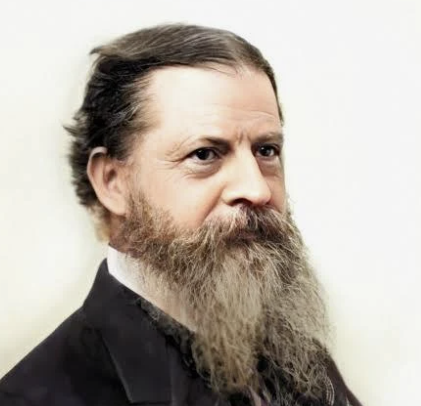
Wherever ideas come together they tend to weld into general ideas; and whenever they are generally connected, general ideas govern the connection; and these general ideas are living feelings spread out.

3 months 3 weeks ago
The constitution of madness as mental illness, at the end of the eighteenth century, bears witness to a rupture in a dialogue, gives the separation as already enacted, and expels from the memory all those imperfect words, of no fixed syntax, spoken falteringly, in which the exchange between madness and reason was carried out. The language of psychiatry, which is a monologue by reason about madness, could only have come into existence in such a silence.
▼
Source
source
Preface to 1961 edition

3 months 4 weeks ago
The Nazis were 'convinced that evil-doing in our time has a morbid force of attraction,' Bolshevik assurances inside and outside Russia that they do not recognize ordinary moral standards have become a mainstay of Communist propaganda, and experience has proven time and again that the propaganda value of evil deeds and general contempt for moral standards is independent of mere self-interest, supposedly the most powerful psychological factor in politics.
▼
Source
source
Part 3, Ch. 10
2 weeks ago
It is better, of course, to know useless things than to know nothing.
▼
Source
source
Line 45.
2 months 1 week ago
Administration is not unlike play-acting. The task of the good actor is to know and play his role, although different roles may differ greatly in content. The effectiveness of the performance will depend on the effectiveness of the play and the effectiveness with which it is played. The effectiveness of the administrative process will vary with the effectiveness of the organization and the effectiveness with which its members play their parts.
▼
Source
source
p. 252; As cited in: Herbert Simon (1996) The Sciences of the Artificial. page xii.

4 months 2 weeks ago
Corpses are more fit to be cast out than dung.

4 months 1 day ago
No doubt, when modesty was made a virtue, it was a very advantageous thing for the fools, for everybody is expected to speak of himself as if he were one.
▼
Source
source
Vol. 1, Ch. 3, Section 2: Pride
4 months 1 day ago
Europeans are awakening more and more to a sense that beasts have rights, in proportion as the strange notion is being gradually overcome and outgrown, that the animal kingdom came into existence solely for the benefit and pleasure of man. This view, with the corollary that non-human living creatures are to be regarded merely as things, is at the root of the rough and altogether reckless treatment of them, which obtains in the West.
▼
Source
source
Part III, Ch. VIII, 7, p. 225

3 months 6 days ago
A constellation of the most pedantic, obstinate ignorance and presumption, mixed with a kind of rustic incivility, which would try the patience of Job.
▼
Source
source
Declaration about the scholars of England, particularly those of Oxford

2 months 3 weeks ago
Women becoming, consequently weaker, in mind and body, than they ought to be...have not sufficient strength to discharge the first duty of a mother; and sacrificing to lasciviousness the parental affection...either destroy the embryo in the womb, or cast if off when born. Nature in every thing demands respect, and those who violate her laws seldom violate them with impunity.
▼
Source
source
Ch. 8
2 months 3 weeks ago
The apparatus defeats its own purpose if its purpose is to create a humane existence on the basis of a humanized nature.
▼
Source
source
pp. 145-146

1 month 6 days ago
In Kleist's essay humans are caught between the graceful automatism of the puppet and the conscious freedom of a god. The jerky, stuttering quality of their actions comes from their feeling that they must determine the course of their lives. Other animals live without having to choose their path through life. Whatever uncertainty they may feel sniffing their way through the world is not a permanent condition; once they reach a place of safety, they are at rest. In contrast, human life is spent anxiously deciding how to live.
▼
Source
source
The Faith of Puppets: Leopardi and the Souls of Machines (p.25-6)

3 months 4 days ago
In America, conscription is unknown; men are enlisted for payment. Compulsory recruitment is so alien to the ideas and so foreign to the customs of the people of the United States that I doubt whether they would ever dare to introduce it into their law.
▼
Source
source
Chapter XIII.

3 months 4 weeks ago
You can take better care of your secret than another can.
▼
Source
source
1863

5 months 2 days ago
Not one of these nobly equipped young men has escaped the restless, exhausting, confusing, debilitating crisis of education. ... He feels that he cannot guide himself, cannot help himself, and then he dives hopelessly into the world of everyday life and daily routine, he is immersed in the most trivial activity possible, and his limbs grow weak and weary.

3 months 4 weeks ago
Instinct leads, intelligence does but follow.
▼
Source
source
Statement of 1902 quoted in The William James Reader (2007), Vol I, p. 264
4 months 1 week ago
It is more of a job to interpret the interpretations than to interpret the things, and there are more books about books than about any other subject: we do nothing but write glosses about each other.
▼
Source
source
Ch. 13

3 months 4 weeks ago
I have nothing but contempt for you idiotic chosen ones who have the heart to rejoice when there are the damned in Hell and the poor on earth; as for me, I am on the side of men and I will not leave it.
▼
Source
source
Act 6, sc. 6
2 months 3 weeks ago
The mental operation by which one achieves new concepts and which one denotes generally by the inadequate name of induction is not a simple but rather a very complicated process. Above all, it is not a logical process although such processes can be inserted as intermediary and auxiliary links. The principle effort that leads to the discovery of new knowledge is due to abstraction and imagination.
▼
Source
source
3rd edition, p. 318ff, As quoted by Phillip Frank, Philosophy of Science: The Link Between Science and Philosophy

4 months 3 weeks ago
At any street corner the feeling of absurdity can strike any man in the face.
2 months 3 weeks ago
I think that I have succeeded in making it clear that this doctrine gives room for explanations of many facts which without it are absolutely and hopelessly inexplicable; and further that it carries along with it the following doctrines: first, a logical realism of the most pronounced type; second, objective idealism; third, tychism, with its consequent thoroughgoing evolutionism. We also notice that the doctrine presents no hindrences to spiritual influences, such as some philosophies are felt to do.
CivilSimian.com created by AxiomaticPanic, CivilSimian, Kalokagathia