


4 months 1 week ago
If you well apprehend and keep in mind these things, nature free at once and rid of her haughty lords is seen to do all things spontaneously of herself without the meddling of the gods.
▼
Source
source
Book II, lines 1090-1092 (tr. Munro)

2 weeks ago
It is to this law that our souls must adjust themselves, this they should follow, this they should obey. Whatever happens, assume that it was bound to happen, and do not be willing to rail at Nature. That which you cannot reform, it is best to endure, and to attend uncomplainingly upon the God under whose guidance everything progresses; for it is a bad soldier who grumbles when following his commander.

3 months 4 weeks ago
History teaches us that war is not inevitable. Once again, it is for us to choose whether we use war or some other method of settling the ordinary and unavoidable conflicts between groups of men.
▼
Source
source
What Are You Going To Do About It? , The case for constructive peace, 1936
3 weeks 4 days ago
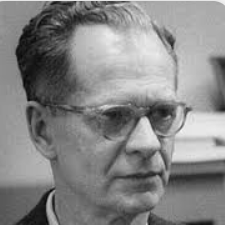
Ethical control may survive in small groups, but the control of the population as a whole must be delegated to specialists-to police, priests, owners, teachers, therapists, and so on, with their specialized reinforcers and their codified contingencies.
▼
Source
source
Beyond Freedom and Dignity (1971), p. 155

4 months 3 weeks ago
In memory yet green, in joy still felt, The scenes of life rise sharply into view. We triumph; Life's disasters are undealt, And while all else is old, the world is new.

2 months 4 weeks ago
Men must be governed by those laws which they love. Where thirty millions are to be governed by a few thousand men, the government must be established by consent, and must be congenial to the feelings and to the habits of the people. That which creates tyranny is the imposition of a form of government contrary to the will of the governed: and even a free and equal plan of government, would be considered as despotic by those who desired to have their old laws and their ancient system.
▼
Source
source
Speech in the House of Commons on India (27 June 1781), quoted in The Parliamentary Register: Or, History of the Proceedings and Debates of the House of Commons, Volume III (1782), pp. 666-667

4 months 3 weeks ago
Neither perception nor true opinion, nor reason or explanation combined with true opinion could be knowledge. Then our art of midwifery declare to us that all the offspring that have been born are mere wind-eggs and not worth rearing and if you remain barren, you will be less harsh and gentler to your associates, for you will have the wisdom not to think you know that which you do not know.
3 weeks 4 days ago
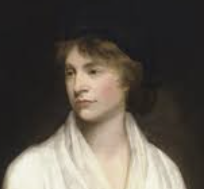
Many instructional arrangements seem "contrived", but there is nothing wrong with that. It is the teacher's function to contrive conditions under which students learn. Their relevance to a future usefulness need not be obvious. It is a difficult assignment. The conditions the teacher arranges must be powerful enough to compete with those under which the student tends to behave in distracting ways.
▼
Source
source
Free and Happy Student in The Phi Delta Kappan (September 1973); later published in Reflections on Behaviorism and Society
2 months 3 weeks ago
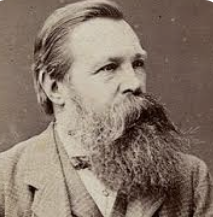
You know I am not born to tread in the beaten track - the peculiar bent of my nature pushes me on.
▼
Source
source
Letter to Everina Wollstonecraft
2 months 3 weeks ago
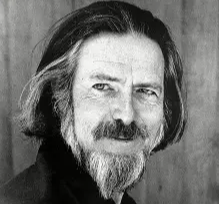
The proletariat is that class in society which lives entirely from the sale of its labor and does not draw profit from any kind of capital; whose weal and woe, whose life and death, whose sole existence depends on the demand for labor - hence, on the changing state of business, on the vagaries of unbridled competition.
4 months 3 weeks ago
By such reflections and by the continuance in them of a divine nature, the qualities which we have described grew and increased among them; but when the divine portion began to fade away, and became diluted too often and too much with the mortal admixture, and the human nature got the upper hand, they then, being unable to bear their fortune, behaved unseemly, and to him who had an eye to see grew visibly debased, for they were losing the fairest of their precious gifts; but to those who had no eye to see the true happiness, they appeared glorious and blessed at the very time when they were full of avarice and unrighteous power.
4 months 3 weeks ago
He is a dreamer of ancient times, or rather, of the myths of what ancient times used to be. Such men are harmless in themselves, but their queer lack of realism makes them fools for others.

2 weeks 6 days ago
I here, on the very threshold, protest against it in reference to Paganism, and to all other isms by which man has ever for a length of time striven to walk in this world. They have all had a truth in them, or men would not have taken them up. Quackery and dupery do abound; in religions, above all in the more advanced decaying stages of religions, they have fearfully abounded: but quackery was never the originating influence in such things; it was not the health and life of such things, but their disease, the sure precursor of their being about to die! Let us never forget this.
1 week 3 days ago
I have always done things in my own way, which is at once the way that comes naturally to me, that is honest, sincere, genuine, and unforced; but also perverse, although you must remember that this word means per (through) verse (poetry), out-of-the-way and wayward, which is surely towards the way, and that to be queer-to "follow your own weird"-is wholeheartedly to accept your karma, or fate, or destiny, and thus to be odd in the service of God, "whose service," as the Anglican Book of Common Prayer declares, "is perfect freedom."
▼
Source
source
p. xiii

3 months 3 weeks ago
In the ceremonies of the public execution, the main character was the people, whose real and immediate presence was required for the performance.
▼
Source
source
Chapter One, pp. 56
4 months 3 weeks ago
Outside of that single fatality of death, everything, joy or happiness, is liberty.
4 months 3 weeks ago
...there are more things to admire in men than to despise.

2 months 3 weeks ago
The only minds which seduce us are the minds which have destroyed themselves trying to give their life a meaning.
2 months 4 weeks ago
The administrators of the executive power may be either elective or not; and in the former case all or only some of them may be elective. They are elective in a proper democracy, that is to say, in a democracy which recognizes representation. If all the public officials are directly elected by the whole people, the democracy is a pure democracy; if only some, it is a mixed democracy. The public officials may also fill vacancies themselves; this is the case in a pure aristocracy. But if only some of the magistrates are thus replaced by the public officers, and if the others are again directly elected by the people, then the form of government is that of a democratic aristocracy. A permanent president (monarch) may also be elected to exercise the executive power during his lifetime. In all these cases, either all citizens of the commonwealth, or only some of them, are eligible to office. Eligibility may, therefore, be limited or unlimited.

1 month 4 weeks ago
The appreciation of the merits of art (of the emotions it conveys) depends upon an understanding of the meaning of life, what is seen as good and evil. Good and evil are defined by religions.
2 weeks ago
There is no sorrow in the world, when we have escaped from the fear of death.
2 weeks 6 days ago
Blessed is the healthy nature; it is the coherent, sweetly co-operative, not incoherent, self-distracting, self-destructive one!
2 weeks ago
Death weighs on him who is known to all, but dies unknown to himself.
▼
Source
source
lines 401-403; (Chorus)
2 months 3 weeks ago
Fear is the antidote to boredom: the remedy must be stronger than the disease.
1 month 3 weeks ago
When we read the best nineteenth- and twentieth-century novelists, we soon realize that they are trying in a variety of ways to establish a definition of human nature, to justify the continuation of life as well as the writing of novels.
▼
Source
source
"The Sealed Treasure" (1960), p. 60

2 months 1 week ago
Art is thought, and thought only gives the world an appearance of order to anyone weak enough to be convinced by its show.
▼
Source
source
Chapter one, The Country of the Blind
4 months 3 weeks ago
It is very likely that there are many, many planets carrying life, even intelligent life, throughout the universe, because there are so many stars. By sheer chance, even if those chances are small, a great many life forms and a great many intelligences may exist.

4 months 3 weeks ago
A fire eater must eat fire even if he has to kindle it himself.
3 months 2 weeks ago
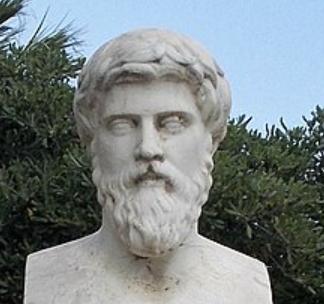
Cato requested old men not to add the disgrace of wickedness to old age, which was accompanied with many other evils.
▼
Source
source
Cato the Elder
2 months 1 week ago
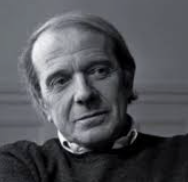
Evaluations, in essence, are... ways of being, modes of existence of those who judge and evaluate.
▼
Source
source
p. 1
2 weeks ago
What anger is has been sufficiently explained. The difference between it and irascibility is evident: it is the same as that between a drunken man and a drunkard; between a frightened man and a coward. It is possible for an angry man not to be irascible; an irascible man may sometimes not be angry. I shall omit the other varieties of anger, which the Greeks distinguish by various names, because we have no distinctive words for them in our language, although we call men bitter and harsh, and also peevish, frantic, clamorous, surly and fierce: all of which are different forms of irascibility.

4 months 6 days ago
Even opinion is of force enough to make itself to be espoused at the expense of life.
▼
Source
source
Book I, Ch. 40. Of Good and Evil, tr. Cotton, rev. W. Hazlitt, 1842
2 weeks ago
These actions are not essentially difficult; it is we ourselves that are soft and flabby.
4 months 1 day ago
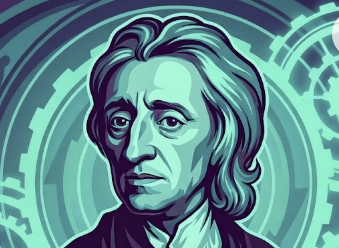
He will better comprehend the foundations and measures of decency and justice, and have livelier, and more lasting impressions of what he ought to do, by giving his opinion on cases propos'd, and reasoning with his tutor on fit instances, than by giving a silent, negligent, sleepy audience to his tutor's lectures; and much more than by captious logical disputes, or set declamations of his own, upon any question. The one sets the thoughts upon wit and false colours, and not upon truth; the other teaches fallacy, wrangling, and opiniatry; and they are both of them things that spoil the judgment, and put a man out of the way of right and fair reasoning; and therefore carefully to be avoided by one who would improve himself, and be acceptable to others.
▼
Source
source
Sec. 98
1 month 3 weeks ago
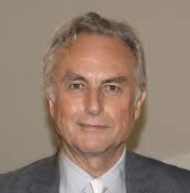
It is fashionable to wax apocalyptic about the threat to humanity posed by the AIDS virus, "mad cow" disease, and many others, but I think a case can be made that faith is one of the world's great evils, comparable to the smallpox virus but harder to eradicate.
▼
Source
source
Is Science a Religion?, The Humanist

4 months ago
Passing from quantity to quality of population, we come to the question of eugenics. We may perhaps assume that, if people grow less superstitious, government will acquire the right to sterilize those who are not considered desirable as parents. This power will be used, at first, to diminish imbecility, a most desirable object. But probably, in time, opposition to the government will be taken to prove imbecility, so that rebels of all kinds will be sterilized. Epileptics, consumptives, dipsomaniacs and so on will gradually be included; in the end, there will be a tendency to include all who fail to pass the usual school examinations. The result will be to increase the average intelligence; in the long run, it may be greatly increased. But probably the effect upon really exceptional intelligence will be bad. Mr. Micawber, who was Dickens's father, would hardly have been regarded as a desirable parent. How many imbeciles ought to outweigh one Dickens I do not profess to know.

4 months 1 day ago
Contemplating the universe, the whole system of creation, in this point of light, we shall discover, that all that which is called natural philosophy is properly a divine study- It is the study of God through his works - It is the best study, by which we can arrive at a knowledge of the existence, and the only one by which we can gain a glimpse of his perfection. Do we want to contemplate his power? We see it in the immensity of the Creation. Do we want to contemplate his wisdom? We see it in the unchangeable order by which the incomprehensible Whole is governed. Do we want to contemplate his munificence? We see it in the abundance with which he fills the earth. Do we want to contemplate his mercy? We see it in his not withholding that abundance even from the unthankful. In fine, do we want to know what God is?
▼
Source
source
Search not written or printed books, but the Scripture called the Creation. A Discourse, &c. &c.
4 months ago
To choose one sock from each of infinitely many pairs of socks requires the Axiom of Choice, but for shoes the Axiom is not needed.
▼
Source
source
As quoted in Williams' Weighing the Odds: A Course in Probability and Statistics (2001), p. 498
4 months 4 weeks ago
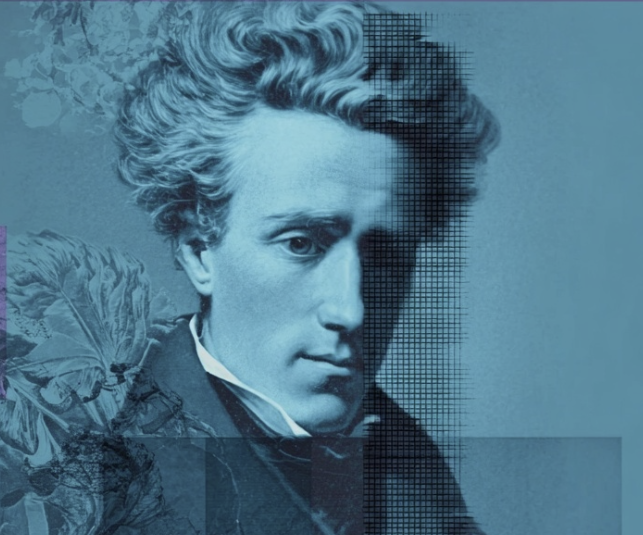
Every human being is tried this way in the active service of expectancy. Now comes the fulfillment and relieves him, but soon he is again placed on reconnaissance for expectancy; then he is again relieved, but as long as there is any future for him, he has not yet finished his service. And while human life goes on this way in very diverse expectancy, expecting very different things according to different times and occasions and in different frames of mind, all life is again one nightwatch of expectancy.
2 months 3 weeks ago
The only interesting philosophers are the ones who have stopped thinking and have begun to search for happiness.
2 weeks ago
Very often the things that cost nothing cost us the most heavily; I can show you many objects the quest and acquisition of which have wrested freedom from our hands.

3 months 4 weeks ago
Classical political economy nearly touches the true relation of things, without, however,consciously formulating it. This it cannot so long as it sticks in its bourgeois skin.
▼
Source
source
Vol. I, Ch. 19, pg. 594.

3 months 2 weeks ago
Form no covetous desire, so that the demon of greediness may not deceive thee, and the treasure of the world may not be tasteless to thee.

3 months 4 weeks ago
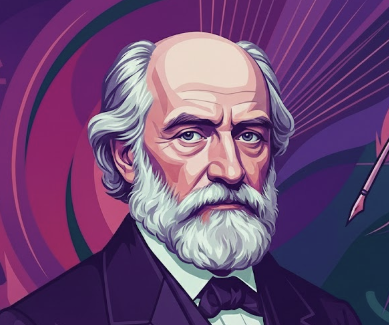
When a whole nation is roaring Patriotism at the top of its voice, I am fain to explore the cleanness of its hands and purity of its heart.
▼
Source
source
December 10, 1824
4 months ago
Patriotism, when it wants to make itself felt in the domain of learning, is a dirty fellow who should be thrown out of doors.
▼
Source
source
Vol. 2, Ch. 21, § 255
3 months 3 weeks ago
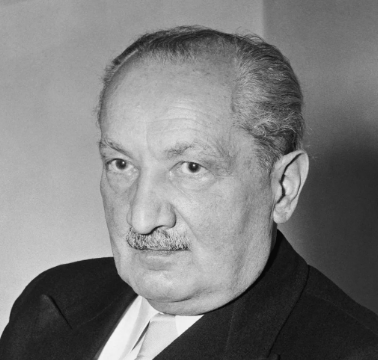
Nevertheless, the ultimate business of philosophy is to preserve the force of the most elemental words in which Dasein expresses itself, and to keep the common understanding from levelling them off to that unintelligibility which functions in turn as a source of pseudo-problems.
▼
Source
source
Macquarrie & Robinson translation
4 months 6 days ago
There is no wish more natural than the wish to know.
▼
Source
source
Ch. 13
2 weeks ago
We put down mad dogs; we kill the wild, untamed ox; we use the knife on sick sheep to stop their infecting the flock; we destroy abnormal offspring at birth; children, too, if they are born weak or deformed, we drown. Yet this is not the work of anger, but of reason - to separate the sound from the worthless.
▼
Source
source
De Ira (On Anger): Book 1, cap. 15, line 2 Seneca: Moral and Political Essays (Cambridge UP, 1995) p. 32
2 months 2 weeks ago
The success of most things depends upon knowing how long it will take to succeed.
CivilSimian.com created by AxiomaticPanic, CivilSimian, Kalokagathia