



1 month 1 week ago
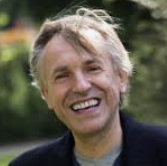
Genes and culture have co-evolved. But crudely, natural selection "designed" male human primates to hunt nonhumans and build coalitions of other male human primates in order to wage territorial wars of aggression. Nature didn't design us to become a scientific community and collaborate to overcome aging. It's difficult to imagine that any human enemy could inflict such gruesome damage on the victims as growing old. The ravages of aging strike down combatants and civilians alike. So the trillions of dollars that humans currently spend on ways to harm and kill each other ("defence") would be more fruitfully spent on defeating our common enemy. We should work together to build a "Triple S" civilisation of superlongevity, superhappiness and superintelligence.
▼
Source
source
Transhumanism 2017: Towards a 'Triple S' civilisation of Superlongevity, Superintelligence and Superhappiness, Timeship Buddha
2 months 3 weeks ago
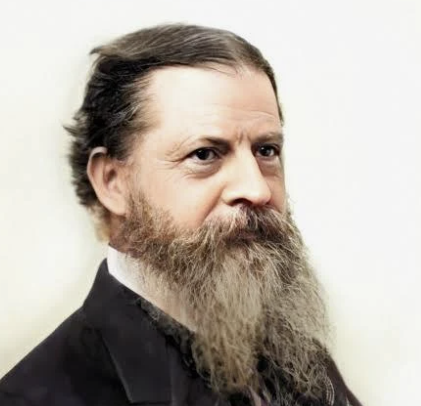
Now, to say that a lot of objects is finite, is the same as to say that if we pass through the class from one to another we shall necessarily come round to one of those individuals already passed; that is, if every one of the lot is in any one-to-one relation to one of the lot, then to every one of the lot some one is in this same relation.
2 months 2 weeks ago
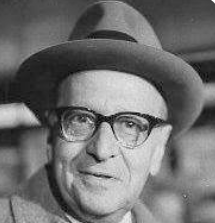
Logical empiricism holds the view, notwithstanding some its assertions, that the forms of knowledge and consequently the relations of man to nature and to other men never change. According to rationalism, too, all subjective and objective potentialities are rooted in insights which the individual already possesses, but rationality uses existing objects as well as the active inner striving and ideas of man to construct standards for the future. In this regard, it is not so closely associated with the present order as is empiricism.
▼
Source
source
p. 148.
2 weeks ago
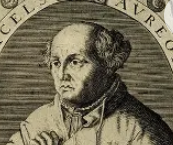
All is interrelated. Heaven and earth, air and water. All are but one thing; not four, not two and not three, but one. Where they are not together, there is only an incomplete piece.
▼
Source
source
Paracelsus - Collected Writings Vol. I (1926) edited by Bernhard Aschner, p. 110
2 months 3 weeks ago
The young man who has not wept is a savage, and the old man who will not laugh is a fool.
▼
Source
source
Ch. 3, P. 57

3 months 4 days ago
We carry with us the wonders, we seek without us: There is all Africa, and her prodigies in us; we are that bold and adventurous piece of nature, which he that studies, wisely learns in a compendium, what others labour at in a divided piece and endless volume.
▼
Source
source
Section 15

3 months 2 weeks ago
Man is a universe in little [Microcosm].
▼
Source
source
Freeman (1948), p. 150
2 months 2 weeks ago
Strictly speaking, the mass, as a psychological fact, can be defined without waiting for individuals to appear in mass formation. In the presence of one individual we can decide whether he is "mass" or not. The mass is all that which sets no value on itself - good or ill - based on specific grounds, but which feels itself "just like everybody," and nevertheless is not concerned about it; is, in fact, quite happy to feel itself as one with everybody else.
▼
Source
source
Chap.I: The Coming Of The Masses
1 month 4 weeks ago
How good is it to remember one's insignificance: that of a man among billions of men, of an animal amid billions of animals; and one's abode, the earth, a little grain of sand in comparison with Sirius and others, and one's life span in comparison with billions on billions of ages. There is only one significance, you are a worker. The assignment is inscribed in your reason and heart and expressed clearly and comprehensibly by the best among the beings similar to you. The reward for doing the assignment is immediately within you. But what the significance of the assignment is or of its completion, that you are not given to know, nor do you need to know it. It is good enough as it is. What else could you desire?
▼
Source
source
Last Diaries (1979) edited by Leon Stilman, p. 77

2 months 3 weeks ago
Paradise was unendurable, otherwise the first man would have adapted to it; this world is no less so, since here we regret paradise or anticipate another one. What to do? Where to go? Do nothing and go nowhere, easy enough.
1 month 1 week ago
We shall have to share out the fruits of technology among the whole of mankind. The notion that the direct and immediate producers of the fruits of technology have a proprietary right to these fruits will have to be forgotten. After all, who is the producer? Man is a social animal, and the immediate producer has been helped to produce by the whole structure of society, beginning with his own education.
▼
Source
source
Surviving the Future (1971; Oxford UP, 1972) p. 95

4 months 3 days ago
Marriage is encouraged in China, not by the profitableness of children, but by the liberty of destroying them.
▼
Source
source
Chapter VIII, p. 87.

3 months 3 weeks ago
In the darkest region of the political field the condemned man represents the symmetrical, inverted figure of the king.

3 months 4 weeks ago
"If a nation expects to be ignorant and free," said Jefferson, "it expects what never was and never will be."
▼
Source
source
Chapter 4 (p. 34)
4 months 4 weeks ago
The science which has to do with nature clearly concerns itself for the most part with bodies and magnitudes and their properties and movements, but also with the principles of this sort of substance, as many as they may be.
2 months 3 weeks ago
Impossible to accede to truth by opinions, for each opinion is only a mad perspective of reality.
1 month 3 weeks ago
For him who loves labor, there is always something to do.
▼
Source
source
Maxim 219
1 month 1 week ago
Many city-dwellers have a romanticized conception of the living world. From another perspective, some "conservation biologists" favour e.g. "Pleistocene rewilding". By contrast, I think any truly compassionate person should be horrified at the terrible suffering of Nature "red in tooth and claw". Why not aim for a cruelty-free world instead?
▼
Source
source
"Interview with Pensata Animal", Pensata Animal, 25 Oct. 2009

4 months ago
Love is better than hate, because it brings harmony instead of conflict into the desires of the persons concerned. Two people between whom there is love succeed or fail together, but when two people hate each other the success of either is the failure of the other.

3 months 4 weeks ago
The violence of love is as much to be dreaded as that of hate. When it is durable, it is serene and equable. Even its famous pains begin only with the ebb of love, for few are indeed lovers, though all would fain be.
▼
Source
source
Pearls of Thought (1881) p. 158
3 months 4 weeks ago
It is remarkable that, notwithstanding the universal favor with which the New Testament is outwardly received, and even the bigotry with which it is defended, there is no hospitality shown to, there is no appreciation of, the order of truth with which it deals.
2 months 2 weeks ago
When we see a great man desiring power instead of his real goal we soon recognize that he is sick, or more precisely that his attitude to his work is sick. He overreaches himself, the work denies itself to him, the incarnation of the spirit no longer takes place, and to avoid the threat of senselessness he snatches after empty power. This sickness casts the genius on to the same level as those hysterical figures who, being by nature without power, slave for power, in order that they may enjoy the illusion that they are inwardly powerful, and who in this striving for power cannot let a pause intervene, since a pause would bring with it the possibility of self-reflection and self-reflection would bring collapse.
▼
Source
source
p. 180

4 months 3 days ago
I make this chief distinction between religion and superstition, that the latter is founded on ignorance, the former on knowledge; this, I take it, is the reason why Christians are distinguished from the rest of the world, not by faith, nor by charity, nor by the other fruits of the Holy Spirit, but solely by their opinions, inasmuch as they defend their cause, like everyone else, by miracles, that is by ignorance, which is the source of all malice; thus they turn a faith, which may be true, into superstition.
▼
Source
source
Letter 21 (73) to Henry Oldenburg , November
2 months 1 week ago
The American who first discovered Columbus made a bad discovery.
▼
Source
source
G 42

3 months 4 weeks ago
I do not give a damn about the dead. They died for the [Communist] Party and the Party can decide what it wants. I practice a live man's politics, for the living.
▼
Source
source
Act 5, sc. 3
2 months 2 weeks ago
The thesis of the identity of concept and thing is in general the vital nerve of idealist thought, and indeed traditional thought in general. ... Negative dialectics as critique means above all criticism of precisely this claim to identity.
▼
Source
source
p. 20
2 weeks ago
He who wants to govern must have insight into the hearts of men and act accordingly.
3 months 4 days ago
Obstinacy in a bad cause, is but constancy in a good.
▼
Source
source
Section 25

2 months 2 weeks ago
Martyrs create faith, faith does not create martyrs.

2 weeks ago
Most men ebb and flow in wretchedness between the fear of death and the hardships of life; they are unwilling to live, and yet they do not know how to die.
2 months 3 weeks ago
When one is not understood one should as a rule lower one's voice, because when one really speaks loudly enough and is not heard, it is because people do not want to hear. One had better begin to mutter to oneself, then they get curious.
▼
Source
source
Nietzsche's Zarathustra (1988), p. 30
4 months 1 week ago
Time, which is the author of authors.
▼
Source
source
Book I, iv, 12
2 months 3 weeks ago
The state of health is a state of nonsensation, even of nonreality. As soon as we cease to suffer, we cease to exist.
4 months ago
Correct and accurate conclusions may be arrived at if we carefully observe the relation of the spheres of concepts, and only conclude that one sphere is contained in a third sphere, when we have clearly seen that this first sphere is contained in a second, which in its turn is contained in the third. On the other hand, the art of sophistry lies in casting only a superficial glance at the relations of the spheres of the concepts, and then manipulating these relations to suit our purposes, generally in the following way: - When the sphere of an observed concept lies partly within that of another concept, and partly within a third altogether different sphere, we treat it as if it lay entirely within the one or the other, as may suit our purpose.
▼
Source
source
Vol. I, Ch. 10, as translated by R. B. Haldane
2 months 3 weeks ago
It depends only on the weakness of our organs and of our self-excitement (Selbstberuhrung), that we do not see ourselves in a Fairy-world. All Fabulous Tales (Mahrchen) are merely dreams of that home world, which is everywhere and nowhere. The higher powers in us, which one day as Genies, shall fulfil our will, are, for the present, Muses, which refresh us on our toilsome course with sweet remembrances.
1 month 3 weeks ago
There is but a step between a proud man's glory and his disgrace.
▼
Source
source
Maxim 138
3 months 6 days ago
That neither our Thoughts, nor Passions, nor Ideas formed by the Imagination, exist without the Mind, is what every Body will allow. And it seems no less evident that the various Sensations or Ideas imprinted on the Sense... cannot exist otherwise than in a Mind perceiving them... For as to what is said of the absolute Existence of unthinking Things without any relation to their being perceived, that seems perfectly unintelligible. Their Esse is Percipi, nor is it possible they should have any Existence, out of the Minds or thinking Things which perceive them.

2 weeks 6 days ago
To a shower of gold most things are penetrable.
▼
Source
source
Pt. I, Bk. III, ch. 7.

2 months 1 week ago
As man loses touch with his 'inner being', his instinctive depths, he finds himself trapped in the world of consciousness, that is to say, in the world of other people. Any poet knows this truth; when other people sicken him, he turns to hidden resources of power inside himself, and he knows then that other people don't matter a damn. He knows the 'secret life' inside him is the reality; other people are mere shadows in comparison. but the 'shadows' themselves cling to one another. 'Man is a political animal', said Aristotle, telling one of the greatest lies in human history. Man has more in common with the hills, or with the stars, than with other men.
▼
Source
source
p. 170
4 months 3 days ago
The proposal of any new law or regulation of commerce which comes from this order, ought always to be listened to with great precaution, and ought never to be adopted till after having been long and carefully examined, not only with the most scrupulous, but with the most suspicious attention. It comes from an order of men, whose interest is never exactly the same with that of the public, who have generally an interest to deceive and even to oppress the public, and who accordingly have, upon many occasions, both deceived and oppressed it.
▼
Source
source
Chapter XI, Part III, Conclusion of the Chapter, p. 292.
4 months 6 days ago
A little of all things, but nothing of everything, after the French manner.
▼
Source
source
Chapter 26. Of the Education of Children

3 months 4 weeks ago
Go where he will, the wise man is at home, His hearth the earth, his hall the azure dome.
▼
Source
source
Wood-notes, st. 3
2 months 1 week ago
By narcissism is meant ceasing to have an authentic interest in the outside world but instead an intense attachment to oneself, to one's own group, clan, religion, nation, race, etc. - with consequent serious distortions of rational judgment. In general, the need for narcissistic satisfaction derives from the necessity to compensate for material and cultural poverty.

2 months 3 weeks ago
The victor and the one who keeps My works to the end: I will give him authority over the nations and He will shepherd them with an iron scepter; He will shatter them like pottery just as I have received this from My Father.
2 weeks 6 days ago
The science of the age, in short, is physical, chemical, physiological; in all shapes mechanical. Our favourite Mathematics, the highly prized exponent of all these other sciences, has also become more and more mechanical. Excellence in what is called its higher departments depends less on natural genius than on acquired expertness in wielding its machinery. Without undervaluing the wonderful results which a Lagrange or Laplace educes by means of it, we may remark, that their calculus, differential and integral, is little else than a more cunningly-constructed arithmetical mill; where the factors, being put in, are, as it were, ground into the true product, under cover, and without other effort on our part than steady turning of the handle. We have more Mathematics than ever; but less Mathesis.
4 weeks ago
The great artist liberates the emotions and recreates the sheer wonder of childhood without surrendering the development of the intellect.
▼
Source
source
p. 258
3 months 4 weeks ago
Life consists with wildness. The most alive is the wildest. Not yet subdued to man, its presence refreshes him.
CivilSimian.com created by AxiomaticPanic, CivilSimian, Kalokagathia