

2 months 3 weeks ago
The moral consciousness can sustain the mocking gaze of the political man only if the certitude of peace dominates the evidence of war. Such a certitude is not obtained by a simple play of antitheses. The peace of empires issued from war rests on war. It does not restore to the alienated beings their lost identity. For that a primordial and original relation with being is needed.
▼
Source
source
Totality and Infinity
4 months 1 week ago
If we are not stupid or insincere when we say that the good or ill of man lies within his own will, and that all beside is nothing to us, why are we still troubled?
▼
Source
source
Book I, ch. 25, § 1.

3 months 4 weeks ago
If in this book harsh words are spoken about some of the greatest among the intellectual leaders of mankind, my motive is not, I hope, the wish to belittle them. It springs rather from my conviction that, if our civilization is to survive, we must break with the habit of deference to great men. Great men may make great mistakes; and as the book tries to show, some of the greatest leaders of the past supported the perennial attack on freedom and reason. Their influence, too rarely challenged, continues to mislead those on whose defence civilization depends, and to divide them. The responsibility of this tragic and possibly fatal division becomes ours if we hesitate to be outspoken in our criticism of what admittedly is a part of our intellectual heritage. By reluctance to criticize some of it, we may help to destroy it all.
▼
Source
source
Preface to the First Edition

2 months 1 week ago
The principle of brotherhood expounded by the agitator of Nazareth preserved the germ of life, of truth and justice, so long as it was the beacon light of the few. The moment the majority seized upon it, that great principle became a shibboleth and harbinger of blood and fire, spreading suffering and disaster. The attack on the omnipotence of Rome was like a sunrise amid the darkness of the night, only so long as it was made by the colossal figures of a Huss, a Calvin, or a Luther. Yet when the mass joined in the procession against the Catholic monster, it was no less cruel, no less bloodthirsty than its enemy. Woe to the heretics, to the minority, who would not bow to its dicta. After infinite zeal, endurance, and sacrifice, the human mind is at last free from the religious phantom; the minority has gone on in pursuit of new conquests, and the majority is lagging behind, handicapped by truth grown false with age.

3 months 4 weeks ago
Do you think that I count the days? There is only one day left, always starting over: it is given to us at dawn and taken away from us at dusk.
▼
Source
source
Act 10, sc. 2
3 weeks ago
All poetry is supposed to be instructive but in an unnoticeable manner; it is supposed to make us aware of what it would be valuable to instruct ourselves in; we must deduce the lesson on our own, just as with life.
▼
Source
source
Letter to Carl Friedrich Zelter

5 months 1 day ago
Is Wagner a human being at all? Is he not rather a disease? He contaminates everything he touches - he has made music sick.
3 months 2 weeks ago
With regard to the rather common general distinction between good and bad sex ..., bad sex is generally better than none at all. This should not be controversial: it seems to hold for other important matters, like food, music, literature, and society. In the end, one must choose from among the available alternatives, whether their availability depends on the environment or on one's own constitution. And the alternatives have to be fairly grim before it becomes rational to opt for nothing.
▼
Source
source
"Sexual Perversion" (1969), p. 52.


4 months 3 days ago
The great end of all human industry, is the attainment of happiness. For this were arts invented, sciences cultivated, laws ordained, and societies modelled, by the most profound wisdom of patriots and legislators.
▼
Source
source
Part I, Essay 16: The Stoic

4 months ago
Change is one thing, progress is another.

3 months 4 weeks ago
While we are reading these sentences, this fair modern world seems only a reprint of the Laws of Menu with the gloss of Culluca. Tried by a New England eye, or the mere practical wisdom of modern times, they are the oracles of a race already in its dotage, but held up to the sky, which is the only impartial and incorruptible ordeal, they are of a piece with its depth and serenity, and I am assured that they will have a place and significance as long as there is a sky to test them by.
4 months ago
At the present stage in the development of the art of war, there is only way of coping with them, and that is to keep out of war. In all the densely populated countries of Western Europe, it seems almost certain that, within a few days of the outbreak of war, panic will seize the surviving inhabitants of the capitals and the industrial areas, leading to anarchy, starvation, and paralysis of all warlike effort. The only sensible course, therefore, is to prevent war if possible, and to remain neutral if war occurs.
▼
Source
source
Letter to The New Statesman and Nation (10 August 1935)

3 months 4 weeks ago
When communist workmen associate with one another, theory, propaganda, etc., is their first end. But at the same time, as a result of this association, they acquire a new need - the need for society - and what appears as a means becomes an end. You can observe this practical processing its most splendid results whenever you see French socialist workers together. Such things as smoking, drinking, eating, etc., are no longer means of contact or means that bring together. Company, association, and conversation, which again has society as its end, are enough for them; the brotherhood of man is on mere phase with them, but a fact of life, and the nobility of man shines upon us from their work-hardened bodies.
▼
Source
source
"The Meaning of Human Requirements" p.99-100,The Marx-Engels Reader

4 months 3 days ago
But love for an object eternal and infinite feeds the mind with joy alone, and a joy which is free from all sorrow. This is something greatly to be desired and to be sought with all our strength.
▼
Source
source
I, 10; translation by W. Hale White (Revised by Amelia Hutchison Stirling)
2 months 1 day ago
Whatever is referred to must exist. Let us call this the axiom of existence.
▼
Source
source
P. 77.

1 month 4 weeks ago
The attitude of the ruling classes to the laborers is that of a man who has felled his adversary to the earth and holds him down, not so much because he wants to hold him down, as because he knows that if he let him go, even for a second, he would himself be stabbed, for his adversary is infuriated and has a knife in his hand. And therefore, whether their conscience is tender or the reverse, our rich men cannot enjoy the wealth they have filched from the poor as the ancients did who believed in their right to it. Their whole life and all their enjoyments are embittered either by the stings of conscience or by terror.
▼
Source
source
Chapter V, Contradiction Between our Life and our Christian Conscience

2 weeks ago
And what is freedom, you ask? It means not being a slave to any circumstance, to any constraint, to any chance; it means compelling Fortune to enter the lists on equal terms.

3 months 4 weeks ago
The best state for human nature is that in which, while no one is poor, no one desires to be richer, nor has any reason to fear being thrust back by the efforts of others to push themselves forward.
▼
Source
source
Book IV, Chapter VI, §2
2 months 4 weeks ago
There are only Epicureans, either crude or refined; Christ was the most refined.
▼
Source
source
Act I.

3 months ago
If the people are happy, united, wealthy, and powerful, we presume the rest. We conclude that to be good from whence good is derived.

4 months 1 week ago
The human understanding is unquiet; it cannot stop or rest, and still presses onward, but in vain. Therefore it is that we cannot conceive of any end or limit to the world, but always as of necessity it occurs to us that there is something beyond... But he is no less an unskilled and shallow philosopher who seeks causes of that which is most general, than he who in things subordinate and subaltern omits to do so.
▼
Source
source
Aphorism 48
2 months 1 week ago
Enlightenment is an awakening to the everyday.
3 months ago
If any ask me what a free Government is, I answer, that, for any practical purpose, it is what the people think so, - and that they, and not I, are the natural, lawful, and competent judges of this matter.
4 months 1 day ago
You have not that power you ought to have over him, till he comes to be more afraid of offending so good a friend than of losing some part of his future expectation.
▼
Source
source
Sec. 97
2 weeks ago
Apart from any other basis which might justify a superiority, education, as a power, raised him who possessed it over the weak, who lacked it, and the educated man counted in his circle, however large or small it was, as the mighty, the powerful, the imposing one: for he was an authority.
▼
Source
source
p. 12
5 months 1 day ago
Art furnishes us with eyes and hands and above all the good conscience to be able to turn ourselves into such a phenomenon.
2 months 4 weeks ago
Yes! We believe in a higher principle than your virtue and the kind of morality you speak of so paltrily and without much conviction. We believe that there is no imperative or reward for virtue for the soul because it simply acts according to the necessity of its inherent nature. The moral imperative expresses itself in an ought and presupposes the concept of an evil next to that of good.
▼
Source
source
P. 43

5 months ago
To understand oneself in existence is the Christian principle, except that this self has received much richer and much more profound qualifications that are even more difficult to understand together with existing. The believer is a subjective thinker, and the difference, is only between the simple person and the simple wise person. Here again the oneself is not humanity in general, subjectivity in general, and other such things, whereas everything becomes easy inasmuch as the difficulty is removed and the whole matter is shifted over into the shadow play of abstraction.
3 weeks ago
One lives but once in the world.
▼
Source
source
Clavigo, Act I, sc. i

2 months 3 weeks ago
The flesh spreads, further and further, like a gangrene upon the surface of the globe. It cannot impose limits upon itself, it continues to be rife despite its rebuffs, it takes its defeats for conquests, it has never learned anything. It belongs above all to the realm of the Creator, and it is indeed in the flesh that He has projected His maleficent instincts.
3 months ago
You may have made a Revolution, but not a Reformation. You may have subverted Monarchy, but not recover'd freedom.
▼
Source
source
Letter to Charles-Jean-François Depont (November 1789), quoted in Alfred Cobban and Robert A. Smith (eds.), The Correspondence of Edmund Burke, Volume VI: July 1789-December 1791 (1967), p. 46
2 months 3 weeks ago
All religions are cruel, all founded on blood; for all rest principally on the idea of sacrifice - that is, on the perpetual immolation of humanity to the insatiable vengeance of divinity.

4 months 1 week ago
I want death to find me planting my cabbages.
▼
Source
source
Ch. 20. Of the Force of Imagination (tr. Donald M. Frame)
2 months 4 weeks ago
Whoever does not philosophize for the sake of philosophy, but rather uses philosophy as a means, is a sophist.
▼
Source
source
"Selected Aphorisms from the Athenaeum (1798)", Dialogue on Poetry and Literary Aphorisms, Ernst Behler and Roman Struc, trans. (Pennsylvania University Press:1968) #96
4 months 1 day ago
The only thing we are naturally afraid of is pain, or loss of pleasure. And because these are not annexed to any shape, colour, or size of visible objects, we are frighted of none of them, till either we have felt pain from them, or have notions put into us that they will do us harm.
▼
Source
source
Sec. 115
5 months ago
Freedom's possibility is not the ability to choose the good or the evil. The possibility is to be able. In a logical system, it is convenient to say that possibility passes over into actuality. However, in actuality it is not so convenient, and an intermediate term is required. The intermediate term is anxiety, but it no more explains the qualitative leap than it can justify it ethically. Anxiety is neither a category of necessity nor a category of freedom; it is entangled freedom, where freedom is not free in itself but entangled, not by necessity, but in itself.

4 months 3 weeks ago
I shall assume that your silence gives consent.

4 months 1 week ago
One should hasten to put such witches to death. Statement of 20 August 1538;
▼
Source
source
as quoted in Conversations With Martin Luther (1915), translated and edited by Preserved Smith and Herbert Percival Gallinger, p. 163

3 months 3 weeks ago
The painter is turning his eyes towards us only in so far as we happen to occupy the same position as his subject. We, the spectators, are an additional factor. Though greeted by that gaze, we are also dismissed by it, replaced by that which was always there before we were: the model itself. But, inversely, the painter's gaze, addressed to the void confronting him outside the picture, accepts as many models as there are spectators; in this precise but neutral place, the observer and the observed take part in a ceaseless exchange.
▼
Source
source
Las Menias
2 months 2 weeks ago
In the life of the mass-order, the culture of the generality tends to conform to the demands of the average human being. Spirituality decays through being diffused among the masses when knowledge is impoverished in every possible way by rationalisation until it becomes accessible to the crude understanding of all.
4 months 1 week ago
For this too is a very pleasant strand woven into the Cynic's pattern of life; he must needs be flogged like an ass, and while he is being flogged he must love the men who flog him, as though he were the father or brother of them all.
▼
Source
source
Book III, ch. 22, 54
3 months 4 weeks ago
In these frequent talks about the books I read, he used, as opportunity offered, to give me explanations and ideas respecting civilization, government, morality, mental cultivation, which he required me afterwards to restate to him in my own words. He also made me read, and give him a verbal account of, many books which would not have interested me sufficiently to induce me to read them of myself: among others, Millar's Historical View of the English Government, a book of great merit for its time, and which he highly valued; Mosheim's Ecclesiastical History, McCrie's Life of John Knox, and even Sewel's and Rutty's Histories of the Quakers. He was fond of putting into my hands books which exhibited men of energy and resource in unusual circumstances, struggling against difficulties and overcoming them: of such works I remember Beaver's African Memoranda, and Collins's account of the first settlement of New South Wales.
▼
Source
source
(p. 8)

2 weeks 6 days ago
The fine arts once divorcing themselves from truth are quite certain to fall mad, if they do not die.
▼
Source
source
Latter Day Pamphlet, No. 8.
1 week 3 days ago
Do you suppose that God takes himself seriously? I know a Zen master, Joshu Sasaki, who has let it be known that the best form of meditation is to stand up with your hands on your hips and roar with laughter for ten minutes every morning. I have heard of a sophisticated shaman-type fellow who used to cure ringworm on cows just by pointing at the scars and laughing. Truly religious people always make jokes about their religion; their faith is so strong that they can afford it. Much of the secret of life consists in knowing how to laugh, and also how to breathe.
▼
Source
source
p. 6
3 months ago
Some decent regulated pre-eminence, some preference (not exclusive appropriation) given to birth, is neither unnatural, nor unjust, nor impolitic.
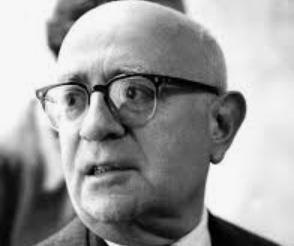
2 months 2 weeks ago
In the general tendency toward specialization, philosophy too has established itself as a specialized discipline, one purified of all specific content. In so doing, philosophy has denied its own constitutive concept: the intellectual freedom that does not obey the dictates of specialized knowledge.
▼
Source
source
p. 6
4 months 1 week ago
When I consider the short duration of my life, swallowed up in the eternity before and after, the small space which I fill, or even can see, engulfed in the infinite immensity of spaces whereof I know nothing, and which know nothing of me, I am terrified, and wonder that I am here rather than there, for there is no reason why here rather than there, or now rather than then. Who has set me here? By whose order and design have this place and time been destined for me? It is not well to be too much at liberty. It is not well to have all we want.How many kingdoms know nothing of us! The eternal silence of these infinite spaces alarms me.
▼
Source
source
"The Misery of Man Without God": "Man's Disproportion," The Thoughts of Blaise Pascal translated from the Text of M. Auguste Molinier Tr. C. Kegan Paul, 1885
3 months 4 weeks ago
The South may keep her pine-apples, and we will be content with our strawberries, which are, as it were, pine-apples with "going a-strawberrying" stirred into them, infinitely enhancing their flavor.
CivilSimian.com created by AxiomaticPanic, CivilSimian, Kalokagathia