



3 months 2 days ago
The one infinite is perfect, in simplicity, of itself, absolutely, nor can aught be greater or better, This is the one Whole, God, universal Nature, occupying all space, of whom naught but infinity can give the perfect image or semblance.
▼
Source
source
II 12 as translated by Dorothea Waley Singer

3 months 2 weeks ago
The painter is turning his eyes towards us only in so far as we happen to occupy the same position as his subject. We, the spectators, are an additional factor. Though greeted by that gaze, we are also dismissed by it, replaced by that which was always there before we were: the model itself. But, inversely, the painter's gaze, addressed to the void confronting him outside the picture, accepts as many models as there are spectators; in this precise but neutral place, the observer and the observed take part in a ceaseless exchange.
▼
Source
source
Las Menias

4 months 3 days ago
Marriage, a market which has nothing free but the entrance.

2 months 3 weeks ago
Mere imagination would indeed be mere trifling; only no imagination is mere.
▼
Source
source
Vol. VI, par. 286

3 months 3 weeks ago
I wanted for the moments in my life to follow each other and order themselves like those of a life remembered. It would be just as well to try to catch time by the tail.

4 months 4 days ago
I have no patience with those who say that sexual excitement is shameful and that venereal stimuli have their origin not in nature, but in sin. Nothing is so far from the truth. As if marriage, whose function cannot be fulfilled without these incitements, did not rise above blame. In other living creatures, where do these incitements come from? From nature or from sin? From nature, of course. It must borne in mind that in the apetites of the body there is very little difference between man and other living creatures. Finally, we defile by our imagination what of its own nature is fair and holy. If we were willing to evaluate things not according to the opinion of the crowd, but according to nature itself, how is it less repulsive to eat, chew, digest, evacuate, and sleep after the fashion of dumb animals, than to enjoy lawful and permitted carnal relations?
▼
Source
source
In Praise of Marriage (1519), in Erasmus on Women (1996) Erika Rummel

2 months 3 weeks ago
Skepticism is the sadism of embittered souls.
2 months 3 days ago
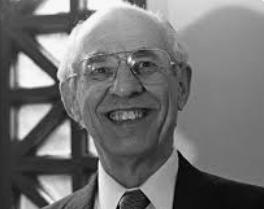
Analytic philosophers - both in the 'constructivist' camp and in the camp that studies 'the ordinary use of words' - are disturbingly unanimous in regarding 2-valued logic as having a privileged position: privileged, not just in the sense of corresponding to the way we do speak, but in the sense of having no serious rival for logical reasons. If the foregoing analysis is correct, this is a prejudice of the same kind as the famous prejudice in favor of a privileged status for Euclidean geometry (a prejudice that survives in the tendency to cite 'space has three dimensions' as some kind of 'necessary' truth). One can go over from a 2-valued to a 3-valued logic without totally changing the meaning of 'true' and 'false'; and not just in silly ways, like the ones usually cited (e.g. equating truth with high probability, falsity with low probability, and middlehood with 'in between' probability).
▼
Source
source
"Three-valued logic"
3 months 3 weeks ago
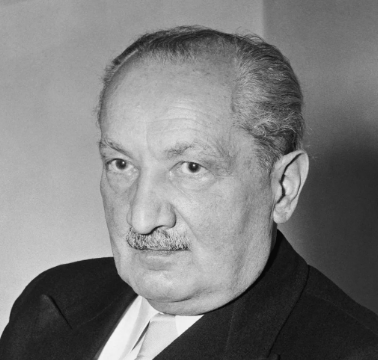
This is precisely what is decisive in Nietzsche's conception of art, that he sees it in its essential entirety in terms of the artist; this he does consciously and in explicit opposition to that conception of art which represents it in terms of those who "enjoy" and "experience" it.That is a guiding principle of Nietzsche's teaching on art: art must be grasped in terms of creators and producers, not recipients. Nietzsche expresses it unequivocally in the following words (WM, 811): "Our aesthetics heretofore has been a woman's aesthetics, inasmuch as only the recipients of art have formulated their experiences of 'what is beautiful.' In all philosophy to date the artist is missing." Philosophy of art means "aesthetics" for Nietzsche too-but masculine aesthetics, not feminine aesthetics. The question of art is the question of the artist as the productive, creative one; his experiences of what is beautiful must provide the standard.
▼
Source
source
p. 70

3 months 4 weeks ago
The proposal of any new law or regulation of commerce which comes from this order, ought always to be listened to with great precaution, and ought never to be adopted till after having been long and carefully examined, not only with the most scrupulous, but with the most suspicious attention. It comes from an order of men, whose interest is never exactly the same with that of the public, who have generally an interest to deceive and even to oppress the public, and who accordingly have, upon many occasions, both deceived and oppressed it.
▼
Source
source
Chapter XI, Part III, Conclusion of the Chapter, p. 292.
3 months 2 weeks ago
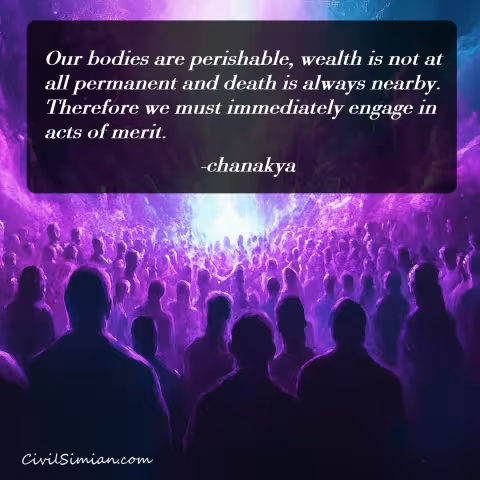
Bear in mind, that if through toil you accomplish a good deed, that toil will quickly pass from you, the good deed will not leave you so long as you live; but if through pleasure you do anything dishonourable, the pleasure will quickly pass away, that dishonourable act will remain with you for ever.
▼
Source
source
In the speech which he delivered ('At Numantia to the Knights'); quoted by Aulus Gellius, Attic Nights, XVI, i, 4 John C. Rolfe, ed. The Attic Nights of Aulus Gellius, Vol. 3, LCL 212 (1928), p. 131
2 months 3 weeks ago
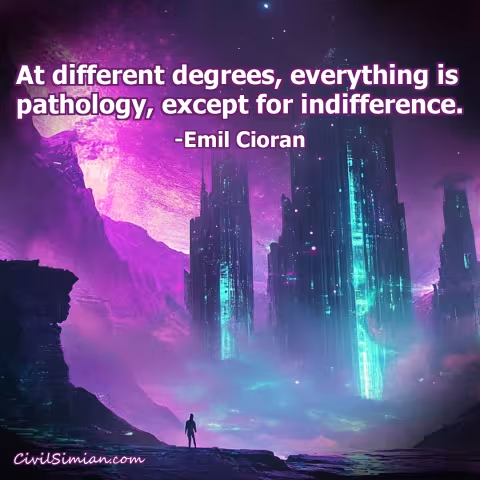
In theory, it matters little to me whether I live as whether I die; in practice, I am lacerated by every anxiety which opens an abyss between life and death.
3 months 1 week ago
Scilurus on his death-bed, being about to leave four-score sons surviving, offered a bundle of darts to each of them, and bade them break them. When all refused, drawing out one by one, he easily broke them,-thus teaching them that if they held together, they would continue strong; but if they fell out and were divided, they would become weak.
▼
Source
source
31 Scilurus

3 months 3 weeks ago
War involves in its progress such a train of unforeseen and unsupposed circumstances ... that no human wisdom can calculate the end. Prospects on the Rubicon
▼
Source
source
London: J. Debrett, 1787

3 months 3 weeks ago
I have heard with admiring submission the experience of the lady who declared "that the sense of being perfectly well-dressed gives a feeling of inward tranquility which religion is powerless to bestow".
▼
Source
source
Social Aims
1 month 4 weeks ago
I have studied these things - you have not.
▼
Source
source
Reported as Newton's response, whenever Edmond Halley would say anything disrespectful of religion, by Sir David Brewster in The Life of Sir Isaac Newton (1831)

1 month 3 weeks ago
The hero of my tale, whom I love with all the power of my soul, whom I have tried to portray in all his beauty, who has been, is, and will be beautiful, is Truth.
▼
Source
source
Sevastopol in May (1855), Ch. 16
1 month 2 weeks ago
I have been deep in Plato, Aristotle, and Theocritus ever since I left home, and admiring more and more every day the powers of that mighty language which is incomparably the best vehicle both for reasoning and for imagery that mankind have ever discovered, and which is richer both in abstract philosophical terms and poetical expressions than the English, French, and Latin tongues put together.
▼
Source
source
Letter to Zachary Macaulay (19? August 1820), quoted in The Letters of Thomas Babington Macaulay, Volume I: 1807-February 1831, ed. Thomas Pinney (1974), p. 145

1 month 3 weeks ago
Effects are perceived, whereas causes are conceived. Effects always preceed causes in the actual developmental order.
▼
Source
source
(p. 303)

2 weeks 2 days ago
In all European countries, especially in England, one class of Captains and commanders of men, recognizable as the beginning of a new real and not imaginary "Aristocracy," has already in some measure developed itself: the Captains of Industry;-happily the class who above all, or at least first of all, are wanted in this time. In the doing of material work, we have already men among us that can command bodies of men. And surely, on the other hand, there is no lack of men needing to be commanded: the sad class of brother-men whom we had to describe as "Hodge's emancipated horses," reduced to roving famine,-this too has in all countries developed itself; and, in fatal geometrical progression, is ever more developing itself, with a rapidity which alarms every one. On this ground, if not on all manner of other grounds, it may be truly said, the "Organization of Labor" (not organizable by the mad methods tried hitherto) is the universal vital Problem of the world.

4 months 3 weeks ago
A robot, the man had said, is logical but not reasonable.
3 months ago
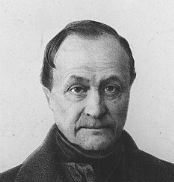
In the final, positive state, the mind has given over the vain search after Abolute notions, the origin and destination of the universe, and the cause of phenomenon, and applies itself to the tudy of their laws, - that is, their invariable relations of succession and resemblance. Reasoning and observation, duly combined, are the means of this knowledge. What is now understood when we speak of an explanation of the facts is simply the establishment of a connection between single phenomena and some general facts, the number of which continually diminishes with the progress of science.
▼
Source
source
Vol I

3 months ago
The Americans never use the word peasant, because they have no idea of the class which that term denotes; the ignorance of more remote ages, the simplicity of rural life, and the rusticity of the villager have not been preserved among them; and they are alike unacquainted with the virtues, the vices, the coarse habits, and the simple graces of an early stage of civilization.
▼
Source
source
Chapter XVII.

3 months 3 weeks ago
If this labourer were in possession of his own means of production, and was satisfied to live as a labourer, he need not work beyond beyond the time necessary for the reproduction of his means of subsistence, say 8 hours a day.
▼
Source
source
Vol. I, Ch. 11, pg. 336.
3 months 3 weeks ago
As far as men go, it is not what they are that interests me, but what they can become.
▼
Source
source
Act 5, sc. 3
2 weeks 2 days ago
Never till now, in the history of an Earth which to this hour nowhere refuses to grow corn if you will plough it, to yield shirts if you will spin and weave in it, did the mere manual two-handed worker (however it might fare with other workers) cry in vain for such "wages" as he means by "fair wages," namely food and warmth!
2 months 3 weeks ago
We suffer: the external world begins to exist . . . ; we suffer to excess: it vanishes. Pain instigates the world only to unmask its unreality.


4 months 3 weeks ago
When you are reading God's Word, it is not the obscure passages that bind you but what you understand, and with that you comply at once. If you understood only one single passage in all of Holy Scripture, well, then you must do that first of all, but you do not first have to sit down and ponder the obscure passages.
3 months 2 weeks ago
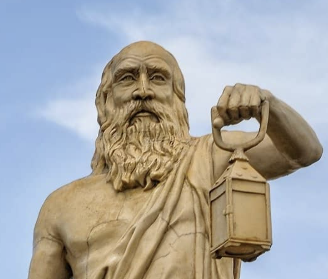
On reaching Athens he fell in with Antisthenes. Being repulsed by him, because he never welcomed pupils, by sheer persistence Diogenes wore him out. Once when he stretched out his staff against him, the pupil offered his head with the words, "Strike, for you will find no wood hard enough to keep me away from you, so long as I think you've something to say."
▼
Source
source
Diogenes Laërtius, vi. 21,
3 months 3 weeks ago
Kant speaks of the "thing-in-itself" (Ding an sich) in order to distinguish it from the "thing-for-us" (Ding fur uns), that is, as a "phenomenon." A thing-in-itself is that which is not approachable through experience as are the rocks, plants, and animals. Every thing-for-us is as a thing and also a thing-in-itself, which means that it is recognized absolutely withing the absolute knowledge of God. But not every thing-in-itself is also a thing-for-us: God, for instance, is a thing-in-itself, as Kant uses the word, according to the meaning of Christian theology.
▼
Source
source
p. 5
1 month 3 weeks ago
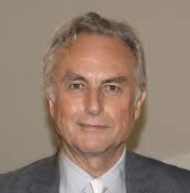
We should be offended when children are denied a proper education. We should be offended when children are told they will spend eternity in hell. We should be offended when medical science, for example stem-cell research, is compromised by the bigoted opinions of powerful and above all well-financed ignoramuses. We should be offended when voodoo, of all kinds, is given equal weight to science. We should be offended by hymen reconstruction surgery. We should be offended by 'female circumcision', euphemism for genital mutilation. We should be offended by stoning.
▼
Source
source
I Am Offended!, August 3, 2008

2 months 2 weeks ago
Why tempt ye me, ye hypocrites? Shew me the tribute money.
▼
Source
source
22:18-19 (KJV)

6 days ago
In the new order a Locke was free-with almost no danger of being interfered with-to think his sublime thoughts, to seek the first causes of all things, to understand the nature of things. He could talk with his friends and teach the young. And there was money enough. The academies and universities satisfied Socrates' demand to be fed in the prytaneum.
▼
Source
source
Commerce and Culture, p. 289.
3 months 3 weeks ago
England has to fulfill a double mission in India: one destructive, the other regenerating - the annihilation of old Asiatic society, and the laying the material foundations of Western society in Asia... When a great social revolution shall have mastered the results of the bourgeois epoch... and subjected them to the common control of the most advanced peoples, then only will human progress cease to resemble that hideous, pagan idol, who would not drink the nectar but from the skulls of the slain.
▼
Source
source
"The Future Results of British Rule in India," New York Daily Tribune, 08 August 1853
3 months 3 weeks ago
In doing Good, I lose myself in Being, I abandon my particularity, I become a universal subject.
▼
Source
source
p. 77
2 months 3 weeks ago
They ask you for facts, proofs, works, and all you can show them are transformed tears.

3 months 3 weeks ago
For an author to write as he speaks is just as reprehensible as the opposite fault, to speak as he writes; for this gives a pedantic effect to what he says, and at the same time makes him hardly intelligible.
▼
Source
source
The Art of Literature
1 week 4 days ago
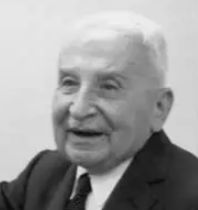
Socialism is the watchword and the catchword of our day. The socialist idea dominates the modem spirit. The masses approve of it. It expresses the thoughts and feelings of all; it has set its seal upon our time. When history comes to tell our story it will write above the chapter "The Epoch of Socialism." As yet, it is true, Socialism has not created a society which can be said to represent its ideal. But for more than a generation the policies of civilized nations have been directed towards nothing less than a gradual realization of Socialism.
▼
Source
source
Introduction : The Success of Socialist Ideas
3 months 3 weeks ago
This world belongs to the energetic.
▼
Source
source
Resources
1 month 4 weeks ago
The other part of the true religion is our duty to man. We must love our neighbour as our selves, we must be charitable to all men for charity is the greatest of graces, greater then even faith or hope & covers a multitude of sins. We must be righteous & do to all men as we would they should do to us.
▼
Source
source
Of Humanity
3 months 3 weeks ago
Capitals accumulate faster than the population; thus wages; thus population; thus grain prices; thus the difficulty of production and hence the exchange values.
▼
Source
source
Notebook III, The Chapter on Capital, p. 271.
2 months 1 week ago
We must leave on one side the beliefs which fill up voids and sweeten what is bitter. The belief in immortality. The belief in the utility of sin: etiam peccata. The belief in the providential ordering of events - in short the "consolations" which are ordinarily sought in religion.
▼
Source
source
p. 258

3 months 4 weeks ago
I pass, at length, to the third and perfectly absolute dominion, which we call democracy.
▼
Source
source
Ch. 11, Of Democracy
3 months 3 weeks ago
We can come to look upon the deaths of our enemies with as much regret as we feel for those of our friends, namely, when we miss their existence as witnesses to our success.
▼
Source
source
Vol. 2, Ch. 26, sect. 311a

3 months 3 weeks ago
The scientific attitude of mind involves a sweeping away of all other desires in the interests of the desire to know-it involves suppression of hopes and fears, loves and hates, and the whole subjective emotional life, until we become subdued to the material, able to see it frankly, without preconceptions, without bias, without any wish except to see it as it is, and without any belief that what it is must be determined by some relation, positive or negative, to what we should like it to be, or to what we can easily imagine it to be.
3 months 3 weeks ago
Two men who differ as to the ends of life cannot hope to agree about education.
▼
Source
source
Ch. 12: Education and Discipline

3 months ago
Every man has his dignity. I'm willing to forget mine, but at my own discretion and not when someone else tells me to.
CivilSimian.com created by AxiomaticPanic, CivilSimian, Kalokagathia