

2 months 3 weeks ago
What will be the attitude of communism to existing nationalities? The nationalities of the peoples associating themselves in accordance with the principle of community will be compelled to mingle with each other as a result of this association and thereby to dissolve themselves, just as the various estate and class distinctions must disappear through the abolition of their basis, private property.

2 months 3 weeks ago
There ought to be system of manners in every nation which a well-formed mind would be disposed to relish. To make us love our country, our country ought to be lovely.

4 months 1 week ago
Appearances to the mind are of four kinds. Things either are what they appear to be; or they neither are, nor appear to be; or they are, and do not appear to be; or they are not, and yet appear to be. Rightly to aim in all these cases is the wise man's task.
▼
Source
source
Book I, ch. 27, § 1.

2 months 2 weeks ago
Because of your unbelief: for verily I say unto you, If ye have faith as a grain of mustard seed, ye shall say unto this mountain, Remove hence to yonder place; and it shall remove; and nothing shall be impossible unto you. Howbeit this kind goeth not out but by prayer and fasting.
▼
Source
source
17:20-21 (KJV)

1 month 3 weeks ago
Pornography and obscenity...work by specialism and fragmentation. They deal with a figure without a ground -- situations in which the human factor is suppressed in favor of sensations and kicks.
▼
Source
source
Letter to Clare Westcott, November 26 1975. Letters of Marshall McLuhan, p. 514
6 days ago
Man can hardly even recognize the devils of his own creation.
▼
Source
source
This quote was attributed to Albert Schweitzer by Rachel Carson on p. 17 of her seminal work Silent Spring (1962), and is widely cited on various Internet websites, but an actual source from Schweitzer's works is elusive.

3 months ago
Among these widely differing families of men, the first that attracts attention, the superior in intelligence, in power, and in enjoyment, is the white, or European, the MAN pre-eminently so called, below him appear the Negro and the Indian.
▼
Source
source
Chapter XVIII.

3 months 3 weeks ago
"They have an engine called the Press whereby the people are deceived."
▼
Source
source
Ch. 13 : They Have Pulled Down Deep Heaven on Their Heads

4 months 2 weeks ago
Men all say, "We are wise"; but being driven forward and taken in a net, a trap, or a pitfall, they know not how to escape. Men all say, "We are wise"; but happening to choose the course of the Mean, they are not able to keep it for a round month.

3 weeks ago
Material production - the production, for example, or cars, televisions, clothing, and food - creates the means of social life. ... Immaterial production, by contrast, including the production of ideas, knowledges, communication, cooperation, and affective relations, tends to create not the means of social life but social life itself. (146)
▼
Source
source
146

3 months 1 day ago
Darkness and light divide the course of time, and oblivion shares with memory, a great part even of our living beings; we slightly remember our felicities, and the smartest strokes of affliction leave but short smart upon us. Sense endureth no extremities, and sorrows destroy us or themselves. To weep into stones are fables.
▼
Source
source
Chapter V

4 months 3 weeks ago
The papers were always talking about the debt owed to society. According to them, it had to be paid. But that doesn't speak to the imagination. What really counted was the possibility of escape, a leap to freedom, out of the implacable ritual, a wild run for it that would give whatever chance for hope there was. Of course, hope meant being cut down on some street corner, as you ran like mad, by a random bullet. But when I really thought it through, nothing was going to allow me such a luxury. Everything was against it; I would just be caught up in the machinery again.

1 month 2 weeks ago
The measure of a man is a man. Justice, morality, ethics, fairness, goodness all based on the preservation of life. You can do other things, but you'd be Good by coincidence.

2 months 3 weeks ago
My mission is to suffer for all those who suffer without knowing it. I must pay for them, expiate their unconsciousness, their luck to be ignorant of how unhappy they are.

3 months 1 week ago
Not much younger than these (sc. Hermotimus of Colophon and Philippus of Mende) is Euclid, who put together the Elements, collecting many of Eudoxus' theorems, perfecting many of Theaetetus', and also bringing to irrefragable demonstration the things which were only somewhat loosely proved by his predecessors. This man lived in the time of the first Ptolemy. For Archimedes, who came immediately after the first (Ptolemy), makes mention of Euclid: and, further, they say that Ptolemy once asked him if there was in geometry any shorter way than that of the elements, and he answered that there was no royal road to geometry. He is then younger than pupils of Plato but older than Eratosthenes and Archimedes; for the latter were contemporary with one another, as Eratosthenes somewhere says.
▼
Source
source
As quoted by Sir Thomas Little Heath, The Thirteen Books of Euclid's Elements (1908) Vol.1 Introduction and Books I, II p.1, citing Proclus ed. Friedlein, p. 68, 6-20.
2 months 3 weeks ago
Few persons care to study logic, because everybody conceives himself to be proficient enough in the art of reasoning already. But I observe that this satisfaction is limited to one's own ratiocination and does not extend to that of other men. We come to the full possession of our power of drawing inferences the last of all our faculties, for it is not so much a natural gift as a long and difficult art.
▼
Source
source
Illustrations of the Logic of Science First Paper - The Fixation of Belief", in Popular Science Monthly, Vol. 12

4 months 4 weeks ago
Art furnishes us with eyes and hands and above all the good conscience to be able to turn ourselves into such a phenomenon.

4 months 1 week ago
The reason, however, why the philosopher may be likened to the poet is this: both are concerned with the marvellous.
▼
Source
source
Commentary on the Metaphysics (c. 1270-1272), 1, 3; quoted in Josef Pieper, Leisure, the Basis of Culture (New York, 1952), p. 88
4 months 1 week ago
I have always been of the opinion that infamy earned by doing what is right is not infamy at all, but glory.
▼
Source
source
Speech I

2 months 1 week ago
What the sorrowful Jew of Amsterdam called the essence of a thing, the effort that it makes to persist indefinitely in its own being, self-love, the longing for immortality, is it not perhaps the primal and fundamental condition of all reflective or human knowledge? And is it not therefore the true base, the real starting-point, of all philosophy, although the philosophers, perverted by intellectualism, do not recognize it?
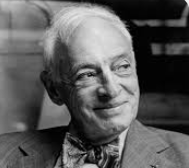
1 month 2 weeks ago
Death is the dark backing that a mirror needs if we are to see anything.
▼
Source
source
Humboldt's Gift (1975), p. 265

2 months 3 weeks ago
Surely this voice meant our Teacher; for it is he that can collect the indications which lie scattered on all sides. A singular light kindles in his looks, when at length the high Rune lies before us, and he watches in our eyes whether the star has yet risen upon us, which is to make the Figure visible and intelligible.
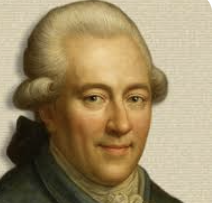
2 months 5 days ago
The most heated defenders of a science, who cannot endure the slightest sneer at it, are commonly those who have not made very much progress in it and are secretly aware of this defect.
▼
Source
source
F 8

2 weeks 2 days ago
With what scientific stoicism he walks through the land of wonders, unwondering.
2 weeks 2 days ago
And yet I will venture to believe that in no time, since the beginnings of Society, was the lot of those same dumb millions of toilers so entirely unbearable as it is even in the days now passing over us. It is not to die, or even to die of hunger, that makes a man wretched; many men have died; all men must die,-the last exit of us all is in a Fire-Chariot of Pain. But it is to live miserable we know not why; to work sore and yet gain nothing; to be heart-worn, weary, yet isolated, unrelated, girt in with a cold universal Laissez-faire: it is to die slowly all our life long, imprisoned in a deaf, dead, Infinite Injustice, as in the accursed iron belly of a Phalaris' Bull! This is and remains forever intolerable to all men whom God has made. Do we wonder at French Revolutions, Chartisms, Revolts of Three Days? The times, if we will consider them, are really unexampled.

3 months 3 weeks ago
In the part of this universe that we know there is great injustice, and often the good suffer, and often the wicked prosper, and one hardly knows which of those is the more annoying.
▼
Source
source
"The Argument for the Remedying of Injustice"

3 months 3 weeks ago
Men go to a fire for entertainment. When I see how eagerly men will run to a fire, whether in warm or in cold weather, by day or by night, dragging an engine at their heels, I'm astonished to perceive how good a purpose the level of excitement is made to serve.
▼
Source
source
June, 1850

3 months 3 weeks ago
The effectiveness of political and religious propaganda depends upon the methods employed, not upon the doctrines taught. These doctrines may be true or false, wholesome or pernicious-it makes little or no difference.
▼
Source
source
Chapter 7 (p. 63)

2 months 1 week ago
I have wanted them to have this simple definition to read again and again so they know: Feminism is a movement to end sexism, sexist exploitation, and oppression.
▼
Source
source
Feminism is for Everybody: Passionate Politics (2014), p.XII
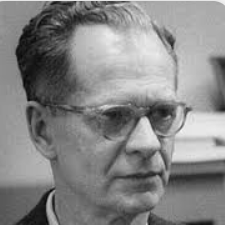
3 weeks ago
The strengthening of behavior which results from reinforcement is appropriately called "conditioning". In operant conditioning we "strengthen" an operant in the sense of making a response more probable or, in actual fact, more frequent.
▼
Source
source
Science and Human Behavior
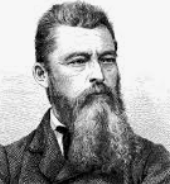
2 months 3 weeks ago
Feuerbach is saying: No, wait a minute - if you are going to be allowed to go on living as you are living, then you also have to admit that you are not Christians. Feuerbach has understood the requirements but cannot force himself to submit to them - ergo, he prefers to renounce being a Christian. And now, no matter how great a responsibility he must bear, he takes a position that is not unsound, that is, it is wrong of established Christendom to say that Feuerbach is attacking Christianity; it is not true, he is attacking the Christians by demonstrating that their lives do not correspond to the teachings of Christianity.
▼
Source
source
Soren Kierkegaard, Journals X2A 163
2 weeks 2 days ago
Man's unhappiness, as I construe, comes of his greatness; it is because there is an Infinite in him, which with all his cunning he cannot quite bury under the Finite.
▼
Source
source
Bk. I, ch. 9.
1 month 4 days ago
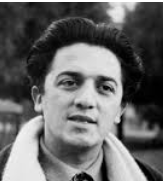
I don't believe in total freedom for the artist. Left on his own, free to do anything he likes, the artist ends up doing nothing at all. If there's one thing that's dangerous for an artist, it's precisely this question of total freedom, waiting for inspiration and the rest of it.
▼
Source
source
Artistic Freedom
3 weeks ago
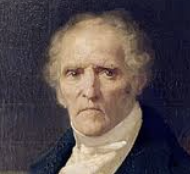
Agricultural association, which in all ages has been deemed impossible, would produce results of unbounded magnificence the rigorous demonstrations, the mathematical calculations by which these results will be verified, will not, however, prevent the picture of the future harmony and happiness which they present from repelling minds habituated to the miseries and wretchedness of our present civilization. The Theory of Social Organization.
▼
Source
source
Harmonian Man: Selected Writings of Charles Fourier, p. 5.
1 month 2 weeks ago
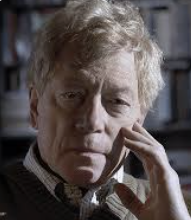
The core of common culture is religion. Tribes survive and flourish because they have gods, who fuse many wills into a single will, and demand and reward the sacrifices on which social life depends.
▼
Source
source
"Culture and Cult" (p. 5)
2 months 1 week ago
And this God, the living God, your God, our God, is in me, is in you, lives in us, and we live and move and have our being in Him. And he is in us by virtue of the hunger, the longing, which we have for Him, He is Himself creating the longing for Himself.

3 months 3 weeks ago
There is a freemasonry among the dull by which they recognize and are sociable with the dull, as surely as a correspondent tact in men of genius.
▼
Source
source
1827

2 months 3 weeks ago
The tyranny of Mrs. Grundy is worse than any other tyranny we suffer under.
▼
Source
source
On Manners and Fashion
1 month 3 weeks ago
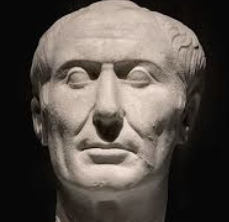
He who helps the guilty, shares the crime.
▼
Source
source
Maxim 139
1 month 4 days ago
No critic writing about a film could say more than the film itself, although they do their best to make us think the opposite.
▼
Source
source
"Film Critics"

4 months 1 week ago
I have read in Plato and Cicero sayings that are very wise and very beautiful; but I never read in either of them, "Come unto me, all ye that labor and are heavy laden."
▼
Source
source
p. 62

1 week 3 days ago
It makes a big difference whether you give something back or pay it off... The framers of the laws instituted festivals, in order that men should be publicly compelled to gaiety, as a necessary temperance for labors; We remember the great orator Pollio Asinius, who was not detained by anything beyond the tenth hour: he did not even need letters for an hour after that, so that no new concern arose, but he put the fatigue of the whole day in those two hours. Some joined in the middle of the day and put off some lighter work in the afternoon hours. Our elders also forbade a new report to be made in the senate after ten o'clock. The army divided the vigils, and the night was safe from the return of the expedition.
2 months 2 weeks ago
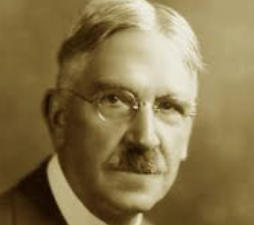
Classical science was based upon the belief that it is possible to formulate both the position and velocity at one time of any given particle. It followed that knowledge of the position and velocity of a given number of particles would enable the future behavior of the whole collection to be accurately predicted. The principle of Heisenberg is that given the determination of position, its velocity can be stated only as of a certain order of probability, while if its velocity is determined the correlative factor of position can be stated only as of a certain order of probability. Both cannot be determined at once, from which it follows necessarily that the future of the whole collection cannot possibly be foretold except in terms of some order of probability.
3 months 3 weeks ago
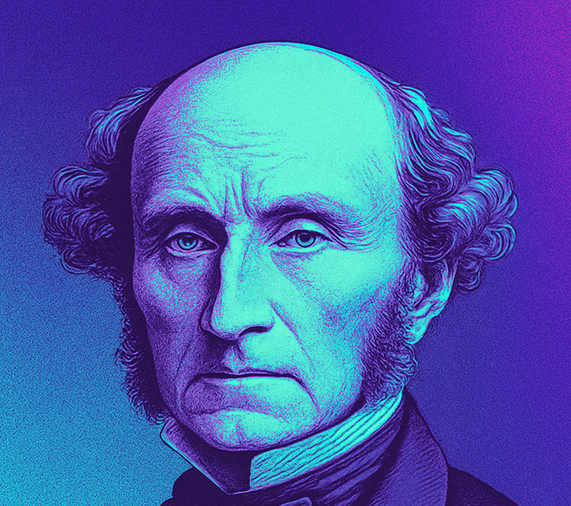
All honour to those who can abnegate for themselves the personal enjoyment of life, when by such renunciation they contribute worthily to increase the amount of happiness in the world; but he who does it, or professes to do it, for any other purpose, is no more deserving of admiration than the ascetic mounted on his pillar. He may be an inspiriting proof of what men can do, but assuredly not an example of what they should.
▼
Source
source
Ch. 2

2 months 3 weeks ago
I am a sick man... I am a wicked man. An unattractive man.
▼
Source
source
Part 1, Chapter 1

2 months 1 week ago
One gloomy and pessimistic writer with a powerful style affects a whole generation of writers, who in turn affect almost every educated person in the country.
▼
Source
source
p. 79

2 months 1 week ago
We set the treatment of bodies so high above the treatment of souls, that the physician occupies a higher place in society than the school-master. The governess is to have every one of God's gifts; she is to do that which the mother herself is incapable of doing; but our son must not degrade himself by marrying the governess, nor our daughter the tutor, though she might marry the medical man.
1 month 3 weeks ago
At the speed of light there is no sequence; everything happens at the same instant.

4 months 3 weeks ago
Law could never, by determining exactly what is noblest and must just for one and all, enjoin upon them that which is best; for the differences of men and of actions and the fact that nothing, I may say, in human life is ever at rest, forbid any science whatsoever to promulgate any simple rule for everything and for all time. So, that which is persistently simple is inapplicable to things which are never simple.

4 months 3 days ago
We only labor to stuff the memory, and leave the conscience and the understanding unfurnished and void.
▼
Source
source
Book I, Ch. 25
CivilSimian.com created by AxiomaticPanic, CivilSimian, Kalokagathia