

3 months 3 weeks ago
Do you suppose that you can do the things you do now, and yet be a philosopher? Do you suppose that you can eat in the same fashion, drink in the same fashion, give way to anger and to irritation, just as you do now?
▼
Source
source
Book III, ch. 15, 10 (= Enchiridion 29, 10).
2 months 1 week ago
Time is taking giant strides with us more than with any other age since the history of the world began. At some point within the three years that have gone by since my interpretation of the present age that epoch has come to an end. At some point self-seeking has destroyed itself, because by its own complete development it has lost its self and the independence of that self; and since it would not voluntarily set itself any other aim but self, an external power has forced upon it another and a foreign purpose.
▼
Source
source
Introduction p. 1

3 months 2 weeks ago
In all determinations of morality, this circumstance of public utility is ever principally in view; and wherever disputes arise, either in philosophy or common life, concerning the bounds of duty, the question cannot, by any means, be decided with greater certainty, than by ascertaining, on any side, the true interests of mankind. If any false opinion, embraced from appearances, has been found to prevail; as soon as farther experience and sounder reasoning have given us juster notions of human affairs, we retract our first sentiment, and adjust anew the boundaries of moral good and evil.
▼
Source
source
§ 2.17 : Of Benevolence, Pt. 2

1 month 3 weeks ago
In refusing to face evil, Sinclair has gained nothing and lost a great deal; the Buddhist scripture expenses it: those who refuse to discriminate might as well be dead.
▼
Source
source
Chapter Three, The Romantic Outsider

3 months 1 week ago
Reality is harsh to the feet of shadows.
▼
Source
source
Ch. 5
4 months ago
Character is destiny.
3 days ago
Bukharin, like Lenin, regarded the system of basing economic life on mass terror not as a transient necessity but as a permanent principle of socialist organization. He did not shrink from justifying all means of coercion and held, like Trotsky at the same period, that the new system called essentially for the militarization of labour - i.e. the use of police and military force to compel the whole population to work in such places and conditions as the state might arbitrarily decree. Indeed, once the market is abolished there is no longer any free sale of labour or competition between workers, and police coercion is therefore the only means of allocating "human resources". If hired labour is eliminated, only compulsory labour remains. In other words, socialism - as conceived by both Trotsky and Bukharin at this time - is a permanent, nation-wide labour camp.
▼
Source
source
(pg. 28-9)
2 months 1 week ago
So it is that you come to know what a real God is. ... The God wants my life. He wants to go with me, sit at the table with me, work with me. Above all he wants to be ever-present.
▼
Source
source
P. 291
3 weeks 3 days ago
I have repeatedly stressed that the rape of the Earth and rape of women are intimately linked - both metaphorically, in shaping world-views, and materially, in shaping women's everyday lives. The deepening economic vulnerability of women makes them more vulnerable to all forms of violence, including sexual assault, as we found out during a series of public hearings on the impact of economic reforms on women organized by the National Commission on Women and the Research Foundation for Science, Technology and Ecology.
▼
Source
source
Ecofeminism, by Maria Mies and Vandana Shiva, 1993, (full text pdf)
2 months 1 week ago
Metaphysical assertions, however, are statements of the psyche, and are therefore psychological. ... Whenever the Westerner hears the word "psychological," it always sounds to him like "only psychological."
▼
Source
source
Psyche and Symbol (1958), p. 285

4 months 1 week ago
Every human being is tried this way in the active service of expectancy. Now comes the fulfillment and relieves him, but soon he is again placed on reconnaissance for expectancy; then he is again relieved, but as long as there is any future for him, he has not yet finished his service. And while human life goes on this way in very diverse expectancy, expecting very different things according to different times and occasions and in different frames of mind, all life is again one nightwatch of expectancy.

3 months 1 week ago
It seems that sin is geographical. From this conclusion, it is only a small step to the further conclusion that the notion of "sin" is illusory, and that the cruelty habitually practised in punishing it is unnecessary.
▼
Source
source
A Fresh Look at Empiricism: 1927-42 (1996), p. 283

4 months 1 week ago
[B]ecause that which is finite is always bounded with reference to something... it is necessary that there should be no end... [N]umber also appears to be infinite, and mathematical magnitudes, and that which is beyond the heavens. And since that which is beyond is infinite, body also appears to be infinite, and it would seem that there are infinite worlds; for why is there rather void here than there? ...If also there is a vacuum, and an infinite place, it is necessary that there should be an infinite body: for in things which have a perpetual subsistence, capacity differs nothing from being. The speculation of the infinite is, however, attended with doubt: for many impossibilities happen both to those who do not admit that it has a subsistence, and to those who do. ...It is ...especially the province of a natural philosopher to consider if there be a sensible infinite magnitude.

1 month 2 weeks ago
There are two kinds of people, killers, and everybody else.

3 months 1 week ago
Yet a man may love a paradox, without losing either his wit or his honesty.
▼
Source
source
"Walter Savage Landor", from The Dial, xii, 1841
3 months 1 week ago
It is normal to hate what we fear, and it happens frequently, though not always, that we fear what we hate. I think it may be taken as the rule among primitive men, that they both fear and hate whatever is unfamiliar. They have their own herd, originally a very small one. And within one herd, all are friends, unless there is some special ground of enmity. Other herds are potential or actual enemies; a single member of one of them who strays by accident will be killed. An alien herd as a whole will be avoided or fought according to circumstances. It is this primitive mechanism which still controls our instinctive reaction to foreign nations. The completely untravelled person will view all foreigners as the savage regards a member of another herd. But the man who has travelled, or who has studied international politics, will have discovered that, if his herd is to prosper, it must, to some degree, become amalgamated with other herds.
1 month 3 days ago
National loyalty involves a love of home and a preparedness to defend it; nationalism is a belligerent ideology, which uses national symbols in order to conscript the people to war.
2 days ago
All things are subject to decay and change.
▼
Source
source
The General History of Polybius as translated by James Hampton' (1762), Vol. II, pp. 177-178

3 months 1 week ago
He blamed as severely what he thought a bad action, when the motive was a feeling of duty, as if the agents had been consciously evil doers. He would not have accepted as a plea in mitigation for inquisitors, that they sincerely believed burning heretics to be an obligation of conscience. But though he did not allow honesty of purpose to soften his disapprobation of actions, it had its full effect on his estimation of characters. No one prized conscientiousness and rectitude of intention more highly, or was more incapable of valuing any person in whom he did not feel assurance of it.
▼
Source
source
(pp. 49-50)
3 months 1 week ago
Written words differ from spoken words in being material structures. A spoken word is a process in the physical world, having an essential time-order; a written word is a series of pieces of matter, having an essential space-order.
▼
Source
source
An Outline of Philosophy Ch.4 Language, 1927
1 month 3 days ago
There is no doubt in my mind that, from the third-person point of view, monarchy is the most reasonable form of government. By embodying the state in a fragile human person, it captures the arbitrariness and the givenness of political allegiance, and so transforms allegiance into affection.
▼
Source
source
The Meaning of Conservatism: Third Edition (2001), p. 193
Just now
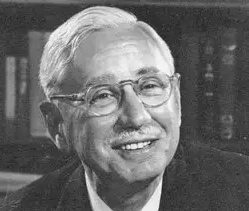
Science tells us how to heal and how to kill; it reduces the death rate in retail and then kills us wholesale in war; but only wisdom - desire coordinated in the light of all experience - can tell us when to heal and when to kill. To observe processes and to construct means is science; to criticize and coordinate ends is philosophy: and because in these days our means and instruments have multiplied beyond our interpretation and synthesis of ideals and ends, our life is full of sound and fury, signifying nothing. For a fact is nothing except in relation to desire; it is not complete except in relation to a purpose and a whole. Science without philosophy, facts without perspective and valuation, cannot save us from havoc and despair. Science gives us knowledge, but only philosophy can give us wisdom.
▼
Source
source
Introduction : On the Uses of Philosophy

3 months 1 week ago
Proverbs are always platitudes until you have personally experienced the truth of them.
▼
Source
source
Part IV: America,Jesting Pilate: The Diary of a Journey, 1926

1 month 3 weeks ago
For the kingdom of heaven is with us today.
2 months 1 day ago
When language is used without true significance, it loses its purpose as a means of communication and becomes an end in itself.

4 months 1 week ago
Outside of that single fatality of death, everything, joy or happiness, is liberty.
1 month 3 weeks ago
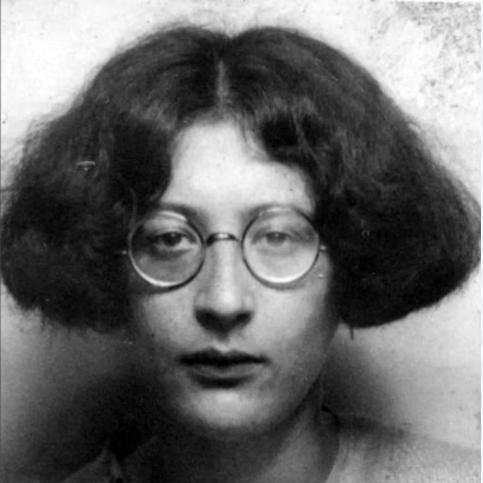
In order to obey God, one must receive his commands. How did it happen that I received them in adolescence, while I was professing atheism? To believe that the desire for good is always fulfilled - that is faith, and whoever has it is not an atheist.
▼
Source
source
Last Notebook (1942) p. 137
4 months ago
Lifetime is a child at play, moving pieces in a game.
3 months 1 week ago
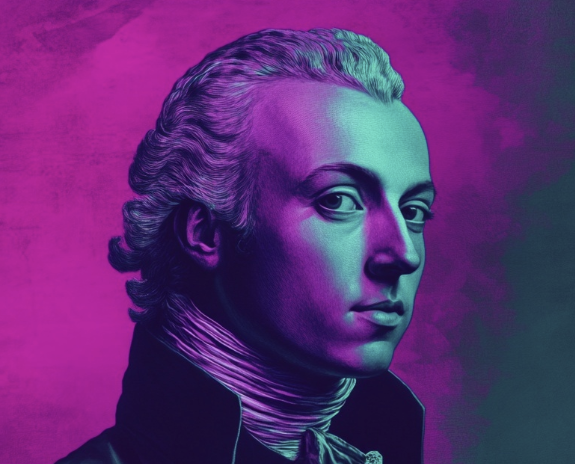
The third of this kind of principles is : matter neither originates nor perishes; all the changes in the world concern form only ; a postulate which on the recommendation of common sense has spread through all philosophical schools, not because it is to be taken as having been found so, or as having been demonstrated by arguments a priori, but because if we were to admit that matter itself is fleeting and transitory, nothing at all that is stable and lasting would be left any longer to serve for the explication of phenomena according to universal and perpetual laws, and hence nothing at all would be left for the exercise of the intellect.
2 months 1 week ago
Primitive superstition lies just below the surface of even the most tough-minded individuals, and it is precisely those who most fight against it who are the first to succumb to its suggestive effects.
▼
Source
source
p. 25

3 months 1 week ago
Although I consider our political world to be the best of which we have any historical knowledge, we should beware of attributing this fact to democracy or to freedom. Freedom is not a supplier who delivers goods to our door. Democracy does not ensure that anything is accomplished - certainly not an economic miracle. It is wrong and dangerous to extol freedom by telling people that they will certainly be all right once they are free. How someone fares in life is largely a matter of luck or grace, and to a comparatively small degree perhaps also of competence, diligence, and other virtues. The most we can say of democracy or freedom is that they give our personal abilities a little more influence on our well-being.

5 days ago
Now the argument that I make in my book is that part of the current disaffection with liberalism is not from any of its basic principles, but... is the result of certain deformations of liberal principles that were carried to extremes that led... to bad outcomes... There's a move in this direction on the right and... on the left.
▼
Source
source
12:25 Ref: Francis Fukuyama, Liberalism and Its Discontents

2 weeks 3 days ago
Humanists today, who claim to take a wholly secular view of things, scoff at mysticism and religion. But the unique status of humans is hard to defend, and even to understand, when it is cut off from any idea of transcendence. In a strictly naturalistic view - one in which the world is taken on its own terms, without reference to a creator or any spiritual realm - there is no hierarchy of value with humans at the top. There are simply multifarious animals, each with their own needs. Human uniqueness is a myth inherited from religion, which humanists have recycled into science.
▼
Source
source
An Old Chaos: Humanism and Flying Saucers (p. 77)

1 month 3 weeks ago
And the soul, my soul at least, longs for something else, not absorption, not quietude, not peace, not appeasement, it longs ever to approach and never to arrive, it longs for the never-ending longing, for an eternal hope which is eternally renewed but never wholly fulfilled. And together with all this, it longs for an eternal lack of something and an eternal suffering. A suffering, a pain, thanks to which it grows without ceasing in consciousness and longing. Do not write upon the gate of heaven that sentence which Dante placed over the threshold of hell, Lasciate ogni speranza! [Lasciate ogne speranza, voi ch'intrate: All hope abandon, ye who enter in] Do not destroy time!

3 months 1 week ago
I find it wholesome to be alone the greater part of the time. To be in company, even with the best, is soon wearisome and dissipating. I love to be alone. I never found the companion that was so companionable as solitude. We are for the most part more lonely when we go abroad among men than when we stay in our chambers. A man thinking or working is always alone, let him be where he will... The really diligent student... is as solitary as a dervish in the desert. The farmer can work alone in the field or the woods all day, hoeing or chopping, and not feel lonesome.

2 months 3 weeks ago
All things are full of gods.
▼
Source
source
As quoted in Aristotle, De Anima, 411a

2 months 3 weeks ago
That which exercises reason is more excellent than that which does not exercise reason; there is nothing more excellent than the universe, therefore the universe exercises reason.
▼
Source
source
As quoted in De Natura Deorum by Cicero, ii. 8.; iii. 9.
3 months 1 week ago
Enthusiasm is supernatural serenity.
▼
Source
source
Pearls of Thought (1881) p. 74
3 months 1 week ago
What would we really know the meaning of? The meal in the firkin; the milk in the pan; the ballad in the street; the news of the boat; the glance of the eye; the form and the gait of the body; - show me the ultimate reason of these matters; show me the sublime presence of the highest spiritual cause lurking, as always it does lurk, in these suburbs and extremities of nature; let me see every trifle bristling with the polarity that ranges it instantly on an eternal law; and the shop, the plough, and the ledger, referred to the like cause by which light undulates and poets sing; - and the world lies no longer a dull miscellany and lumber-room, but has form and order; there is no trifle; there is no puzzle; but one design unites and animates the farthest pinnacle and the lowest trench.
▼
Source
source
par. 40
2 months 3 days ago
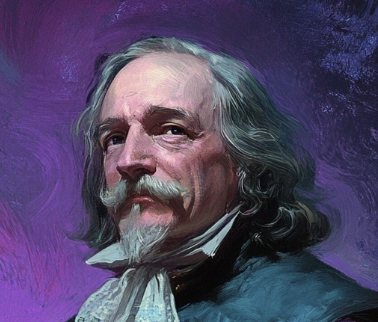
Hereby it is manifest, that during the time men live without a common Power to keep them all in awe, they are in that conditions called Warre; and such a warre, as is of every man, against every man.
▼
Source
source
The First Part, Chapter 13, p. 62
3 months 1 week ago
All the thoughts of a turtle are turtle.
▼
Source
source
1855

3 months 1 week ago
I entered the [Communist] Party because its cause was just and I will leave it when it ceases to be just.
▼
Source
source
Hugo to Hoederer, Act 5, sc. 3
3 months 1 week ago
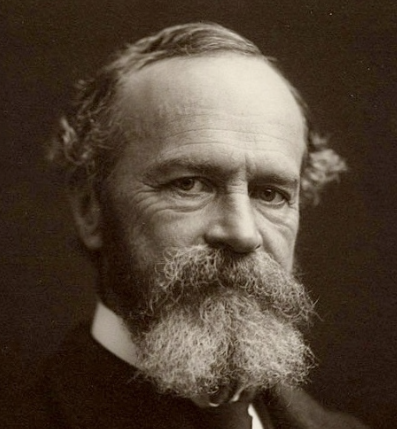
Man's chief difference from the brutes lies in the exuberant excess of his subjective propensities - his preeminence over them simply and solely in the number and in the fantastic and unnecessary character of his wants, physical, moral, aesthetic, and intellectual. Had his whole life not been a quest for the superfluous, he would never have established himself as inexpugnably as he has done in the necessary.
▼
Source
source
"Reflex Action and Theism"
3 months 1 week ago
Perfect humility dispenses with modesty.

2 months 6 days ago
Losing love is so rich a philosophical ordeal that it makes a hairdresser into a rival of Socrates.

2 months 6 days ago
Third, these general ideas are not mere words, nor do they consist in this, that certain concrete facts will every time happen under certain descriptions of conditions; but they are just as much, or rather far more, living realities than the feelings themselves out of which they are concreted. And to say that mental phenomenon are governed by law does not mean merely that they are describable by a general formula; but that there is a living idea, a conscious continuum of feeling which pervades them, and to which they are docile.

4 months ago
When we see men of worth, we should think of equaling them; when we see men of a contrary character, we should turn inwards and examine ourselves.

1 month 1 week ago
No tears are shed, when an enemy dies.
▼
Source
source
Maxim 376
3 months 1 week ago
I believe in Christianity as I believe that the sun has risen. Not only because I see it, but because by it I see everything else.
▼
Source
source
"Is Theology Poetry?", 1945
CivilSimian.com created by AxiomaticPanic, CivilSimian, Kalokagathia