



3 months 1 week ago
Christianity does not involve the belief that all things were made for man. It does involve the belief that God loves man and for his sake became man and died.
▼
Source
source
Ch. 7: "A Chapter of Red Herrings"

3 months 1 week ago
Fire is the most tolerable third party.
▼
Source
source
January 2, 1853
3 months 4 weeks ago
The world is divided into men who have wit and no religion and men who have religion and no wit.

1 month 1 week ago
The civilized pagan recognizes life not in himself alone, but in societies of men-in the tribe, the clan, the family, the kingdom -and sacrifices his personal good for these societies. The motive power of his life is glory. His religion consists in the exaltation of the glory of those who are allied to him-the founders of his family, his ancestors, his rulers-and in worshiping gods who are exclusively protectors of his clan, his family, his nation, his government.
▼
Source
source
Chapter IV, Christianity Misunderstood by Men of Science
3 months 1 day ago
The idealist tradition, including contemporary phenomenology, has of course admitted subjective points of view as basic and has gone to the opposite length of denying an irreducible objective reality. ... I find the idealist solution unacceptable ...: objective reality cannot be analyzed or shut out of existence any more than subjective reality can. Even if not everything is something from no point of view, some things are.The deep source of both idealism and its objectifying opposite is the same: a conviction that a single world cannot contain both irreducible points of view and irreducible objective reality - that one of them must be what there really is and the other somehow reducible or dependent on it. This is a very powerful idea. To deny it is in a sense to deny that there is a single world.
▼
Source
source
"Subjective and Objective" (1979), p. 212.
2 months 1 day ago
The Greek word for philosopher (philosophos) connotes a distinction from sophos. It signifies the lover of wisdom (knowledge) as distinguished from him who considers himself wise in the possession of knowledge. This meaning of the word still endures: the essence of philosophy is not the possession of the truth but the search for truth. ... Philosophy means to be on the way. Its questions are more essential than its answers, and every answer becomes a new question.
▼
Source
source
Way to Wisdom: An Introduction to Philosophy (1951) as translated by Ralph Mannheim, Ch. 1, What is Philosophy?, p. 12

2 months 1 week ago
All is in a man's hands and he lets it all slip from cowardice, that's an axiom. It would be interesting to know what it is men are most afraid of. Taking a new step, uttering a new word is what they fear most. Variant translation: "Taking a new step, uttering a new word, is what people fear most."

3 months 1 week ago
What strikes one here above all is the crudely empirical conception of profit derived from the outlook of the ordinary capitalist, which wholly contradicts the better esoteric understanding of Adam Smith.
▼
Source
source
Vol. II, Ch. X, p. 202.
2 months 1 week ago
In England ... everything becomes professional ... even the rogues of that island are pedants.
▼
Source
source
"Selected Aphorisms from the Lyceum (1797)"

3 months 2 weeks ago
His capital is continually going from him in one shape, and returning to him in another, and it is only by means of such circulation, or successive exchanges, that it can yield him any profit. Such capitals, therefore, may very properly be called circulating capitals.
▼
Source
source
Chapter I, p. 305.

2 months 3 days ago
It is written, Man shall not live by bread alone, but by every word that proceedeth out of the mouth of God.
▼
Source
source
4:4 (KJV) Said to Satan. The reference is to Deuteronomy 8:3, "... that he might make thee know that man doth not live by bread only, but by every word that proceedeth out of the mouth of the Lord doth man live." (KJV)
2 months 2 days ago
Those who have ever valued liberty for its own sake believed that to be free to choose, and not to be chosen for, is an inalienable ingredient in what makes human beings human.
2 months 3 days ago
Go thy way; and as thou hast believed, so be it done unto thee.
▼
Source
source
8:13 (KJV) Said to the officer.

3 months 1 week ago
Either we must have war against Russia, before she has the atom bomb, or we will have to lie down and let them govern us. ... Anything is better than submission.
▼
Source
source
Speech quoted in The Observer (21 November 1948), quoted in Robert Skildesky, Oswald Mosley (1981), p. 542 and Martin Ceadel, Thinking about Peace and War (1987), p. 52
2 months 4 weeks ago
When Eudæmonidas heard a philosopher arguing that only a wise man can be a good general, "This is a wonderful speech," said he; "but he that saith it never heard the sound of trumpets."
▼
Source
source
62 Eudæmonidas

1 day ago
Who is there that can recognize real intellect, and do reverence to it; and discriminate it well from sham intellect, which is so much more abundant, and deserves the reverse of reverence? He that himself has it!-One really human Intellect, invested with command, and charged to reform Downing Street for us, would continually attract real intellect to those regions, and with a divine magnetism search it out from the modest corners where it lies hid. And every new accession of intellect to Downing Street would bring to it benefit only, and would increase such divine attraction in it, the parent of all benefit there and elsewhere!

3 months ago
In fact we do not know anything infallibly, but only that which changes according to the condition of our body and of the [influences] that reach and impinge upon it.
3 weeks 2 days ago
Societies, not states, are 'the social atoms' with which students of history have to deal.
▼
Source
source
Vol. 1
3 months 1 week ago
It is so hard to forget what it is worse than useless to remember! If I am to be a thoroughfare, I prefer that it be of the mountain-brooks, the Parnassian streams, and not the town-sewers. There is inspiration, that gossip which comes to the ear of the attentive mind from the courts of heaven. There is the profane and stale revelation of the bar-room and the police court. The same ear is fitted to receive both communications. Only the character of the hearer determines to which it shall be open, and to which closed. I believe that the mind can be permanently profaned by the habit of attending to trivial things, so that all our thoughts shall be tinged with triviality.
▼
Source
source
p. 492
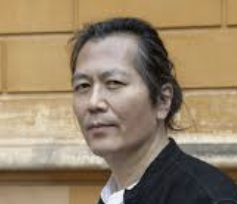
1 month 3 weeks ago
Every religious practice is an exercise in attention. A temple is the highest degree of attention.

4 months ago
The way of the superior man may be found, in its simple elements, in the intercourse of common men and women; but in its utmost reaches, it shines brightly through Heaven and Earth.
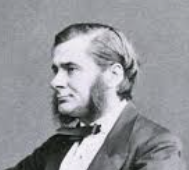
3 weeks 5 days ago
What is this wide-spread component of the surface of the earth? and whence did it come? You may think this no very hopeful inquiry. You may not unnaturally suppose that the attempt to solve such problems as these can lead to no result, save that of entangling the inquirer in vague speculations, incapable of refutation and of verification. If such were really the case, I should have selected some other subject than a "piece of chalk" for my discourse. But, in truth, after much deliberation, I have been unable to think of any topic which would so well enable me to lead you to see how solid is the foundation upon which some of the most startling conclusions of physical science rest.

1 month 3 weeks ago
Compared with the wholesale violence of capital and government, political acts of violence are but a drop in the ocean. That so few resist is the strongest proof how terrible must be the conflict between their souls and unbearable social iniquities.

3 months 2 weeks ago
To which we may add this other Aristotelian consideration, that he who confers a benefit on any one loves him better than he is beloved by him again.
▼
Source
source
Book II, Ch. 8. Of the Affections of Fathers
3 months 1 week ago
No man is liberated from fear who dare not see his place in the world as it is; no man can achieve the greatness of which he is capable until he has allowed himself to see his own littleness.
▼
Source
source
Dreams and Facts, 1919
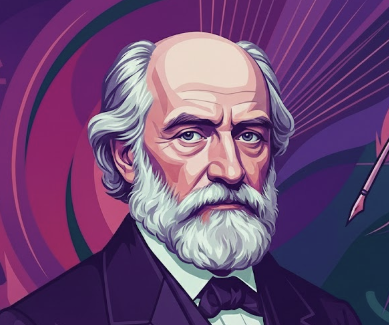
3 months 1 week ago
Descartes is rightly regarded as the father of modern philosophy primarily and generally because he helped the faculty of reason to stand on its own feet by teaching men to use their brains in place whereof the Bible, on the one hand, and Aristotle, on the other, had previously served.
▼
Source
source
E. Payne, trans. (1974) Vol. 1, p. 3

3 months 1 week ago
The concrete man has but one interest - to be right. That to him is the art of all arts, and all means are fair which help him to it.
3 weeks 5 days ago
I do not advocate burning your ship to get rid of the cockroaches.
▼
Source
source
Said in reference to those who wished to abolish all religious teaching, rather than freeing state education from Church controls, in Critiques and Addresses (1873) p. 90

2 months 1 week ago
Bad laws are the worst sort of tyranny.
▼
Source
source
Speech at Bristol Previous to the Election (6 September 1780), quoted in The Works of the Right Honourable Edmund Burke, Vol. II (1855), p. 148

3 months 1 week ago
Let us maintain inviolably equality in the sacred right of suffrage: public security can never have a basis more solid.
▼
Source
source
Author's Inscription: French Edition

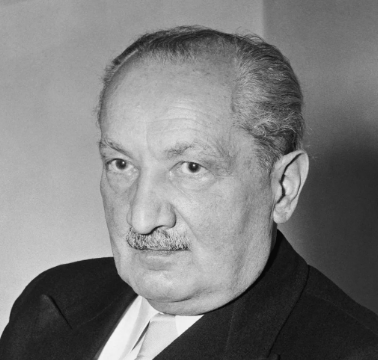
3 months 6 days ago
It is said that "being" is the most universal and the emptiest concept. As such it resists every attempt at definition. Nor does this most universal and thus indefinable concept need any definition. Everybody uses it constantly and also already understands what is meant by it.
▼
Source
source
Introduction: The Exposition of the Question of the Meaning of Being (Stambaugh translation)

1 month 3 weeks ago
The first thing that we know about ourselves is our imperfection.
1 month 2 weeks ago
To err is human also in so far as animals seldom or never err, or at least only the cleverest of them do so.
▼
Source
source
G 30
3 months 2 weeks ago
Make your educational laws strict and your criminal ones can be gentle; but if you leave youth its liberty you will have to dig dungeons for ages.
2 months 6 days ago
Personally, people know themselves very poorly.
▼
Source
source
Contributions to the analysis of the sensations (1897), translated by Cora May Williams, published by Open Court Publishing Company, p. 4
3 months 1 week ago
Persons of genius, it is true, are, and are always likely to be, a small minority; but in order to have them, it is necessary to preserve the soil in which they grow. Genius can only breathe freely in an atmosphere of freedom.
▼
Source
source
Ch. III: Of Individuality, As One of the Elements of Well-Being
3 months 1 week ago
I've got a one-dimensional mind.
▼
Source
source
Said to Rupert Crawshay-Williams; Russell Remembered (1970), p. 31
2 months 1 day ago
The "old maid" with her repressed cravings for tenderness, sex, and propagation, is rarely quite free of ressentiment. What we call "prudery," in contrast with true modesty, is but one of the numerous variants of sexual ressentiment. The habitual behavior of many old maids, who obsessively ferret out all sexually significant events in their surroundings in order to condemn them harshly, is nothing but sexual gratification transformed into ressentiment satisfaction. Thus the criticism accomplishes the very thing it pretends to condemn.
▼
Source
source
L. Coser, trans. (1973), pp. 61-62

2 months 6 days ago
Self-knowledge - the bitterest knowledge of all and also the kind we cultivate least: what is the use of catching ourselves out, morning to night, in the act of illusion, pitilessly tracing each act back to its root, and losing case after case before our own tribunal?

4 months 1 week ago
I get a certain pleasure in knowing that I live not merely in a city but in Manhattan, the center of New York City, a region so unique in many ways that I honestly believe that Earth is divided into halves: Manhattan and non-Manhattan.
1 month 6 days ago
The popularity of the paranormal, oddly enough, might even be grounds for encouragement. I think that the appetite for mystery, the enthusiasm for that which we do not understand, is healthy and to be fostered. It is the same appetite which drives the best of true science, and it is an appetite which true science is best qualified to satisfy.
3 months 1 week ago
The necessity of faith as an ingredient in our mental attitude is strongly insisted on by the scientific philosophers of the present day; but by a singularly arbitrary caprice they say that it is only legitimate when used in the interests of one particular proposition, - the proposition, namely, that the course of nature is uniform. That nature will follow to-morrow the same laws that she follows to-day is, they all admit, a truth which no man can know; but in the interests of cognition as well as of action we must postulate or assume it.
2 months 2 weeks ago
I have often seen an actor laugh off the stage, but I don't remember ever having seen one weep.
▼
Source
source
"Paradox on Acting" (1830), as quoted in Selected Writings (1966) edited by Lester G. Crocker

4 months 1 week ago
No multitude is able to acquire any art whatsoever. Then if there is a kingly art, neither the collective body of the wealthy nor the whole people could ever acquire this science of statesmanship.

3 months 5 days ago
The rule of Big Money and its attendant culture of cupidity and mendacity has so poisoned our hearts, minds and souls that a dominant self-righteous neoliberal soulcraft of smartness, dollars and bombs thrives with little opposition.
▼
Source
source
America is spiritually bankrupt. We must fight back together. The Guardian,
2 months 1 week ago
If women be educated for dependence; that is, to act according to the will of another fallible being, and submit, right or wrong, to power, where are we to stop?
▼
Source
source
Ch. 3
3 months 1 week ago
Then he tried to recall the lessons of Mr. Wisdom. "it is I myself, eternal Spirit, who drives this Me, the slave, along that ledge. I ought not to care whether he falls and breaks his neck or not. It is not he that is real, it is I - I - I.
▼
Source
source
Pilgrim's Regress 137

2 months 2 weeks ago
He who seeks freedom for anything but freedom's self is made to be a slave.
▼
Source
source
p. 204
CivilSimian.com created by AxiomaticPanic, CivilSimian, Kalokagathia