


1 month 3 weeks ago
To say that a life is grievable is to claim that a life, even before it is lost, is, or will be, worthy of being grieved on the occasion of its loss; the life has value in relation to mortality. One treats a person differently if one brings the sense of the grievability of the other to one's ethical bearing toward the other. If an other's loss would register as a loss, would be marked and mourned, and if the prospect of loss is feared, and precautions are thus taken to safeguard that life from harm or destruction, then our very ability to value and safeguard a life depends upon an ongoing sense of its grievability-the conjectured future of a life as an indefinite potential that would be mourned were it cut short or lost.
▼
Source
source
p. 75
2 months 3 weeks ago
Modern man may assert that he can dispense with them, and he may bolster his opinion by insisting that there is no scientific evidence of their truth. But since we are dealing with invisible and unknowable things (for God is beyond human understanding, and there is no mean of proving immortality), why should we bother with evidence?
▼
Source
source
p. 75-76

3 months 3 weeks ago
Men did not make the earth... It is the value of the improvements only, and not the earth itself, that is individual property... Every proprietor owes to the community a ground rent for the land which he holds.
▼
Source
source
Agrarian Justice
1 month 3 weeks ago
Evidence is the only good reason to believe anything.
▼
Source
source
Interview shown in AlJazeera ,
3 months 4 weeks ago
Of corruption, the principal and direct use is, to engage the representatives of the people to betray their trust, and sell themselves and the people to the universal corrupter-the monarch, in his capacity of corrupter-general.
▼
Source
source
Constitutional Code (written between 1820 and 1832), quoted in The Works of Jeremy Bentham, Vol. XVII (1841), p. 76
1 week 3 days ago
Bishop Berkeley destroyed this world in one volume octavo; and nothing remained after his time, but mind - which experienced a similar fate from the hand of Mr. Hume, in 1737.
▼
Source
source
Introduction

3 months 2 weeks ago
Philosophy unravels the knots in our thinking; hence its results must be simple, but its activity is as complicated as the knots that it unravels.
▼
Source
source
Ch. 9 : Philosophy, p. 183

4 months 3 weeks ago
And thus Christianity is played in, Christendom. Artists in dramatic costumes make their appearance in artistic buildings-there really is no danger at all, anything but that: the teacher is a royal functionary, steadily promoted, making a career-and how he dramatically plays Christianity, in short, he plays comedy. He lectures about renunciation, but he himself is being steadily promoted; he teaches all that about despising worldly titles and rank, but he himself is making a career.

2 months 2 weeks ago
Ask, and it will be given to you; seek, and you will find; knock, and it will be opened to you. For everyone who asks receives, and he who seeks finds, and to him who knocks it will be opened.
▼
Source
source
Matthew 7:7-8 (NKJV) (Also Luke 11:9-13)
2 months 2 weeks ago
Simon Peter said to Him, "Let Mary leave us, for women are not worthy of Life." Jesus said, "I myself shall lead her in order to make her male, so that she too may become a living spirit resembling you males. For every woman who will make herself male will enter the Kingdom of Heaven."
1 month 2 weeks ago
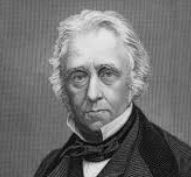
He had a head which statuaries loved to copy, and a foot the deformity of which the beggars in the streets mimicked.
▼
Source
source
p. 313

3 months 4 weeks ago
The establishment of any new manufacture, of any new branch of commerce, or any new practice in agriculture, is always a speculation, from which the projector promises himself extraordinary profits. These profits sometimes are very great, and sometimes, more frequently, perhaps, they are quite otherwise; but in general they bear no regular proportion to those of other older trades in the neighbourhood. If the project succeeds, they are commonly at first very high. When the trade or practice becomes thoroughly established and well known, the competition reduces them to the level of other trades.
▼
Source
source
Chapter X, Part I, p. 136 (tendency of the rate of profit to fall).

2 months 3 weeks ago
It is trifling to believe in what you do or in what others do. You should avoid simulacra and even "realities"; you should take up a position external to everything and everyone, drive off or grind down your appetites, live, according to a Hindu adage, with as few desires as a "solitary elephant.

3 months 3 weeks ago
These effects of mescalin are the sort of effects you could expect to follow the administration of a drug having the power to impair the efficiency of the cerebral reducing valve. When the brain runs out of sugar, the undernourished ego grows weak, can't be bothered to undertake the necessary chores, and loses all interest in those spatial and temporal relationships which mean so much to an organism bent on getting on in the world. As Mind at Large seeps past the no longer watertight valve, all kinds of biologically useless things start to happen. ... Other persons discover a world of visionary beauty. To others again is revealed the glory, the infinite value and meaningfulness of naked existence, of the given, unconceptualized event.
▼
Source
source
describing his experiment with mescaline, p. 26

2 months 1 week ago
In a book called Symbolism, Its Meaning and Effect, Whitehead points out that perception is usually a matter of symbols, just like language; I say I see a book when I actually see a red oblong. The Transactionists (who have been influenced by Whitehead rather than Husserl) take this one stage further, and point out that when I 'perceive' something, I am actually making a bet with myself that what I perceive is what I think it is. In order to act and live at all, I have to make these bets; I cannot afford to make absolutely certain that things are what I think they are. But this means that we should not take our perceptions at face value, any more than Nietzsche was willing to take philosophy at its face value; we must allow for prejudice and distortion.
▼
Source
source
p. 66
2 weeks 1 day ago
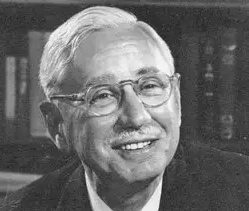
It is a mistake to think that the past is dead. Nothing that has ever happened is quite without influence at this moment. The present is merely the past rolled up and concentrated in this second of time. You, too, are your past; often your face is your autobiography; you are what you are because of what you have been; because of your heredity stretching back into forgotten generations; because of every element of environment that has affected you, every man or woman that has met you, every book that you have read, every experience that you have had; all these are accumulated in your memory, your body, your character, your soul. So with a city, a country, and a race; it is its past, and cannot be understood without it.
▼
Source
source
As quoted in "The Gentle Philosopher" (2006) by John Little at the Will Durant Foundation
3 days ago
Although our case is different from that of ascetics who remove themselves from the world, the situation of the latest technological civilization might offer the incentive for commitments of this kind. In a large city, in mass society, among the almost unreal swarming of faceless beings, an essential sense of isolation or of detachment often occurs naturally, perhaps even more than in the solitude of moors and mountains.
▼
Source
source
p. 121
2 months 2 weeks ago
The happy consciousness is shaky enough-a thin surface over fear, frustration, and disgust.
▼
Source
source
p. 76
3 months 2 weeks ago
Rather, we heirs of Enlightenment think of enemies of liberal democracy like Nietzsche or Loyola as, to use Rawls's word, "mad." We do so because there is no way to see them as fellow citizens of our constitutional democracy, people whose life plans might, given ingenuity and good will, be fitted in with those of other citizens. They are crazy because the limits of sanity are set by what we can take seriously. This, in turn, is determined by our upbringing, our historical situation.
2 months 2 weeks ago
The repose of sleep refreshes only the body. It rarely sets the soul at rest. The repose of the night does not belong to us. It is not the possession of our being. Sleep opens within us an inn for phantoms. In the morning we must sweep out the shadows.
▼
Source
source
Ch. 2, sect. 3
2 months 1 week ago
But now we come to the real paradox: that something as explosive as sexual excitement can nevertheless become a matter of habit, But then that applies to all our pleasures. We discover some new product in the supermarket, and become addicted to it. Then our tastebuds become accustomed to its flavour, and or interest fades. In the same way a honeymoon couple may find an excuse to hurry off to the bedroom half a dozen times a day; but after a month or so sex has taken its place among the many routines of their lives. They still enjoy it, but it no longer has quite the same power to excite the imagination. Sex, like every other pleasure, can become mechanical.
▼
Source
source
p. 14

4 months 3 days ago
Who does not in some sort live to others, does not live much to himself.
▼
Source
source
Book III, Ch. 10

3 months 6 days ago
It is better to suffer, than to do, wrong.
2 months 1 week ago
It is within science itself, and not in some prior philosophy, that reality is to be identified and described.
▼
Source
source
Theories and Things, Cambridge, MA: Harvard University Press. 1981


1 month 2 weeks ago
The core of common culture is religion. Tribes survive and flourish because they have gods, who fuse many wills into a single will, and demand and reward the sacrifices on which social life depends.
▼
Source
source
"Culture and Cult" (p. 5)
1 month 1 week ago
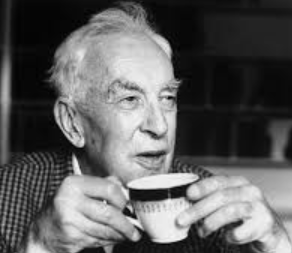
Civilization, as we know it, is a movement and not a condition, a voyage and not a harbour. No known civilization has, ever reached the goal of civilization yet. There has never been a communion of saints on earth. In the least uncivilized society at its least uncivilized moment, the vast majority of its members have remained very near indeed to the primitive human level. And no society has ever been secure of holding such ground as it has managed to gain in its spiritual advance. Ch. 8: Civilization on Trial Variants: Civilization is a movement and not a condition, a voyage and not a harbor.
▼
Source
source
As quoted in Reader's Digest (October 1958)
3 weeks 1 day ago
With exceptions so rare they are regarded as miracles of nature, successful democratic politicians are insecure and intimidated men. They advance politically only as they placate, appease, bribe, seduce, bamboozle, or otherwise manage to manipulate the demanding and threatening elements in their constituencies. The decisive consideration is not whether the proposition is good but whether it is popular-not whether it will work well and prove itself but whether the active talking constituents like it immediately. Politicians rationalize this servitude by saying that in a democracy public men are the servants of the people.
▼
Source
source
p. 27

4 months 3 days ago
Now when God sends forth his holy Gospel, He deals with us in a twofold manner, the first outwardly, then inwardly. Outwardly he deals with us through the oral word of the Gospel and through material sings, that is, baptism adndthe sacrament of the altar. Inwardly He deals with us through the Holy spirit, faith, and other gifts. But whatever their measure of order the outward factors should and must procede. The inward experience follows and is effected by the outward. God has determined to give the inward to no one except through the outward.
▼
Source
source
Luthers Works, 40 p. 146 as quoted in Against the Idols: The Reformation of Worship from Erasmus to Calvinby Carlos M. N. Eire, p. 72
3 days ago
Never express yourself more clearly than you are able to think.
▼
Source
source
As quoted in Values of the Wise : Humanity's Highest Aspirations (2004) by Jason Merchey, p. 63

2 months 3 weeks ago
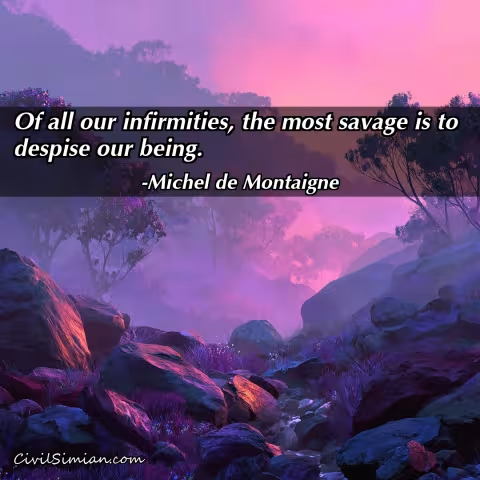
Our patience will achieve more than our force.
4 months 3 days ago
The Mass is the greatest blasphemy of God, and the highest idolatry upon earth, an abomination the like of which has never been in Christendom since the time of the Apostles.
▼
Source
source
171

4 months 1 week ago
For creation is not a change, but that dependence of the created existence on the principle from which it is instituted, and thus is of the genus of relation; whence nothing prohibits it being in the created as in the subject. Creation is thus said to be a kind of change, according to the way of understanding, insofar as our intellect accepts one and the same thing as not existing before and afterwards existing.
▼
Source
source
II, 18, 2 (see also Summa Theologica I, q. 45, art. 3 ad 2)
6 days ago
Just as the wave cannot exist for itself, but is ever a part of the heaving surface of the ocean, so must I never live my life for itself, but always in the experience which is going on around me. It is an uncomfortable doctrine which the true ethics whisper into my ear. You are happy, they say; therefore you are called upon to give much.
▼
Source
source
Chapter 26
2 months 2 weeks ago
Everything is what it is: liberty is liberty, not equality or fairness or justice or culture, or human happiness or a quiet conscience.

2 months 1 week ago
Full of gods means full of meaning, full of narration. The world becomes readable, like a picture.

3 months 3 weeks ago
The rules of logic are to mathematics what those of structure are to architecture.

3 months 3 weeks ago
What is there in 'Paradise Lost' to elevate and astonish like Herschel or Somerville?
▼
Source
source
Quoted in Robert D. Richardson, Jr., Emerson, the Mind On Fire (Univ. of Calif Press 1995), p. 124

3 months 3 weeks ago
And if he be too forward to venture upon his own strength and skill, and perplexity and trouble of a misadventure now and then, that reaches not his innocence, his health, or reputation, may not be an ill way to teach him more caution.
▼
Source
source
Sec. 94
3 days ago
Our task is not so much discovery as re-discovery. What one needs is not so much thinking as remembering. Sometimes it suffices to sit quietly and listen well, when venerable men have thought before us. Constant forgettings of truths once perceived are the very charm of the human mind; the history of human thought is nothing more than the story of these forgettings and rememberings and forgettings again.
▼
Source
source
On the Wisdom of America (1950), p. xiv

3 months 2 weeks ago
Good breeding in cattle depends on physical health, but in men on a well-formed character.
▼
Source
source
Freeman (1948), p. 151
3 months 3 weeks ago
In the past, there was a small leisure class and a larger working class. The leisure class enjoyed advantages for which there was no basis in social justice; this necessarily made it oppressive, limited its sympathies, and caused it to invent theories by which to justify its privileges.
▼
Source
source
Ch. 1: In Praise of Idleness, p. 13

4 months 4 days ago
For man seeketh in society comfort, use, and protection: and they be three wisdoms of divers natures, which do often sever: wisdom of the behaviour, wisdom of business, and wisdom of state.
▼
Source
source
Book II, xxiii
2 months 3 weeks ago
Every step closer to my soul excites the scornful laughter of my devils, those cowardly ear-whisperers and poison-mixers. It was easy for them to laugh, since I had to do strange things.
▼
Source
source
P. 234
1 month 4 weeks ago
The Marxist critique is only a critique of capital, a critique coming from the heart of the middle and petit bourgeois classes, for which Marxism has served for a century as a latent ideology.... The Marxist seeks a good use of economy. Marxism is therefore only a limited petit bourgeois critique, one more step in the banalization of life toward the "good use" of the social!
▼
Source
source
Canadian Journal of Political and Social Theory 15 (1987) "When Bataille Attacked the Metaphysical Principle of Economy"

1 week 3 days ago
All is interrelated. Heaven and earth, air and water. All are but one thing; not four, not two and not three, but one. Where they are not together, there is only an incomplete piece.
▼
Source
source
Paracelsus - Collected Writings Vol. I (1926) edited by Bernhard Aschner, p. 110
2 weeks 1 day ago
All the problems that disturb us today-the cutting down of forests and the erosion of the soil; the emancipation of woman and the limitation of the family; the conservatism of the established, and the experimentalism of the unplaced, in morals, music, and government; the corruptions of politics and the perversions of conduct; the conflict of religion and science, and the weakening of the supernatural supports of morality; the war of the classes, the nations, and the continents; the revolutions of the poor against the economically powerful rich, and of the rich against the politically powerful poor; the struggle between democracy and dictatorship, between individualism and communism, between the East and the West-all these agitated, as if for our instruction, the brilliant and turbulent life of ancient Hellas. There is nothing in Greek civilization that does not illuminate our own.
▼
Source
source
Preface, P.18

3 months 2 days ago
All things are in the Universe, and the universe is in all things: we in it, and it in us; in this way everything concurs in a perfect unity.
CivilSimian.com created by AxiomaticPanic, CivilSimian, Kalokagathia