


2 months 2 weeks ago
All ye shall be offended because of me this night: for it is written, I will smite the shepherd, and the sheep of the flock shall be scattered abroad. But after I am risen again, I will go before you into Galilee.
▼
Source
source
26:31-32 (KJV)

4 months 3 weeks ago
An optimistic view of the future would indicate that before long, the clear necessity of expanding humanity's horizons would cause ... space settlements to be built. The construction would also serve as a great project that not only would be clearly of great benefit, but might induce human cooperation in something large enough to fire the heart and mind, and make people forget the petty quarrels that have engaged them for thousands of years in wars over insignificant scraps of earthly territory.

4 months 2 weeks ago
The institutions of the Ruler are rooted in his own character and conduct, and sufficient attestation of them is given by the masses of the people. He examines them by comparison with those of the three kings, and finds them without mistake. He sets them up before Heaven and Earth, and finds nothing in them contrary to their mode of operation. He presents himself with them before spiritual beings, and no doubts about them arise. He is prepared to wait for the rise of a sage a hundred ages after, and has no misgivings. His presenting himself with his institutions before spiritual beings, without any doubts arising about them, shows that he knows Heaven. His being prepared, without any misgivings, to wait for the rise of a sage a hundred ages after, shows that he knows men.

4 months 3 weeks ago
Knowledge is the food of the soul; and we must take care, my friend, that the Sophist does not deceive us when he praises what he sells, like the dealers wholesale or retail who sell the food of the body; for they praise indiscriminately all their goods, without knowing what are really beneficial or hurtful.
2 months 2 weeks ago
All art is the struggle to be, in a particular sort of way, virtuous.
▼
Source
source
The Black Prince (1973); 2003, p. 181.
3 months 3 weeks ago
It was mathematics, the non-empirical science par excellence, wherein the mind appears to play only with itself, that turned out to be the science of sciences, delivering the key to those laws of nature and the universe that are concealed by appearances.
▼
Source
source
p. 7

2 months 3 weeks ago
By the disposition of a stupendous wisdom, moulding together the great mysterious incorporation of the human race, the whole, at one time, is never old, or middle-aged, or young; but, in a condition of unchangeable constancy, moves on through the varied tenor of perpetual decay, fall, renovation, and progression.
3 months 3 weeks ago
A father would do well, as his son grows up, and is capable of it, to talk familiarly with him; nay, ask his advice, and consult with him about those things wherein he has any knowledge or understanding. By this, the father will gain two things, both of great moment. The sooner you treat him as a man, the sooner he will begin to be one; and if you admit him into serious discourses sometimes with you, you will insensibly raise his mind above the usual amusements of youth, and those trifling occupations which it is commonly wasted in. For it is easy to observe, that many young men continue longer in thought and conversation of school-boys than otherwise they would, because their parents keep them at that distance, and in that low rank, by all their carriage to them.
▼
Source
source
Sec. 95
3 months 3 weeks ago
Whatever concept one may hold, from a metaphysical point of view, concerning the freedom of the will, certainly its appearances, which are human actions, like every other natural event are determined by universal laws. However obscure their causes, history, which is concerned with narrating these appearances, permits us to hope that if we attend to the play of freedom of the human will in the large, we may be able to discern a regular movement in it, and that what seems complex and chaotic in the single individual may be seen from the standpoint of the human race as a whole to be a steady and progressive though slow evolution of its original endowment.
▼
Source
source
Introduction
2 months 2 weeks ago
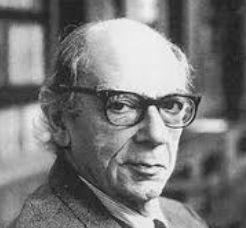
By freedom he meant a condition in which men were not prevented from choosing both the object and the manner of their worship. For him only a society in which this condition was realised could be called fully human. Its realisation was an ideal which Mill regarded as more precious than life itself.
6 days ago
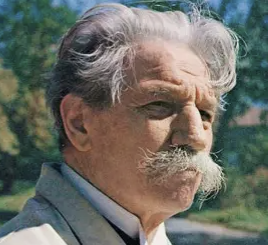
Reverence for life, veneratio vitæ, is the most direct and at the same time the profoundest achievement of my will-to-live. In reverence for life my knowledge passes into experience. The simple world- and life-affirmation which is within me just because I am will-to-live has, therefore, no need to enter into controversy with itself, if my will-to-live learns to think and yet does not understand the meaning of the world. In spite of the negative results of knowledge, I have to hold fast to world- and life-affirmation and deepen it. My life carries its own meaning in itself. This meaning lies in my living out the highest idea which shows itself in my will-to-live, the idea of reverence for life. With that for a starting-point I give value to my own life and to all the will-to-live which surrounds me, I persevere in activity, and I produce values.
1 month 3 weeks ago
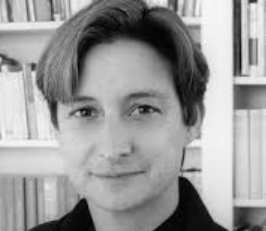
It is precisely because we can destroy that we are under an obligation to know why we ought not to do it, and to summon those countervailing powers that curb our destructive capacity. Nonviolence becomes an ethical obligation by which we are bound precisely because we are bound to one another; it may well be an obligation against which we rail, in which ambivalent swings of the psyche make themselves known, but the obligation to preserve the social bond can be resolved upon without precisely resolving that ambivalence. The obligation not to destroy each other emerges from, and reflects, the vexed social form of our lives, and it leads us to reconsider whether self-preservation is not linked to preserving the lives of others.
▼
Source
source
p. 148
3 months 3 weeks ago
Metaphysics has as the proper object of its enquiries three ideas only: God, freedom, and immortality.
▼
Source
source
B 395
1 month 3 weeks ago
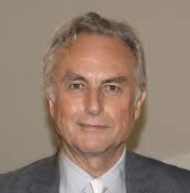
An atheist is just somebody who feels about Yahweh the way any decent Christian feels about Thor or Baal or the golden calf. As has been said before, we are all atheists about most of the gods that humanity has ever believed in. Some of us just go one god further.
▼
Source
source
Richard Dawkins on militant atheism,

2 months 3 weeks ago
If just once you were depressed for no reason, you have been so all your life without knowing.
2 months 2 weeks ago
By becoming the pure subject who knows the world objectively, man ultimately realizes that absolute consciousness with respect to which the body and individual existence are no longer anything but objects; death is deprived of meaning. Reduced to the status of object of consciousness, the body could not be conceived as an intermediary between "things" and the consciousness which knows them.
▼
Source
source
p. 204
2 months 2 weeks ago
Life, individual or collective, personal or historic, is the one entity in the universe whose substance is compact of danger, of adventure. It is, in the strict sense of the word, drama. ... The primary, radical meaning of life appears when it is employed in the sense not of biology, but of biography. For the very strong reason that the whole of biology is quite definitely only a chapter in certain biographies, it is what biologists do in the portion of their lives open to biography.
▼
Source
source
Chap.IX: The Primitive and the Technical

3 months 3 weeks ago
The teaching of my philosophy... that our whole existence is something which had better not have been, and that to disown and disclaim it is the highest wisdom.
▼
Source
source
Ch 1
2 months 3 weeks ago
It was the case of common soldiers deserting from their officers, to join a furious, licentious populace. It was a desertion to a cause, the real object of which was to level all those institutions, and to break all those connexions, natural and civil, that regulate and hold together the community by a chain of subordination; to raise soldiers against their officers; servants against their masters; tradesmen against their customers; artificers against their employers; tenants against their landlords; curates against their bishops; and children against their parents. That this cause of theirs was not an enemy to servitude, but to society.
▼
Source
source
Speech in the House of Commons (9 February 1790), quoted in The Parliamentary History of England, From the Earliest Period to the Year 1803, Vol. XXVIII (1816), column 359

4 months 2 days ago
Our preaching does not stop with the law. That would lead to wounding without binding up, striking down and not healing, killing and not making alive, driving down to hell and not bringing back up, humbling and not exalting. Therefore, we must also preach grace and the promise of forgiveness - this is the means by which faith is awakened and properly taught. Without this word of grace, the law, contrition, penitence, and everything else are done and taught in vain.
▼
Source
source
pp. 78-79

4 months 3 weeks ago
Old age realizes the dreams of youth: look at Dean Swift; in his youth he built an asylum for the insane, in his old age he was himself an inmate.
2 months 2 days ago
To successfully adjudicate ethical problems, as opposed to 'solving' them, it is necessary that the members of the society have a sense of community. A compromise that cannot pretend to be the last word on an ethical question, that cannot pretend to derive from binding principles in an unmistakeably constraining way, can only derive its force from a shared sense of what is and is not reasonable, from loyalties to one another, and a commitment to 'muddling through' together.
▼
Source
source
"How Not to Solve Ethical Problems"

4 months 3 weeks ago
Outside of that single fatality of death, everything, joy or happiness, is liberty.
1 week 3 days ago
Human or general needs can be satisfied through society; for satisfaction of unique needs you must do some seeking. A friend and a friendly service, or even an individual's service, society cannot procure you. And yet you will every moment be in need of such a service, and on the slightest occasions require somebody who is helpful to you. Therefore do not rely on society, but see to it that you have the wherewithal to - purchase the fulfilment of your wishes.
▼
Source
source
Cambridge 1995, p. 243
1 month 3 weeks ago
Even when there is no law, there is conscience.
▼
Source
source
Maxim 237
2 months 3 weeks ago
It is the man of science, eager to have his every opinion regenerated, his every idea rationalized, by drinking at the fountain of fact, and devoting all the energies of his life to the cult of truth, not as he understands it, but as he does not yet understand it, that ought properly to be called a philosopher. To an earlier age knowledge was power - merely that and nothing more; to us it is life and the summum bonum. Emancipation from the bonds of self, of one's own prepossessions, importunately sought at the hands of that rational power before which all must ultimately bow, - this is the characteristic that distinguishes all the great figures of nineteenth-century science from those of former periods.
▼
Source
source
"The Century's Great Men in Science" in The 19th Century : A Review of Progress During the Past One Hundred Years in the Chief Departments of Human Activity (1901), published by G. P. Putnam's Sons.

2 months 1 week ago
In the first place for over two centuries religion has been on the defensive, and on a weak defensive. The result of the repetition of this undignified retreat, during many generations, has at last almost entirely destroyed the intellectual authority of religious thinkers. Consider this contrast: when Darwin or Einstein proclaim theories which modify our ideas, it is a triumph for science. We do not go about saying that there is another defeat for science, because its old ideas have been abandoned. We know that another step of scientific insight has been gained.Religion will not regain its old power until it can face change in the same spirit as does science. Its principles may be eternal, but the expression of those principles requires continual development.
▼
Source
source
Ch. 12: "Religion and Science", p. 263
2 months 2 weeks ago
The detour to ideality leads to coinciding with oneself, that is, to certainty, which remains the guide and guarantee of the whole spiritual adventure of being.
▼
Source
source
The Levinas reader by Levinas, Emmanuel p. 89

3 months 3 weeks ago
The country that is more developed industrially only shows, to the less developed, the image of its own future.
▼
Source
source
Author's prefaces to the First Edition.

3 months 3 weeks ago
You find as you look around the world that every single bit of progress of humane feeling, every improvement in the criminal law, every step toward the diminution of war, every step toward better treatment of the colored races, or even mitigation of slavery, every moral progress that there has been in the world, has been consistently opposed by the organized churches of the world. I say quite deliberately that the Christian religion, as organized in its churches, has been and still is the principal enemy of moral progress in the world.
▼
Source
source
"The Emotional Factor"
1 month 4 weeks ago
The best and safest method of philosophizing seems to be, first to enquire diligently into the properties of things, and to establish these properties by experiment, and then to proceed more slowly to hypothesis for the explanation of them. For hypotheses should be employed only in explaining the properties of things, but not assumed in determining them, unless so far as they may furnish experiments.
▼
Source
source
Letter to Ignatius Pardies (1672) Philosophical Transactions of the Royal Society (Feb. 1671/2) as quoted by William L. Harper
2 months 3 weeks ago
Not content with real sufferings, the anxious man imposes imaginary ones on himself; he is a being for whom unreality exists, must exist; otherwise where would he obtain the ration of torment his nature demands?
3 weeks ago
News and truth are not the same thing and must be clearly distinguished. The function of news is to signalize an event, the function of truth is to bring to light the hidden facts, to set them into relation with each other, and make a picture of reality on which men can act. Only at those points, where social conditions take recognizable and measurable shape, do the body of truth and the body of news coincide.
▼
Source
source
Ch. XXIV: "News, Truth, and a Conclusion", p. 358 The clause in bold is sometimes quoted on its own in the form, "The news and the truth are not the same thing."
3 months 3 weeks ago
The light dove, cleaving the air in her free flight, and feeling its resistance, might imagine that its flight would be still easier in empty space.
▼
Source
source
B 8

3 months 3 weeks ago
...the reality of society involves the socialization of certain unrealities.
▼
Source
source
p. 455
2 months 3 weeks ago
Early and provident fear is the mother of safety.
▼
Source
source
Speech on the Petition of the Unitarians (11 May 1792), volume vii, p. 50

4 months 4 days ago
Among the celestial bodies that are revolving over our heads, though the motions are not the same, and though the force is not equal, yet they move, and ever have moved, without clashing, and in perfect harmony.
2 months 3 weeks ago
We are living in what the Greeks called the right time for a "metamorphosis of the gods," i.e. of the fundamental principles and symbols. This peculiarity of our time, which is certainly not of our conscious choosing, is the expression of the unconscious man within us who is changing. Coming generations will have to take account of this momentous transformation if humanity is not to destroy itself through the might of its own technology and science.
▼
Source
source
p 110

2 months 3 weeks ago
The ideal form for a poem, essay, or fiction, is that which the ideal writer would evolve spontaneously. One in whom the powers of expression fully responded to the state of feeling, would unconsciously use that variety in the mode of presenting his thoughts, which Art demands.
▼
Source
source
Pt. II, sec. 4, "The Ideal Writer"
2 months 2 weeks ago
In Walt Whitman democracy is carried into psychology and morals. The various sights, moods, and emotions are given each one vote; they are declared to be all free and equal, and the innumerable commonplace moments of life are suffered to speak like the others. Those moments formerly reputed great are not excluded, but they are made to march in the ranks with their companions-plain foot-soldiers and servants of the hour.
▼
Source
source
p. 53

2 months 3 weeks ago
On its pass through finitude, the being-for-itself of the counter-image expresses itself most potently as ""I-ness", as self-identical individuality. Just as a planet in its orbit no sooner reaches its farthest distance from the center than it returns to its closest proximity, so the point of the farthest distance from God, the I-ness, is also the moment of its return to the Absolute, of the re-absorption into the ideal.
▼
Source
source
P. 30
2 months 2 weeks ago
While there may exist no more than the normal extent of disagreement about the meaning of particular terms or theses contained in these works, there is a startling degree of divergence about the central view, the basic political attitude of Machiavelli.

1 month 3 weeks ago
The Churches as Churches-as institutions affirming their own infallibility-are anti-Christian institutions. Between the Churches as such and Christianity, not only is there nothing in common except the name, but they are two quite opposite and opposing principles. The one represents pride, violence, self-assertion, immobility and death: the other humility, penitence, meekness, progress, and life.
▼
Source
source
Chapter III, Christianity Misunderstood by Believers
2 months 3 weeks ago
Plants are Children of the Earth; we are Children of the Æther. Our Lungs are properly our Root; we live, when we breathe; we begin our life with breathing.
4 months 3 weeks ago
My hearers, this discourse has not wandered out into the world to look for conflict, it has not tried to get the better of anybody, it has not even tried to uphold anybody, as though there was battle without. It has spoken to you; not by way of explaining anything to you, but trying to speak secretly with you about your relationship to that secret wisdom mentioned in our text. Oh that nothing may upset you in respect to this, “neither life nor death nor things present nor things to come nor any other creature” (Romans 8:38) –not this discourse, which, though it may have profited you nothing, yet has striven for what after all is the first and the last, to help you have what the Scripture calls “faith in yourself before God.

3 months 3 weeks ago
First Shakespeare sonnets seem meaningless; first Bach fugues, a bore; first differential equations, sheer torture. But training changes the nature of our spiritual experiences. In due course, contact with an obscurely beautiful poem, an elaborate piece of counterpoint or of mathematical reasoning, causes us to feel direct intuitions of beauty and significance. It is the same in the moral world.
▼
Source
source
Ch. 14, p. 333 [2012 reprint]
3 months 3 weeks ago
Two men who differ as to the ends of life cannot hope to agree about education.
▼
Source
source
Ch. 12: Education and Discipline

2 months 4 days ago
The great rule: If the little bit you have is nothing special in itself, at least find a way of saying it that is a little bit special.
▼
Source
source
E 55

2 months 2 weeks ago
Many, and I think the determining, constitutive facts remain outside the reach of the operational concept. And by virtue of this limitation-this methodological injunction against transitive concepts which might show the facts in their true light and call them by their true name-the descriptive analysis of the facts blocks the apprehension of facts and becomes an element of the ideology that sustains the facts. Proclaiming the existing social reality as its own norm, this sociology fortifies in the individuals the "faithless faith" in the reality whose victims they are.
▼
Source
source
p. 119
3 months 3 weeks ago
If you punish a child for being naughty, and reward him for being good, he will do right merely for the sake of the reward; and when he goes out into the world and finds that goodness is not always rewarded, nor wickedness always punished, he will grow into a man who only thinks about how he may get on in the world, and does right or wrong according as he finds either of advantage to himself.
CivilSimian.com created by AxiomaticPanic, CivilSimian, Kalokagathia