

3 months 4 weeks ago
Human freedom is realised in the adoption of humanity as an end in itself, for the one thing that no-one can be compelled to do by another is to adopt a particular end.
▼
Source
source
Part Two : Metaphysical Principles of Virtue
2 months 2 weeks ago
That Marxism should triumph in Russia, where there is no industry, would be the greatest contradiction that Marxism could undergo. But there is no such contradiction, for there is no such triumph. Russia is Marxist more or less as the Germans of the Holy Roman Empire were Romans.
▼
Source
source
Chapter XIV: Who Rules The World?

3 months 2 weeks ago
If God had looked into our minds he would not have been able to see there whom we were speaking of.
▼
Source
source
Pt II, p. 217

1 month 3 weeks ago
Headlines are icons, not literature.
▼
Source
source
(p. 5)

2 months 3 weeks ago
Paradise was unendurable, otherwise the first man would have adapted to it; this world is no less so, since here we regret paradise or anticipate another one. What to do? Where to go? Do nothing and go nowhere, easy enough.
1 month 4 days ago
It's not that there are no differences between human and non-human animals, any more than there are no differences between black people and white people, freeborn citizens and slaves, men and women, Jews and gentiles, gays or heterosexuals. The question is rather: are they morally relevant differences? This matters because morally catastrophic consequences can ensue when we latch on to a real but morally irrelevant difference between sentient beings.
▼
Source
source
"The Abolitionist Project", Talks given at the FHI (Oxford University) and the Charity International Happiness Conference, 2007
1 month 3 weeks ago
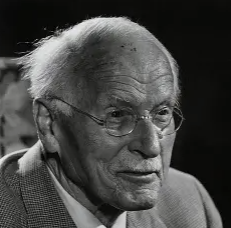
The move from a structuralist account in which capital is understood to structure social relations in relatively homologous ways to a view of hegemony in which power relations are subject to repetition, convergence, and rearticulation brought the question of temporality into the thinking of structure, and marked a shift from a form of Althusserian theory that takes structural totalities as theoretical objects to one in which the insights into the contingent possibility of structure inaugurate a renewed conception of hegemony as bound up with the contingent sites and strategies of the rearticulation of power.
▼
Source
source
"Further Reflections on the Conversations of Our Time" (1997), which received first place in the Philosophy and Literature Bad Writing Contest
2 months 3 weeks ago
The deep critical thinker has become the misfit of the world. This is not a coincidence. To maintain order and control you must isolate the intellectual, the sage, the philosopher, the savant before their ideas awaken people.

3 months 3 weeks ago
To some extent, mythology is only the most ancient history and biography. So far from being false or fabulous in the common sense, it contains only enduring and essential truth, the I and you, the here and there, the now and then, being omitted. Either time or rare wisdom writes it. Before printing was discovered, a century was equal to a thousand years. The poet is he who can write some pure mythology to-day without the aid of posterity.

2 months 1 week ago
The real sin - perhaps it is a sin against the Holy Ghost for which there is no remission - is the sin of heresy, the sin of thinking for oneself. The saying has been heard before now, here in Spain, that to be a liberal - that is, a heretic - is worse than being an assassin, a thief, or an adulterer. The gravest sin is not to obey the Church, whose infallibility protects us from reason.
1 month 3 weeks ago
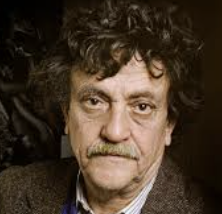
My theory is that all women have hydrofluoric acid bottled up inside.
▼
Source
source
On difficulties with women, as quoted in "Kurt Vonnegut, Writer of Classics of the American Counterculture, Dies at 84" by Dinitia Smith in The New York Times

1 week 3 days ago
It makes a big difference whether you give something back or pay it off... The framers of the laws instituted festivals, in order that men should be publicly compelled to gaiety, as a necessary temperance for labors; We remember the great orator Pollio Asinius, who was not detained by anything beyond the tenth hour: he did not even need letters for an hour after that, so that no new concern arose, but he put the fatigue of the whole day in those two hours. Some joined in the middle of the day and put off some lighter work in the afternoon hours. Our elders also forbade a new report to be made in the senate after ten o'clock. The army divided the vigils, and the night was safe from the return of the expedition.

3 months 3 weeks ago
Some day you will be old enough to start reading fairy tales again.
▼
Source
source
The Lion, the Witch and the Wardrobe (1950), Dedication: "To Lucy Barfield"
3 months 3 weeks ago
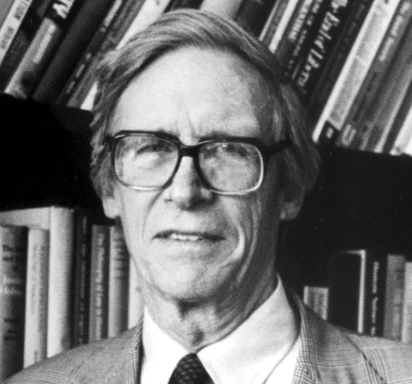
Justice as fairness provides what we want.
▼
Source
source
Chapter III, Section 30, pg. 190
3 months 3 weeks ago
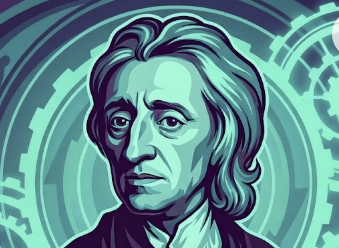
This life affords no solid satisfaction, but in the consciousness of having done well, and the hopes of another life.
▼
Source
source
Letter to Anthony Collins (23 August 1704), in The Works of John Locke, Vol. X (London, 1823), p. 298; quoted by William Julius Mickle in Voltain in the Shades (London, 1770), p. 7
2 months 3 weeks ago
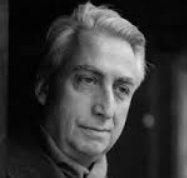
Only the idiot is equipped to breathe.
2 months 1 week ago
By reducing any quality to quantity, myth economizes intelligence: it understands reality more cheaply.
▼
Source
source
p. 153

3 months 3 weeks ago
Great men, great nations, have not been boasters and buffoons, but perceivers of the terror of life, and have manned themselves to face it.
▼
Source
source
Fate
3 months 2 weeks ago
For remember that in general we don't use language according to strict rules - it hasn't been taught us by means of strict rules, either.
▼
Source
source
p. 25
2 months 3 weeks ago
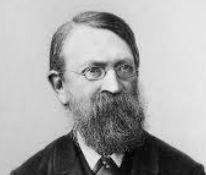
Nature consists of the elements given by the senses. Primitive man first takes out of them certain complexes of these elements that present themselves with a certain stability and are most important to him. The first and oldest words are names for "things". ... The sensations are no "symbols of things". On the contrary the "thing" is a mental symbol for a sensation-complex of relative stability. Not the things, the bodies, but colours, sounds, pressures, times (what we usually call sensations) are the true elements of the world.
▼
Source
source
p. 23, as quoted in Lenin as Philosopher: A Critical Examination of the Philosophical Basis of Leninism (1948) by Anton Pannekoek, p. 454
6 days ago
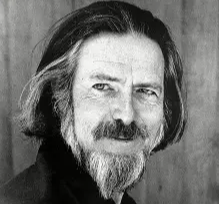
There was never a time when the world began, because it goes round and round like a circle, and there is no place on a circle where it begins. Look at my watch, which tells the time; it goes round, and so the world repeats itself again and again. But just as the hour-hand of the watch goes up to twelve and down to six, so, too, there is day and night, waking and sleeping, living and dying, summer and winter. You can't have any one of these without the other, because you wouldn't be able to know what black is unless you had seen it side-by-side with white, or white unless side-by-side with black.
▼
Source
source
Inside information p. 16
3 months 2 weeks ago
The difficulty in philosophy is to say no more than we know.
▼
Source
source
p. 45
3 weeks ago
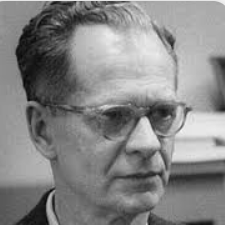
It is a mistake to suppose that the whole issue is how to free man. The issue is to improve the way in which he is controlled.
▼
Source
source
"I have been misunderstood" An interview with B.F.Skinner, Center Magazine (March/April 1972), pp. 63

2 months 2 weeks ago
Be of good courage, and if you are discouraged, still take courage over against the various forms of nature. He who has ears to hear, let him hear.
▼
Source
source
Chapter 4.

2 months 1 week ago
I must confess that my estimate of Lovecraft would not have pleased his most ardent admirers. The view I expressed in that book was that, while Lovecraft was distinctly a creative genius in his own way, his pessimism should not be taken too seriously; that it was the pessimism of a sick recluse, and had about it an element of rassentiment, a kind of desire to take revenge on the world that rejected him. In short, Lovecraft was a 19th century romantic, born in the wrong time. Most men of genius dislike their own age, but the really great ones impose their own vision on the age. The weak ones turn away into a world of gloomy fantasy.
▼
Source
source
p. 2

3 months 3 weeks ago
We see then, commodities are in love with money, but "the course of true love never did run smooth".
▼
Source
source
Vol. I, Ch. 3, Section 2, pg. 121.

2 months 3 weeks ago
The body of all true religion consists, to be sure, in obedience to the will of the Sovereign of the world, in a confidence in His declarations, and in imitation of His perfections.

3 months 2 weeks ago
There is object proof that homosexuality is more interesting than heterosexuality. It's that one knows a considerable number of heterosexuals who would wish to become homosexuals, whereas one knows very few homosexuals who would really like to become heterosexuals.
▼
Source
source
As quoted in Who's Who in Contemporary Gay & Lesbian History: From World War II to the Present Day (2001) by Robert Aldrich and Gary Wotherspoon ISBN 041522974X
2 months 3 weeks ago
Erosion of our being by our infirmities: the resulting void is filled by the presence of consciousness, what am I saying? - that void is consciousness itself.
3 months 3 weeks ago
To live without duties is obscene.
▼
Source
source
Aristocracy
2 months 1 week ago
The uniting of Orthodoxy with state absolutism came about on the soil of a non-belief in the Divineness of the earth, in the earthly future of mankind; Orthodoxy gave away the earth into the hands of the state because of its own non-belief in man and mankind, because of its nihilistic attitude towards the world. Orthodoxy does not believe in the religious ordering of human life upon the earth, and it compensates for its own hopeless pessimism by a call for the forceful ordering of it by state authority.
▼
Source
source
Nihilism On A Religious Soil
3 months 3 weeks ago
Nor is it the irrationality of the form which is taken as characteristic. On the contrary, one overlooks the irrational.
▼
Source
source
Vol. II, Ch. I, p. 30.

2 months 2 weeks ago
The precepts "Love your enemies, do good to them which hate you, bless them that curse you" ... are born from the Gospel's profound spirit of individualism, which refuses to let one's own actions and conduct depend in any way on somebody else's acts. The Christian refuses to let his acts be mere reactions-such conduct would lower him to the level of his enemy. The act is to grow organically from the person, "as the fruit from the tree." ... What the Gospel demands is not a reaction which is the reverse of the natural reaction, as if it said: "Because he strikes you on the cheek, tend the other"-but a rejection of all reactive activity, of any participation in common and average ways of acting and standards of judgment.
▼
Source
source
L. Coser, trans. (1961), pp. 99-100

1 month 3 weeks ago
In the upper, rich, more educated classes of European society doubt arose as to the truth of that understanding of life which was expressed by Church Christianity. When, after the Crusades and the maximum development of papal power and its abuses, people of the rich classes became acquainted with the wisdom of the classics and saw, on the one hand, the reasonable lucidity of the teachings of the ancient sages, and on the other hand, the incompatibility of the Church doctrine with the teaching of Christ, they found it impossible to continue to believe the Church teaching.

2 weeks 2 days ago
If they be inhabited, what a scope for misery and folly; if they be un-inhabited, what a waste of space.
▼
Source
source
On other stars Attributed by John Burroughs on the first page of his 1920 book Accepting The Universe

3 months 3 weeks ago
If a man is offered a fact which goes against his instincts, he will scrutinize it closely, and unless the evidence is overwhelming, he will refuse to believe it. If, on the other hand, he is offered something which affords a reason for acting in accordance with his instincts, he will accept it even on the slenderest evidence. The origin of myths is explained in this way.
▼
Source
source
Ch. VI: International relations, p. 97
3 months 2 weeks ago
Courage, not cleverness; not even inspiration, is the grain of mustard that grows up to be a great tree.
▼
Source
source
p. 44e
3 months 3 weeks ago
We are always getting ready to live, but never living.
▼
Source
source
April 12, 1834
2 months 2 weeks ago
Man alone has the power of self-realization, the power to be a self-determining subject in all processes of becoming, for he alone has an understanding of potentialities and a knowledge of 'notions.' His very existence is the process of actualizing his potentialities, of molding his life according to the notions of reason.
▼
Source
source
P. 9
3 months 3 weeks ago
It is likely that America will be more important during the next century or two, but after that it may well be the turn of China.
▼
Source
source
Letter to Rachel Gleason Brooks, May 5, 1930
1 month 3 weeks ago
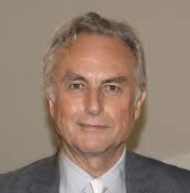
I am not advocating a morality based on evolution. I am saying how things have evolved. I am not saying how we humans morally ought to behave.
▼
Source
source
Ch. 1. Why Are People?

3 months 4 weeks ago
I perfectly agree with your Lordship too, that to crush the Industry of so great and so fine a province of the empire, in order to favour the monopoly of some particular towns in Scotland or England, is equally unjust and impolitic. The general opulence and improvement of Ireland might certainly, under proper management, afford much greater resources to the Government, than can ever be drawn from a few mercantile or manufacturing towns.
▼
Source
source
Letter to Henry Dundas (1 November 1779), quoted in Adam Smith, The Correspondence of Adam Smith, eds. E. C. Mossner and I. S. Ross (1987), p. 241
2 weeks 5 days ago
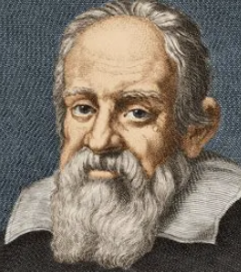
What was observed by us in the third place is the nature or matter of the Milky Way itself, which, with the aid of the spyglass, may be observed so well that all the disputes that for so many generations have vexed philosophers are destroyed by visible certainty, and we are liberated from wordy arguments.
▼
Source
source
Original text as reproduced in Edward Tufte, Beautiful Evidence (Cheshire, Connecticut: Graphics Press LLC, 2006), 101
2 months 3 weeks ago
As far as I am concerned, I resign from humanity. I no longer want to be, nor can still be, a man. What should I do? Work for a social and political system, make a girl miserable? Hunt for weaknesses in philosophical systems, fight for moral and aesthetic ideals? It's all too little. I renounce my humanity even though I may find myself alone. But am I not already alone in this world from which I no longer expect anything?
2 months 2 weeks ago
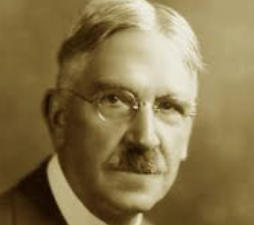
Movement in direct experience is alteration in the qualities of objects, and space as experienced is an aspect of this qualitative change. Up and down, back and front, to and fro, this side and that- or right and left- here and there, feel differently. The reason they do is that they are not static points in something itself static, but objects in movement, qualitative changes of value. For "back" is short for backwards and front for forwards. So with velocity. Mathematically there are no such things as fast and slow. They mark simply greater and less on a number scale. As experienced they are qualitatively as unlike as noise and silence, heat and cold, black and white. To be forced to wait a long time for an important event to happen is a length very different from that measured by the movements of the hands of a clock. It is something qualitative.
2 months 4 days ago
Many things about our bodies would not seem to us so filthy and obscene if we did not have the idea of nobility in our heads.
▼
Source
source
D 6
1 month 3 weeks ago
My reason will still not understand why I pray, but I shall still pray, and my life, my whole life, independently of anything that may happen to me, is every moment of it no longer meaningless as it was before, but has an unquestionable meaning of goodness with which I have the power to invest it.
▼
Source
source
Pt. VIII, ch. 19

3 months 3 weeks ago
I grasp at each second, trying to suck it dry: nothing happens which I do not seize, which I do not fix forever in myself, nothing, neither the fugitive tenderness of those lovely eyes, nor the noises of the street, nor the false dawn of early morning: and even so the minute passes and I do not hold it back, I like to see it pass.
CivilSimian.com created by AxiomaticPanic, CivilSimian, Kalokagathia