

5 days ago
There is nothing wrong with meditating just to meditate, in the same way that you listen to music just for the music. If you go to concerts to "get culture" or to improve your mind, you will sit there as deaf as a doorpost.
▼
Source
source
p. 90

4 months 3 weeks ago
The next thing you can learn from the woman who was a sinner, something she herself understood, is that with regard to finding forgiveness she is able to do nothing at all.
2 months 3 weeks ago
Death is the most blessed dream.
▼
Source
source
Act II.
5 days ago
I realized that the difference that I saw between things was the same thing as their unity, because differences (borders, lines, surfaces, boundaries) don't really divide things from each other at all, they join them together, because all boundaries are held in common.

2 months 3 weeks ago
What is not heartrending is superfluous, at least in music.

3 days ago
The blood of the heroes is closer to God than the ink of the philosophers and the prayers of the faithful.
4 months 3 weeks ago
Rhetoric, it seems, is a producer of persuasion for belief, not for instruction in the matter of right and wrong. And so the rhetorician's business is not to instruct a law court or a public meeting in matters of right and wrong, but only to make them believe.

3 months 3 weeks ago
In this distribution of functions, the scholar is the delegated intellect. In the right state, he is, Man Thinking. In the degenerate state, when the victim of society, he tends to become a mere thinker, or, still worse, the parrot of other men's thinking.
▼
Source
source
pars. 7-8

3 months 3 weeks ago
The world would be astonished if it knew how great a proportion of its brightest ornaments-of those most distinguished even in popular estimation for wisdom and virtue-are complete sceptics in religion...
▼
Source
source
(p. 45)

3 months 3 weeks ago
All human knowledge begins with intuitions, proceeds from thence to concepts, and ends with ideas.
▼
Source
source
B 730; Variant translation: All our knowledge begins with the senses, proceeds then to the understanding, and ends with reason. There is nothing higher than reason.

4 months 2 days ago
We are, I know not how, double in ourselves, which is the cause that what we believe we do not believe, and cannot disengage ourselves from what we condemn.
▼
Source
source
Ch. 16. Of Glory, tr. Cotton, rev. W. Carew Hazlitt, 1877

1 month 3 weeks ago
Ten years ago, you could have traveled thousands of miles through the United States and never seen a baseball cap turned back to front. Today, the reverse baseball cap is ubiquitous. I do not know what the pattern of geographical spread of the reverse baseball cap precisely was, but epidemiology is certainly among the professions primarily qualified to study it.

2 months 2 weeks ago
When shall we open our minds to the conviction that the ultimate reality of the world is neither matter nor spirit, is no definite thing, but a perspective?
2 weeks 3 days ago
Karl Marx was born at Trier on 5 May 1818, the child of Jewish parents with a long rabbinical tradition on both sides. His grandfathers were rabbis; his father, a well-to-do lawyer, changed his first name from Herschel to Heinrich and adopted Protestantism, which in Prussia was a necessary condition of professional and cultural emancipation.
▼
Source
source
(pg. 96)
4 months 2 days ago
They who have compared our lives to a dream were, perhaps, more in the right than they were aware of. When we dream, the soul lives, works, and exercises all its faculties, neither more nor less than when awake; but more largely and obscurely, yet not so much, neither, that the difference should be as great as betwixt night and the meridian brightness of the sun, but as betwixt night and shade; there she sleeps, here she slumbers; but, whether more or less, 'tis still dark, and Cimmerian darkness. We wake sleeping, and sleep waking.
▼
Source
source
tr. Cotton, rev. W. Carew Hazlitt, 1877

3 months 3 weeks ago
Man's chief difference from the brutes lies in the exuberant excess of his subjective propensities - his preeminence over them simply and solely in the number and in the fantastic and unnecessary character of his wants, physical, moral, aesthetic, and intellectual. Had his whole life not been a quest for the superfluous, he would never have established himself as inexpugnably as he has done in the necessary.
▼
Source
source
"Reflex Action and Theism"
4 months 2 days ago
To which we may add this other Aristotelian consideration, that he who confers a benefit on any one loves him better than he is beloved by him again.
▼
Source
source
Book II, Ch. 8. Of the Affections of Fathers

3 months 3 weeks ago
Arithmetic must be discovered in just the same sense in which Columbus discovered the West Indies, and we no more create numbers than he created the Indians.
▼
Source
source
Principles of Mathematics (1903), p. 451

3 months 3 weeks ago
The theory of Communism may be summed up in the single sentence: Abolition of private property.
▼
Source
source
Section 2, paragraph 13.
1 month 3 weeks ago
The successful scientist and the raving crank are separated by the quality of their inspirations. But I suspect that this amounts, in practice, to a difference, not so much in ability to notice analogies as in ability to reject foolish analogies and pursue helpful ones.
▼
Source
source
Chapter 8 "Explosions and Spirals" (pp. 195-196)
8 months ago
The symptom is not only a cyphered message, it is at the same time a way for the subject to organize his enjoyment - that is why, even after the completed interpretation, the subject is not prepared to renounce his symptom.
3 months 3 weeks ago
For my part, while I am as convinced a Socialist as the most ardent Marxian, I do not regard Socialism as a gospel of proletarian revenge, nor even, primarily, as a means of securing economic justice. I regard it primarily as an adjustment to machine production demanded by considerations of common sense, and calculated to increase the happiness, not only of proletarians, but of all except a tiny minority of the human race.
▼
Source
source
Ch. 7: The Case for Socialism

3 months 3 weeks ago
A proud man is always looking down on things and people: and, of course, as long as you are looking down, you cannot see something that is above you.
▼
Source
source
Book III, Chapter 8, "The Great Sin"

2 months 2 weeks ago
This heaven will pass away, and the one above it will pass away. The dead are not alive, and the living will not die. In the days when you consumed what is dead, you made it what is alive. When you come to dwell in the light, what will you do? On the day when you were one you became two. But when you become two, what will you do?

2 months 3 weeks ago
Superstition is the religion of feeble minds.
3 days ago
Instead of holding on to the Biblical view that we are made in the image of God, we come to realize that we are made in the image of the monkey.
▼
Source
source
p. 36
3 months 3 weeks ago
Pray go back and recollect one of the conclusions to which I sought to lead you in my very first lecture. You may remember how I there argued against the notion that the worth of a thing can be decided by its origin. Our spiritual judgment, I said, our opinion of the significance and value of a human event or condition, must be decided on empirical grounds exclusively. If the fruits for life of the state of conversion are good, we ought to idealize and venerate it, even though it be a piece of natural psychology; if not, we ought to make short work of it, no matter what supernatural being may have infused it.
▼
Source
source
Lecture IX, "Conversion, concluded"

3 months 2 weeks ago
A proposition is completely logically analyzed if its grammar is made completely clear: no matter what idiom it may be written or expressed in...
▼
Source
source
Philosophical Remarks (1930), Part I (1)

1 month 3 weeks ago
When an individual passes from one period of life to another a time comes when he cannot go on in senseless activity and excitement as before, but has to understand that although he has out-grown what before used to direct him, this does not mean that he must live without any reasonable guidance, but rather that he must formulate for himself an understanding of life corresponding to his age, and having elucidated it must be guided by it. And in the same way a similar time must come in the growth and development of humanity.
▼
Source
source
VI

3 months 3 weeks ago
I am very fond of truth, but not at all of martyrdom.
▼
Source
source
Letter to Jean le Rond d'Alembert, 8 February 1776
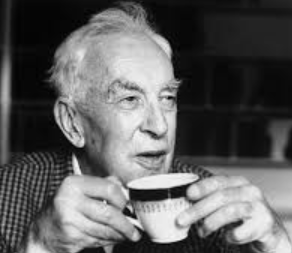
1 month 1 week ago
These immense cities lie basking on the beaches of the continent like whales that have taken to the land again. What do these great, sleek, well-fed creatures live on so sumptuously?
▼
Source
source
12. The Elusive Continent (on the six state capitals of Australia)
2 months 2 weeks ago
The Kingdom is like a wise fisherman who cast his net into the sea and drew it up from the sea full of small fish. Among them the wise fisherman found a fine large fish. He threw all the small fish back into the sea and chose the large fish without difficulty. Whoever has ears to hear, let him hear.

1 month 3 weeks ago
We should provide in peace what we need in war.
▼
Source
source
Maxim 709

2 weeks 1 day ago
There is an irrepressible tendency in every man to develop himself according to the magnitude which Nature has made him of; to speak out, to act out, what nature has laid in him. This is proper, fit, inevitable; nay it is a duty, and even the summary of duties for a man. The meaning of life here on earth might be defined as consisting in this: To unfold your self, to work what thing you have the faculty for.

1 week 2 days ago
What is wisdom? Always desiring the same things, and always refusing the same things.
▼
Source
source
Line 5 Here, Seneca uses the same observation that Sallust made regarding friendship (in his historical account of the Catilinarian conspiracy, Bellum Catilinae[XX.4]) to define wisdom.
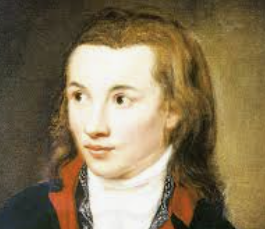
2 months 3 weeks ago
The normal present connects the past and the future through limitation. Contiguity results, crystallization by means of solidification. There also exists, however, a spiritual present that identifies past and future through dissolution, and this mixture is the element, the atmosphere of the poet.
▼
Source
source
Fragment No. 109

3 months 4 weeks ago
By Natura naturans we must understand what is in itself and is conceived through itself, or such attributes of substance as express an eternal and infinite essence, that is ... God, insofar as he is considered as a free cause. But by Natura naturata I understand whatever follows from the necessity of God's nature, or from God's attributes, that is, all the modes of God's attributes insofar as they are considered as things which are in God, and can neither be nor be conceived without God.
▼
Source
source
Part I, Prop. XXIX, Scholium, trans: Edwin Curley, London: Penguin, 1996

2 months 1 week ago
The reward in heaven is the perpetual bait, a bait that has caught man in an iron net, a strait-jacket which does not let him expand or grow. All pioneers of truth have been, and still are, reviled; they have been, and still are, persecuted. But did they ask humanity to pay the price? Did they seek to bribe mankind to accept their ideas? They knew too well that he who accepts a truth because of the bribe, will soon barter it away to a higher bidder...Proud and self-reliant characters prefer hatred to such sickening artificial love. Not because of any reward does a free spirit take his stand for a great truth, nor has such a one ever been deterred because of fear of punishment.
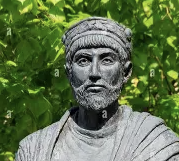
4 days ago
Is it not absurd when a human being tries to find happiness somewhere outside himself, and thinks that wealth and birth and the influence of friends...is of the utmost importance?
▼
Source
source
Oration to the Uneducated Cynics

2 months 4 weeks ago
In America, conscription is unknown; men are enlisted for payment. Compulsory recruitment is so alien to the ideas and so foreign to the customs of the people of the United States that I doubt whether they would ever dare to introduce it into their law.
▼
Source
source
Chapter XIII.
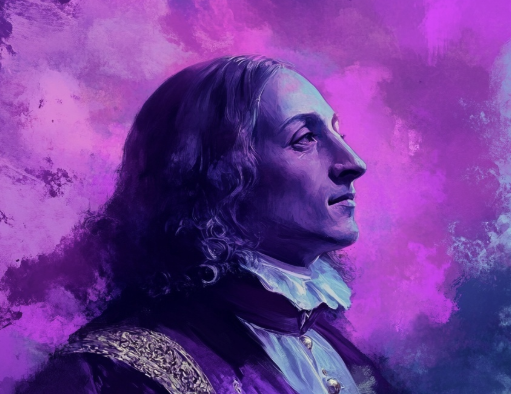
4 months 1 week ago
The method of not erring is sought by all the world. The logicians profess to guide it, the geometricians alone attain it, and apart from science, and the imitations of it, there are no true demonstrations.
3 months 3 weeks ago
It is said (I do not know with what truth) that a certain Hindu thinker believed the earth to rest upon an elephant. When asked what the elephant rested upon, he replied that it rested upon a tortoise. When asked what the tortoise rested upon, he said, "I am tired of this. Suppose we change the subject." This illustrates the unsatisfactory character of the First-Cause argument.
▼
Source
source
"Is There a God?", 1952
3 months 3 weeks ago
Mathematics, rightly viewed, possesses not only truth, but supreme beauty - a beauty cold and austere, like that of sculpture, without appeal to any part of our weaker nature, without the gorgeous trappings of painting or music, yet sublimely pure, and capable of a stern perfection such as only the greatest art can show. The true spirit of delight, the exaltation, the sense of being more than Man, which is the touchstone of highest excellence, is to be found in mathematics as surely as in poetry. What is best in mathematics deserves not merely to be learnt as a task, but to be assimilated as a part of daily thought, and brought again and again before the mind with ever-renewed encouragement.

3 months ago
We vainly accuse the fury of guns, and the new inventions of death; it is in the power of every hand to destroy us, and we are beholden unto every one we meet he doth not kill us.
▼
Source
source
Section 44
2 weeks 4 days ago
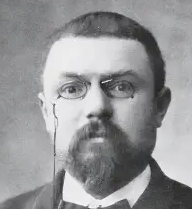
Astronomers... define duration in the following way: time... so defined that Newton's law and that of vis viva [or of the conservation of energy] may be verified. Newton's law is an experimental truth... only approximate... We still have only a definition by approximation.

2 months 1 week ago
The full expression of personality depends upon its being inflated by social prestige; it is a social privilege.
▼
Source
source
p. 64
3 months 2 weeks ago
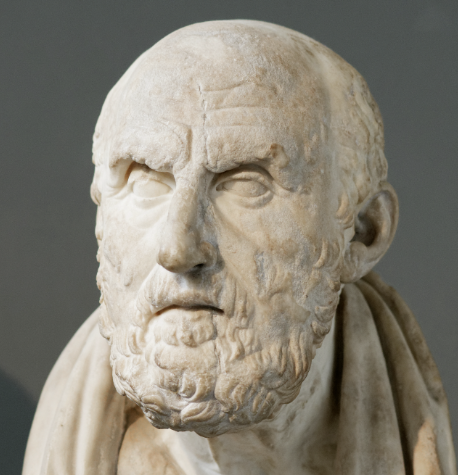
Wise people are in want of nothing, and yet need many things. On the other hand, nothing is needed by fools, for they do not understand how to use anything, but are in want of everything.
▼
Source
source
As quoted in Moral Epistles by Seneca, iii. 10.
2 months 1 week ago
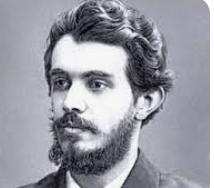
It is difficult to fit the work of Nikolai Berdyaev into any neat category. The label that was used most frequently to characterize him was that of an "existential Christian philosopher" but ... his voice is equally relevant to psychology and psychoanalysis and it also constitutes a uniquely original commentary on the very nature of the person in our postmodern world especially in relation to spirituality.
▼
Source
source
Renos K. Papadopoulos, in C.G. Jung and Nikolai Berdyaev: Individuation and the Person (2011) by Georg Nicolaus, Foreword, p. xiii
3 months 3 weeks ago
I must before I die, find some way to say the essential thing that is in me, that I have never said yet - a thing that is not love or hate or pity or scorn, but the very breath of life, fierce and coming from far away, bringing into human life the vastness and fearful passionless force of non-human things...
▼
Source
source
p. 261
CivilSimian.com created by AxiomaticPanic, CivilSimian, Kalokagathia