

4 months 2 weeks ago
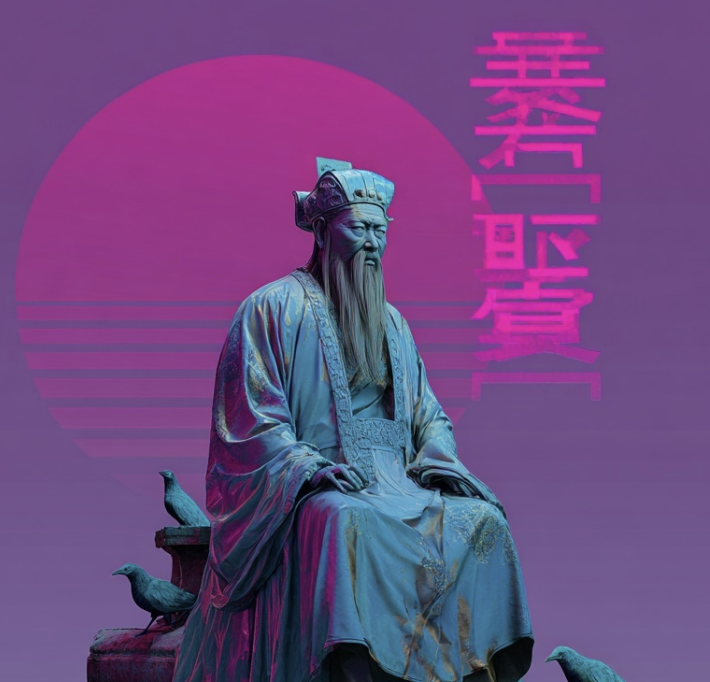
The Yin based its propriety on that of the Xia, and what it added and subtracted is knowable. The Zhou has based its propriety on that of the Shang and what it added and subtracted is knowable. In this way, what continues from the Chou, even if 100 generations hence, is knowable.


3 months 4 weeks ago
The slaving Poor are incapable of any Principles: Gentlemen may be converted to true Principles, by Time and Experience. The middling Rank of Men have Curiosity and Knowledge enough to form Principles, but not enough to form true ones, or correct any Prejudices that they may have imbib'd: And 'tis among the middling Rank, that Tory Principles do at present prevail most in England.
▼
Source
source
Part I, Essay 9: Of The Parties of Great Britain; final lines of this essay in the 1741 and 1742 editions of Essays, Moral and Political, they were not included in later editions.
1 week 3 days ago
If one rejects laissez faire on account of man's fallibility and moral weakness, one must for the same reason also reject every kind of government action.
▼
Source
source
Planning for Freedom (1952), p. 44
5 days ago
When one says, for example, that superiority and inferiority is a formation to be found in every human association, though the proposition certainly involves very profound insight into the essence of human nature and human relationship, yet the assertion is so general that it affords little knowledge of particular societary formations. In order to reach such particular knowledge we must study separate types of superiority and inferiority, and we must master the special features of their formation, which in proportion to their definiteness of course lose generality of application.
▼
Source
source
p. 169

3 months 2 weeks ago
You can't be reluctant to give up your lie and still tell the truth.
▼
Source
source
p. 44e
4 months 1 week ago
Once for all, then, a short precept is given thee: Love, and do what thou wilt: whether thou hold thy peace, through love hold thy peace; whether thou cry out, through love cry out; whether thou correct, through love correct; whether thou spare, through love do thou spare: let the root of love be within, of this root can nothing spring but what is good.
▼
Source
source
Tractatus VII, 8 Latin: "dilige et quod vis fac."; falsely often: "ama et fac quod vis." Translation by Professor Joseph Fletcher: Love and then what you will, do.
2 months 2 weeks ago
A man is a man to the extent that he is a superman. A man should be defined by the sum of those tendencies which impel him to surpass the human condition.
▼
Source
source
Introduction

3 months 3 weeks ago
I think that yesterday was a crisis in my life. I finished the first part of Renouvier's second Essais and see no reason why his definition of free will-"the sustaining of a thought because I choose to when I might have other thoughts"-need be the definition of an illusion. At any rate, I will assume for the present-until next year-that it is no illusion. My first act of free will shall be to believe in free will.
▼
Source
source
Diary entry (April 30, 1870) as quoted in Ralph Barton Perry, The Thought and Character of William James, vol. 1, p. 323; Letters of William James, vol. I, p. 147.
3 months 2 weeks ago
One might say: art shows us the miracles of nature. It is based on the concept of the miracles of nature.
2 months 3 weeks ago
It is the peculiarity of privilege and of every privileged position to kill the intellect and heart of man. The privileged man, whether he be privileged politically or economically, is a man depraved in intellect and heart.
▼
Source
source
As quoted in "Socialism" article of Encyclopaedia Britannica, 9th edition (1887), edited by Thomas Spencer Baynes with assistance of William Robertson Smith, Vol. 22, p. 216, Charles Scribner's Sons

2 months 1 week ago
Man should possess an infinite appetite for life. It should be self-evident to him, all the time, that life is superb, glorious, endlessly rich, infinitely desirable. At present, because he is in a midway position between the brute and the truly human, he is always getting bored, depressed, weary of life. He has become so top-heavy with civilisation that he cannot contact the springs of pure vitality. Control of the prefrontal cortex will change all of this. He will cease to cast nostalgic glances towards the womb, for he will realise that death is no escape. Man is a creature of life and the daylight; his destiny lies in total objectivity.
▼
Source
source
pp. 317-318

4 months 2 days ago
I moreover affirm that our wisdom itself, and wisest consultations, for the most part commit themselves to the conduct of chance.
▼
Source
source
Book III, Ch. 8. Of the Art of Conversation

1 month 3 weeks ago
Some teachers of mankind - as Plato... the first Christians, the orthodox Muslims, and the Buddhists - have gone so far as to repudiate art. ...[They consider it] so highly dangerous in its power to infect people against their wills, that mankind will lose far less by banishing all art than by tolerating each and every art. ...such people were wrong in repudiating all art, for they denied that which cannot be denied - one of the indispensable means of communication, without which mankind could not exist. ...Now there is only fear, lest we should be deprived of any pleasures art can afford, so any type of art is patronized. And I think the last error is much grosser than the first and that its consequences are far more harmful.
2 months 4 weeks ago
Africans are always vicious... mostly inclined to lasciviousness, vengeance, theft and lies.
▼
Source
source
As quoted in David Johnson, 'Representing the Cape "Hottentots"
1 month 3 weeks ago
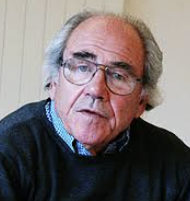
We are in a logic of simulation, which no longer has anything to do with a logic of facts and an order of reason. Simulation is characterized by a precession of the model, of all the models based on the merest fact-the models come first, their circulation, orbital like that of the bomb, constitutes the genuine magnetic field of the event. The facts no longer have a specific trajectory, they are born at the intersection of models, a single fact can be engendered by all the models at once.
▼
Source
source
"The Precession of Simulacra," pp. 16-17
2 months 1 week ago
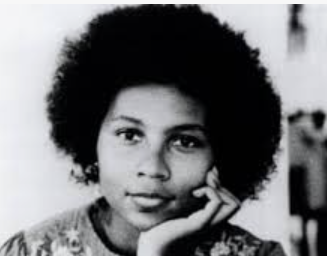
Today's mic-hogging, fast-talking, contentious young (and old) lefties continue to hawk little books and pamphlets on revolution, always with choice words or documents from Marx, Mao, even Malcolm. But I've never seen a broadside with "A Black Feminist Statement or even the writings of Angela Davis or June Jordan or Barbara Omolade or Flo Kennedy or Audre Lorde or bell hooks or Michelle Wallace, at least not from the groups who call themselves leftist. These women's collective wisdom has provided the richest insights into American radicalism's most fundamental questions: How can we build a multiracial movement? Who are the working class and what do they desire? How do we resolve the Negro Question and the Woman Question? What is freedom?
▼
Source
source
Robin Kelley Freedom Dreams
2 months 3 weeks ago
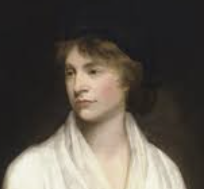
It is the preservation of the species, not of individuals, which appears to be the design of Deity throughout the whole of nature.
▼
Source
source
Letter 22
4 months 2 days ago
To which we may add this other Aristotelian consideration, that he who confers a benefit on any one loves him better than he is beloved by him again.
▼
Source
source
Book II, Ch. 8. Of the Affections of Fathers
3 months 2 weeks ago
A sovereign shows himself to be a tyrant if he disregards his honest advisors, or punishes them for what they have said.


3 months 3 weeks ago
Acquisitiveness - the wish to possess as much as possible of goods, or the title to goods - is a motive which, I suppose, has its origin in a combination of fear with the desire for necessaries.
3 months 4 weeks ago
Grief and disappointment give rise to anger, anger to envy, envy to malice, and malice to grief again, till the whole circle be completed.
▼
Source
source
Part 1, Section 4
1 month 1 week ago
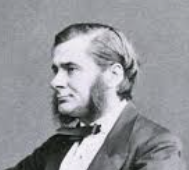
A small beginning has led us to a great ending. If I were to put the bit of chalk with which we started into the hot but obscure flame of burning hydrogen, it would presently shine like the sun. It seems to me that this physical metamorphosis is no false image of what has been the result of our subjecting it to a jet of fervent, though nowise brilliant, thought to-night. It has become luminous, and its clear rays, penetrating the abyss of the remote past, have brought within our ken some stages of the evolution of the earth. And in the shifting "without haste, but without rest" of the land and sea, as in the endless variation of the forms assumed by living beings, we have observed nothing but the natural product of the forces originally possessed by the substance of the universe.
1 month 2 weeks ago
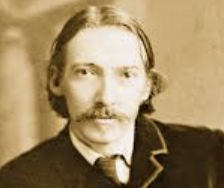
There are circumstances in which even the least energetic of mankind learn to behave with vigour and decision; and the most cautious forget their prudence and embrace foolhardy resolutions.
▼
Source
source
The Rajah's Diamond, Story of the Bandbox.
2 months 1 week ago
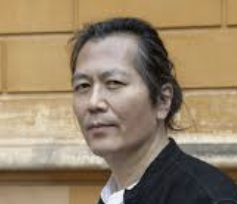
Eros, erotic desire, conquers depression. It delivers us from the inferno of the same to the utopia, indeed utopia, of the wholly other.
3 months 2 weeks ago
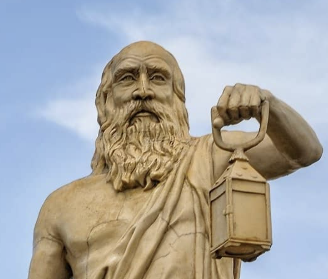
When some one boasted that at the Pythian games he had vanquished men, Diogenes replied, "Nay, I defeat men, you defeat slaves."
▼
Source
source
Diogenes Laërtius, vi. 33, 43
4 months 2 days ago
All that is under heaven, says the sage, runs one law and one fortune.
▼
Source
source
Ch. 12, tr. Cotton, rev. W. Carew Hazlitt, 1877

3 months 3 weeks ago
Man cannot will unless he has first understood that he must count on no one but himself; that he is alone, abandoned on earth in the midst of his infinite responsibilities, without help, with no other aim than the one he sets himself, with no other destiny than the one he forges for himself on this earth.

2 months 1 week ago
No period of history has ever been great or ever can be that does not act on some sort of high, idealistic motives, and idealism in our time has been shoved aside, and we are paying the penalty for it.
▼
Source
source
Ch. 32, January 13, 1944.
2 months 3 weeks ago
We are firmly convinced that the most imperfect republic is a thousand times better than the most enlightened monarchy. In a republic, there are at least brief periods when the people, while continually exploited, is not oppressed; in the monarchies, oppression is constant. The democratic regime also lifts the masses up gradually to participation in public life--something the monarchy never does. Nevertheless, while we prefer the republic, we must recognise and proclaim that whatever the form of government may be, so long as human society continues to be divided into different classes as a result of the hereditary inequality of occupations, of wealth, of education, and of rights, there will always be a class-restricted government and the inevitable exploitation of the majorities by the minorities. The State is nothing but this domination and this exploitation, well regulated and systematised.
4 months 2 weeks ago
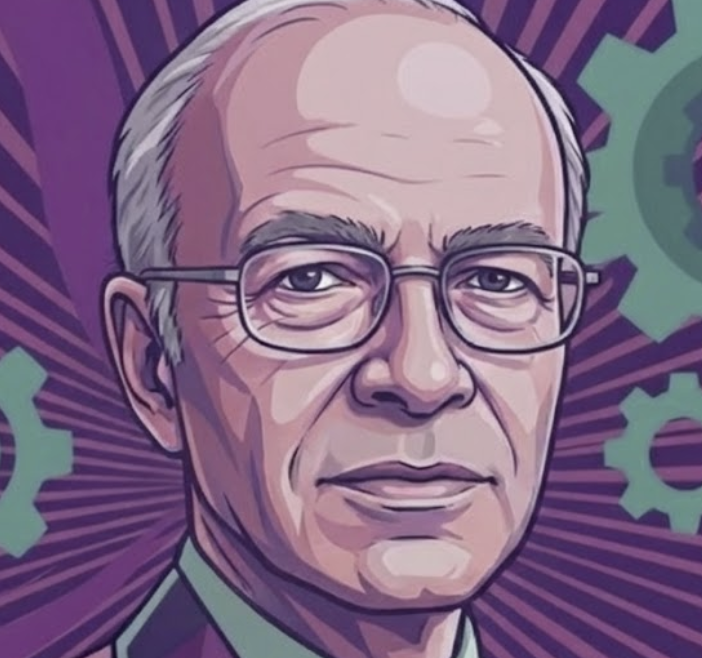
The man of virtue makes the difficulty to be overcome his first business, and success only a subsequent consideration: this may be called perfect virtue.
3 months 2 weeks ago
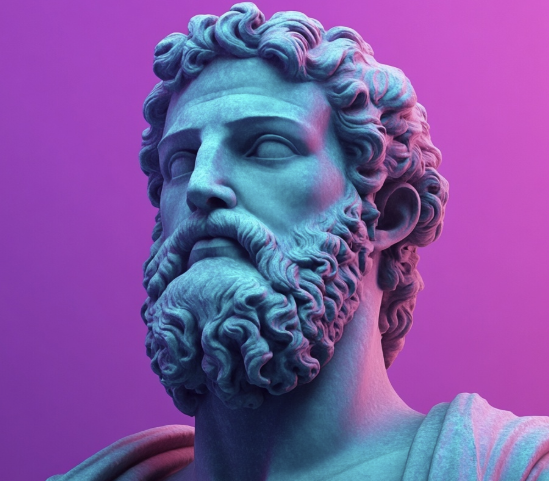
The only justifiable stopping place for the expansion of altruism is the point at which all whose welfare can be affected by our actions are included within the circle of altruism. This means that all beings with the capacity to feel pleasure or pain should be included; we can improve their welfare by increasing their pleasures and diminishing their pains.
▼
Source
source
Chapter 4, Reason, p. 120
4 months 1 week ago
Do you suppose that you can do the things you do now, and yet be a philosopher? Do you suppose that you can eat in the same fashion, drink in the same fashion, give way to anger and to irritation, just as you do now?
▼
Source
source
Book III, ch. 15, 10 (= Enchiridion 29, 10).

3 months 3 weeks ago
It is not only when it takes the form of physical addiction that sex is evil. It is also evil when it manifests itself as a way of satisfying the lust for power or the climber's craving for position and social distinction.
▼
Source
source
Ch. 14, p. 358 [2012 reprint]
3 months 3 weeks ago
Lying... is so ill a quality, and the mother of so many ill ones that spawn from it, and take shelter under it, that a child should be brought up in the greatest abhorrence of it imaginable. It should be always spoke of before him with the utmost detestation, as a quality so wholly inconsistent with the name and character of a gentleman, that no body of any credit can bear the imputation of a lie; a mark that is judg'd in utmost disgrace, which debases a man to the lowest degree of a shameful meanness, and ranks him with the most contemptible part of mankind and the abhorred rascality; and is not to be endured in any one who would converse with people of condition, or have any esteem or reputation in the world.
▼
Source
source
Sec. 131
2 months 2 weeks ago
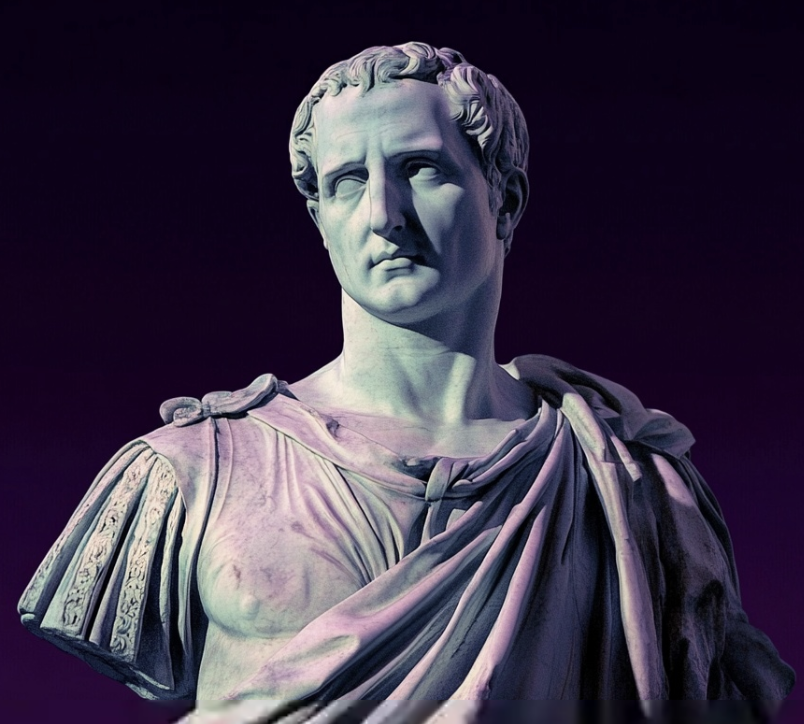
Reverie is not a mind vacuum. It is rather the gift of an hour which knows the plenitude of the soul.
▼
Source
source
Ch. 2, sect. 3
4 months 1 week ago
The first duty of a man is the seeking after and the investigation of truth.
▼
Source
source
As quoted in A Crowd of One: The Future of Individual Identity (2007) by John Clippinger, p. 130 Compare: "The distinguishing property of man is to search for and to follow after truth." – De Officiis, Book I, 13
3 months 3 weeks ago
Pure Mathematics is the class of all propositions of the form "p implies q," where p and q are propositions containing one or more variables, the same in the two propositions, and neither p nor q contains any constants except logical constants. And logical constants are all notions definable in terms of the following: Implication, the relation of a term to a class of which it is a member, the notion of such that, the notion of relation, and such further notions as may be involved in the general notion of propositions of the above form. In addition to these, mathematics uses a notion which is not a constituent of the propositions which it considers, namely the notion of truth.
▼
Source
source
Principles of Mathematics (1903), Ch. I: Definition of Pure Mathematics, p. 3
3 months 2 weeks ago
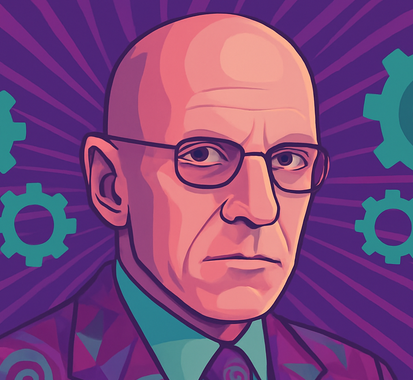
The political, ethical, social, philosophical problem of our day is not to try to liberate the individual from the state and from the state's institutions but to liberate us both from the state and from the type of individualization which is linked to the state. We have to promote new forms of subjectivity through the refusal of this kind of individuality which has been imposed on us for several centuries.
▼
Source
source
p. 785
2 months 4 days ago
What concerns me alone I only think, what concerns my friends I tell them, what can be of interest to only a limited public I write, and what the world ought to know is printed...
▼
Source
source
B 52
4 months 3 weeks ago
It is difficult to set forth any of the greater ideas, except by the use of examples; for it would seem that each of us knows everything that he knows as if in a dream and then again, when he is as it were awake, knows nothing of it all.

3 months 3 weeks ago
Religious suffering is, at one and the same time, the expression of real suffering and a protest against real suffering. Religion is the sigh of the oppressed creature, the heart of a heartless world, and the soul of soulless conditions. It is the opium of the people.The abolition of religion as the illusory happiness of the people is the demand for their real happiness. To call on them to give up their illusions about their condition is to call on them to give up a condition that requires illusions. The criticism of religion is, therefore, in embryo, the criticism of that vale of tears of which religion is the halo.Criticism has plucked the imaginary flowers on the chain not in order that man shall continue to bear that chain without fantasy or consolation, but so that he shall throw off the chain and pluck the living flower.
1 month 1 week ago
Civilizations die from suicide, not by murder.
▼
Source
source
In Mark Steyn, "It's the Demography, Stupid!", Opinion Journal, WSJ (2006).
4 months 1 week ago
In a quarrel for earth, turn not to earth.
▼
Source
source
First Homily, as translated by John Burnaby (1955), p. 267

2 weeks 1 day ago
Were we required to characterise this age of ours by any single epithet, we should be tempted to call it, not an Heroical, Devotional, Philosophical, or Moral Age, but, above all others, the Mechanical Age. It is the Age of Machinery, in every outward and inward sense of that word; the age which, with its whole undivided might, forwards, teaches and practises the great art of adapting means to ends. Nothing is now done directly, or by hand; all is by rule and calculated contrivance. For the simplest operation, some helps and accompaniments, some cunning abbreviating process is in readiness. Our old modes of exertion are all discredited, and thrown aside. On every hand, the living artisan is driven from his workshop, to make room for a speedier, inanimate one. The shuttle drops from the fingers of the weaver, and falls into iron fingers that ply it faster.

3 months 3 weeks ago
This bird sees the white man come and the Indian withdraw, but it withdraws not. Its untamed voice is still heard above the tinkling of the forge... It remains to remind us of aboriginal nature.
▼
Source
source
March 23, 1856; of the crow

2 months 3 weeks ago
The writers against religion, whilst they oppose every system, are wisely careful never to set up any of their own.
▼
Source
source
Preface
3 months 3 weeks ago
A thing is important if anyone think it important.
▼
Source
source
Ch. 28, Note 35

3 months 3 weeks ago
It requires twenty years for a man to rise from the vegetable state in which he is within his mother's womb, and from the pure animal state which is the lot of his early childhood, to the state when the maturity of reason begins to appear. It has required thirty centuries to learn a little about his structure. It would need eternity to learn something about his soul. It takes an instant to kill him.
▼
Source
source
"Man: General Reflection on Man", 1771
CivilSimian.com created by AxiomaticPanic, CivilSimian, Kalokagathia