

3 months ago
I am a utilitarian. I am also a vegetarian. I am a vegetarian because I am a utilitarian.
▼
Source
source
Utilitarianism and Vegetarianism, Philosophy & Public Affairs, 9(4): 325 (1980).

3 months 1 week ago
Two men who differ as to the ends of life cannot hope to agree about education.
▼
Source
source
Ch. 12: Education and Discipline
2 months 1 week ago
There is, properly speaking, no Misfortune in the world. Happiness and Misfortune stand in continual balance. Every Misfortune is, as it were, the obstruction of a stream, which, after overcoming this obstruction, but bursts through with the greater force.

1 month 1 week ago
How good is it to remember one's insignificance: that of a man among billions of men, of an animal amid billions of animals; and one's abode, the earth, a little grain of sand in comparison with Sirius and others, and one's life span in comparison with billions on billions of ages. There is only one significance, you are a worker. The assignment is inscribed in your reason and heart and expressed clearly and comprehensibly by the best among the beings similar to you. The reward for doing the assignment is immediately within you. But what the significance of the assignment is or of its completion, that you are not given to know, nor do you need to know it. It is good enough as it is. What else could you desire?
▼
Source
source
Last Diaries (1979) edited by Leon Stilman, p. 77
1 month 6 days ago
But perhaps the rest of us could have separate classes in science appreciation, the wonder of science, scientific ways of thinking, and the history of scientific ideas, rather than laboratory experience.

2 months 2 days ago
Ye have heard that it hath been said, Thou shalt love thy neighbour, and hate thine enemy. But I say unto you, Love your enemies, bless them that curse you, do good to them that hate you, and pray for them which despitefully use you, and persecute you; That ye may be the children of your Father which is in heaven: for he maketh his sun to rise on the evil and on the good, and sendeth rain on the just and on the unjust.
▼
Source
source
Matthew 5:43-45 (KJV)
2 months ago
The metaphysical apologia at least betrayed the injustice of the established order through the incongruence of concept and reality. The impartiality of scientific language deprived what was powerless of the strength to make itself heard and merely provided the existing order with a neutral sign for itself. Such neutrality is more metaphysical than metaphysics.
▼
Source
source
E. Jephcott, trans., p. 17.

3 months 1 week ago
I appeal to the philosophers of all countries to unite and never again mention Heidegger or talk to another philosopher who defends Heidegger. This man was a devil. I mean, he behaved like a devil to his beloved teacher, and he has a devilish influence on Germany. ... One has to read Heidegger in the original to see what a swindler he was.
▼
Source
source
As quoted in "At 90, and Still Dynamic : Revisiting Sir Karl Popper and Attending His Birthday Party" by Eugene Yue-Ching Ho, in Intellectus 23

1 month 3 weeks ago
Men ... ask nothing better, it would seem, than to leave their destiny, their life, and all their thoughts in the hands of a few men with a gift for the exclusive manipulation of this or that technique.
▼
Source
source
"Wave Mechanics," p. 75
1 month 3 weeks ago
Necessity resides in the way we talk about things, not in the things we talk about.
▼
Source
source
Ways of Paradox and Other Essays (1976), p. 174

3 months 1 week ago
Virtue supposes liberty, as the carrying of a burden supposes active force. Under coercion there is no virtue, and without virtue there is no religion. Make a slave of me, and I shall be no better for it. Even the sovereign has no right to use coercion to lead men to religion, which by its nature supposes choice and liberty. My thought is no more subject to authority than is sickness or health.
▼
Source
source
"Canon Law: Ecclesiastical Ministry", 1771

1 month 3 weeks ago
Consciousness (conscientia) is participated knowledge, is co-feeling, and co-feeling is com-passion. Love personalizes all that it loves. Only by personalizing it can we fall in love with an idea. And when love is so great and so vital, so strong and so overflowing, that it loves everything, then it personalizes everything and discovers that the total All, that the Universe, is also a person possessing a Consciousness, a Consciousness which in its turn suffers, pities, and loves, and therefore is consciousness. And this Consciousness of the Universe, which a love, personalizing all that it loves, discovers, is what we call God.

3 months 2 weeks ago
You must not murder. (Exodus 20:13) Q. What does this mean? A. We should fear and love God so that we may not hurt or harm our neighbor in his body, but help and befriend him in every bodily need [in every need and danger of life and body].
1 month 3 weeks ago
Familiar things happen, and mankind does not bother about them. It requires a very unusual mind to undertake the analysis of the obvious.
▼
Source
source
Ch. 1: "The Origins of Modern Science", p. 6

4 months 1 week ago
It is the nature of science that answers automatically pose new and more subtle questions.
3 weeks 5 days ago
Science has taught... me to be careful how I adopt a view which jumps with my preconceptions, and to require stronger evidence for such belief than for one to which I was previously hostile. My business is to teach my aspirations to conform themselves to fact, not to try and make facts harmonise with my aspirations.
3 months 2 weeks ago
Let us not flutter too high, but remain by the manger and the swaddling clothes of Christ, in whom dwelleth all the fulness of the Godhead bodily.
▼
Source
source
50

3 months 1 week ago
Machines are worshipped because they are beautiful and valued because they confer power; they are hated because they are hideous and loathed because they impose slavery.
▼
Source
source
Ch. 6: Machines and the Emotions

1 month 3 weeks ago
There certainly is self division. The man who watches a woman undressing has the red eyes of an ape; yet the man who sees two young lovers, really alone for the first time, who brings out all the pathos, the tenderness and uncertainty when he tells about it, is no brute; he is very much human. And the ape and the man exist in one body; and when the ape's desires are about to be fulfilled, he disappears and is succeeded by the man, who is disgusted with the ape's appetite.
▼
Source
source
Chapter one, The Country of the Blind
1 month 3 weeks ago
What the sorrowful Jew of Amsterdam called the essence of a thing, the effort that it makes to persist indefinitely in its own being, self-love, the longing for immortality, is it not perhaps the primal and fundamental condition of all reflective or human knowledge? And is it not therefore the true base, the real starting-point, of all philosophy, although the philosophers, perverted by intellectualism, do not recognize it?

3 weeks 2 days ago
The gradual spread of sterility in seeding plants would result in a global catastrophe that could eventually wipe out higher life forms, including humans, from the planet.
▼
Source
source
On the terminator gene, from the book "Stolen Harvest: The Hijacking of the Global Food Supply" (2001), p.83

3 months 1 week ago
And now, at half-past ten o'clock, I hear the cockerels crow in Hubbard's barns, and morning is already anticipated. It is the feathered, wakeful thought in us that anticipates the following day.
▼
Source
source
July 11, 1851
1 month 3 weeks ago
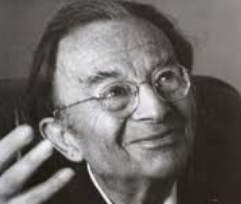
All men are in need of help and depend on one another. Human solidarity is the necessary condition for the unfolding of any one individual.
▼
Source
source
Ch. 2

2 months 6 days ago
Erect I make a resolution; prone I revoke it.
2 months 6 days ago
To try curing someone of a "vice," of what is the deepest thing he has, is to attack his very being, and this is indeed how he himself understands it, since he will never forgive you for wanting him to destroy himself in your way and not his.

3 months 1 week ago
...the impossible must be supposed in order to explain the superdetermination of the event
▼
Source
source
p. 301
3 months 1 week ago
When will the world learn that a million men are of no importance compared with one man?
▼
Source
source
Letter to Ralph Waldo Emerson, 8 June 1843
3 months 2 weeks ago
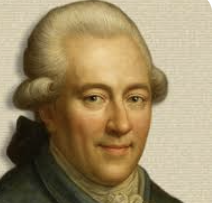
The heathen really make their self-invented notions and dreams of God and idol. Ultimately, they put their trust in that which is nothing. So it is with all idolatry. For it happens not merely by erecting an image and worshipping it, but rather it happens in the heart. For the heart seeks help and consolation from creatures, saints, or devils. It neither cares for God, nor looks to Him for anything better than to believe that He is willing to help.
▼
Source
source
"On Infant Baptism," Large Catechism
1 month 2 weeks ago
Once the good man was dead, one wore his hat and another his sword as he had worn them, a third had himself barbered as he had, a fourth walked as he did, but the honest man that he was - nobody any longer wanted to be that.
▼
Source
source
C 36
1 month 6 days ago
The popularity of the paranormal, oddly enough, might even be grounds for encouragement. I think that the appetite for mystery, the enthusiasm for that which we do not understand, is healthy and to be fostered. It is the same appetite which drives the best of true science, and it is an appetite which true science is best qualified to satisfy.
▼
Source
source
"Science Delusion and the Appetite for Wonder", John Brockman, Edge.org, December 29, 1996
1 month 3 weeks ago
The human soul has need of truth and of freedom of expression. The need for truth requires that intellectual culture should be universally accessible, and that it should be able to be acquired in an environment neither physically remote nor psychologically alien.

3 months 4 weeks ago
Down in adoration falling,Lo! the sacred Host we hail;Lo! o'er ancient forms departing,Newer rites of grace prevail;Faith for all defects supplying,Where the feeble senses fail.
▼
Source
source
Pange, Lingua, stanza 5 (Tantum Ergo)

3 months 1 week ago
In actions of enthusiasm, this drawback appears: but in those lower activities, which have no higher aim than to make us more comfortable and more cowardly, in actions of cunning, actions that steal and lie, actions that divorce the speculative from the practical faculty, and put a ban on reason and sentiment, there is nothing else but drawback and negation.
▼
Source
source
Goethe; or, The Writer
3 months 1 week ago
No man with a genius for legislation has appeared in America. They are rare in the history of the world. There are orators, politicians, and eloquent men, by the thousand; but the speaker has not yet opened his mouth to speak who is capable of settling the much-vexed questions of the day.
3 months 5 days ago
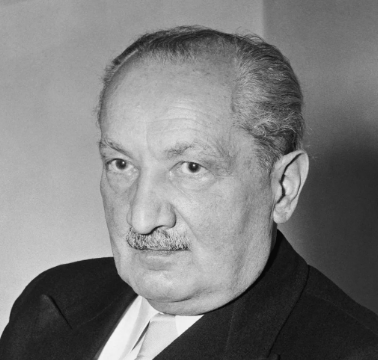
This Europe, which in its ruinous blindness is forever on the point of cutting its own throat, lies today in a great pincers, squeezed between Russia on one side and America on the other. From a metaphysical point of view, Russia and America are the same: the same dreary technological frenzy, the same unrestricted organization of the average man...
3 months 1 week ago
Those who promise us paradise on earth never produced anything but a hell.
▼
Source
source
As quoted in In Passing: Condolences and Complaints on Death, Dying, and Related Disappointments (2005) by Jon Winokur, p. 144

2 months 1 week ago
Law and arbitrary power are in eternal enmity. Name me a magistrate, and I will name property; name me power, and I will name protection. It is a contradiction in terms, it is blasphemy in religion, it is wickedness in politics, to say that any man can have arbitrary power. In every patent of office the duty is included. For what else does a magistrate exist? To suppose for power is an absurdity in idea. Judges are guided and governed by the eternal laws of justice, to which we are all subject. We may bite our chains, if we will, but we shall be made to know ourselves, and be taught that man is born to be governed by law; and he that will substitute will in the place of it is an enemy to God.
▼
Source
source
Speech in opening the impeachment of Warren Hastings (16 February 1788), quoted in The Works of the Right Honourable Edmund Burke, Volume the Ninth (1899), p. 458

2 months 2 days ago
The novel, the novel proper that is, is about people's treatment of each other, and so it is about human values.
▼
Source
source
Ch. 10, p. 138
1 month 1 week ago
Our tools are extensions of our purposes, and so we find it natural to make metaphorical attributions of intentionality to them; but I take it no philosophical ice is cut by such examples.

3 months 2 weeks ago
The worst of my actions or conditions seem not so ugly unto me as I find it both ugly and base not to dare to avouch for them.
3 months 3 weeks ago
When I, who conduct this inquiry, love something, then three things are found: I, what I love, and the love itself. There are, therefore three things: the lover, the beloved and the love.
▼
Source
source
(Cambridge: 2002), Book 9, Chapter 2, Section 2, p. 26

1 month 3 weeks ago
...I pray to God to make me free of God.
3 months 3 weeks ago
An ignorant doctor is the aide-de-camp of death.

3 months 5 days ago
Without some redistribution of wealth and power, downward mobility and debilitating poverty will continue to drive people into desperate channels. And without principled opposition to xenophobias from above and below, these desperate channels will produce a cold-hearted and mean-spirited America no longer worth fighting for or living in.
▼
Source
source
(p79)

3 months 1 week ago
To his dog, every man is Napoleon; hence the constant popularity of dogs.
▼
Source
source
Reader's Digest, 1934
3 months 5 days ago
Deconstruction never had meaning or interest, at least in my eyes, than as a radicalization, that is to say, also within the tradition of a certain Marxism, in a certain spirit of Marxism.
▼
Source
source
Specters of Marx. Routledge, 1994. p. 115
3 months 2 weeks ago
For my own part, I cannot without grief see so much as an innocent beast pursued and killed that has no defence, and from which we have received no offence at all.
▼
Source
source
Ch. 11, tr. Cotton, 1685

2 months 2 weeks ago
We find that everything that makes up difference and number is pure accident, pure show, pure constitution. Every production, of whatever kind, is an alteration, but the substance remains always the same, because it is only one, one divine immortal being.
CivilSimian.com created by AxiomaticPanic, CivilSimian, Kalokagathia