


1 day ago
The true Church of England, at this moment, lies in the Editors of its Newspapers. These preach to the people daily, weekly; admonishing kings themselves; advising peace or war, with an authority which only the first Reformers, and a long-past class of Popes, were possessed of; inflicting moral censure; imparting moral encouragement, consolation, edification; in all ways diligently "administering the Discipline of the Church."

4 months 1 week ago
I was once being interviewed by Barbara Walters [...] In between two of the segments she asked me [...] "But what would you do if the doctor gave you only six months to live?" I said, "Type faster." This was widely quoted, but the "six months" was changed to "six minutes," which bothered me. It's "six months."
1 month 6 days ago
Vanity dies hard; in some obstinate cases it outlives the man.
▼
Source
source
Prince Otto, reported in Bartlett's Familiar Quotations, 10th ed. (1919).

2 months 1 week ago
Law and arbitrary power are in eternal enmity. Name me a magistrate, and I will name property; name me power, and I will name protection. It is a contradiction in terms, it is blasphemy in religion, it is wickedness in politics, to say that any man can have arbitrary power. In every patent of office the duty is included. For what else does a magistrate exist? To suppose for power is an absurdity in idea. Judges are guided and governed by the eternal laws of justice, to which we are all subject. We may bite our chains, if we will, but we shall be made to know ourselves, and be taught that man is born to be governed by law; and he that will substitute will in the place of it is an enemy to God.
▼
Source
source
Speech in opening the impeachment of Warren Hastings (16 February 1788), quoted in The Works of the Right Honourable Edmund Burke, Volume the Ninth (1899), p. 458
3 months ago
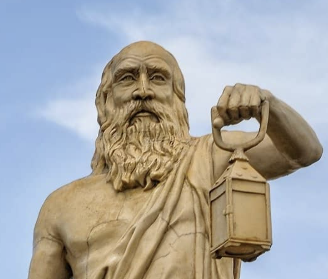
He lit a lamp in broad daylight and said, as he went about, "I am looking for a human."
▼
Source
source
Diogenes Laërtius, vi. 41. This line is frequently translated as "I am looking for an honest man."

1 month 3 weeks ago
Seek, therefore, thyself! But in finding oneself, does not one find one's own nothingness? ...Carlyle answers (Past and Present, book iii, chap. xi.). "The latest Gospel in the world is, Know thy work and do it. Know thyself: long enough has that poor self of thine tormented thee; thou wilt never get to know it, I believe! Think it thy business, this of knowing thyself; thou art an unknowable individual: know what thou canst work at; and work at it, like Hercules. That will be thine better plan." ...and what is my work? - without thinking about myself, is to love God. ...And on the other hand, in loving God in myself, am I not loving myself more than God, am I not loving myself in God?

2 months 6 days ago
Where are my sensations? They have melted into... me, and what is this me, this self, but the sum of these evaporated sensations?
1 day ago
Innumerable are the illusions and legerdemain-tricks of Custom: but of all these, perhaps the cleverest is her knack of persuading us that the Miraculous, by simple repetition, ceases to be Miraculous.
▼
Source
source
Bk. III, ch. 8.

1 week ago
A questioner asks: If human nature is evil, then where do ritual and rightness come from? I reply: ritual and rightness are always created by the conscious activity of the sages.
▼
Source
source
Sources of Chinese Tradition (1999), vol. 1, p. 180
3 months 3 weeks ago
Do not imagine that it is less an accident by which you find yourself master of the wealth which you possess, than that by which this man found himself king.
2 months 6 days ago
Tears do not burn except in solitude.
3 months ago
Nothing of the All is either empty or superfluous.
▼
Source
source
fr. 13

3 months 1 week ago
Either Man will abolish war, or war will abolish Man.
▼
Source
source
Fact and Fiction (1961), Part IV, Ch. 10: "Can War Be Abolished?", p. 276

2 months 3 days ago
And then if any man shall say to you, Lo, here is Christ; or, lo, he is there; believe him not: For false Christs and false prophets shall rise, and shall shew signs and wonders, to seduce, if it were possible, even the elect. But take ye heed: behold, I have foretold you all things. But in those days, after that tribulation, the sun shall be darkened, and the moon shall not give her light, And the stars of heaven shall fall, and the powers that are in heaven shall be shaken. And then shall they see the Son of man coming in the clouds with great power and glory. And then shall he send his angels, and shall gather together his elect from the four winds, from the uttermost part of the earth to the uttermost part of heaven.
▼
Source
source
13:21-27 (KJV)
2 months 2 days ago
The tangible source of exploitation disappears behind the façade of objective rationality.
▼
Source
source
p. 32
2 months 6 days ago
I have all the defects of other people yet everything they do seems to me inconceivable.
3 months 3 weeks ago
In a quarrel for earth, turn not to earth.
▼
Source
source
First Homily, as translated by John Burnaby (1955), p. 267

1 month 3 weeks ago
The power of God is the worship He inspires. The worship of God is not a rule of safety - it is an adventure of the spirit, a flight after the unattainable. The death of religion comes with the repression of the high hope of adventure.
▼
Source
source
Ch. 12: "Religion and Science", pp. 268-269
3 months 4 days ago
The question here is the same as the question I addressed with regard to madness, disease, delinquency and sexuality. In all of these cases, it was not a question of showing how these objects were for a long time hidden before being finally discovered, nor of showing how all these objects are only wicked illusions or ideological products to be dispelled in the light of reason finally having reached its zenith. It was a matter of showing by what conjunctions a whole set of practices-from the moment they become coordinated with a regime of truth-was able to make what does not exist (madness, disease, delinquency, sexuality, etcetera), nonetheless become something.
▼
Source
source
Lecture 1, January 10, 1979, p. 19

1 month 1 week ago
The images of mankind have become the most basic thing about them. And they're all software, and disembodied.
▼
Source
source
(p. 346)

2 months 2 weeks ago
Not only does democracy make every man forget his ancestors, but also clouds their view of their descendants and isolates them from their contemporaries. Each man is for ever thrown back on himself alone, and there is danger that he may be shut up in the solitude of his own heart.
▼
Source
source
Book Two, Chapter II.

3 months 2 weeks ago
Lands for the purposes of pleasure and magnificence, parks, gardens, public walks, &c. possessions which are every where considered as causes of expence, not as sources of revenue, seem to be the only lands which, in a great and civilized monarchy, ought to belong the crown.
▼
Source
source
Chapter II, Part I, p. 891.

2 months 1 week ago
It is not as a child that I believe and confess Jesus Christ. My hosanna is born of a furnace of doubt.
▼
Source
source
As quoted in Kierkegaard, the Melancholy Dane (1950) by Harold Victor Martin.
2 months ago
In the face of the idea that truth might afford the opposite of satisfaction and turn out to be completely shocking to humanity at any given historical moment, ... the fathers of pragmatism made the satisfaction of the subject the criterion of truth. For such a doctrine there is no possibility of rejecting or even criticizing any species of belief that is enjoyed by its adherents.
▼
Source
source
p. 52.

2 months 2 weeks ago
A man may be in as just possession of Truth as of a City, and yet be forced to surrender.
▼
Source
source
Section 6
2 months 1 week ago
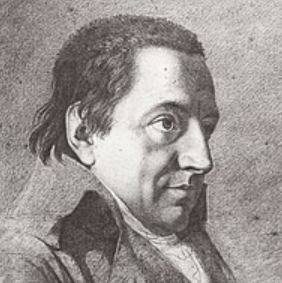
The Divine Existence (Daseyn),-his Existence, I say, which, according to the distinction already laid down, is his (Manifestation and Revelation of himself-is absolute- only through itself, and of necessity, LIGHT:-namely, y the inward and spiritual Light. This Light, left to itself, separates and divides itself into an infinite multiplicity of individual rays; and in this way, in these individual rays, becomes estranged from itself and its | original source. But this same Light may also again concentrate itself from out this separation, and conceive and comprehend itself as One, as that which it is in itself,-the Existence and Revelation of God; remaining indeed, even in this conception, that which it is in its form,-Light; but yet in this condition, and even by means of this very condition, announcing it-to self as having no real Being in itself, but as only the, Existence and Self-Manifestation of God.
▼
Source
source
p. 78
1 month 3 weeks ago
The only way to give finality to the world is to give it consciousness. For where there is no consciousness there is no finality, finality presupposing a purpose. And... faith in God is based simply upon the vital need of giving finality to existence, of making it answer to a purpose. We need God, not in order to understand the why, but in order to feel and sustain the ultimate wherefore, to give a meaning to the Universe.

3 months 1 week ago
Can a mortal ask questions which God finds unanswerable? Quite easily, I should think. All nonsense questions are unanswerable. How many hours are there in a mile? Is yellow square or round? Probably half the questions we ask - half our great theological and metaphysical problems - are like that.
4 months 1 week ago
Once you've dissected a joke, you're about where you are when you've dissected a frog. It's dead. Banquets of the Black Widowers (1984), p. 49; comparable to "Humor can be dissected, as a frog can, but the thing dies in the process and the innards are discouraging to any but the pure scientific mind."
3 months 1 week ago
The most dangerous thing you can do is to take any one impulse of your own nature and set it up as the thing you ought to follow at all costs. There is not one of them which will not make us into devils if we set it up as an absolute guide. You might think love of humanity in general was safe, but it is not. If you leave out justice you will find yourself breaking agreements and faking evidence in trials "for the sake of humanity", and become in the end a cruel and treacherous man.
▼
Source
source
Book I, Chapter 2, "Some Objections"
1 month 2 weeks ago
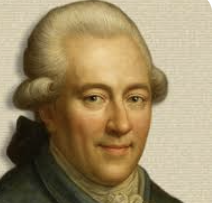
We often have need of a profound philosophy to restore to our feelings their original state of innocence, to find our way out of the rubble of things alien to us, to begin to feel for ourselves and to speak ourselves, and I might almost say to exist ourselves. Even if my philosophy does not extend to discovering anything new, it does nevertheless possess the courage to regard as questionable what has long been thought true.
▼
Source
source
B 49

4 months 1 week ago
Start with a planet like the earth, with a complement of simple compounds bound to exist upon it, add the energy of a nearby sun, and you are bound to end with nucleic acids. You can't avoid it.
3 months 2 weeks ago
No circumstance is ever so desperate that one cannot nurture some spark of hope.
▼
Source
source
Act I, scene i
1 month 3 weeks ago
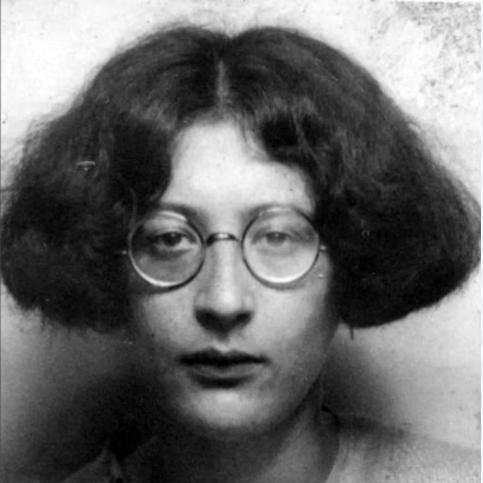
Humility consists of knowing that in this world the whole soul, not only what we term the ego in its totality, but also the supernatural part of the soul, which is God present in it, is subject to time and to the vicissitudes of change. There must be absolutely acceptance of the possibility that everything material in us should be destroyed. But we must simultaneously accept and repudiate the possibility that the supernatural part of the soul should disappear.
▼
Source
source
"Concerning the Our Father" in Waiting on God (1972), Routledge & Kegan Paul edition, p. 153
1 month 6 days ago
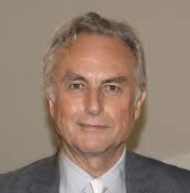
To explain the origin of the DNA/protein machine by invoking a supernatural Designer is to explain precisely nothing, for it leaves unexplained the origin of the Designer.
▼
Source
source
Chapter 6 "Origins and Miracles" (p. 141)
3 months 1 week ago
I think if I had met him [Lenin] without knowing who he was, I should not have guessed that he was a great man; he struck me as too opinionated and narrowly orthodox. His strength comes, I imagine, from his honesty, courage, and unwavering faith-religious faith in the Marxian gospel, which takes the place of the Christian martyr's hopes of Paradise, except that it is less egotistical... I went to Russia a Communist; but contact with those who have no doubts has intensified a thousandfold my own doubts, not as to Communism in itself, but as to the wisdom of holding a creed so firmly that for its sake men are willing to inflict widespread misery.
▼
Source
source
Part I, Ch. 3: Lenin, Trotsky and Gorky

3 months 2 weeks ago
A speech comes alive only if it rises from the heart, not if it floats on the lips.
▼
Source
source
in The Erasmus Reader (1990), p. 130.
3 months 1 week ago
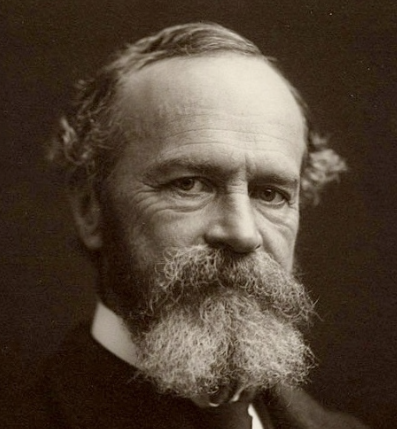
Wherever you are it is your own friends who make your world.
▼
Source
source
As quoted in The Thought and Character of William James (1935) by Ralph Barton Perry, Vol. II, ch. 91
4 months 1 week ago
Now men seem, not unreasonably, to form their notions of the supreme good and of happiness from the lives of men.
1 month 3 weeks ago
It is because of my wretchedness that I am "I." It is on account of the wretchedness of the universe that, in a sense, God is "I" (that is to say a person).
▼
Source
source
p. 83

3 months 5 days ago
The human body is the best picture of the human soul.
▼
Source
source
Pt II, p. 178
2 months 1 week ago
A fool with a heart and no sense is just as unhappy as a fool with sense and no heart.
▼
Source
source
Part 1, Chapter 7
1 month 1 week ago
For tribal man, space was the uncontrollable mystery. For technological man it is time that occupies the same role.
▼
Source
source
p. 85; "Magic that Changes Mood")
1 day ago
I plead guilty to valuing such a man beyond all other sorts of men. Smooth-shaven Respectabilities not a few one finds, that are not good for much. Small thanks to a man for keeping his hands clean, who would not touch the work but with gloves on!
2 months 2 days ago
We return to our analysis of qualities. Something preserves itself throughout this flux, something that passes into other things, but also stands against them as a being for itself. This something can exist only as the product of a process through which it integrates its otherness with its own proper being. Hegel says that its existence comes about through 'the negation of the negation.' The first negation is the otherness in which it turns, and the second is the incorporation of this other into its own self. Such a process presupposes that things possess a certain power over their movement, that they exist in a certain self-relation that enables them to 'mediate' their existential conditions.
▼
Source
source
P. 132-133
2 months 1 week ago
Should it be proved that woman is naturally weaker than man, from whence does it follow that it is natural for her to labour to become still weaker than nature intended her to be? Arguments of this cast are an insult to common sense, and savour of passion. The divine right of husbands, like the divine right of kings, may, it is to be hoped, in this enlightened age, be contested without danger, and though conviction may not silence many boisterous disputants, yet, when any prevailing prejudice is attacked, the wise will consider, and leave the narrow-minded to rail with thoughtless vehemence at innovation.
▼
Source
source
Ch. 3
1 month 3 days ago
One's language is a spiritual location. It houses your soul. If you were born in America all essential communication, your deepest conversations with yourself, will be in English. ... Your English is the principal instrument of your humanity.
▼
Source
source
Part I, p. 27
2 months 6 days ago
Old age, after all, is merely the punishment for having lived.
CivilSimian.com created by AxiomaticPanic, CivilSimian, Kalokagathia