


1 week 6 days ago
The inventive genius of great England will not forever sit patient with mere wheels and pinions, bobbins, straps and billy-rollers whirring in the head of it. The inventive genius of England is not a Beaver's, or a Spinner's or Spider's genius: it is a Man's genius, I hope, with a God over him!
2 months 4 weeks ago
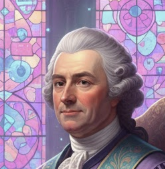
We indeed, who are beings of finite powers, are forced to make use of instruments. And the use of an instrument sheweth the agent to be limited by rules of another's prescription, and that he cannot obtain his end but in such a way, and by such conditions. Whence it seems a clear consequence, that the supreme unlimited agent useth no tool or instrument at all. The will of an Omnipotent Spirit is no sooner exerted than executed, without the application of means; which, if they are employed by inferior agents, it is not upon account of any real efficacy that is in them, or necessary aptitude to produce any effect, but merely in compliance with the laws of nature, or those conditions prescribed to them by the First Cause, who is Himself above all limitation or prescription whatsoever.
▼
Source
source
Philonous to Hylas. The Second Dialogue

3 months 3 weeks ago
Indeed, if we consider the unblushing promises of reward and the staggering nature of the rewards promised in the Gospels, it would seem that Our Lord finds our desires, not too strong, but too weak. We are half-hearted creatures, fooling about with drink and sex and ambition when infinite joy is offered us, like an ignorant child who wants to go on making mud pies in a slum because he cannot imagine what is meant by the offer of a holiday at the sea. We are far too easily pleased.

2 months 1 week ago
The philosophical thought of Kant, the supreme flower of the Germanic people, has its roots in the religious feeling of Luther, and it is not possible for Kantism, especially the practical part of it, to take root and bring forth flower and fruit in peoples who have not undergone the experience of the Reformation and who perhaps were incapable of experiencing it. Kantism is Protestant, and we Spaniards are fundamentally Catholic. And if Krause struck some roots here - more numerous and more permanent than is commonly supposed - it is because Krause has roots in pietism, and pietism, as Ritschl has demonstrated in his Geschichte des Pietismus, has specifically Catholic roots and may be described as the irruption, or rather the persistence of Catholic mysticism in the heart of Protestant rationalism. And this explains why not a few Catholic thinkers in Spain became followers of Krause.
4 months 3 weeks ago
It is well said, then, that it is by doing just acts that the just man is produced, and by doing temperate acts the temperate man; without doing these no one would have even a prospect of becoming good. But most people do not do these, but take refuge in theory and think they are being philosophers and will become good in this way, behaving somewhat like patients who listen attentively to their doctors, but do none of the things they are ordered to do.
2 months 6 days ago
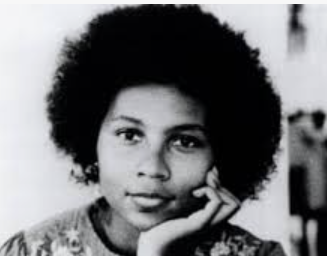
We need to recognize the destructive role played by the media in fanning the flames of the "Black-Jewish Conflict." Cornel West, bell hooks, Richard Green, Barbara Christian, Henry Louis Gates, Marian Wright Edelman, Nell Painter, Albert Raby....Why are these names not as well known outside the African American community as the names of Louis Farrakhan or Leonard Jeffries? Are they, in their diversity and dynamism, less representative of the African American community?
▼
Source
source
Melanie Kaye/Kantrowitz "Jews, Class, Color, and the Cost of Whiteness" in The Issue is Power
3 months 3 weeks ago
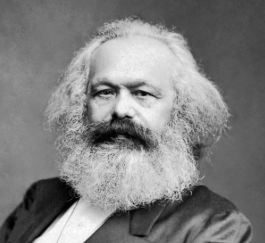
Undeterred by this examination, the French Revolution gave rise to ideas which led beyond the ideas of the entire old world order. The revolutionary movement which began in 1789 in the Cercle Social, which in the middle of its course had as its chief representatives Leclerc and Roux, and which finally with Babeuf's conspiracy was temporarily defeated, gave rise to the communist idea which Babeuf's friend Buonarroti re-introduced in France after the Revolution of 1830. This idea, consistently developed, is the idea of the new world order.
▼
Source
source
Chapter 6, 3
3 days ago
There is obviously a place in life for a religious attitude for awe and astonishment at existence. That is also a basis for respect for existence. We don't have much of it in this culture, even though we call it materialistic. In this culture we call materialistic, today we are of course bent on the total destruction of material and its conversion into junk and poisonous gases. This is of course not a materialistic culture because it has no respect for material. And respect is in turn based on wonder.
▼
Source
source
Images of God

2 months 2 weeks ago
Compared to the refined culture of sclerotic forms and frames, which mask everything, the lyrical mode is utterly barbarian in its expression. Its value resides precisely in its savage quality: it is only blood, sincerity, and fire.
3 weeks 5 days ago
Our main conclusions about the state are that a minimal state, limited, to the narrow functions of protection against force, theft, fraud, enforcement of contracts, and so on, is justified, but any more extensive state will violate persons' rights not to be forced to do certain things, and is unjustified; and that the minimal state is inspiring as well as right.
▼
Source
source
Preface, p. ix
4 months 1 week ago
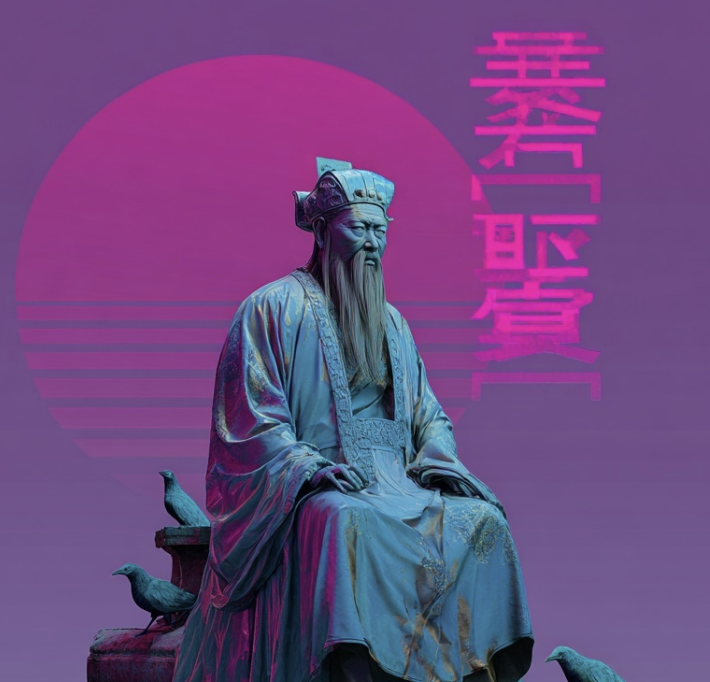
The superior man is modest in his speech, but exceeds in his actions. James Legge translation. Variant translations: The superior man acts before he speaks, and afterwards speaks according to his actions. The greater man does not boast of himself, But does what he must do. A good man does not give orders, but leads by example.
4 months ago
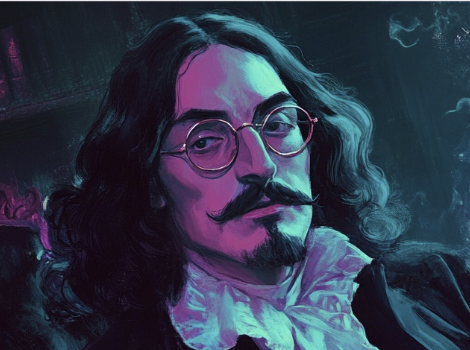
Staying as I am, one foot in one country and the other in another, I find my condition very happy, in that it is free.
▼
Source
source
Letter to Elisabeth of Bohemia, Princess Palatine, Paris, June/July 1648

3 months 3 weeks ago
How shall we define a god? Expressed in psychological terms (which are primary-there is no getting behind them) a god is something that gives us the peculiar kind of feeling which Professor Otto has called "numinous". Numinous feelings are the original god-stuff from which the theory-making mind extracts the individualised gods of the pantheon.
▼
Source
source
"Meditation on the Moon"

2 months 3 weeks ago
Nothing is so fatal to Religion as indifference which is, at least, half Infidelity.
▼
Source
source
Letter to William Smith, Member of the Irish Parliament (29 January 1795), quoted in R. B. McDowell (ed.)
2 months 2 weeks ago
Everyone is mistaken, everyone lives in illusion. At best, we can admit a scale of fictions, a hierarchy of unrealities, giving preference to one rather than to another; but to choose, no, definitely not that...

3 months 3 weeks ago
I asked my guide how it was possible the judicious part of them could suffer such incoherent prating? "We are obliged," said he, "to suffer it, because no one knows, when a brother rises up to hold forth, whether he will be moved by the spirit or by folly. In this uncertainty, we listen patiently to every one. We even allow our women to speak in public; two or three of them are often inspired at the same time, and then a most charming noise is heard in the Lord's house." "You have no priests, then?" said I. "No, no, friend," replied the Quaker; "heaven make us thankful!" Then opening one of the books of their sect, he read the following words in an emphatic tone: "'God forbid we should presume to ordain any one to receive the Holy Spirit on the Lord's day, in exclusion to the rest of the faithful!'
▼
Source
source
Further account of his conversations with Andrew Pit

3 months 3 weeks ago
It is a great mortification to the vanity of man, that his utmost art and industry can never equal the meanest of nature's productions, either for beauty or value. Art is only the under-workman, and is employed to give a few strokes of embellishment to those pieces, which come from the hand of the master.
▼
Source
source
Part I, Essay 15: The Epicurean

1 month 3 weeks ago
One might think that it must be quite clear to people not deprived of reason, that violence breeds violence; that the only means of deliverance from violence lies in not taking part in it. This method, one would think, is quite obvious. It is evident that a great majority of men can be enslaved by a small minority only if the enslaved themselves take part in their own enslavement. If people are enslaved, it is only because they either fight violence with violence or participate in violence for their own personal profit. Those who neither struggle against violence nor take part in it can no more be enslaved than water can be cut. They can be robbed, prevented from moving about, wounded or killed, but they cannot be enslaved: that is, made to act against their own reasonable will.
▼
Source
source
The Meaning of the Russian Revolution
1 month 2 weeks ago
Pardon one offence and you encourage the commission of many.
▼
Source
source
Maxim 750
4 months 5 days ago
For as old age is that period of life most remote from infancy, who does not see that old age in this universal man ought not to be sought in the times nearest his birth, but in those most remote from it?
▼
Source
source
Preface to the Treatise on Vacuum, c.1651

3 months 3 weeks ago
The Religion that is afraid of science dishonours God and commits suicide. It acknowledges that it is not equal to the whole of truth, that it legislates, tyrannizes over a village of God's empires but is not the immutable universal law. Every influx of atheism, of skepticism is thus made useful as a mercury pill assaulting and removing a diseased religion and making way for truth.
▼
Source
source
March 4, 1831
2 weeks 2 days ago
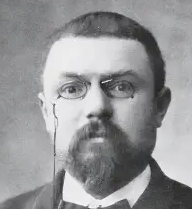
It is only through science and art that civilization is of value. Some have wondered at the formula: science for its own sake; an yet it is as good as life for its own sake, if life is only misery; and even as happiness for its own sake, if we do not believe that all pleasures are of the same quality...Every act should have an aim. We must suffer, we must work, we must pay for our place at the game, but this is for seeing's sake; or at the very least that others may one day see.
3 months 2 weeks ago
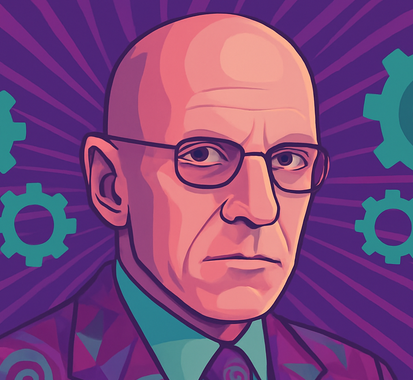
When I was a student in the 1950s, I read Husserl, Sartre, Merleau-Ponty. When you feel an overwhelming influence, you try to open a window. Paradoxically enough, Heidegger is not very difficult for a Frenchman to understand. When every word is an enigma, you are in a not-too-bad position to understand Heidegger. Being and Time is difficult, but the more recent works are clearer. Nietzsche was a revelation to me. I felt that there was someone quite different from what I had been taught. I read him with a great passion and broke with my life, left my job in the asylum, left France: I had the feeling I had been trapped. Through Nietzsche, I had become a stranger to all that.
▼
Source
source
Truth, Power, Self : An Interview with Michel Foucault
2 months 3 weeks ago
Applaud us when we run, console us when we fall, cheer us when we recover.
▼
Source
source
Speech at Bristol Previous to the Election (6 September 1780), quoted in The Works of the Right Honourable Edmund Burke, Vol. II (1855), p. 129
2 months 2 weeks ago
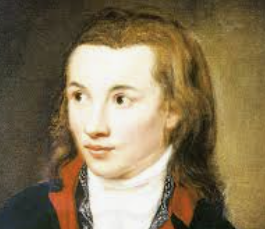
Building worlds is not enough for the deeper urging mind; but a loving heart sates the striving spirit.
▼
Source
source
Fragment No. 91

4 months 3 weeks ago
As a genius of construction man raises himself far above the bee in the following way: whereas the bee builds with wax that he gathers from nature, man builds with the far more delicate conceptual material which he first has to manufacture from himself.
3 months 3 weeks ago
There is but one good; that is God. Everything else is good when it looks to Him and bad when it turns from Him.
▼
Source
source
Ch. 11
2 months 2 weeks ago
Objection to scientific knowledge: this world doesn't deserve to be known.
3 months 1 week ago
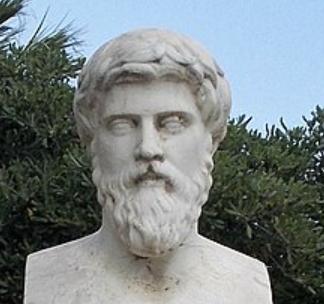
The mind is not a vessel that needs filling, but wood that needs igniting.
▼
Source
source
On Listening to Lectures (Tr. Waterfield)
3 months 3 weeks ago
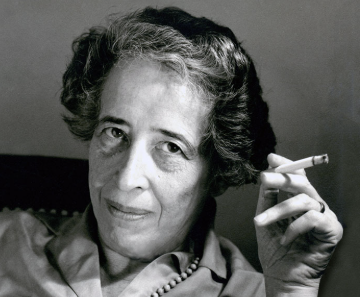
Thinking withdraws radically and for its own sake from this world and its evidential nature, whereas science profits from a possible withdrawal for the sake of specific results.
▼
Source
source
p. 56

2 months 2 weeks ago
The sun will be darkened, and the moon will not give its light; the stars will fall from the sky, and the heavenly bodies will be shaken. They will see the Son of Man coming on the clouds of the sky, with power and great glory... I tell you the truth, this generation will certainly not pass away until all these things have happened.
▼
Source
source
24:29-34 (NIV)
1 month 2 weeks ago
There's something that remains barbarous in educated people, and lately I've more and more had the feeling that we are nonwondering primitives. And why is it that we no longer marvel at these technological miracles? They've become the external facts of every life. We've all been to the university, we've had introductory courses in everything, and therefore we have persuaded ourselves that if we had the time to apply ourselves to these scientific marvels, we would understand them. But of course that's an illusion. It couldn't happen. Even among people who have had careers in science. They know no more about how it all works than we do. So we are in the position of savage men who, however, have been educated into believing that they are capable of understanding everything. Not that we actually do understand, but that we have the capacity.
▼
Source
source
"A Half Life" (1990), pp. 302-303
3 months 3 weeks ago
This world belongs to the energetic.
▼
Source
source
Resources

3 months 3 weeks ago
Probably in time physiologists will be able to make nerves connecting the bodies of different people; this will have the advantage that we shall be able to feel another man's tooth aching.
▼
Source
source
Human Knowledge: Its Scope and Limits (1948), p. 493

2 months 5 days ago
With Puritanism as the constant check upon American life, neither truth nor sincerity is possible. Nothing but gloom and mediocrity to dictate human conduct, curtail natural expression, and stifle our best impulses.
2 months 1 week ago
But our Don Quixote, the inward, the immortal Don Quixote, conscious of his own comicness, does not believe that his doctrines will triumph in this world, because they are not of it. And it is better that they should not triumph. And if the world wished to make Don Quixote king, he would retire alone to the mountain, fleeing from the king-making crowds, as Christ retired alone to the mountain when, after the miracle of the loaves and fishes, they sought to proclaim him king. He left the title of king for the inscription written over the cross.
1 month 1 week ago
I have endeavoured to show that no absolute structural line of demarcation, wider than that between the animals which immediately succeed us in the scale, can be drawn between the animal world and ourselves; and I may add the expression of my belief that the attempt to draw a physical distinction is equally futile, and that even the highest faculties of feeling and of intellect begin to germinate in lower forms of life.
▼
Source
source
Ch.2, p. 129

3 months 3 weeks ago
The value which the workmen add to the materials, therefore, resolves itself in this case into two parts, of which the one pays their wages, the other the profits of the employer upon the whole stock of materials and wages which he advanced.
▼
Source
source
Chapter VI, p. 58.

2 weeks 4 days ago
The capitalist call workers to the factory, for example, directing them to collaborate and communicate in production and giving them the means to do so. In the paradigm of immaterial production, in contrast, labor itself tends to produce the means of interaction, communication, and cooperation for production directly. Affective labor always directly constructs a relationship.
▼
Source
source
147
2 months 2 weeks ago
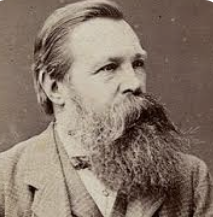
The general co-operation of all members of society for the purpose of planned exploitation of the forces of production, the expansion of production to the point where it will satisfy the needs of all, the abolition of a situation in which the needs of some are satisfied at the expense of the needs of others, the complete liquidation of classes and their conflicts, the rounded development of the capacities of all members of society through the elimination of the present division of labor, through industrial education, through engaging in varying activities, through the participation by all in the enjoyments produced by all, through the combination of city and country - these are the main consequences of the abolition of private property.
1 month 2 weeks ago
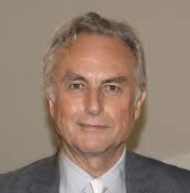
Just because science can't in practice explain things like the love that motivates a poet to write a sonnet, that doesn't mean that religion can. It's a simple and logical fallacy to say, 'If science can't do something, therefore religion can'.

1 week ago
We often want one thing and pray for another, not telling the truth even to the gods.
▼
Source
source
Line 2.

4 months ago
There is no wish more natural than the wish to know.
▼
Source
source
Ch. 13

2 months 3 weeks ago
Throughout all organic nature there is at work a modifying influence of the kind... as the cause, these specific differences: an influence which, though slow in its action, does, in time, if the circumstances demand it, produce marked changes-an influence, which to all appearance, would produce in the millions of years, and under the great varieties of condition which geological records imply, any amount of change.
3 months 3 weeks ago
The instinctive foundation of the intellectual life is curiosity, which is found among animals in its elementary forms. Intelligence demands an alert curiosity, but it must be of a certain kind. The sort that leads village neighbours to try to peer through curtains after dark has no very high value. The widespread interest in gossip is inspired, not by a love of knowledge but by malice: no one gossips about other people's secret virtues, but only about their secret vices. Accordingly most gossip is untrue, but care is taken not to verify it. Our neighbour's sins, like the consolations of religion, are so agreeable that we do not stop to scrutinise the evidence closely.
▼
Source
source
On Education, Especially in Early Childhood (1926), Ch. 2: The Aims of Education, p. 50

3 weeks 4 days ago
Universality is the foundation for law. Individuals are treated as ends in themselves, symmetry is applied and justice emerges. Ideologically, we don't have to try to be "good". This kind of kills freedom. We just have to avoid the worst of the bad, like killing, to preserve universality and justice.
Just now
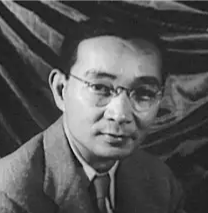
There are two kinds of animals on earth. One kind minds his own business, the other minds other people's business. The former are vegetarians, like cows, sheep and thinking men. The latter are carnivorous, like hawks, tigers and men of action.
▼
Source
source
As quoted by Tai-yi Lin (Lin Yutang's daughter) in her Foreword (26 March 1950) to The Importance of Living, p. x
CivilSimian.com created by AxiomaticPanic, CivilSimian, Kalokagathia