

4 months ago
A penny saved is of more value than a penny paid out.
▼
Source
source
What Luther Says, Section on "Life, Human," No. 2438. Rules for a Thrifty Life. 2, p. 784

2 months 1 week ago
Imagination, which is the social sense, animates the inanimate and anthropomorphizes everything; it humanizes everything and even makes everything identical with man. And the work of man is to supernaturalize Nature - that is to say, to make it divine by making it human, to help it to become conscious of itself, in short. The action of reason, on the other hand, is to mechanize or materialize.
2 months 3 weeks ago
...for stones, plants, and animals there is no God, but only for man.


2 months 3 weeks ago
I am attached to Christianity at large; much from conviction; more from affection.
▼
Source
source
Letter to an unknown correspondent (26 January 1791), quoted in Alfred Cobban and Robert A. Smith (eds.), The Correspondence of Edmund Burke, Volume VI: July 1789-December 1791 (1967), p. 215
1 month 2 weeks ago
The successful scientist and the raving crank are separated by the quality of their inspirations. But I suspect that this amounts, in practice, to a difference, not so much in ability to notice analogies as in ability to reject foolish analogies and pursue helpful ones.
▼
Source
source
Chapter 8 "Explosions and Spirals" (pp. 195-196)
4 months ago
A person must take care to exercise moderate discipline over the body and subject it to the Spirit by means of fasting, vigils, and labor. The goal is to have the body obey and conform - and not hinder - the inner person and faith. Unless it is held in check, we know it is the nature of the body to undermine faith and the inner person.
▼
Source
source
pp. 71-72

4 weeks 1 day ago
Evangelical atheists preach the need for a scientific view of things, but a settled view does not go with scientific method. If we know anything it is that most of the theories that prevail at any one time are false. Scientific theories are not components of a world-view but tools we use to tinker with the world.
▼
Source
source
Sweet Morality (p. 224)
2 months 1 week ago
Human life, by its very nature, has to be dedicated to something, an enterprise glorious or humble, a destiny illustrious or trivial. We are faced with a condition, strange but inexorable, involved in our very existence.
▼
Source
source
Chapter XIV: Who Rules The World?

3 months 3 weeks ago
There is always a best way of doing everything, if it be to boil an egg. Manners are the happy ways of doing things; each once a stroke of genius or of love, - now repeated and hardened into usage. They form at last a rich varnish, with which the routine of life is washed, and its details adorned.
▼
Source
source
Behavior
3 months 1 week ago
Nowadays, to say that we are clever animals is not to say something philosophical and pessimistic but something political and hopeful - namely, if we can work together, we can make ourselves into whatever we are clever and courageous enough to imagine ourselves becoming. This is to set aside Kant's question "What is man?" and to substitute the question "What sort of world can we prepare for our great grandchildren?"
▼
Source
source
"Human Rights, Rationality, and Sentimentality." Truth and Progress: Philosophical Papers, Volume 3 (1998).
3 months 1 week ago
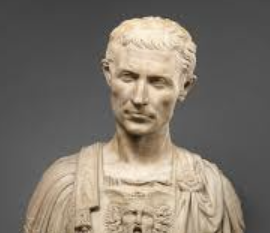
It is worth observing, how we feel ourselves affected in reading the characters of Cæsar, and Cato, as they are so finely drawn and contrasted in Salust. In one, the ignoscendo, largiundo; in the other, nil largiundo. In one, the miseris perfugium; in the other, malis perniciem. In the latter we have much to admire, much to reverence, and perhaps something to fear; we respect him, but we respect him at a distance. The former makes us familiar with him; we love him, and he leads us whither he pleases.
▼
Source
source
Edmund Burke, A Philosophical Enquiry into the Origin of Our Ideas of the Sublime and Beautiful (2nd ed. 1759), pp. 206-207
4 months 1 week ago
Ten thousand do not turn the scale against a single man of worth.
2 months 1 day ago
The true line is not between "hard" natural science and "soft" social sciences, but between precise science limited to highly abstract and simple phenomena in the laboratory and inexact science and technology dealing with complex problems in the real world.
▼
Source
source
p. 302.

2 months 3 weeks ago
I should have loved freedom, I believe, at all times, but in the time in which we live I am ready to worship it.
▼
Source
source
Book Four, Chapter VII.
4 months 1 week ago
It is no advantage to be near the light if the eyes are closed.
▼
Source
source
p. 607
4 months 1 day ago
We are much beholden to Machiavel and others, that write what men do, and not what they ought to do.
▼
Source
source
Book II, xxi, 9

3 months 2 weeks ago
Man has to awaken to wonder - and so perhaps do peoples. Science is a way of sending him to sleep again.
▼
Source
source
p. 5e

3 months 4 days ago
Repentance deserveth Pardon.

2 months 5 days ago
In his Experiment in Autobiography (1934), H.G. Wells pointed out that ever since the beginning of life, most creatures have been 'up against it'. Their lives are a drama of struggle against the forces of nature. Yet nowadays you can say to a man: Yes, you earn a living, you support a family, you love and hate, but -- what do you do? His real interest may be in something else -- art, science, literature, philosophy. The bird is a creature of the air, the fish is a creature of the water, and man is a creature of the mind.
▼
Source
source
pp. 346-347
2 months 6 days ago
Not all women, in fact, very few, have had the good fortune to live and work among women and men actively involved in the feminist movement. Many of us live in circumstances and environments where we must engage in feminist struggle alone, with only occasional support and affirmation.
▼
Source
source
Acknowledgments.
3 months 2 weeks ago
The most defenseless tenderness and the bloodiest of powers have a similar need of confession. Western man has become a confessing animal.
▼
Source
source
Vol. I, p. 59
3 months 1 week ago
I will begin to speak when I am not going to say what were better left unsaid.
▼
Source
source
Quoted by Plutarch, Life of Cato the Younger, 4 Bernadotte Perrin, ed. Plutarch's Lives, Vol. 8, LCL 100 (1919), pp. 247, 361
3 months 3 weeks ago
In early times, the great majority of the male sex were slaves, as well as the whole of the female. And many ages elapsed, some of them ages of high cultivation, before any thinker was bold enough to question the rightfulness, and the absolute social necessity, either of the one slavery or of the other.
▼
Source
source
Ch. 1
1 month 3 weeks ago
The ascription of an unconscious intentional phenomenon to a system implies that the phenomenon is in principle accessible to consciousness. A statement of the author's "connection principle."
▼
Source
source
"Consciousness, Explanatory Inversion, and Cognitive Science," The Behavioral and Brain Sciences 13, 4 (December 1990): 585-696.
3 months 3 weeks ago
He that denies any of the doctrines that Christ has delivered, to be true, denies him to be sent from God, and consequently to be the Messiah; and so ceases to be a Christian.
▼
Source
source
§ 232
2 months 3 weeks ago
There are only Epicureans, either crude or refined; Christ was the most refined.
▼
Source
source
Act I.

2 months 2 weeks ago
If the flesh came into being because of spirit, it is a wonder. But if spirit came into being because of the body, it is a wonder of wonders. Indeed, I am amazed at how this great wealth has made its home in this poverty.

3 months 3 weeks ago
The poet presents the imagination with images from life and human characters and situations, sets them all in motion and leaves it to the beholder to let these images take his thoughts as far as his mental powers will permit. This is why he is able to engage men of the most differing capabilities, indeed fools and sages together. The philosopher, on the other hand, presents not life itself but the finished thoughts which he has abstracted from it and then demands that the reader should think precisely as, and precisely as far as, he himself thinks. That is why his public is so small.
▼
Source
source
Vol. 2 "On Philosophy and the Intellect" as translated in Essays and Aphorisms (1970), as translated by R. J. Hollingdale

3 months 3 weeks ago
This body which called itself and which still calls itself the Holy Roman Empire was in no way holy, nor Roman, nor an empire.
▼
Source
source
Essai sur l'histoire générale et sur les mœurs et l'esprit des nations, Chapter 70, 1756

3 months 1 week ago
Strength of body is nobility in beasts of burden, strength of character is nobility in men.
2 months 2 weeks ago
When we assume God to be a guiding principle-well, sure enough, a god is usually characteristic of a certain system of thought or morality. For instance, take the Christian God, the summum bonum: God is love, love being the highest moral principle; and God is spirit, the spirit being the supreme idea of meaning. All our Christian moral concepts derive from such assumptions, and the supreme essence of all of them is what we call God.
▼
Source
source
Nietzsche's Zarathustra (1988), p. 40

3 months 3 weeks ago
[...] men are not astonish'd at the operations of their own reason, at the same time, that they admire the instinct of animals, and find a difficulty in explaining it, merely because it cannot be reduc'd to the very same principles. [...] reason is nothing but a wonderful and unintelligible instinct in our souls[.]
▼
Source
source
Part 3, Section 16

3 months 3 weeks ago
Listen to me: a family man is never a real family man. An assassin is never entirely assassin. They play a role, you understand. While a dead man, he is really dead. To be or not to be, right?
▼
Source
source
Hugo, Act 4, sc. 6

2 months 2 weeks ago
In order to have the stuff of a tyrant, a certain mental derangement is necessary.

3 months 3 weeks ago
The human imagination has seldom had before it an object so sublimely ordered as the medieval cosmos. If it has an aesthetic fault, it is perhaps, for us who have known romanticism, a shade too ordered. For all its vast spaces it might in the end afflict us with a kind of claustrophobia. Is there nowhere any vagueness? No undiscovered by-ways? No twilight? Can we never really get out of doors?
▼
Source
source
The Discarded Image: An Introduction to Medieval and Renaissance Literature, 1964
2 months 2 weeks ago
For the Lawes of Nature (as Justice, Equity, Modesty, Mercy, and (in summe)doing to others, as wee would be done to,) of themselves, without the terrour of some Power, to cause them to be observed, are contrary to our naturall Passions, that carry us to Partiality, Pride, Revenge, and the like. And Covenants, without the Sword, are but Words, and of no strength to secure a man at all.
▼
Source
source
The Second Part, Chapter 17, p. 85
3 months 2 weeks ago
A real subjection is born mechanically from a fictitious relation. So it is not necessary to use force to constrain the convict to good behavior, the madman to calm, the worker to work, the schoolboy to application, the patient to the observation of the regulations.
▼
Source
source
Part Four, Complete and austere institutions
2 months 2 weeks ago
Beware of thinkers whose minds function only when they are fueled by a quotation.
2 months 4 days ago
Envy, jealousy, ambition, any kind of greed are passions; love is an action, the practice of human power, which can be practiced only in freedom and never as a result of compulsion. Love is an activity, not a passive affect; it is a "standing in," not a "falling for." In the most general way, the active character of love can be described by stating that love is primarily giving, not receiving.

4 months ago
Virtue refuses facility for her companion ... the easy, gentle, and sloping path that guides the footsteps of a good natural disposition is not the path of true virtue. It demands a rough and thorny road.
▼
Source
source
Ch. 11. Of Cruelty (tr. Donald M. Frame)
3 months 4 days ago
Let thy mind rule thy tongue!
2 months 3 weeks ago
The President ... may err ... Congress may decide amiss ... But if the Supreme Court is ever composed of imprudent or bad men, the Union may be plunged into anarchy or civil war.
▼
Source
source
Chapter XVIII.
2 months 3 weeks ago
The main business of religions is to purify, control, and restrain that excessive and exclusive taste for well-being which men acquire in times of equality.
▼
Source
source
Book One, Chapter V.
2 months 2 weeks ago
I have never taken myself for a being. A non-citizen, a marginal type, a nothing who exists only by the excess, by the superabundance of his nothingness.
1 month 2 weeks ago
For my part, I travel not to go anywhere, but to go. I travel for travel's sake. The great affair is to move.
▼
Source
source
Travels with a Donkey in the Cévennes (1878).
2 months 2 weeks ago
A word is a bud attempting to become a twig. How can one not dream while writing? It is the pen which dreams. The blank page gives the right to dream.
▼
Source
source
Introduction, sect. 6
CivilSimian.com created by AxiomaticPanic, CivilSimian, Kalokagathia