


1 week 5 days ago
The habits of study acquired at Universities are of the highest importance in after-life. At the season when you are in young years the whole mind is, as it were, fluid, and is capable of forming itself into any shape that the owner of the mind pleases to order it to form itself into. The mind is in a fluid state, but it hardens up gradually to the consistency of rock or iron, and you cannot alter the habits of an old man, but as he has begun he will proceed and go on to the last.

2 months 3 weeks ago
The moment a sovereign removes the idea of security and protection from his subjects, and declares that he is everything and they nothing, when he declares that no contract he makes with them can or ought to bind him, he then declares war upon them: he is no longer sovereign; they are no longer subjects.
▼
Source
source
Speech in opening the impeachment of Warren Hastings (16 February 1788), quoted in The Works of the Right Honourable Edmund Burke, Volume the Ninth (1899), p. 459
3 months 3 weeks ago
All our knowledge falls with the bounds of experience.
▼
Source
source
A 146, B 185

2 months 2 weeks ago
Skepticism is the sadism of embittered souls.
2 weeks 4 days ago
Love, in spite of the romantics, is not self-sustaining; it endures only when the lovers love many things together, and not merely each other.
▼
Source
source
Ch. XIV: "Love in the Great Society", §6, pp. 308-309

3 months 3 weeks ago
Every man I meet is in some way my superior, and in that, I can learn of him.
▼
Source
source
As quoted in Think, Vol. 4-5 (1938), p. 32
1 week 5 days ago
Where this will end? In the Abyss, one may prophecy; whither all Delusions are, at all moments, travelling; where this Delusion has now arrived. For if there be a Faith, from of old, it is this, as we often repeat, that no Lie can live for ever. The very Truth has to change its vesture, from time to time; and be born again. But all Lies have sentence of death written down against them, and Heaven's Chancery itself; and, slowly or fast, advance incessantly towards their hour.
▼
Source
source
Pt. I, Bk. VI, ch. 3.
4 months 2 weeks ago
Since those who rule in the city do so because they own a lot, I suppose they're unwilling to enact laws to prevent young people who've had no discipline from spending and wasting their wealth, so that by making loans to them, secured by the young people's property, and then calling those loans in, they themselves become even richer and more honored.
1 month 4 weeks ago
Until the seventeenth century there was no concept of evidence with which to pose the problem of induction!
▼
Source
source
Chapter 4, Evidence, p. 31.

1 month 2 weeks ago
Each new technology is a reprogramming of sensory life.
▼
Source
source
(p. 33)
3 months 1 week ago
It is sweet and honorable to die for one's country.
▼
Source
source
Book III, ode ii, line 13
1 week ago
With competition is connected less the intention to do the thing best than the intention to make it as profitable, as productive, as possible. Hence people study to get into the civil service (study in order to get a well-paid job), study cringing and flattery, routine and 'acquaintance with business', work 'for appearance'. Hence, while it is apparently a matter of doing 'good service', in truth only a 'good business' and earning of money are looked out for. The job is done only ostensibly for the job's sake, but in fact on account of the gain that it yields. One would indeed prefer not to be censor, but one wants to be - advanced; one would like to judge, administer, etc., according to his best convictions, but one is afraid of transfer or even dismissal; one must, above all things - live.
▼
Source
source
Cambridge 1995, p. 237
1 month 4 weeks ago
I think part of the appeal of mathematical logic is that the formulas look mysterious - you write backward Es!
▼
Source
source
Putnam as quoted in: Julian Baggini, Jeremy Stangroom (2005) What Philosophers Think. p. 233
2 months 2 weeks ago
Even in childhood I watched the hours flow, independent of any reference, any action, any event, the disjunction of time from what was not itself, its autonomous existence, its special status, its empire, its tyranny. I remember quite clearly that afternoon when, for the first time, confronting the empty universe, I was no more than a passage of moments reluctant to go on playing their proper parts. Time was coming unstuck from being - at my expense.


4 months 2 weeks ago
In Oran, as elsewhere, for want of time and thought, people have to love one another without knowing it.
3 months 1 week ago
There were two brothers called Both and Either; perceiving Either was a good, understanding, busy fellow, and Both a silly fellow and good for little, Philip said, "Either is both, and Both is neither."
▼
Source
source
35 Philip

6 days ago
Mankind is born for mutual assistance, anger for mutual ruin: the former loves society, the latter estrangement.
3 months 3 weeks ago
To these spurious principles must be added some others of great affinity with them... First, that by which we assume that everything in the universe is done according to the order of nature, which principle by Epicurus was proclaimed without any restriction, and by all other philosophers unanimously with extremely rare exceptions, not to be admitted but from supreme necessity.
2 weeks ago
...shall we say that the difference between a vegetarian and a cannibal is just a matter of taste?
▼
Source
source
"The Idolatry of Politics", New Republic, 1986-June-16, page 31.
4 months 3 weeks ago
If the genius is an artist, then he accomplishes his work as art, but neither he nor his work of art has a telos outside him.
2 months 2 weeks ago
So it is that after each night, facing a new day, the impossible necessity of dealing with it fills us with dread; exiled in light as if the world had just started, inventing the sun, we flee from tears-just one of which would be enough to wash us out of time.
6 days ago
"I should prefer that Fortune keep me in her camp rather than in the lap of luxury. If I am tortured, but bear it bravely, all is well; if I die, but die bravely, it is also well."
1 week 5 days ago
The "imagination that shudders at the Hell of Dante," is not that the same faculty, weaker in degree, as Dante's own? No one but Shakspeare can embody, out of Saxo Grammaticus, the story of Hamlet as Shakspeare did: but every one models some kind of story out of it; every one embodies it better or worse. We need not spend time in defining. Where there is no specific difference, as between round and square, all definition must be more or less arbitrary. A man that has so much more of the poetic element developed in him as to have become noticeable, will be called Poet by his neighbors.

2 months 1 week ago
The materialists say, it is by means of a series of straight lines more or less perfect that one imagines the perfect straight line as an ideal limit. That is right, but the progression in itself necessarily contains what is infinite; it is in relation to the perfect straight line that one can say that such and such a straight line is less twisted than some other. ... Either one conceives the infinite or one does not conceive at all.
▼
Source
source
p. 87

4 months 2 weeks ago
For it is the chief characteristic of the religion of science, that it works, and that such curses as that of Aporat's are really deadly.

3 months 3 weeks ago
I know my heart, and have studied mankind; I am not made like any one I have been acquainted with, perhaps like no one in existence; if not better, I at least claim originality, and whether Nature did wisely in breaking the mould with which she formed me, can only be determined after having read this work.
▼
Source
source
Variant translations: I may not be better than other people, but at least I am different. If I am not better, at least I am different.

2 months 1 week ago
The truth is sum, ergo cogito - I am, therefore I think, although not everything that is thinks. Is not consciousness of thinking above all consciousness of being? Is pure thought possible, without consciousness of self, without personality? Can there exist pure knowledge without feeling, without that species of materiality which feelings lends to it? Do we not perhaps feel thought, and do we not feel ourselves in the act of knowing and willing? Could not the man in the stove [Descartes] have said: "I feel, therefore I am"? or "I will, therefore I am"? And to feel oneself, is it not perhaps to feel oneself imperishable?

3 months 3 weeks ago
May it not be the fact that mankind, who after all are made up of single human beings, obtain a greater sum of happiness when each pursues his own, under the rules and conditions required by the good of the rest, than when each makes the good of the rest his only object, and allows himself no personal pleasures not indispensable to the preservation of his faculties? The regimen of a blockaded town should be cheerfully submitted to when high purposes require it, but is it the ideal perfection of human existence?
▼
Source
source
Auguste Comte and Positivism, p. 142
3 months 2 weeks ago
The main characteristic of any event is that it has not been foreseen. We don't know the future but everybody acts into the future. Nobody knows what he is doing because the future is being done, action is being done by a "we" and not an "I." Only if I were the only one acting could I foretell the consequences of what I'm doing. What actually happens is entirely contingent, and contingency is indeed one of the biggest factors in all history.
4 months 3 weeks ago
Oh, can I really believe the poet's tales, that when one first sees the object of one's love, one imagines one has seen her long ago, that all love like all knowledge is remembrance, that love too has its prophecies in the individual. ... it seems to me that I should have to possess the beauty of all girls in order to draw out a beauty equal to yours; that I should have to circumnavigate the world in order to find the place I lack and which the deepest mystery of my whole being points towards, and at the next moment you are so near to me, filling my spirit so powerfully that I am transfigured for myself, and feel that it's good to be here.
4 months 2 weeks ago
A nihilist is not one who believes in nothing, but one who does not believe in what exists.
2 months 1 week ago
As we shall see later, the most important factor in the training of good mental habits consists in acquiring the attitude of suspended conclusion, and in mastering the various methods of searching for new materials to corroborate or to refute the first suggestions that occur. To maintain the state of doubt and to carry on systematic and protracted inquiry ― these are the essentials of thinking.
▼
Source
source
Chapter 1: "What Is Thought?"
1 month 4 weeks ago
To sum up: we have seen that of the three notions of 'partial interpretation' discussed, each is either unsuitable for Carnap's purposes (starting with observation terms), or incompatible with a rather minimal scientific realism; and, in addition, the second notion depends upon gross and misleading changes in our use of language. Thus in none of these senses is 'a partially interpreted calculus in which only the observation terms are directly interpreted' an acceptable model for a scientific theory.
▼
Source
source
"What theories are not"
6 days ago
Show me that the good in life does not depend upon life's length, but upon the use we make of it; also, that it is possible, or rather usual, for a man who has lived long to have lived too little. Say to me when I lie down to sleep: "You may not wake again!" And when I have waked: "You may not go to sleep again!" Say to me when I go forth from my house: "You may not return!" And when I return: "You may never go forth again!"

3 months 3 weeks ago
A thing is important if anyone think it important.
▼
Source
source
Ch. 28, Note 35
2 months 2 weeks ago
Irons and the unbreathable air of this world strip us of everything, except the freedom to kill ourselves; and this freedom grants us a strength and pride to triumph over the loads which overwhelm us.
3 months 3 weeks ago
Many people think they are thinking when they are merely rearranging their prejudices.
▼
Source
source
To his young son from the Yosemite Valley on
2 weeks ago
If the gist of the controversy were to be expressed in a single sentence, one might say that the mechanists represented the opposition of the natural sciences to philosophic interference, while the dialecticians stood for the supremacy of philosophy over the sciences and thus reflected the characteristic tendency of Soviet ideological development. The mechanists' outlook might be called negative, while the dialecticians ascribed immense importance to philosophy and regarded themselves as specialists. The mechanists, however, had a much better idea of what science was about. The dialecticians were ignoramuses in this sphere and confined themselves to general formulas about the philosophical need to "generalize" and unify the sciences; on the other hand, they knew more than the mechanists about the history of philosophy. (Eventually the party condemned both camps, and created a dialectical synthesis of both forms of ignorance.)
▼
Source
source
(pg. 64)
2 months 2 weeks ago
The tendency to regard continuity, in the sense in which I shall define it, as an idea of prime importance in philosophy conveniently may be be termed synechism. The present paper is intended chiefly to show what synechism is, and what it leads to.

1 month 3 weeks ago
In order that men should embrace the truth - not in the vague way they did in childhood, nor in the one-sided and perverted way presented to them by their religious and scientific teachers, but embrace it as their highest law the complete liberation of this truth from all and every superstition (both pseudo-religious and pseudo-scientific) by which it is still obscured is essential: not a partial, timid attempt, reckoning with traditions sanctified by age and with the habits of the people - not such as was effected in the religious sphere by Guru Nanak, the founder of the sect of the Sikhs, and in the Christian world by Luther, and by similar reformers in other religions - but a fundamental cleansing of religious consciousness from all ancient religious and modern scientific superstitions.
▼
Source
source
VI
2 months 3 weeks ago
To enrich God, man must become poor; that God may be all, man must be nothing.

4 months ago
Careful thought about this will reveal how few there are who are truly converted from evil habits, especially among those who have prolonged their lives of sin right up to the end. The path down to evil is quick, slippery, and easy. But to turn and "to go forth to the upper air . . . this is effort, this is toil." Think of Aesop's goat before you descend and remember that climbing out is not easy.
▼
Source
source
p. 147

4 months 1 week ago
A true friend will partake of the wants and sorrows of his friend, as if they were his own; if he be in want, he will relieve him; if he be in prison, he will visit him; if he be sick, he will come to him; nay-situations may occur, in which he would not scruple to die for him. It cannot then be doubted, that friendship is one of the most useful means of procuring a secure, tranquil, and happy life.
1 month 2 weeks ago
The role of the artist is to create an Anti-environment as a means of perception and adjustment.
▼
Source
source
(p. 31)
2 months 4 days ago
I've always believed that a writer has got to remain an outsider. If I was offered anything like the Nobel Prize for Literature, I'd find it an extremely difficult conflict because I'd be basically disinclined to accept.
▼
Source
source
Interview with Paul Newman in Abraxas Unbound #7
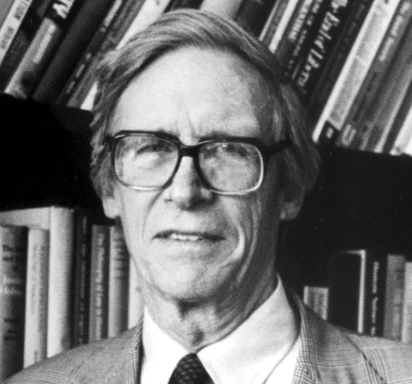
3 months 2 weeks ago
I have tried to set forth a theory that enables us to understand and to assess these feelings about the primacy of justice. Justice as fairness is the outcome: it articulates these opinions and supports their general tendency.
▼
Source
source
Chapter IX, Section 87, p. 586
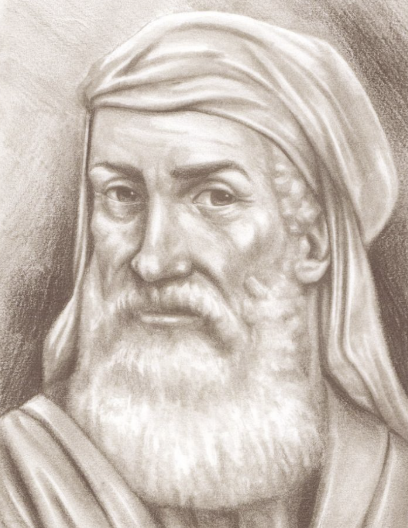
3 months 1 week ago
And I will tell you something else: there is no birth of all mortal things, nor any end in wretched death, but only a mixing and dissolution of mixtures; 'birth' is so called on the part of mankind.
▼
Source
source
fr. 8
1 month ago
Talking about dreams is like talking about movies, since the cinema uses the language of dreams; years can pass in a second and you can hop from one place to another. It's a language made of image. And in the real cinema, every object and every light means something, as in a dream.
▼
Source
source
As quoted in Rolling Stone no. 421

2 months 3 weeks ago
But man is a Noble Animal, splendid in ashes, and pompous in the grave, solemnizing Nativities and Deaths with equal lustre, nor omitting Ceremonies of Bravery, in the infamy of his nature. Life is a pure flame, and we live by an invisible Sun within us.
▼
Source
source
Chapter V
CivilSimian.com created by AxiomaticPanic, CivilSimian, Kalokagathia