


2 months 4 days ago
Revolution is indeed a violent process. But if it is to result only in a change of dictatorship, in a shifting of names and political personalities, then it is hardly worth while. It is surely not worth all the struggle and sacrifice, the stupendous loss in human life and cultural values that result from every revolution. If such a revolution were even to bring greater social well being (which has not been the case in Russia) then it would also not be worth the terrific price paid: mere improvement can be brought about without bloody revolution.

3 months 3 weeks ago
The man who comes back through the Door in the Wall will never be quite the same as the man who went out. He will be wiser but less cocksure, happier but less self-satisfied, humbler in acknowledging his ignorance yet better equipped to understand the relationship of words to things, of systematic reasoning to the unfathomable Mystery which it tries, forever vainly, to comprehend.
▼
Source
source
Page 191
2 days ago
I must interpret the life about me as I interpret the life that is my own. My life is full of meaning to me. The life around me must be full of significance to itself. If I am to expect others to respect my life, then I must respect the other life I see, however strange it may be to mine. And not only other human life, but all kinds of life: life above mine, if there be such life; life below mine, as I know it to exist. Ethics in our Western world has hitherto been largely limited to the relations of man to man. But that is a limited ethics. We need a boundless ethics which will include the animals also.

1 week 5 days ago
Yes, truly, it is a great thing for a Nation that it get an articulate voice; that it produce a man who will speak forth melodiously what the heart of it means!

6 days ago
Or, if you enjoy living with Greeks also, spend your time with Socrates and with Zeno: the former will show you how to die if it be necessary; the latter how to die before it is necessary. Live with Chrysippus, with Posidonius: they will make you acquainted with things earthly and things heavenly; they will bid you work hard over something more than neat turns of language and phrases mouthed forth for the entertainment of listeners; they will bid you be stout of heart and rise superior to threats. The only harbour safe from the seething storms of this life is scorn of the future, a firm stand, a readiness to receive Fortune's missiles full in the breast, neither skulking nor turning the back.


2 months 2 weeks ago
But the extraordinary insight which some persons are able to gain of others from indications so slight that it is difficult to ascertain what they are, is certainly rendered more comprehensible by the view here taken.
2 months 2 weeks ago
The meaning and design of a problem seem not to lie in its solution, but in our working at it incessantly.
▼
Source
source
p. 103

2 months 3 days ago
No man, not even a doctor, ever gives any other definition of what a nurse should be than this - "devoted and obedient." This definition would do just as well for a porter. It might even do for a horse. It would not do for a policeman.
▼
Source
source
Notes on Nursing
3 months 3 weeks ago
For passionate emotions of all sorts, and for everything which has been said or written in exaltation of them, he professed the greatest contempt. He regarded them as a form of madness. "The intense" was with him a bye-word of scornful disapprobation. He regarded as an aberration of the moral standard of modern times, compared with that of the ancients, the great stress laid upon feeling.
▼
Source
source
(p. 49)

2 months 2 weeks ago
I do not forgive myself for being born. It is as if, creeping into this world, I had profaned a mystery, betrayed some momentous pledge, committed a fault of nameless gravity. Yet in a less assured mood, birth seems a calamity I would be miserable not having known.

3 months 3 weeks ago
But bounty and hospitality very seldom lead to extravagance; though vanity almost always does.
▼
Source
source
Chapter III, Part V, p. 987.

3 months 3 weeks ago
Any question of philosophy ... which is so obscure and uncertain, that human reason can reach no fixed determination with regard to it; if it should be treated at all; seems to lead us naturally into the style of dialogue and conversation.
▼
Source
source
Pamphilus to Hermippus, Prologue
3 months 3 weeks ago
Beating is the worst, and therefore the last means to be us'd in the correction of children, and that only in the cases of extremity, after all gently ways have been try'd, and proved unsuccessful; which, if well observ'd, there will very seldom be any need of blows.
▼
Source
source
Sec. 84
2 months 4 days ago
At the deepest level, the desire for complete union with God exhibits a narcissistic structure.

3 months 4 weeks ago
I do not speak the minds of others except to speak my own mind better.
▼
Source
source
Ch. 26. On the Education of Children
1 month 5 days ago
Just like Chief Seattle talked about being in the web of life, in India we talk about vasudhaiva kutumbkam, which means the earth family. Indian cosmology has never separated the human from the non-human-we are a continuum.

3 months 2 weeks ago
Every story of conversion is the story of a blessed defeat.
▼
Source
source
Foreword to Joy Davidman's Smoke on the Mountain, 1954
1 month 2 weeks ago
The individual selectionist would admit that groups do indeed die out, and that whether or not a group goes extinct may be influenced by the behaviour of the individuals in that group. He might even admit that if only the individuals in a group had the gift of foresight they could see that in the long run their own best interests lay in restraining their selfish greed, to prevent the destruction of the whole group. How many times must this have been said in recent years to the working people of Britain? But group extinction is a slow process compared with the rapid cut and thrust of individual competition. Even while the group is going slowly and inexorably downhill, selfish individuals prosper in the short term at the expense of altruists. The citizens of Britain may or may not be blessed with foresight, but evolution is blind to the future.
▼
Source
source
Ch. 1. Why Are People?

2 months 2 weeks ago
The society which projects and undertakes the technological transformation of nature alters the base of domination by gradually replacing personal dependence (of the slave on the master, the serf on the lord of the manor, the lord on the donor of the fief, etc.) with dependence on the "objective order of things" (on economic laws, the market etc.).
▼
Source
source
p. 144
3 months 3 weeks ago
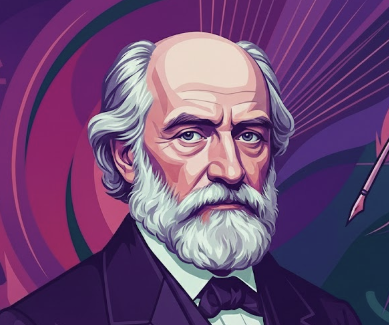
Life is a task to be done. It is a fine thing to say defunctus est; it means that the man has done his task.
▼
Source
source
"On the Sufferings of the World"

4 months 2 weeks ago
Let us be understood. If the Japanese surrender after the destruction of Hiroshima, having been intimidated, we will rejoice. But we refuse to see anything in such grave news other than the need to argue more energetically in favor of a true international society, in which the great powers will not have superior rights over small and middle-sized nations, where such an ultimate weapon will be controlled by human intelligence rather than by the appetites and doctrines of various states. Before the terrifying prospects now available to humanity, we see even more clearly that peace is the only goal worth struggling for. This is no longer a prayer but a demand to be made by all peoples to their governments a demand to choose definitively between hell and reason.

2 months 3 weeks ago
France wanted to make proselytes to her opinions, and turn every government in the world into a republic. If every government was against her, it was because she had declared herself hostile to every government. He knew of nothing to which this strange republic could be compared, but to the system of Mahomet, who with the koran in one hand, and a sword in the other, held out the former to the acceptance of mankind, and with the latter compelled them to adopt it as their creed. The koran which France held out, was the declaration of the rights of man and universal fraternity; and with the sword she was determined to propagate her doctrines, and conquer those whom she could not convince.
▼
Source
source
Speech in the House of Commons (14 December 1792), quoted in The Parliamentary History of England, From the Earliest Period to the Year 1803, Vol. XXX (1817), column 72
4 months 4 days ago
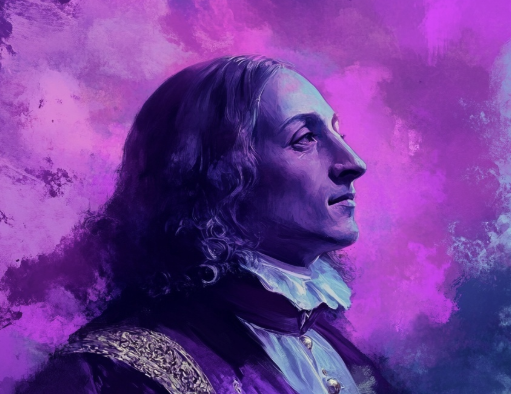
Do not imagine that it is less an accident by which you find yourself master of the wealth which you possess, than that by which this man found himself king.

3 months 3 days ago
Choose always the way that seems the best, however rough it may be; custom will soon render it easy and agreeable.
▼
Source
source
As quoted in A Dictionary of Thoughts: Being a Cyclopedia of Laconic Quotations from the Best Authors of the World, both Ancient and Modern (1908) by Tyron Edwards, p. 101
3 months 2 weeks ago
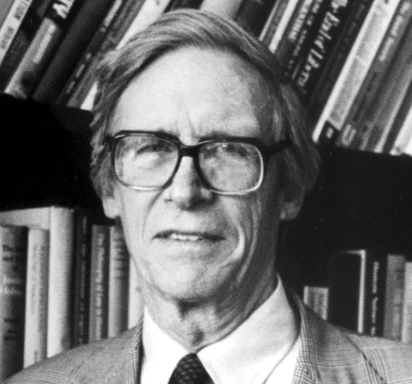
There are infinitely many variations of the initial situation and therefore no doubt indefinitely many theorems of moral geometry.
▼
Source
source
Chapter III, Section 21, pg. 126

3 months 3 weeks ago
Let me never fall into the vulgar mistake of dreaming that I am persecuted whenever I am contradicted.
▼
Source
source
November 8, 1838
1 month 2 weeks ago
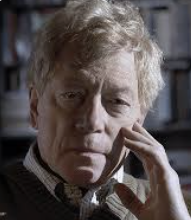
Schopenhauer argues that the empirical world exists only as a representation: 'every object, whatever its origin, is, as object, already conditioned by the subject, and thus is essentially only the subject's representation.' A representation is a subjective state that has been ordered according to space, time and causality - the primary forms of sensibility and understanding. So long as we turn our thoughts towards the natural world, and search for the thing-in-itself behind the representation is futile. Every argument and every experience leads only to the same end: the system of representations, standing like a veil between the subject and the thing-in-itself. No scientific investigation can penetrate the veil; and yet it is only a veil, Schopenhauer affirms, a tissue of illusions which we can, if we choose, penetrate by other means. The way to penetrate the veil was stumbled upon by Kant.
▼
Source
source
A Short History of Modern Philosophy (1981; 2nd ed. 1995), p. 177

3 months 3 weeks ago
I am convinced that everything has come down to us from the banks of the Ganges, - astronomy, astrology, metempsychosis, etc.
▼
Source
source
M. de Voltaire par M. Bailly et précédées de quelques lettres de M. de Voltaire a l'auteur, Paris 1777, quoted in E. F. Bryant, The Quest for the Origins of Vedic Culture (2001), Ch. 1
3 months 2 weeks ago
Then he tried to recall the lessons of Mr. Wisdom. "it is I myself, eternal Spirit, who drives this Me, the slave, along that ledge. I ought not to care whether he falls and breaks his neck or not. It is not he that is real, it is I - I - I.
▼
Source
source
Pilgrim's Regress 137
2 months 2 weeks ago
The wrinkles of a nation are as visible as those of an individual.
4 months 3 weeks ago
It is necessary that every thing which is harmonized, should be generated from that which is void of harmony, and that which is void of harmony from that which is harmonized. ...But there is no difference, whether this is asserted of harmony, or of order, or composition... the same reason will apply to all of these.
2 months 3 weeks ago
In this choice of inheritance we have given to our frame of polity the image of a relation in blood, binding up the constitution of our country with our dearest domestic ties, adopting our fundamental laws into the bosom of our family affections, keeping inseparable and cherishing with the warmth of all their combined and mutually reflected charities our state, our hearths, our sepulchres, and our altars.

3 months 3 weeks ago
To acquire immunity to eloquence is of the utmost importance to the citizens of a democracy.
▼
Source
source
Ch. 18: The Taming of Power
1 week 5 days ago
Here numerous persons, with big wigs many of them, and austere aspect, whom I take to be Professors of the Dismal Science, start up in an agitated vehement manner: but the Premier resolutely beckons them down again.
▼
Source
source
Latter Day Pamphlets, No. 1.
2 months 1 week ago
The State is always, whatever be its form - primitive, ancient, medieval, modern - an invitation issued by one group of men to other human groups to carry out some enterprise in common. That enterprise, be its intermediate processes what they may, consists in the long run in the organisation of a certain type of common life. ... [As Renan says,] "To have common glories in the past, a common will in the present; to have done great things together; to wish to do greater; these are the essential conditions which make up a people.... In the past, an inheritance of glories and regrets; in the future, one and the same programme to carry out.... The existence of a nation is a daily plebiscite."
▼
Source
source
Chapter XIV: Who Rules The World?

3 months 3 weeks ago
Religion, which should most distinguish us from the beasts, and ought most particularly elevate us, as rational creatures, above brutes, is that wherein men often appear most irrational, and more senseless than beasts.
▼
Source
source
Book IV, Ch. 18
2 months 2 weeks ago
The music of the soul is also the music of salesmanship. Exchange value, not truth value counts. On it centers the rationality of the status quo, and all alien rationality is bent to It.
▼
Source
source
p. 57

3 months 2 weeks ago
In any case, if you ever leave me with a handsome man, do not tell me that you trust me because, let me warn you: that is not what will prevent me from deceiving you, if I want to. On the contrary.
▼
Source
source
Jessica to her husband Hugo, Act 3, sc. 5
2 months 1 week ago
The most immediate result of this unbalanced specialisation has been that to-day, when there are more "scientists" than ever, there are much less "cultured" men than, for example, about 1750. And the worst is that with these turnspits of science not even the real progress of science itself is assured. For science needs from time to time, as a necessary regulator of its own advance, a labour of reconstitution, and, as I have said, this demands an effort towards unification, which grows more and more difficult, involving, as it does, ever-vaster regions of the world of knowledge. Newton was able to found his system of physics without knowing much philosophy, but Einstein needed to saturate himself with Kant and Mach before he could reach his own keen synthesis. Kant and Mach - the names are mere symbols of the enormous mass of philosophic and psychological thought which has influenced Einstein.
▼
Source
source
Chapter XII: The Barbarism Of "Specialisation"

2 months 2 weeks ago
This heaven will pass away, and the one above it will pass away. The dead are not alive, and the living will not die. In the days when you consumed what is dead, you made it what is alive. When you come to dwell in the light, what will you do? On the day when you were one you became two. But when you become two, what will you do?
2 months 4 days ago
Poems are magic ceremonies of language.
3 months 2 weeks ago
I have assumed throughout that the persons in the original position are rational.
▼
Source
source
Chapter III, Section 25, pg. 142
2 months 2 weeks ago
Philosophy, as I understand the word, is a positive theoretical science, and a science in an early stage of development. As such it has no more to do with belief than any other science. Indeed, I am bound to confess that it is at present in so unsettled a condition, that if the ordinary theorems of molecular physics and of archaeology are but the ghosts of beliefs, then to my mind, the doctrines of the philosophers are little better than the ghosts of ghosts. I know this is an extremely heretical opinion.
▼
Source
source
Lecture II : The Universal Categories, §3. Laws: Nominalism, CP 5.61
1 week 5 days ago
Consider, for example, the state of Science generally, in Europe, at this period. It is admitted, on all sides, that the Metaphysical and Moral Sciences are falling into decay, while the Physical are engrossing, every day, more respect and attention. In most of the European nations there is now no such thing as a Science of Mind; only more or less advancement in the general science, or the special sciences, of matter.

2 months 3 weeks ago
The debates of that great assembly are frequently vague and perplexed, seeming to be dragged rather than to march, to the intended goal. Something of this sort must, I think, always happen in public democratic assemblies.
▼
Source
source
Book One, Chapter XXI.
2 months 3 weeks ago
There are people with whom everything they consider a means turns mysteriously into an end.
▼
Source
source
Philosophical Fragments, P. Firchow, trans. (1991) § 428
1 week ago
The tiger that assails me is in the right, and I who strike him down am also in the right. I defend against him not my right, but myself.
▼
Source
source
S. Byington, trans. (1913), p. 191
CivilSimian.com created by AxiomaticPanic, CivilSimian, Kalokagathia