

2 months 3 weeks ago
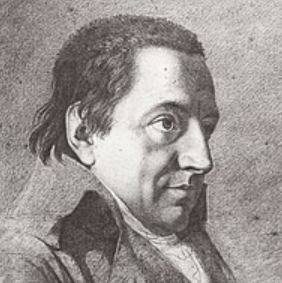
The Doctrine of Knowledge, apart from all special and definite knowing, proceeds immediately upon Knowledge itself, in the essential unity in which it recognises Knowledge as existing; and it raises this question in the first place - How this Knowledge can come into being, and what it is in its inward and essential Nature? The following must be apparent: - There is but One who is absolutely by and through himself, - namely, God; and God is not the mere dead conception to which we have thus given utterance, but he is in himself pure Life. He can neither change nor determine himself in aught within himself, nor become any other Being; for his Being contains within it all his Being and all possible Being, and neither within him nor out of him can any new Being arise.

3 months 3 weeks ago
Hitch your wagon to a star.
▼
Source
source
Civilization

3 months 4 weeks ago
Observe, observe perpetually.

3 months 3 weeks ago
Friendship is the greatest of worldly goods. Certainly to me it is the chief happiness of life. If I had to give a piece of advice to a young man about a place to live, I think I shd. say, 'sacrifice almost everything to live where you can be near your friends.
▼
Source
source
Letter to Arthur Greeves (29 December 1935) - in They Stand Together: The Letters of C. S. Lewis to Arthur Greeves (1914-1963) (1979), p. 477

3 months 3 weeks ago
As soon as it is held that any belief, no matter what, is important for some other reason than that it is true, a whole host of evils is ready to spring up. Discouragement of inquiry, ... is the first of these, but others are pretty sure to follow. Positions of authority will be open to the orthodox. Historical records must be falsified if they throw doubt on received opinion. Sooner or later unorthodoxy will come to be considered a crime to be dealt with by the stake, the purge, or the concentration camp. I can respect the men who argue that religion is true and therefore ought to be believed, but I can only feel profound moral reprobation for those who say that religion ought to be believed because it is useful, and that to ask whether it is true is a waste of time.
▼
Source
source
3 quoted from Why I Am Not a Muslim (1995), Ibn Warraq
2 months 2 weeks ago
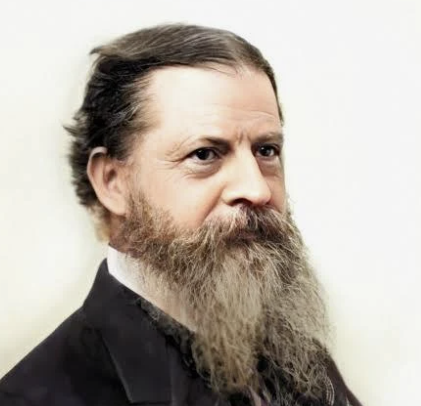
It is terrible to see how a single unclear idea, a single formula without meaning, lurking in a young man's head, will sometimes act like an obstruction ... in an artery, hindering the nutrition of the brain, and condemning its victim to pine away in the fullness of his intellectual vigor and in the midst of intellectual plenty.
▼
Source
source
How to make our ideas clear, Popular Science Monthly, Vol. 12

2 months 1 week ago
That is why St. John of the Cross calls faith a night. With those who have received a Christian education, the lower parts of the soul become attached to these mysteries when they have no right at all to do so. That is why such people need a purification of which St. John of the Cross describes the stages. Atheism and incredulity constitute an equivalent of such a purification.
▼
Source
source
Faiths of Meditation; Contemplation of the divine" as translated in The Simone Weil Reader (1957) edited by George A. Panichas, p. 418
3 months 3 weeks ago
I regard [religion] as a disease born of fear and as a source of untold misery to the human race.
2 months 2 weeks ago
Philosophy, as I understand the word, is a positive theoretical science, and a science in an early stage of development. As such it has no more to do with belief than any other science. Indeed, I am bound to confess that it is at present in so unsettled a condition, that if the ordinary theorems of molecular physics and of archaeology are but the ghosts of beliefs, then to my mind, the doctrines of the philosophers are little better than the ghosts of ghosts. I know this is an extremely heretical opinion.
▼
Source
source
Lecture II : The Universal Categories, §3. Laws: Nominalism, CP 5.61

3 months 3 weeks ago
I was seeing what Adam had seen on the morning of his creation - the miracle, moment by moment, of naked existence.
▼
Source
source
Pages 160-61
3 months 1 week ago
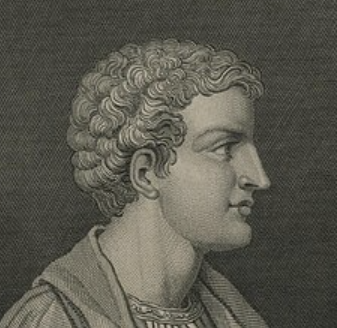
Nor word for word too faithfully translate.
▼
Source
source
Line 133 (tr. John Dryden)
3 months 3 weeks ago
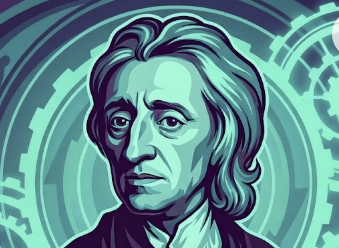
A criminal who, having renounced reason ... hath, by the unjust violence and slaughter he hath committed upon one, declared war against all mankind, and therefore may be destroyed as a lion or tyger, one of those wild savage beasts with whom men can have no society nor security. And upon this is grounded the great law of Nature, "Whoso sheddeth man's blood, by man shall his blood be shed."
▼
Source
source
Second Treatise of Civil Government, Ch. II, sec. 11
2 months 2 weeks ago
Injustice in this world is not something comparative; the wrong is deep, clear, and absolute in each private fate.
▼
Source
source
Ch. IV: The Aristocratic Ideal
4 months 1 week ago
For it still seemed to me that it is not we who sin, but some other nature sinned in us. And it gratified my pride to be beyond blame, and when I did anything wrong not to have to confess that I had done wrong. I loved to excuse my soul and to accuse something else inside me (I knew not what) but which was not I. But, assuredly, it was I, and it was my impiety that had divided me against myself. That sin then was all the more incurable because I did not deem myself a sinner.
▼
Source
source
A. Outler, trans. (Dover: 2002), Book 5, Chapter 10, p. 77

3 months 2 weeks ago
There are many difficulties impeding the rapid spread of reasonableness. One of the main difficulties is that it always takes two to make a discussion reasonable. Each of the parties must be ready to learn from the other. You cannot have a rational discussion with a man who prefers shooting you to being convinced by you.

1 week 6 days ago
The rudest heathen that worshipped Canopus, or the Caabah Black-Stone, he, as we saw, was superior to the horse that worshipped nothing at all! Nay there was a kind of lasting merit in that poor act of his; analogous to what is still meritorious in Poets: recognition of a certain endless divine beauty and significance in stars and all natural objects whatsoever.

4 months 2 weeks ago
The inexperienced in wisdom and virtue, ever occupied with feasting and such, are carried downward, and there, as is fitting, they wander their whole life long, neither ever looking upward to the truth above them nor rising toward it, nor tasting pure and lasting pleasures. Like cattle, always looking downward with their heads bent toward the ground and the banquet tables, they feed, fatten, and fornicate. In order to increase their possessions they kick and butt with horns and hoofs of steel and kill each other, insatiable as they are.

4 months 1 day ago
Further, it will not be amiss to distinguish the three kinds and, as it were, grades of ambition in mankind. The first is of those who desire to extend their own power in their native country, a vulgar and degenerate kind. The second is of those who labor to extend the power and dominion of their country among men. This certainly has more dignity, though not less covetousness. But if a man endeavor to establish and extend the power and dominion of the human race itself over the universe, his ambition (if ambition it can be called) is without doubt both a more wholesome and a more noble thing than the other two. Now the empire of man over things depends wholly on the arts and sciences. For we cannot command nature except by obeying her.
▼
Source
source
Aphorism 129

3 months 3 weeks ago
Truth gains more even by the errors of one who, with due study and preparation, thinks for himself, than by the true opinions of those who only hold them because they do not suffer themselves to think.
▼
Source
source
Ch. II: Of the Liberty of Thought and Discussion
4 months 6 days ago
Look now, this is the starting point of philosophy: the recognition that different people have conflicting opinions, the rejection of mere opinion so that it comes to be viewed with mistrust, an investigation of opinion to determine whether it is rightly held, and the discovery of a standard of judgement, comparable to the balance that we have devised for the determining of weights, or the carpenter's rule for determining whether things are straight or crooked.
▼
Source
source
Book II, ch. 11, 13.
2 months 6 days ago
The study of mathematics is apt to commence in disappointment... We are told that by its aid the stars are weighed and the billions of molecules in a drop of water are counted. Yet, like the ghost of Hamlet's father, this great science eludes the efforts of our mental weapons to grasp it.
▼
Source
source
ch. 1.
3 months 3 weeks ago
...an intellectual concept abstracts from everything sensuous, it is not abstracted from sensuous things, and perhaps would be more correctly called abstracting than abstract. Intellectual concepts it is more cautious, therefore, to call pure ideas, and concepts given only empirically, abstract ideas.

3 months 3 weeks ago
It is remarkable that among all the preachers there are so few moral teachers. The prophets are employed in excusing the ways of men.
▼
Source
source
p. 489

3 months 2 weeks ago
The only knowledge that can truly orient action is knowledge that frees itself from mere human interests and is based in Ideas-in other words knowledge that has taken a theoretical attitude.
▼
Source
source
p. 301

2 months 2 weeks ago
Heroes abound at the dawn of civilizations, during pre-Homeric and Gothic epochs, when people, not having yet experienced spiritual torture, satisfy their thirst for renunciation through a derivative: heroism.
1 month 2 weeks ago
Age may have one side, but assuredly Youth has the other. There is nothing more certain than that both are right, except perhaps that both are wrong. Let them agree to differ; for who knows but what agreeing to differ may not be a form of agreement rather than a form of difference?
▼
Source
source
Crabbed Age and Youth.
1 week ago
It is truly not the merit of the school if we do not come out selfish. Each sort of corresponding pride and every wind of covetousness, eagerness for office, mechanical and servile officiousness, hypocrisy, etc., is bound as much with extensive knowledge as with elegant, classical education, and since this whole instruction exercises no influence of any sort on our ethical behavior, it thus frequently falls to the fate of being forgotten in the same measure as it is not used: one shakes off the dust of the school.
▼
Source
source
p. 22
3 months 3 weeks ago
There is no rule more invariable than that we are paid for our suspicions by finding what we suspect.
▼
Source
source
Pearls of Thought (1881) p. 254
1 week 6 days ago
The uttered part of a man's life, let us always repeat, bears to the unuttered, unconscious part a small unknown proportion. He himself never knows it, much less do others.

3 months 3 weeks ago
Though experience be our only guide in reasoning concerning matters of fact; it must be acknowledged, that this guide is not altogether infallible, but in some cases is apt to lead us into errors.
▼
Source
source
Section 10 : Of Miracles Pt. 1


2 months 2 weeks ago
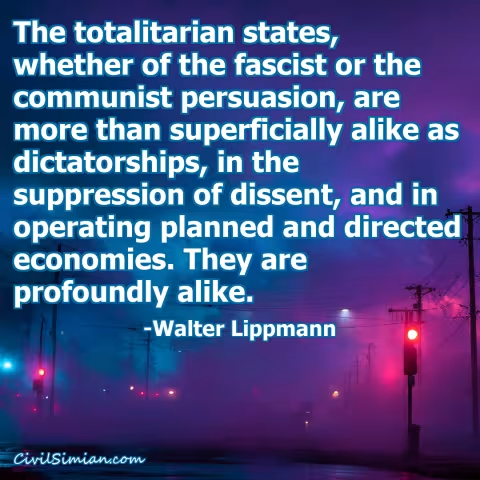
And Jesus answered and said unto her, Martha, Martha, thou art careful and troubled about many things, but one thing is needful: and Mary hath chosen that good part, which shall not be taken away from her.
▼
Source
source
10:41-42 (King James Version| KJV)
2 days ago
Symmetry is a vast subject, significant in art and nature. Mathematics lies at its root, and it would be hard to find a better one on which to demonstrate the working of the mathematical intellect.
▼
Source
source
Symmetry
4 months 3 weeks ago
A person might fairly doubt also what in the world they mean by the absolute - this that or the other, since, as they would themselves allow, the account of the humanity is one and the same in the absolute man, and in any individual man: for so far as the individual and the absolute man are both man, they will not differ at all: and if so, then the essential good and any particular good will not differ, in so far as both are good. Nor will it do to say that the eternity of the absolute good makes it to be more good; for a white thing which has lasted white ever so long, is no whiter than that which only lasts for a day.

4 months 1 week ago
Only after Winter comes do we know that the pine and the cypress are the last to fade.
3 months 4 weeks ago
Heretics cannot themselves appear good unless they depict the Church as evil, false, and mendacious. They alone wish to be esteemed as the good, but the Church must be made to appear evil in every respect.
▼
Source
source
Dictata super Psalterium (Dictations on the Psalter). This is Luther's first major work from the years 1513 to 1515.
4 months 1 day ago
The law of nature teaches me to speak in my own defence: With respect to this charge of bribery I am as innocent as any man born on St. Innocents Day. I never had a bribe or reward in my eye or thought when pronouncing judgment or order. I am ready to make an oblation of myself to the King.
▼
Source
source
(17 April 1621) Quoted by Baron John Campbell (1818), J. Murray in "The Lives of the Lord Chancellors and Keepers of the Great Seal of England"

3 months 1 week ago
Commit no slander; so that infamy and wickedness may not happen unto thee.
▼
Source
source
(p. 59)
3 months 3 weeks ago
Men tend to have the beliefs that suit their passions. Cruel men believe in a cruel God, and use their belief to excuse their cruelty. Only kindly men believe in a kindly God, and they would be kindly in any case.
▼
Source
source
In London Calling (1947), p. 18

3 months 2 weeks ago
...the reality of society involves the socialization of certain unrealities.
▼
Source
source
p. 455
1 month 2 weeks ago
You never have to change anything you got up in the middle of the night to write.
▼
Source
source
As quoted in The #1 New York Times Bestseller (1992) by John Bear, p. 93

2 months 3 weeks ago
Deny them this participation of freedom, and you break that sole bond, which originally made, and must still preserve the unity of the empire.
2 months 3 days ago
Human history began with an act of disobedience, and it is not unlikely that it will be terminated by an act of obedience.
▼
Source
source
Disobedience as a Psychological and Moral Problem in On Disobedience and Other Essays
3 months 3 weeks ago
I am writing to you to tell you of my decision to return to your Government the Carl von Ossietzsky medal for peace. I do so reluctantly and after two years of private approaches on behalf of Heinz Brandt, whose continued imprisonment is a barrier to coexistence, relaxation of tension and understanding between East and West... I regret not to have heard from you on this subject. I hope that you will yet find it possible to release Brandt through an amnesty which would be a boon to the cause of peace and to your country.
▼
Source
source
Letter to Walter Ulbricht, January 7, 1964.

1 month 2 weeks ago
There is no duty we so much underrate as the duty of being happy.
▼
Source
source
An Apology for Idlers.
2 months 1 day ago
He was then in his fifty-fourth year, when even in the case of poets reason and passion begin to discuss a peace treaty and usually conclude it not very long afterwards.
▼
Source
source
B 30
3 months 3 weeks ago
I deny that anyone knows, or can know, the nature of the two sexes, as long as they have only been seen in their present relation to one another. If men had ever been found in society without women, or women without men, or if there had been a society of men and women in which the women were not under the control of the men, something might have been positively known about the mental and moral differences which may be inherent in the nature of each. What is now called the nature of women is an eminently artificial thing - the result of forced repression in some directions, unnatural stimulation in others.
▼
Source
source
Ch. 1

1 month 1 week ago
I really have no claim to rank myself among fatalistic, materialistic, or atheistic philosophers. Not among fatalists, for I take the conception of necessity to have a logical, and not a physical foundation; not among materialists, for I am utterly incapable of conceiving the existence of matter if there is no mind in which to picture that existence; not among atheists, for the problem of the ultimate cause of existence is one which seems to me to be hopelessly out of reach of my poor powers. Of all the senseless babble I have ever had occasion to read, the demonstrations of these philosophers who undertake to tell us all about the nature of God would be the worst, if they were not surpassed by the still greater absurdities of the philosophers who try to prove that there is no God.
CivilSimian.com created by AxiomaticPanic, CivilSimian, Kalokagathia