

3 months ago
People do not feel in any way ashamed or guilty about spending money on new clothes or a new car instead of giving it to famine relief. (Indeed, the alternative does not occur to them.) This way of looking at the matter cannot be justified. When we buy new clothes not to keep ourselves warm but to look "well-dressed" we are not providing for any important need. We would not be sacrificing anything significant if we were to continue to wear our old clothes, and give the money to famine relief. By doing so, we would be preventing another person from starving. It follows from what I have said earlier that we ought to give money away, rather than spend it on clothes which we do not need to keep us warm. To do so is not charitable, or generous. Nor is it the kind of act which philosophers and theologians have called "supererogatory" - an act which it would be good to do, but not wrong not to do. On the contrary, we ought to give the money away, and it is wrong not to do so.

3 months 1 week ago
I may as well say at once that I do not distinguish between inference and deduction. What is called induction appears to me to be either disguised deduction or a mere method of making plausible guesses.
▼
Source
source
Principles of Mathematics (1903), Ch. II: Symbolic Logic, p. 11

2 months 6 days ago
Nothing proves that we are more than nothing.
1 month 3 weeks ago
I must also call your attention to the fact that it is crucial for my viewpoint that human behavior is to a large extent charged with a considerable amount of energy, but that in contrast to Freud I do not consider this energy to be sexual, but the vital energy within any organism which, according to biological laws, gives man the desire to live, and that means to adapt himself to the social necessities of his society. To go back to what I consider to be the misunderstanding, it has never been my position that society only deforms or manifests that which is already there. If we make the distinction between human necessities in general and human desires in particular then indeed, society creates particular desires which, however, follow the general laws of the necessities rooted in human nature.
3 weeks 4 days ago
We have always thought that Mr. Darwin has unnecessarily hampered himself by adhering so strictly to his favourite "Natura non facit saltum." We greatly suspect that she does make considerable jumps in the way of variation now and then, and that these saltations give rise to some of the gaps which appear to exist in the series of known forms.

3 months 2 weeks ago
The mad mob does not ask how it could be better, only that it be different. And when it then becomes worse, it must change again. Thus they get bees for flies, and at last hornets for bees. Whether Soldiers Can Also Be in a State of Grace
▼
Source
source
1526

3 months 2 weeks ago
They who have compared our lives to a dream were, perhaps, more in the right than they were aware of. When we dream, the soul lives, works, and exercises all its faculties, neither more nor less than when awake; but more largely and obscurely, yet not so much, neither, that the difference should be as great as betwixt night and the meridian brightness of the sun, but as betwixt night and shade; there she sleeps, here she slumbers; but, whether more or less, 'tis still dark, and Cimmerian darkness. We wake sleeping, and sleep waking.
▼
Source
source
tr. Cotton, rev. W. Carew Hazlitt, 1877
3 months 5 days ago
I work quite diligently and wish that I were better and smarter. And these both are one and the same.
▼
Source
source
In a letter to Paul Engelmann (1917) as quoted in The Idea of Justice (2010) by Amartya Sen, p. 31
1 month 3 weeks ago
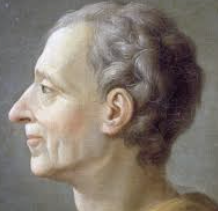
In France there are three kinds of professions: the church, the sword, and the long robe. Each hath a sovereign contempt for the other two. For example, a man who ought to be despised only for being a fool is often so because he is a lawyer.
▼
Source
source
No. 44 (Usbek writing to Rhedi)
2 months 2 days ago
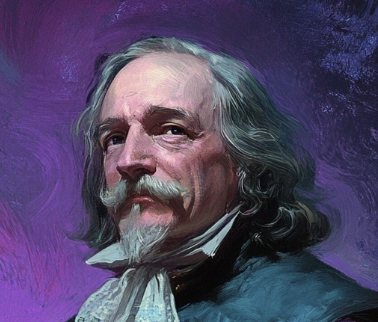
And seeing every man is presumed to do all things in order to his own benefit, no man is a fit Arbitrator in his own cause.
▼
Source
source
The First Part, Chapter 15, p. 78
2 months 4 weeks ago
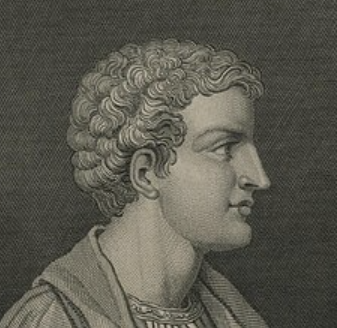
A host is like a general: calamities often reveal his genius.
▼
Source
source
Book II, satire viii, lines 73-74
2 months ago
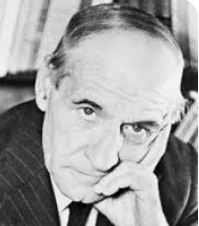
The history of the Roman Empire is also the history of the uprising of the Empire of the Masses, who absorb and annul the directing minorities and put themselves in their place. Then, also, is produced the phenomenon of agglomeration, of "the full." For that reason, as Spengler has very well observed, it was necessary, just as in our day, to construct enormous buildings. The epoch of the masses is the epoch of the colossal.
▼
Source
source
Chap.II: The Rise Of The Historic Level
2 months 1 week ago
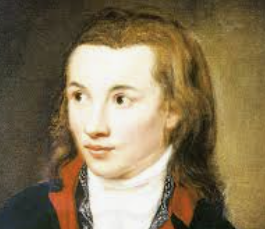
Man is the higher Sense of our Planet; the star which connects it with the upper world; the eye which it turns towards Heaven.

1 month 1 week ago
Art is not, as the metaphysicians say, the manifestation of some mysterious Idea of beauty or God; it is not, as the aesthetical physiologists say, [play or] a game in which one releases surplus energy, ...not the production of pleasing objects, and is above all, not pleasure itself, but it is the means of union among mankind, joining them in the same feelings, and necessary for the life and progress toward the good of the individual and of humanity.
2 months 1 week ago
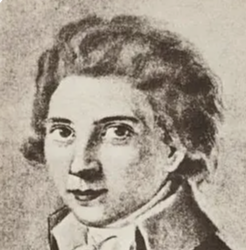
Where there is politics or economics, there is no morality.
▼
Source
source
"Selected Ideas (1799-1800)", Dialogue on Poetry and Literary Aphorisms, Ernst Behler and Roman Struc, trans. (1968) #101
2 months 1 day ago
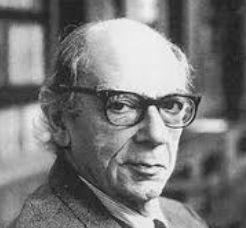
All forms of tampering with human beings, getting at them, shaping them against their will to your own pattern, all thought control and conditioning is, therefore, a denial of that in men which makes them men and their values ultimate.

2 months 6 days ago
Accordingly, time logically supposes a continuous range of intensity of feeling. It follows then, from the definition of continuity, that when any particular kind of feeling is present, an infinitesimal continuum of all feelings differing infinitesimally from that, is present.
3 months 1 week ago
What modern apologists call 'true' Christianity is something depending upon a very selective process. It ignores much that is to be found in the Gospels: for example, the parable of the sheep and the goats, and the doctrine that the wicked will suffer eternal torment in Hell fire. It picks out certain parts of the Sermon on the Mount, though even these it often rejects in practice. It leaves the doctrine of non-resistance, for example, to be practised only by non-Christians such as Gandhi. The precepts that it particularly favours are held to embody such a lofty morality that they must have had a divine origin. And yet ... these precepts were uttered by Jews before the time of Christ.
▼
Source
source
"Can Religion Cure Our Troubles?", in Stockholm newspaper Dagens Nyheter, part II., 11/11/1954
5 days ago
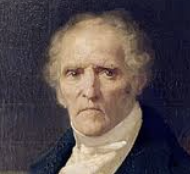
The Turks teach women that they have no souls, and are unworthy to enter paradise. The French would persuade them that they have no intellects, and are not made to engage in mental labors, and to tread the paths of art and science.
▼
Source
source
The Theory of Social Organization

3 months 1 week ago
Religion, therefore, as I now ask you arbitrarily to take it, shall mean for us the feelings, acts, and experiences of individual men in their solitude, so far as they apprehend themselves to stand in relation to whatever they may consider the divine. Since the relation may be either moral, physical, or ritual, it is evident that out of religion in the sense in which we take it, theologies, philosophies, and ecclesiastical organizations may secondarily grow.
▼
Source
source
Lecture II, "Circumscription of the Topic"


2 months 2 weeks ago
I thanke God for my happy Dreams|dreames, as I doe for my good rest, for there is a satisfaction in them unto reasonable desires, and such as can be content with a fit of happinesse; and surely it is not a melancholy conceite to thinke we are all asleepe in this world, and that the conceits of this life are as meare dreames to those of the next, as the Phantasmes of the night, to the conceit of the day. There is an equall delusion in both, and the one doth but seeme to bee the embleme or picture of the other;
▼
Source
source
Section 12
2 months 6 days ago
A pair of statements may be taken conjunctively or disjunctively; for example, "It lightens and it thunders," is conjunctive, "It lightens or it thunders" is disjunctive. Each such individual act of connecting a pair of statements is a new monad for the mathematician.
▼
Source
source
p. 268
2 months 1 week ago
Raise your eyes and count the small gang of your oppressors who are only strong through the blood they suck from you and through your arms which you lend them unwillingly.
2 months 1 week ago
I would rather be a devil in alliance with truth, than an angel in alliance with falsehood.

3 months 1 week ago
In this frame of mind it occurred to me to put the question directly to myself: "Suppose that all your objects in life were realized; that all the changes in institutions and opinions which you are looking forward to, could be completely effected at this very instant: would this be a great joy and happiness to you?" And an irrepressible self-consciousness distinctly answered, "No!" At this my heart sank within me: the whole foundation on which my life was constructed fell down. All my happiness was to have been found in the continual pursuit of this end. The end had ceased to charm, and how could there ever again be any interest in the means? I seemed to have nothing left to live for.
▼
Source
source
(pp. 133-134)
2 months 3 weeks ago
He made one of Antipater's recommendation a judge; and perceiving afterwards that his hair and beard were coloured, he removed him, saying, "I could not think one that was faithless in his hair could be trusty in his deeds."
▼
Source
source
40 Philip
3 months ago
We should infer in the case of a beautiful dwelling-place that it was built for its owners and not for mice; we ought, therefore, in the same way to regard the universe as the dwelling-place of the gods.
▼
Source
source
As quoted in De Natura Deorum by Cicero, iii. 10.

4 months 1 week ago
God creates out of nothing. Wonderful you say. Yes, to be sure, but He does what is still more wonderful: He makes saints out of sinners.

3 months 1 week ago
If this labourer were in possession of his own means of production, and was satisfied to live as a labourer, he need not work beyond beyond the time necessary for the reproduction of his means of subsistence, say 8 hours a day.
▼
Source
source
Vol. I, Ch. 11, pg. 336.
3 months 3 weeks ago
Why, what is weeping and sighing? A judgement. What is misfortune? A judgement. What are strife, disagreement, fault-finding, accusing, impiety, foolishness? They are all judgements.
▼
Source
source
Book III, ch. 3, 18, 19.

3 months 1 week ago
After experience had taught me that all the usual surroundings of social life are vain and futile; seeing that none of the objects of my fears contained in themselves anything either good or bad, except in so far as the mind is affected by them, I finally resolved to inquire whether there might be some real good having power to communicate itself, which would affect the mind singly, to the exclusion of all else: whether, in fact, there might be anything of which the discovery and attainment would enable me to enjoy continuous, supreme, and unending happiness.
▼
Source
source
I, 1

2 months 2 days ago
Oblivious of Democritus, the unwilling materialists of our day have generally been awkwardly intellectual and quite incapable of laughter. If they have felt anything, they have felt melancholy. Their allegiance and affection were still fixed on those mythical sentimental worlds which they saw to be illusory. The mechanical world they believed in could not please them, in spite of its extent and fertility. Giving rhetorical vent to their spleen and prejudice, they exaggerated nature's meagreness and mathematical dryness. When their imagination was chilled they spoke of nature, most unwarrantably, as dead, and when their judgment was heated they took the next step and called it unreal.
▼
Source
source
Ch. 3 "Mechanism"

5 days ago
A specter haunts the world and it is the specter of migration.
▼
Source
source
213
1 month 2 weeks ago
Modem mainstream economic theory bravely assumes that people make their decisions in such a way as to maximize their utility. Accepting this assumption enables economics to predict a great deal of behavior (correctly or incorrectly) without ever making empirical studies of human actors.
▼
Source
source
Simon (1990) "Invariants of Human Behavior" in: Annu. Rev. Psychol. 41: p. 6.
3 months 5 days ago
Our elucidations of the preliminary concept of phenomenology show that its essential character does not consist in its actuality as a philosophical "movement." Higher than actuality stands possibility. We can understand phenomenology solely by seizing upon it as a possibility.
▼
Source
source
Introduction: The Exposition of the Question of the Meaning of Being (Stambaugh translation)
2 months 1 week ago
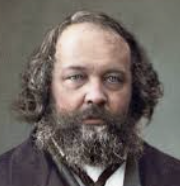
My dignity as a man, my human right which consists of refusing to obey any other man, and to determine my own acts in conformity with my convictions is reflected by the equally free conscience of all and confirmed by the consent of all humanity. My personal freedom, confirmed by the liberty of all, extends to infinity. The materialistic conception of freedom is therefore a very positive, very complex thing, and above all, eminently social, because it can be realized only in society and by the strictest equality and solidarity among all men.
1 month 5 days ago
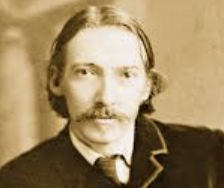
If wine is to withdraw its most poetic countenance, the sun of the white dinner-cloth, a deity to be invoked by two or three, all fervent, hushing their talk, degusting tenderly, and storing reminiscences-for a bottle of good wine, like a good act, shines ever in the retrospect-if wine is to desert us, go thy ways, old Jack!
▼
Source
source
Pt. I, ch. III

3 months 1 week ago
What I see is teeming cohesion, contained dispersal.... For him, to sculpt is to take the fat off space.
▼
Source
source
On Alberto Giacometti's work, Situations, in Braziller
3 months 1 week ago
The fact that a belief has a good moral effect upon a man is no evidence whatsoever in favor of its truth.
▼
Source
source
BBC Radio Debate on the Existence of God, Russell vs. Copleston, 1948
3 weeks 1 day ago
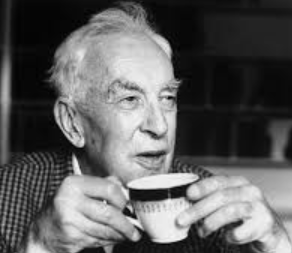
America is like a large, friendly dog in a very small room. Every time it wags its tail, it knocks over a chair!
▼
Source
source
In Quote: The Weekly Digest, vol. 23, no. 19 (4 May 1952) p. 16
3 months 1 week ago
Your crystal? That's silly. Whom do you think you are fooling? Come on, everyone knows that I threw the baby out of the window. The crystal is shattered on earth, and I do not care. I am no longer anything but a skin, and my skin does not belong to you.
▼
Source
source
Estelle to Inès, Act 1, sc. 5

3 months 1 week ago
For in spite of language, in spite of intelligence and intuition and sympathy, one can never really communicate anything to anybody.
▼
Source
source
"Sermons in Cats"

2 months 2 weeks ago
How old the world is! I walk between two eternities... What is my fleeting existence in comparison with that decaying rock, that valley digging its channel ever deeper, that forest that is tottering and those great masses above my head about to fall? I see the marble of tombs crumbling into dust; and yet I don't want to die!
▼
Source
source
Salon of 1767 (1798), Oeuvres esthétiques

4 days ago
Neoconservatives believed that history can be pushed along with the right application of power and will. Leninism was a tragedy in its Bolshevik version, and it has returned as farce when practiced by the United States. Neoconservatism, as both a political symbol and a body of thought, has evolved into something I can no longer support. ..."War" is the wrong metaphor for the broader struggle, since wars are fought at full intensity and have clear beginnings and endings. Meeting the jihadist challenge is more of a "long, twilight struggle" whose core is not a military campaign but a political contest for the hearts and minds of ordinary Muslims around the world.
▼
Source
source
From the essay "After Neoconservatism" in the New York Times Magazine

1 day ago
A witty statesman said, you might prove anything by figures.
▼
Source
source
Ch. 2, Statistics.

1 month 3 weeks ago
Let us go on committing suicide by working among our people, and let them dream life just as the lake dreams the sky.

2 months 2 weeks ago
Indeed, the drunken man while in that condition does not know the definition of drunkenness nor the scientific account of it; he has not the very least scientific knowledge of it. The sober man, on the other hand, knows the definition of drunkenness and its basis, yet he is not drunk in the very least. Again the doctor, when he is himself ill, knows the definition and causes of health and the remedies which restore it, and yet is lacking in health. Similarly there is a difference between knowing the true nature and causes and conditions of the ascetic life and actually leading such a life and forsaking the world.
▼
Source
source
III. The Classes of Seekers, p. 47.
1 day ago
For this also we will honour the poor Manchester Insurrection, and augur well of it. A deep unspoken sense lies in these strong men,- inconsiderable, almost stupid, as all they can articulate of it is. Amid all violent stupidity of speech, a right noble instinct of what is doable and what is not doable never forsakes them: the strong inarticulate men and workers, whom Fact patronises; of whom, in all difficulty and work whatsoever, there is good augury!
1 day ago
The great law of culture is: Let each become all that he was created capable of being.
▼
Source
source
Richter.
CivilSimian.com created by AxiomaticPanic, CivilSimian, Kalokagathia