


3 months 1 week ago
Let them have what instructions you will, and ever so learned lectures of breeding daily inculcated into them, that which will most influence their carriage will be the company they converse with, and the fashion of those about them.
▼
Source
source
Sec. 67
3 months 1 week ago
Monotheistic religions alone furnish the spectacle of religious wars, religious persecutions, heretical tribunals, that breaking of idols and destruction of images of the gods, that razing of Indian temples and Egyptian colossi, which had looked on the sun 3,000 years: just because a jealous god had said, 'Thou shalt make no graven image.'
4 months 1 week ago
Then the case is the same in all the other arts for the orator and his rhetoric; there is no need to know the truth of the actual matters, but one merely needs to have discovered some device of persuasion which will make one appear to those who do not know to know better than those who know.

3 months 1 week ago
The idea that the poor should have leisure has always been shocking to the rich.
▼
Source
source
Ch. 1: In Praise of Idleness

2 weeks 2 days ago
If there is anything unique about the human animal it is that it has the ability to grow knowledge at an accelerating rate while being chronically incapable of learning from experience. Science and technology are cumulative, whereas ethics and politics deal with recurring dilemmas. Whatever they are called, torture and slavery are universal evils; but these evils cannot be consigned to the past like redundant theories in science. They return under different names: torture as enhanced interrogation techniques, slavery as human trafficking. Any reduction in universal evils is an advance in civilization. But, unlike scientific knowledge, the restraints of civilized life cannot be stored on a computer disc. They are habits of behaviour, which once broken are hard to mend. Civilization is natural for humans, but so is barbarism.
▼
Source
source
An Old Chaos: Humanism and Flying Saucers (p. 75)

3 months 1 week ago
As for the Soothsayer, although I am certain no one feels the true beauties of that work better than I, I am far from finding these beauties in the same places as the infatuated public does. They are not the products of study and knowledge, but rather are inspired by taste and sensitivity.
▼
Source
source
First Dialogue; translated by Judith R. Bush, Christopher Kelly, Roger D. Masters


3 months 4 days ago
How can one be late to the end of history? A question for today. It is serious because it obliges one to reflect again, as we have been doing since Hegel, on what happens and deserves the name of event, after history; it obliges one to wonder if the end of history is but the end of a certain concept of history.
▼
Source
source
Injunctions of Marx

3 months 2 weeks ago
We are much beholden to Machiavel and others, that write what men do, and not what they ought to do.
▼
Source
source
Book II, xxi, 9
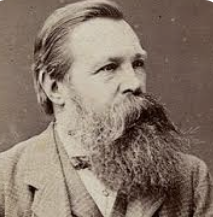
2 months 5 days ago
What do you say to the elections in the factory districts? Once again the proletariat has discredited itself terribly... [I]t cannot be denied that the increase of working-class voters has brought the Tories more than their mere additional percentage and has improved their relative position.
▼
Source
source
Letter to Karl Marx (18 November 1868), quoted in Karl Marx and Frederick Engels: Selected Correspondence, 1846-1895 (1942), pp. 253-254

2 months 2 weeks ago
But the Quincunx of Heaven runs low, and 'tis time to close the five ports of knowledge. We are unwilling to spin out our awaking thoughts into the phantasmes of sleep, which often continueth præcogitations; making Cables of Cobwebbes and Wildernesses of handsome Groves. Beside Hippocrates hath spoke so little and the Oneirocriticall Masters, have left such frigid Interpretations from plants, that there is little encouragement to dream of Paradise it self. Nor will the sweetest delight of Gardens afford much comfort in sleep; wherein the dulnesse of that sense shakes hands with delectable odours; and though in the Bed of Cleopatra, can hardly with any delight raise up the ghost of a Rose.
▼
Source
source
Ch. 5

1 month 1 week ago
The bow too tensely strung is easily broken.
▼
Source
source
Maxim 388
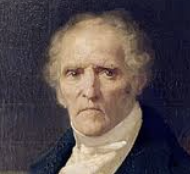
6 days ago
This miracle of social concord would result not from direct conciliation, which would be impossible, but from the development of new interests, and especially from the amazement with which the minds of men would be filled on being convinced of the radical falseness of the civilized social order by comparison with the associative or combined, and of the errors in which the social world has been so long plunged - misled by speculative philosophy, which upholds and extols this order with all its defects to the entire neglect of the study of association.
▼
Source
source
The Theory of Social Organization. Harmonian Man: Selected Writings of Charles Fourier, p. 5.

2 months 2 weeks ago
Men sometimes submit to shame, to tyranny, to conquest, but they never long suffer anarchy. There is no people so barbarous that they escape this general law of humanity.
▼
Source
source
Second letter on Algeria (1837), Travels in Algeria p. 38
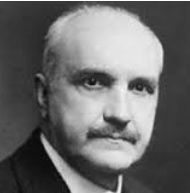
2 months 2 days ago
England is the paradise of individuality, eccentricity, heresy, anomalies, hobbies, and humors.
▼
Source
source
"The British Character"

6 days ago
Empire is a very stimulating account of globalisation, but it is hopelessly wrong on two central issues. The state has not withered away. Strong states still exist-USA, China, Germany, etc-but the difference with the past is that there is now only one Empire and this is not the nebulous entity imagined by Cultural Studies, but a real, living organism and it has a name; the United States of America.
▼
Source
source
Tariq Ali, How Bush Used 9/11 to Remap the World. CounterPunch, 8 July 2002.
3 months 1 week ago
A dog cannot relate his autobiography; however eloquently he may bark, he cannot tell you that his parents were honest but poor.
▼
Source
source
Human Knowledge: Its Scope and Limits (1948), part II, chapter 1, p. 74

2 months 6 days ago
The idea does not belong to the soul; it is the soul that belongs to the idea.
▼
Source
source
Vol. I, par. 216
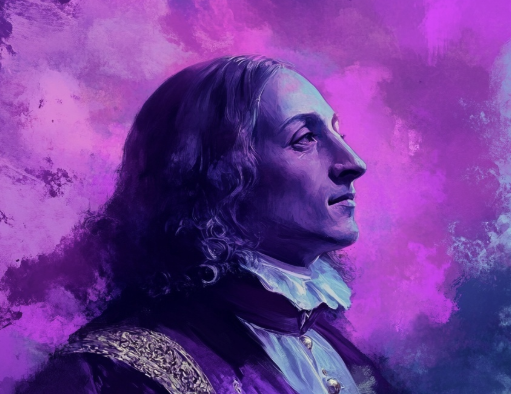
3 months 3 weeks ago
One of the principal reasons that diverts those who are entering upon this knowledge so much from the true path which they should follow, is the fancy that they take at the outset that good things are inaccessible, giving them the name great, lofty, elevated, sublime. This destroys everything. I would call them low, common, familiar: these names suit it better; I hate such inflated expressions.
2 months 1 week ago
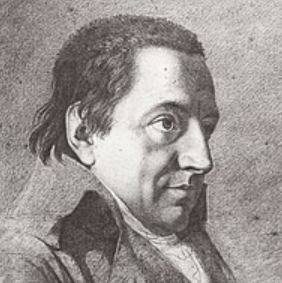
The End of the Life of Mankind on Earth is this,-that in this Life they may order all their relations with FREEDOM according to REASON.
▼
Source
source
p. 5

1 month 3 weeks ago
When I contemplate the green serenity of the fields or look into the depths of clear eyes through which shines a fellow-soul, my consciousness dilates, I feel the diastole of the soul and am bathed in the flood of the life that flows about me, and I believe in my future; but instantly the voice of mystery whispers to me, "Thou shalt cease to be!" the angel of Death touches me with his wing, and the systole of the soul floods the depth of my spirit with the blood of divinity.
2 months 4 weeks ago
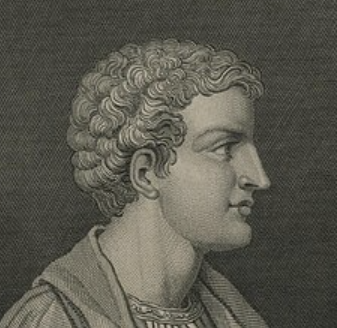
He will through life be master of himself and a happy man who from day to day can have said, "I have lived: tomorrow the Father may fill the sky with black clouds or with cloudless sunshine."
▼
Source
source
Book III, ode xxix, line 41

3 months 1 week ago
...the reality of society involves the socialization of certain unrealities.
▼
Source
source
p. 455
3 months 1 week ago
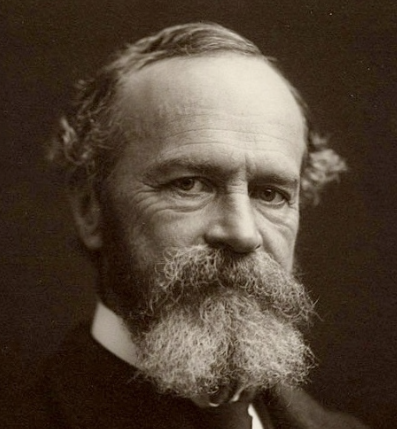
We can act as if there were a God; feel as if we were free; consider Nature as if she were full of special designs; lay plans as if we were to be immortal; and we find then that these words do make a genuine difference in our moral life.
▼
Source
source
Lecture III, "The Reality of the Unseen"
1 month 1 week ago
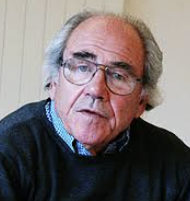
Not only does reality resist those who still criticize it, but it also abandons those who defend it. Maybe it is a way for reality to get its revenge from those who claim to believe in it for the sole purpose of eventually transforming it: sending back its supporters to their own desires.

4 weeks ago
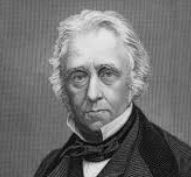
Oh! wherefore come ye forth, in triumph from the North,With your hands, and your feet, and your raiment all red? And wherefore doth your rout send forth a joyous shout? And whence be the grapes of the wine-press which ye tread?
▼
Source
source
The Battle of Naseby (1824), quoted in The Works of Lord Macaulay Complete, Vol. VIII, ed. Lady Trevelyan (1866), p. 551

1 month 1 week ago
To love life is to love God. Harder and more blessed than all else is to love this life in one's sufferings, in undeserved sufferings.
▼
Source
source
Bk. XIV, ch. 15

4 months 1 week ago
So it happens at times that a person believes that he has a world-view, but that there is yet one particular phenomenon that is of such a nature that it baffles the understanding, and that he explains differently and attempts to ignore in order not to harbor the thought that this phenomenon might overthrow the whole view, or that his reflection does not possess enough courage and resolution to penetrate the phenomenon with his world-view.
2 months ago
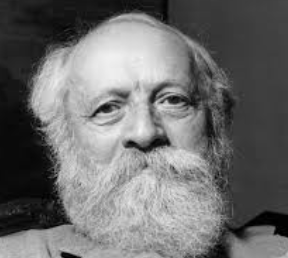
The world is not divine sport, it is divine destiny. There is divine meaning in the life of the world, of man, of human persons, of you and of me. Creation happens to us, burns itself into us, recasts us in burning - we tremble and are faint, we submit. We take part in creation, meet the Creator, reach out to Him, helpers and companions.

3 months 4 weeks ago
Continence is a branch of temperance, which prevents the diseases, infamy, remorse, and punishment, to which those are exposed, who indulge themselves in unlawful amours.
1 month 1 week ago
It is a bad plan that admits of no modification.
▼
Source
source
Maxim 469

2 months 1 week ago
On our earth we can only love with suffering and through suffering. We cannot love otherwise, and we know of no other sort of love. I want suffering in order to love. I long, I thirst, this very instant, to kiss with tears the earth that I have left, and I don't want, I won't accept life on any other!"
3 months 3 weeks ago
Rules necessary for axioms. Not to demand in axioms any but things perfectly evident.
1 month 3 weeks ago
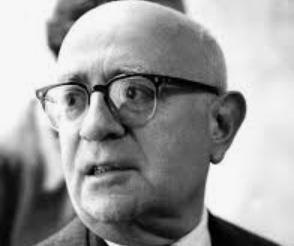
Jazz is the false liquidation of art - instead of utopia becoming reality it disappears from the picture.
▼
Source
source
Perennial fashion - Jazz, as quoted in The Sociology of Rock (1978) by Simon Frith

2 months 6 days ago
The same feeling of not belonging, of futility, wherever I go: I pretend interest in what matters nothing to me, I bestir myself mechanically or out of charity, without ever being caught up, without ever being somewhere. What attracts me is elsewhere, and I don't know where that elsewhere is.

2 months 3 weeks ago
When going to the temple to adore Divinity neither say nor do any thing in the interim pertaining to the common affairs of life.
▼
Source
source
Symbol 1
3 months 5 days ago
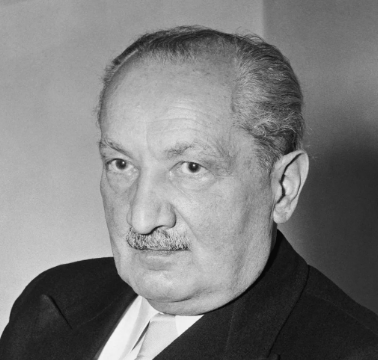
Everywhere we remain unfree and chained to technology, whether we passionately affirm or deny it. But we are delivered over to it in the worst possible way when we regard it as something neutral; for this conception of it, to which today we particularly like to do homage, makes us utterly blind to the essence of technology.
▼
Source
source
The Question Concerning Technology

3 months 2 weeks ago
But the other conception, namely the infusion of the soul, it is piously and suitably believed, was without any sin, so that while the soul was being infused, she would at the same time be cleansed from original sin and adorned with the gifts of God to receive the holy soul thus infused. And thus, in the very moment in which she began to live, she was without all sin.
▼
Source
source
Weimar edition of Martin Luther's Works, English translation edited by J. Pelikan [Concordia: St. Louis], Vol. 4, 694

2 months 3 weeks ago
The most difficult thing in life is to know yourself.
▼
Source
source
Know thyself. As quoted in Diogenes Laërtius, The Lives and Opinions of Eminent Philosophers, I, 40 Variant
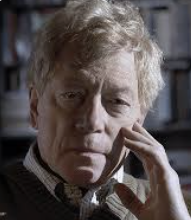
1 month 3 days ago
Burke emphasized that the new forms of politics, which hope to organize society around the rational pursuit of liberty, equality, fraternity, or their modernist equivalents, are actually forms of militant irrationality.
▼
Source
source
Why I became a conservative, The New Criterion
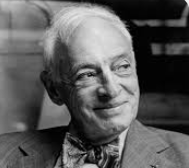
1 month 3 days ago
The university, in a society ruled by public opinion, was to have been an island of intellectual freedom where all views were investigated without restriction. ... But by consenting to play an active or "positive," a participatory role in society, the university has become inundated and saturated with the backflow of society's "problems." Preoccupied with questions of Health, Sex, Race, War, academics make their reputations and their fortunes. ... Any proposed reforms of liberal education which might bring the university into conflict with the whole of the U.S.A. are unthinkable. Increasingly, the people "inside" are identical in their appetites and motives with the people "outside" the university.
▼
Source
source
p. 18
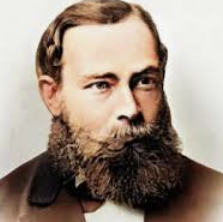
2 months 2 days ago
If I compare arithmetic with a tree that unfolds upward into a multitude of techniques and theorems while its root drives into the depths, then it seems to me that the impetus of the root.
▼
Source
source
Gottlob Frege, Montgomery Furth (1964). The Basic Laws of Arithmetic: Exposition of the System. p. 10
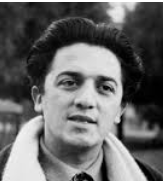
2 weeks 5 days ago
The public has lost the habit of movie-going because the cinema no longer possesses the charm, the hypnotic charisma, the authority it once commanded. The image it once held for us all - that of a dream we dreamt with our eyes open - has disappeared. Is it still possible that one thousand people might group together in the dark and experience the dream that a single individual has directed?
▼
Source
source
"Decline of Cinema"
3 months 2 weeks ago
The will is not free to strive toward whatever is declared good.
▼
Source
source
Thesis 10
2 months 5 days ago
What will be the attitude of communism to existing nationalities? The nationalities of the peoples associating themselves in accordance with the principle of community will be compelled to mingle with each other as a result of this association and thereby to dissolve themselves, just as the various estate and class distinctions must disappear through the abolition of their basis, private property.

3 months 2 weeks ago
The establishment of any new manufacture, of any new branch of commerce, or any new practice in agriculture, is always a speculation, from which the projector promises himself extraordinary profits. These profits sometimes are very great, and sometimes, more frequently, perhaps, they are quite otherwise; but in general they bear no regular proportion to those of other older trades in the neighbourhood. If the project succeeds, they are commonly at first very high. When the trade or practice becomes thoroughly established and well known, the competition reduces them to the level of other trades.
▼
Source
source
Chapter X, Part I, p. 136 (tendency of the rate of profit to fall).

3 months 2 weeks ago
The laws of conscience, which we pretend to be derived from nature, proceed from custom.
▼
Source
source
Ch. 22. Of Custom, tr. Cotton, rev. W. Hazlitt, 1842
2 months 3 weeks ago
Every body is in place; but nothing essentially incorporeal, or any thing of this kind, has any locality.
CivilSimian.com created by AxiomaticPanic, CivilSimian, Kalokagathia