


3 months 2 weeks ago
One mode of emotional excitability is exceedingly important in the composition of the energetic character, from its peculiarly destructive power over inhibitions. I mean what in its lower form is mere irascibility, susceptibility to wrath, the fighting temper; and what in subtler ways manifests itself as impatience, grimness, earnestness, severity of character. Earnestness means willingness to live with energy, though energy bring pain. The pain may be pain to other people or pain to one's self - it makes little difference; for when the strenuous mood is on one, the aim is to break something, no matter whose or what. Nothing annihilates an inhibition as irresistibly as anger does it; for, as Moltke says of war, destruction pure and simple is its essence.

3 months 2 weeks ago
Men go to a fire for entertainment. When I see how eagerly men will run to a fire, whether in warm or in cold weather, by day or by night, dragging an engine at their heels, I'm astonished to perceive how good a purpose the level of excitement is made to serve.
▼
Source
source
June, 1850

4 months 2 weeks ago
At this point of his effort man stands face to face with the irrational. He feels within him his longing for happiness and for reason. The absurd is born of this confrontation between the human need and the unreasonable silence of the world. This must not be forgotten. This must be clung to because the whole consequence of a life can depend on it. The irrational, the human nostalgia, and the absurd that is born of their encounter, these are the three characters in the drama that must necessarily end with all the logic of which an existence is capable.

4 months 2 weeks ago
In the New Testament sense, to be a Christian is, in an upward sense, as different from being a man as, in a downward sense, to be a man is different from being a beast. A Christian in the sense of the New Testament, although he stands suffering in the midst of life's reality, has yet become completely a stranger to this life; in the words of the Scripture and also of the Collects (which still are read-O bloody satire!-by the sort of priests we now have, and in the ears of the sort of Christians that now live) he is a stranger and a pilgrim-just think, for example of the late Bishop Mynster intoning, We are strangers and pilgrims in this world! A Christian in the New Testament sense is literally a stranger and a pilgrim, he feels himself a stranger, and everyone involuntarily feels that this man is a stranger to him.

3 months 2 weeks ago
In the long run the answer to all those who object to the doctrine of hell, is itself a question: What are you asking God to do? To wipe out their past sins and, at all costs, to give them a fresh start, smoothing every difficulty and offering every miraculous help? But He has done so, on Calvary. To forgive them? They will not be forgiven. To leave them alone? Alas, I am afraid that is what He does.

3 months 2 weeks ago
The instinctive foundation of the intellectual life is curiosity, which is found among animals in its elementary forms. Intelligence demands an alert curiosity, but it must be of a certain kind. The sort that leads village neighbours to try to peer through curtains after dark has no very high value. The widespread interest in gossip is inspired, not by a love of knowledge but by malice: no one gossips about other people's secret virtues, but only about their secret vices. Accordingly most gossip is untrue, but care is taken not to verify it. Our neighbour's sins, like the consolations of religion, are so agreeable that we do not stop to scrutinise the evidence closely.
▼
Source
source
On Education, Especially in Early Childhood (1926), Ch. 2: The Aims of Education, p. 50

2 months 2 days ago
Militarism, the destroyer of youth, the raper of women, the annihilator of the best in the race, the very mower of life.

2 months 3 weeks ago
Heroic love is the property of those superior natures who are called insane not because they do not know, but because they over-know.
▼
Source
source
As quoted in The Tragic Sense of Life (1913), by Miguel de Unamuno, as translated by J. E. Crawford

1 month 2 weeks ago
4 ways: Agnosticism, Relativism, Amorality, Morality.
1) I don't know. 2) Everybody is different. 3) Do whatever you can. 4) Do what you should.
Just now
But what we've got going wrong is we've got a kind of bifurcation [in cultural development]:You take your classified telephone directory, and open up "Churches", and have a ruler in your hand. And you will find that the longest space is occupied by authoritarian, Bible-banging churches. And these people are barbarians, who take the written word of the Bible literally. Because they need terribly, they have a personal need, for something to depend on. ... The government realizes that there is a very large number of people like that; and therefore, to keep their votes, they have to pander to those kind of people. And these are the boys who never grew up; they always need Papa. ... The trouble is that the boys who need Papa, are violent. They have the guns. And they are the types of people who like to be soldiers, policemen-tough guys. And therefore they have a great deal of power.
▼
Source
source
Interviewed on Les Hixon's show "In The Spirit" on WBAI New York
1 week 5 days ago
From the point of view of the development of Marx's theories, his early journalistic writings are important for two main reasons. In his sharp attacks on the censorship law he spoke out unequivocally for the freedom of the Press, against the levelling effect of government restriction ('You don't expect a rose to smell like a violet; why then should the human spirit, the richest thing we have, exist only in a single form?'), and also expressed views concerning the whole nature of the state and the essence of freedom. Pointing out that the vagueness and ambiguity of the Press law placed arbitrary power in the hands of officials, Marx went on to argue that censorship was contrary not only to the purposes of the Press, but to the nature of the state as such.
▼
Source
source
(pp. 120-1)
2 months 2 weeks ago
To get to know a truth properly, one must polemicize it.
▼
Source
source
Quoted in The Viking Book of Aphorisms by Wystan Hugh Auden (1962) p. 323
3 months 2 weeks ago
You must love the crust of the earth on which you dwell more than the sweet crust of any bread or cake; you must be able to extract nutriment out of a sand heap.
▼
Source
source
January 25, 1858

4 weeks ago
A global transition to a cruelty-free vegan diet won't just help non-human animals. The transition will also help malnourished humans who could benefit from the grain currently fed to factory-farmed animals. For factory-farming is not just cruel; it's energy-inefficient. Let's take just one example. Over the past few decades, millions of Ethiopians have died of "food shortages" while Ethiopia grew grain to sell to the West to feed cattle. Western meat-eating habits prop up the price of grain so that poor people in the developing world can't afford to buy it. In consequence, they starve by the millions.In my work, I explore futuristic, hi-tech solutions to the problem of suffering. But anybody who seriously wants to reduce human and non-human suffering alike should adopt a cruelty-free vegan lifestyle today.
▼
Source
source
"A World Without Suffering?", Instituto Humanitas Unisinos, Jan. 2011
2 months 1 week ago
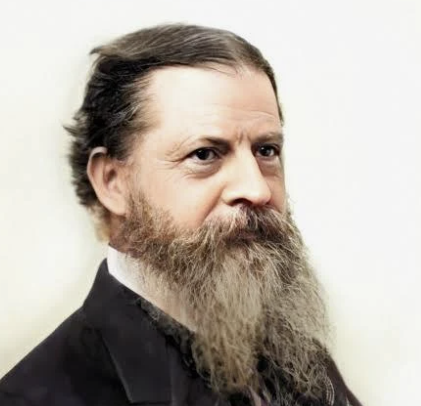
As soon as a thought or word becomes a tool, one can dispense with actually 'thinking' it, that is, with going through the logical acts involved in verbal formulation of it. As has been pointed out, often and correctly, the advantage of mathematics-the model of all neo-positivistic thinking-lies in just this 'intellectual economy.' Complicated logical operations are carried out without actual performance of the intellectual acts upon which the mathematical and logical symbols are based. ... Reason ... becomes a fetish, a magic entity that is accepted rather than intellectually experienced.
▼
Source
source
p. 23.
2 months 2 weeks ago
The old dualistic notion of mind and matter, so prominent in Cartesianism, as two radically different kinds of substance, will hardly find defenders to-day. Rejecting this, we are driven to some form of hylopathy, otherwise called monism.

3 months 3 weeks ago
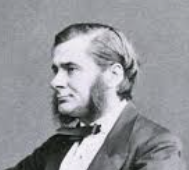
The more we devote ourselves to observing animals and their behaviour, the more we love them, on seeing how gready they care for their young; in such a context, we cannot even contemplate cruelty to a wolf. Leibnitz put the grub he had been observing back on the tree with its leaf, lest he should be guilty of doing any harm to it. It upsets a man to destroy such a creature for no reason, and this tenderness is subsequently transferred to man.
▼
Source
source
Part II, pp. 212-213
1 month 5 days ago
Whatever part of the animal fabric-whatever series of muscles, whatever viscera might be selected for comparison-the result would be the same-the lower Apes and the Gorilla would differ more than the Gorilla and the Man.
▼
Source
source
Ch.2, p. 101
3 months 2 weeks ago
Love may forgive all infirmities and love still in spite of them: but Love cannot cease to will their removal.

2 months 5 days ago
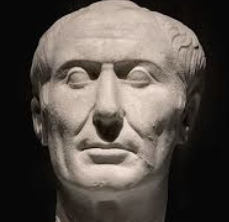
The Hebrews took for their idol, not something made of metal or wood, but a race, a nation, something just as earthly. Their religion is essentially inseparable from such idolatry, because of the notion of the "chosen people".
▼
Source
source
Section 2
1 month 2 weeks ago
The poor man is ruined as soon as he begins to ape the rich.
▼
Source
source
Maxim 941

3 months 3 weeks ago
For where God built a church, there the Devil would also build a chapel...Thus is the Devil ever God's ape.
▼
Source
source
67. Compare "Where God hath a temple, the Devil will have a chapel", Robert Burton, Anatomy of Melancholy, part III, section 4, member 1, subsection 1
2 months 1 week ago
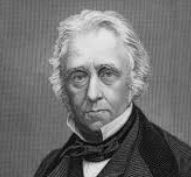
The endeavor of scientific research to see events in their more general connection in order to determine their laws, is a legitimate and useful occupation. Any protest against such efforts, in the name of freefom from restrictive conditions, would be fruitless if science did not naïvely identify the abstractions called rules and laws with the actually efficacious forces, and confuse the probability that B will follow A with the actual effort make B follow A.
▼
Source
source
p. 150.
1 month 1 week ago
I shall cheerfully bear the reproach of having descended below the dignity of history if I can succeed in placing before the English of the nineteenth century a true picture of the life of their ancestors.
▼
Source
source
Vol. I, ch. 1
3 months 3 weeks ago
Beneficence is a duty. He who often practices this, and sees his beneficent purpose succeed, comes at last really to love him whom he has benefited. When, therefore, it is said, "Thou shalt love thy neighbor as thyself," this does not mean, "Thou shalt first of all love, and by means of love (in the next place) do him good"; but: "Do good to thy neighbour, and this beneficence will produce in thee the love of men (as a settled habit of inclination to beneficence)."
▼
Source
source
Metaphysical Elements of Ethics (1780). Translated by Thomas Kingsmill Abbott, translation available at Philosophy.eserver.org. From section "Preliminary Notions of the Susceptibility of the Mind for Notions of Duty Generally", Part C ("Of love to men")
3 months 2 weeks ago
I do not believe that science per se is an adequate source of happiness, nor do I think that my own scientific outlook has contributed very greatly to my own happiness, which I attribute to defecating twice a day with unfailing regularity.
▼
Source
source
Letter to W. W. Norton (publisher), 27 January, 1931

3 months 3 weeks ago
We are delighted to find a person who values us as we value ourselves, and distinguishes us from the rest of mankind, with an attention not unlike that with which we distinguish ourselves.
▼
Source
source
Section III, Chap. I.

2 months 1 week ago
Get thee hence, Satan: for it is written, Thou shalt worship the Lord thy God, and him only shalt thou serve.
▼
Source
source
4:10 (KJV) Said to Satan.

3 months 3 weeks ago
Indeed, history is nothing more than a tableau of crimes and misfortunes.
▼
Source
source
L'Ingénu, ch.10 (1767) Quoted in The End, part 13 of A Series of Unfortunate Events
3 months 2 weeks ago
Real life is, to most men, a long second-best, a perpetual compromise between the ideal and the possible; but the world of pure reason knows no compromise, no practical limitations, no barrier to the creative activity embodying in splendid edifices the passionate aspiration after the perfect from which all great work springs. Remote from human passions, remote even from the pitiful facts of nature, the generations have gradually created an ordered cosmos, where pure thought can dwell as in its natural home, and where one, at least, of our nobler impulses can escape from the dreary exile of the actual world.

1 week 3 days ago
O reader, to what shifts is poor Society reduced, struggling to give still some account of herself, in epochs when Cash Payment has become the sole nexus of man to men!
▼
Source
source
Ch. 6, Laissez-Faire.

3 months 3 weeks ago
A wise man never loses anything, if he has himself.
▼
Source
source
Ch. 38. Of Solitude, tr. Cotton, rev. W. Hazlitt, 1842
2 months 2 weeks ago
We can never legitimately cut loose from our archetypal foundations unless we are prepared to pay the price of a neurosis, any more than we can rid ourselves of our body and its organs without committing suicide.
▼
Source
source
J.B. Priestley, Times Literary Supplement, London
3 months 2 weeks ago
Between the Shaman of the Tungus, the European prelate who rules church and state, the Voguls, and the Puritans, on the one hand, and the man who listens to his own command of duty, on the other, the difference is not that the former make themselves slaves, while the latter is free, but that the former have their lord outside themselves, while the latter carries his lord in himself, yet at the same time is his own slave.
2 months 1 week ago
He that dippeth his hand with me in the dish, the same shall betray me. The Son of man goeth as it is written of him: but woe unto that man by whom the Son of man is betrayed! it had been good for that man if he had not been born.
▼
Source
source
26:23-24 (KJV)
2 months 2 weeks ago
Every father is given the opportunity to corrupt his daughter's nature, and the educator, husband, or psychiatrist then has to face the music. For what has been spoiled by the father can only be made good by a father, just as what has been spoiled by the mother can only be repaired by a mother. The disastrous repetition of the family pattern could be described as the psychological original sin, or as the curse of the Atrides running through the generations.
▼
Source
source
Mysterium Coniunctionis (1955) CW 14: P. 232

3 months 3 weeks ago
Two Chinamen visiting Europe went to the theatre for the first time. One of them occupied himself with trying to understand the theatrical machinery, which he succeeded in doing. The other, despite his ignorance of the language, sought to unravel the meaning of the play. The former is like the astronomer, the latter the philosopher.
▼
Source
source
Vol. 2 "On Various Subjects" as translated in Essays and Aphorisms (1970), as translated by R. J. Hollingdale

4 months 2 weeks ago
Beholding beauty with the eye of the mind, he will be enabled to bring forth, not images of beauty, but realities (for he has hold not of an image but of a reality), and bringing forth and nourishing true virtue to become the friend of God and be immortal, if mortal man may.
2 months 1 week ago
Now precisely because Galilean science is, in the formation of its concepts, the technic of a specific Lebenswelt, it does not and cannot transcend this Lebenswelt. It remains essentially within the basic experiential framework and within the universe of ends set by this reality.
▼
Source
source
p. 164

3 months 2 weeks ago
Nature is too thin a screen; the glory of the One breaks in everywhere.
▼
Source
source
p. 182
2 months 2 weeks ago
Accordingly, time logically supposes a continuous range of intensity of feeling. It follows then, from the definition of continuity, that when any particular kind of feeling is present, an infinitesimal continuum of all feelings differing infinitesimally from that, is present.

3 months 2 weeks ago
The history of science, like the history of all human ideas, is a history of irresponsible dreams, of obstinacy, and of error. But science is one of the very few human activities - perhaps the only one - in which errors are systematically criticized and fairly often, in time, corrected. This is why we can say that, in science, we often learn from our mistakes, and why we can speak clearly and sensibly about making progress there.
▼
Source
source
Ch. 1 "Science : Conjectures and Refutations"
4 weeks ago
Any plea ... for institutionalized risk-assessment, beefed-up bioethics panels, academic review bodies, worse-case scenario planning, more intensive computer simulations, systematic long-term planning and the institutionalized study of existential risks is admirable. But so is urgent action to combat the global pandemic of suffering. "The easiest pain to bear is someone else's"
▼
Source
source
Objections, No 34
1 month 1 week ago
Kant's position is extremely subtle - so subtle, indeed, that no commentator seems to agree with any other as to what it is.
▼
Source
source
Some More -isms (p. 25)

3 months 2 weeks ago
The very cannibalism of the counterrevolution will convince the nations that there is only one way in which the murderous death agonies of the old society and the bloody birth throes of the new society can be shortened, simplified and concentrated, and that way is revolutionary terror.
▼
Source
source
"The Victory of the Counter-Revolution in Vienna," Neue Rheinische Zeitung, 7 November 1848.
3 months 2 weeks ago
The best university that can be recommended to a man of ideas is the gauntlet of the mobs.
▼
Source
source
Eloquence

3 months 2 weeks ago
For a truly religious man nothing is tragic.
▼
Source
source
Conversation of 1930
3 months 3 weeks ago
One must never forget to look at the aim of a matter.
▼
Source
source
Act III, scene xi

1 month 2 weeks ago
And therefore just as a brigand caught in broad daylight in the act cannot persuade us that he did not lift his knife in order to rob his victim of his purse, and had no thought of killing him, we too, it would seem, cannot persuade ourselves or others that the soldiers and policemen around us are not to guard us, but only for defense against foreign foes, and to regulate traffic and fetes and reviews; we cannot persuade ourselves and others that we do not know that the men do not like dying of hunger, bereft of the right to gain their subsistence from the earth on which they live; that they do not like working underground, in the water, or in the stifling heat, for ten to fourteen hours a day, at night in factories to manufacture objects for our pleasure. One would imagine it impossible to deny what is so obvious. Yet it is denied.
▼
Source
source
Chapter XII, Conclusion-Repent Ye, for the Kingdom of Heaven is at Hand
CivilSimian.com created by AxiomaticPanic, CivilSimian, Kalokagathia