


3 months 3 weeks ago
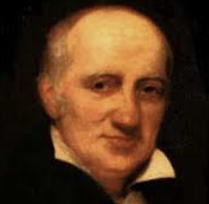
England and France, the two most civilized nations on earth, who are in contrast to each other because of their different characters, are, perhaps chiefly for that reason, in constant feud with one another. Also, England and France, because of their inborn characters, of which the acquired and artificial character is only the result, are probably the only nations who can be assumed to have a particular and, as long as both national characters are not blended by the force of war, unalterable characteristics. That French has become the universal language of conversation, especially in the feminine world, and that English is the most widely used language of commerce among tradesmen, probably reflects the difference in their continental and insular geographic situation.
▼
Source
source
Kant, Immanuel (1996), page 226


2 months 2 weeks ago
Ministers become a sort of miniature kings in their turn. Though they have the greatest opportunity of observing the impotence and unmeaningness of the character, they envy it. It is their trade perpetually to extol the dignity and importance of the master they serve; and men cannot long anxiously endeavor to convince others of the truth of any proposition without becoming half convinced themselves.
▼
Source
source
Book V, Ch. 5

2 months 2 weeks ago
If there is to be any philosophy at all, this contradiction must be resolved - and the solution of this problem, or answer to the question: how can we think both of Presentations as conforming to objects, and objects as conforming to presentations? is, not the first, but the highest task of transcendental philosophy.

3 months 3 weeks ago
I have seen no more evident monstrosity and miracle in the world than myself.
▼
Source
source
Ch. 11

2 months 2 weeks ago
Let us speak plainly: everything which keeps us from self-dissolution, every lie which protects us against our unbreathable certitudes is religious.
3 months 3 weeks ago
Not being able to govern events, I govern myself.
▼
Source
source
Book II, Ch. 17

3 months 2 weeks ago
The finest workers in stone are not copper or steel tools, but the gentle touches of air and water working at their leisure with a liberal allowance of time.

4 months 2 weeks ago
Certain success evicts one from the paradise of winning against the odds.
2 months 3 weeks ago
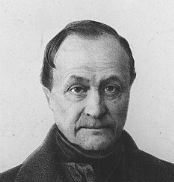
A common monetary standard will be established, with the consent of the various governments, by which industrial transactions will be greatly facilitated. Three spheres made respectively of gold, silver, and platinum, and each weighing fifty grammes, would differ sufficiently in value for the purpose. The sphere should have a small flattened base, and on the great circle parallel to it the Positivist motto would be inscribed. At the pole would be the image of the immortal Charlemagne, the founder of the Western Republic, and round the image his name would be engraved, in its Latin form, Carolus; that name, respected as it is by all nations of Europe alike, would be the common appellation of the universal monetary standard.
▼
Source
source
p. 430
1 week 4 days ago
In 1903 there appeared Problems of Idealism, a collection of essays many of whose authors had recently been Marxists, but which condemned Marxism and materialism for their moral nihilism, contempt of personality, determinism, and fanatical pursuit of social values regardless of the individuals who made up society; they also attacked Marxism for its uncritical worship of progress and sacrifice of the present to the future.
▼
Source
source
(pp. 420-1)

2 months 1 day ago
One simple method is to take a pen or pencil and hold it up against a blank wall or ceiling. Now concentrate on the pen as if it is the most important thing in the world. Then allow your sense to relax, so you see the pen against the background of the wall. Concentrate again. Relax again. Keep on doing this until you become aware of the ability to focus attention at will. You will find that this unaccustomed activity of the will is tiring; it produces a sense of strain behind the eyes. My own perception is that if you persist, in spite of the strain, the result is acute discomfort, followed by a sudden immense relief - the 'peak experience'.
▼
Source
source
p. 33
3 months 2 days ago
The fleshless diet contributes to health and to a suitable endurance of hard work in philosophy.
▼
Source
source
1, 2, 1

3 months 3 weeks ago
But by far the greatest obstacle to the progress of science and to the undertaking of new tasks and provinces therein is found in this - that men despair and think things impossible.
▼
Source
source
Aphorism 92

3 months 2 weeks ago
There is a freemasonry among the dull by which they recognize and are sociable with the dull, as surely as a correspondent tact in men of genius.
▼
Source
source
1827

3 months 3 weeks ago
Let us not flutter too high, but remain by the manger and the swaddling clothes of Christ, in whom dwelleth all the fulness of the Godhead bodily.
▼
Source
source
50

1 month 2 weeks ago
When the woman showed her love for the children that were not her own, and wept over them, I saw in her the living God, and understood What men live by.
▼
Source
source
Ch. XI

3 months 2 weeks ago
The career a young man should choose should be] one that is most consonant with our dignity, one that is based on ideas of whose truth we are wholly convinced, one that offers us largest scope in working for humanity and approaching that general goal towards which each profession offers only one of the means: the goal of perfection ... If he works only for himself he can become a famous scholar, a great sage, an excellent imaginative writer [Dichter], but never a perfected, a truly great man.
▼
Source
source
in Karl Marx and World Literature (1976) by S. S. Prawer, p. 2.

2 months 4 days ago
If a young girl is being forced into a brothel she will not talk about her rights. In such a situation the word would sound ludicrously inadequate.
▼
Source
source
p. 63

4 months 1 week ago
The Law teaches that the universe was invented and created by God, and that it did not come into being by chance or by itself.

3 months 2 weeks ago
"Their own strength has betrayed them. They have [...] pulled down Deep Heaven on their heads."
▼
Source
source
Ch. 13 : They Have Pulled Down Deep Heaven on Their Heads

3 months 4 weeks ago
Origen, of course, is also a great advocate of the allegorical approach. Yet I think you will have to admit that our modem theologians either despise this method of interpretation or are completely ignorant of it. As a matter of fact they surpass the pagans of antiquity in the subtlety of their distinctions.
▼
Source
source
p. 63

1 month 2 weeks ago
Truth is ... one approach to the attainment of the good, but in and of itself, it is neither the good nor the beautiful ... Socrates, Pascal, and others regarded knowledge of the truth with regard to purposeless objects as incongruous with the good ... [by] exposing deception, truth destroys illusion, which is the principle attribute of beauty.

4 months 2 weeks ago
Old age realizes the dreams of youth: look at Dean Swift; in his youth he built an asylum for the insane, in his old age he was himself an inmate.

2 months 2 weeks ago
The African [slave] trade was, in his opinion, an absolute robbery. It therefore could not be a doubt with the House, whether it was proper to abolish it.
▼
Source
source
Speech in the House of Commons (12 May 1789), quoted in The Parliamentary History of England, From the Earliest Period to the Year 1803, Vol. XXVIII (1816), column 96

3 months 2 weeks ago
Is there any knowledge in the world which is so certain that no reasonable man could doubt it?

3 days ago
We know nothing of tomorrow; our business is to be good and happy today.
▼
Source
source
Vol. I, ch. 12, p. 472
3 months 2 weeks ago
He is great who is what he is from Nature, and who never reminds us of others.
▼
Source
source
Uses of Great Men

2 months 1 day ago
Our whole civilization, our entire culture is concentrated in the mad demand for the most perfected weapons of slaughter. Ammunition! Ammunition! O, Lord, thou who rulest heaven and earth, thou God of love, of mercy and of justice, provide us with enough ammunition to destroy our enemy. Such is the prayer which is ascending daily to the Christian heaven.
3 months 3 weeks ago
Every rich man is avaricious, in my opinion.
▼
Source
source
Ch. 14
2 months 3 days ago
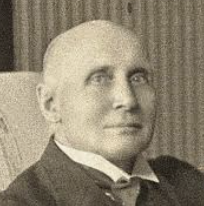
We find here the final application of the doctrine of objective immortality. Throughout the perishing occasions in the life of each temporal Creature, the inward source of distaste or of refreshment, the judge arising out of the very nature of things, redeemer or goddess of mischief, is the transformation of Itself, everlasting in the Being of God. In this way, the insistent craving is justified - the insistent craving that zest for existence be refreshed by the ever-present, unfading importance of our immediate actions, which perish and yet live for evermore.
4 months 1 week ago
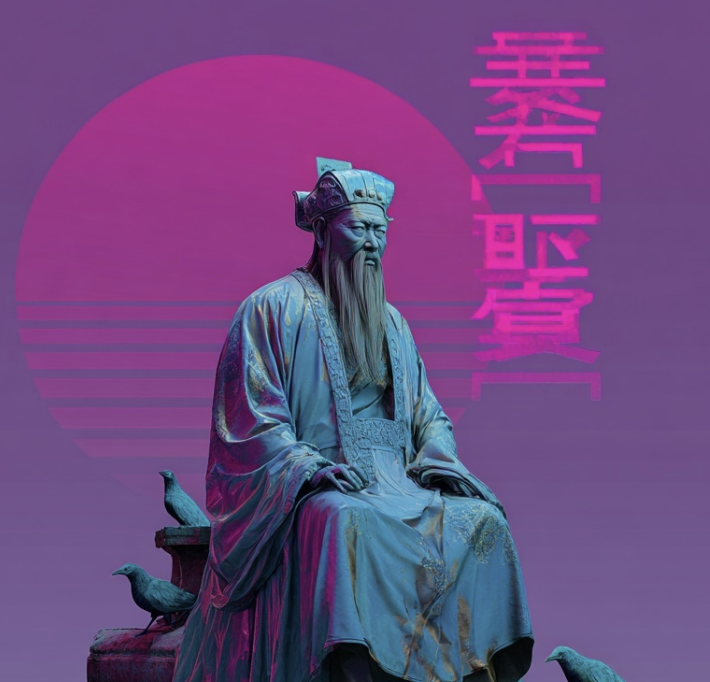
It is soft, smooth and shining like intelligence. Its edges seem sharp but do not cut like justice. It hangs down to the ground like humility. When struck, it gives a clear, ringing sound like music. The strains in it are not hidden and add to its beauty like truthfulness.' What imagination! Confucius extolled Jade's virtues this way.
3 months 2 weeks ago
My first advice (on how not to grow old) would be to choose you ancestors carefully. Although both my parents died young, I have done well in this respect as regards my other ancestors. My maternal grandfather, it is true, was cut off in the flower of his youth, at the age of sixty-seven, but my other three grandparents all lived to be over eighty. Of remoter ancestors I can only discover one who did not live to a great age, and he died of a disease which is now rare, namely, having his head cut off.
▼
Source
source
p. 50

3 months 3 weeks ago
Beauty is no quality in things themselves: It exists merely in the mind which contemplates them; and each mind perceives a different beauty. One person may even perceive deformity, where another is sensible of beauty; and every individual ought to acquiesce in his own sentiment, without pretending to regulate those of others.
▼
Source
source
Part I, Essay 23: Of The Standard of Taste

3 months 2 weeks ago
If I were to give a simple formula or recipe for distinguishing between what I consider to be admissible plans for social reform and inadmissible Utopian blueprints, I might say: Work for the elimination of concrete evils rather than for the realization of abstract goods. Do not aim at establishing happiness by political means. Rather aim at the elimination of concrete miseries.
▼
Source
source
p. 385

2 months 1 week ago
Is this fight against history part of the fight against a dimension of the mind in which centrifugal faculties and forces might develop-faculties and forces that might hinder the total coordination of the individual with the society? Remembrance of the Fast may give rise to dangerous insights, and the established society seems to be apprehensive of the subversive contents of memory. Remembrance is a mode of dissociation from the given facts, a mode of "mediation" which breaks, for short moments, the omnipresent power of the given facts. Memory recalls the terror and the hope that passed. Both come to life again.
▼
Source
source
p. 98

2 months 2 weeks ago
Money is coined liberty, and so it is ten times dearer to the man who is deprived of freedom. If money is jingling in his pocket, he is half consoled, even though he cannot spend it. But money can always and everywhere be spent, and, moreover, forbidden fruit is sweetest of all.
▼
Source
source
The House of the Dead (1862) ch. 1; as translated by Constance Garnett (1915), p. 16

3 months 1 week ago
May we be those who shall heal this world.
▼
Source
source
Yasna 30,9

2 months 5 days ago
Martyrs create faith, faith does not create martyrs.
2 months 5 days ago
Underlying even the so-called problem of knowledge there is simply this human feeling, just as underlying the inquiry into the "why," the cause, there is simply the search for the "wherefore," the end. All the rest is either to deceive oneself or to wish to deceive others; and to wish to deceive others in order to deceive oneself.
4 months 2 weeks ago
Outside intelligences, exploring the Solar System with true impartiality, would be quite likely to enter the Sun in their records thus: Star X, spectral class G0, 4 planets plus debris.
3 months 4 weeks ago
In living bodies, how all the various limbs harmonize, and mutually combine, for common defence against injury! What can be more heterogeneous, and unlike, than the body and the soul? and yet with what strong bonds nature has united them, is evident from the pang of separation. As life itself is nothing else but the concordant union of body and soul, so is health the harmonious cooperation of all the parts and functions of the body.

3 months 2 weeks ago
Understand me: I wish to be a man from somewhere, a man among men. You see, a slave, when he passes by, weary and surly, carrying a heavy load, limping along and looking down at his feet, only at his feet to avoid falling down; he is in his town, like a leaf in greenery, like a tree in a forest, argos surrounds him, heavy and warm, full of herself; I want to be that slave, Electra, I want to pull the city around me and to roll myself up in it like a blanket. I will not leave.
▼
Source
source
Orestes to Electra, Act 2


2 months 1 week ago
Sleep on now, and take your rest: behold, the hour is at hand, and the Son of man is betrayed into the hands of sinners. Rise, let us be going: behold, he is at hand that doth betray me.
▼
Source
source
26:45-46 (KJV)
2 months 2 weeks ago
Pursued by our origins...we all are.
3 months 1 week ago
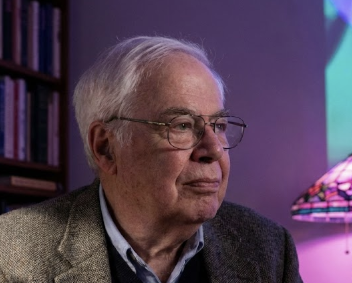
Rather, we heirs of Enlightenment think of enemies of liberal democracy like Nietzsche or Loyola as, to use Rawls's word, "mad." We do so because there is no way to see them as fellow citizens of our constitutional democracy, people whose life plans might, given ingenuity and good will, be fitted in with those of other citizens. They are crazy because the limits of sanity are set by what we can take seriously. This, in turn, is determined by our upbringing, our historical situation.
1 month 2 weeks ago
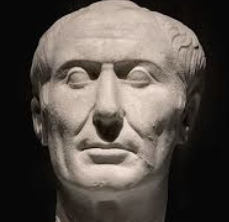
Solitude is the mother of anxieties.
▼
Source
source
Maxim 222
2 months 1 week ago
Is it always permissible to speak of the extension of a concept, of a class? And if not, how do we recognize the exceptional cases? Can we always infer from the extension of one concept's coinciding with that of a second, that every object which falls under the first concept also falls under the second?
▼
Source
source
Vol. 2, p. 127. Replying to Bertrand Russell's letter about Russell's Paradox; quoted in The Stanford Encyclopedia of Philosophy
CivilSimian.com created by AxiomaticPanic, CivilSimian, Kalokagathia