




2 months 1 week ago
If any man will come after me, let him deny himself, and take up his cross, and follow me. For whosoever will save his life shall lose it: and whosoever will lose his life for my sake shall find it. For what is a man profited, if he shall gain the whole world, and lose his own soul? or what shall a man give in exchange for his soul? For the Son of man shall come in the glory of his Father with his angels; and then he shall reward every man according to his works. Verily I say unto you, There be some standing here, which shall not taste of death, till they see the Son of man coming in his kingdom.
▼
Source
source
16:24-28 (KJV)

3 months 1 week ago
There are two forms of knowledge, one genuine, one obscure. To the obscure belong all of the following: sight, hearing, smell, taste, feeling. The other form is the genuine, and is quite distinct from this. [And then distinguishing the genuine from the obscure, he continues:] Whenever the obscure [way of knowing] has reached the minimum sensibile of hearing, smell, taste, and touch, and when the investigation must be carried farther into that which is still finer, then arises the genuine way of knowing, which has a finer organ of thought.

3 months 2 weeks ago
The doctrine that there is as much science in a subject as... mathematics in it, or as much... measurement or 'precision' in it, rests upon... misunderstanding.
3 months 6 days ago
When one asked him what boys should learn, "That," said he, "which they shall use when men."
▼
Source
source
Of Agesilaus the Great
3 months 2 weeks ago
A reproach can only hurt if it hits the mark. Whoever knows that he does not deserve a reproach can treat it with contempt.

3 months 3 weeks ago
Avarice, the spur of industry, is so obstinate a passion, and works its way through so many real dangers and difficulties, that it is not likely to be scared by an imaginary danger, which is so small, that it scarcely admits of calculation. Commerce, therefore, in my opinion, is apt to decay in absolute governments, not because it is there less secure, but because it is less honourable.
▼
Source
source
Part I, Essay 12: Of Civil Liberty

3 months 2 weeks ago
Neither of us cares a straw for popularity. A proof of this is for example, that, because of aversion to any personality cult, I have never permitted the numerous expressions of appreciation from various countries with which I was pestered during the existence of the International to reach the realm of publicity, and have never answered them, except occasionally by a rebuke. When Engels and I first joined the secret Communist Society we made it a condition that everything tending to encourage superstitious belief in authority was to be removed from the statutes.
▼
Source
source
Remarks against personality cults from a letter to W. Blos (10 November 1877).

2 weeks ago
We aspire not to equality but to domination. Countries inhabited by foreign races must become again countries of serfs, farm laborers, and factory workers. The goal is not to suppress inequities, but, rather, to amplify them and to make of them a matter of course.
▼
Source
source
as translated by Asselin Charles, in "Colonial Discourse Since Christopher Columbus," Journal of Black Studies, Vol. 26, No. 2 (November 1995), p. 147

2 months 2 weeks ago
Let us speak plainly: everything which keeps us from self-dissolution, every lie which protects us against our unbreathable certitudes is religious.
3 months 3 weeks ago
Percepts and phenomena which precedes the logical use of the intellect is called appearance, while the reflex knowledge originating from several appearances compared by the intellect is called experience.

3 months 2 weeks ago
Nothing contributes more to nourish elevation of sentiments in a people, than the large and free character of their habitations.
▼
Source
source
(p. 55)

4 months 4 days ago
Anger is a weed; hate is the tree.
▼
Source
source
58 Alternate versions: Anger is a stem, hate is a trunk. Anger is the mote, hate is the beam.
2 months 2 weeks ago
As far as we can discern, the sole purpose of human existence is to kindle a light in the darkness of mere being.
▼
Source
source
p. 326
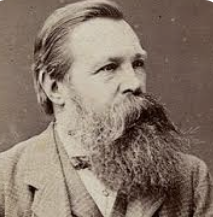
2 months 2 weeks ago
Big industry, freed from the pressure of private property, will undergo such an expansion that what we now see will seem as petty in comparison as manufacture seems when put beside the big industry of our own day. This development of industry will make available to society a sufficient mass of products to satisfy the needs of everyone. The same will be true of agriculture, which also suffers from the pressure of private property and is held back by the division of privately owned land into small parcels. Here, existing improvements and scientific procedures will be put into practice, with a resulting leap forward which will assure to society all the products it needs. In this way, such an abundance of goods will be able to satisfy the needs of all its members.

3 months 1 week ago
If there is a kind of "proof" of the sincerity of the parrhesiastes, it is his courage... Saying something dangerous-different from what the majority believes-is a strong indication that he is a parrhesiastes.

1 month 2 weeks ago
A moral point of view too often serves as a substitute for understanding in technological matters.
▼
Source
source
(p. 245)
4 months 2 weeks ago
[I]t's gravity is the cause; and that which is heavy abides in the middle, and the earth is in the middle: in like manner also, the infinite will abide in itself, through some other cause... and will itself support itself. ...[T]he places of the whole and the part are of the same species; as of the whole earth and a clod, the place is downward; and of the whole of fire, and a spark, the place is upward. So that if the place of the infinite is in itself, there will be the same place also of a part of the infinite.

1 month 2 weeks ago
When the woman showed her love for the children that were not her own, and wept over them, I saw in her the living God, and understood What men live by.
▼
Source
source
Ch. XI
3 months 2 weeks ago
There is no history of mankind, there is only an indefinite number of histories of all kinds of aspects of human life. And one of these is the history of political power. This is elevated into the history of the world. But this, I hold, is an offence against every decent conception of mankind. It is hardly better than to treat the history of embezzlement or of robbery or of poisoning as the history of mankind. For the history of power politics is nothing but the history of international crime and mass murder (including it is true, some of the attempts to suppress them). This history is taught in schools, and some of the greatest criminals are extolled as heroes.
▼
Source
source
Vol 2, Ch. 25 "Has History any Meaning?" Variant: There is no history of mankind, there are only many histories of all kinds of aspects of human life. And one of these is the history of political power. This is elevated into the history of the world.

3 months 3 weeks ago
Adam was created righteous, acceptable, and without sin. He had no need from his labor in the garden to be made righteous and acceptable to God. Rather, the Lord gave Adam work in order to cultivate and protect the garden. This would have been the freest of all works because they were done simply to please God and not to obtain righteousness. ... The works of the person who trusts God are to be understood in a similar manner. Through faith we are restored to paradise and created anew. We have no need of works in order to be righteous; however, in order to avoid idleness and so that the body might be cared for an disciplined, works are done freely to please God.
▼
Source
source
pp. 73-74

3 months 2 weeks ago
United States! the ages plead, - Present and Past in under-song, - Go put your creed into your deed, Nor speak with double tongue.
▼
Source
source
Ode, st. 5

3 months 3 weeks ago
We do not, however, reckon that trade disadvantageous which consists in the exchange of the hard-ware of England for the wines of France;and yet hard-ware is a very durable commodity, and were it not for this continual exportation, might too be accumulated for ages together, to the incredible augmentation of the pots and pans of the country. But it readily occurs that the number of such utensils is in every country necessarily limited by the use which there is for them;that it would be absurd to have more pots and pans than were necessary for cooking the victuals usually consumed there;and that if the quantity of victuals were to increase, the number of pots and pans would readily increase along with it, apart of the increased quantity of victuals being employed in purchasing them, or in maintaining an additional number of workman whose business it was to make them.
▼
Source
source
Chapter I, p. 471.

4 months 2 weeks ago
The welfare of the people in particular has always been the alibi of tyrants, and it provides the further advantage of giving the servants of tyranny a good conscience. It would be easy, however, to destroy that good conscience by shouting to them: if you want the happiness of the people, let them speak out and tell what kind of happiness they want and what kind they don't want! But, in truth, the very ones who make use of such alibis know they are lies; they leave to their intellectuals on duty the chore of believing in them and of proving that religion, patriotism, and justice need for their survival the sacrifice of freedom.
3 months 1 week ago
Do not ask who I am and do not ask me to remain the same: leave it to our bureaucrats and our police to see that our papers are in order. At least spare us their morality when we write.
▼
Source
source
The Archaeology of Knowledge (1972), tr. A. M. Sheridan Smith (New York: Pantheon)
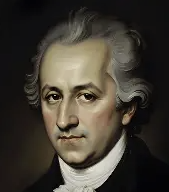
1 week 4 days ago
The spirits that I summoned up, I now can't rid myself of.
▼
Source
source
Der Zauberlehrling (The Sorcerer's Apprentice)
3 months 2 weeks ago
A house sold by A to B does not wander from one place to another, although it circulates as a commodity.
▼
Source
source
Vol. II, Ch. VI, p. 152.

2 months 2 days ago
The Americans have always been more open to my ideas. In fact, I could earn a living in America just by lecturing. One of my brightest audiences, incidentally, were the prisoners in a Philadelphia gaol - brighter than my students at university.
▼
Source
source
Interview with Paul Newman in Abraxas Unbound #7
2 months 2 weeks ago
Nature must not win the game, but she cannot lose. And whenever the conscious mind clings to hard and fast concepts and gets caught in its own rules and regulations-as is unavoidable and of the essence of civilized consciousness-nature pops up with her inescapable demands.
▼
Source
source
Alchemical Studies

2 months 1 day ago
"What I believe" is a process rather than a finality. Finalities are for gods and governments, not for the human intellect. While it may be true that Herbert Spencer's formulation of liberty is the most important on the subject, as a political basis of society, yet life is something more than formulas. In the battle for freedom, as Ibsen has so well pointed out, it is the struggle for, not so much the attainment of, liberty, that develops all that is strongest, sturdiest and finest in human character.
3 months 3 weeks ago
But bounty and hospitality very seldom lead to extravagance; though vanity almost always does.
▼
Source
source
Chapter III, Part V, p. 987.
3 months 3 weeks ago
A great stock, though with small profits, generally increases faster than a small stock with great profits. Money, says the proverb, makes money. When you have a little, it is often easier to get more. The great difficulty is to get that little.
▼
Source
source
Chapter IX, p. 111.

1 week 3 days ago
Nothing that was worthy in the past departs; no truth or goodness realized by man ever dies, or can die.
3 months 3 weeks ago
Here am I who have written on all sorts of subjects calculated to excite hostility, moral, political, and religious, and yet I have no enemies - except, indeed, all the Whigs, all the Tories, and all the Christians.
▼
Source
source
Statement to a friend shortly before his death, as recounted in Men of Letters by Lord Henry Brougham
2 months 2 weeks ago
The capitalists soon had everything in their hands and nothing remained to the workers.

3 months 2 weeks ago
Reality is harsh to the feet of shadows.
▼
Source
source
Ch. 5
1 month 2 weeks ago
The business of art is no longer the communication of thoughts or feelings which are to be conceptually ordered, but a direct participation in an experience. The whole tendency of modern communication...is towards participation in a process, rather than apprehension of concepts.
▼
Source
source
Letter to Harold Adam Innis (14 March 1951), published in Essential McLuhan (1995), edited by Eric McLuhan and Frank Zingrone, p. 73
3 months 2 weeks ago
The horseman serves the horse, The neatherd serves the neat, The merchant serves the purse, The eater serves his meat; 'Tis the day of the chattel, Web to weave, and corn to grind; Things are in the saddle, And ride mankind.
▼
Source
source
Ode: Inscribed to W. H. Channing, st. 7
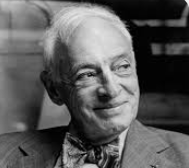
1 month 1 week ago
Everybody needs his memories. They keep the wolf of insignificance from the door.
▼
Source
source
Mr. Sammler's Planet (1970) [Penguin Classics, 2004, ISBN 0-142-43783-2], p. 156

2 months 5 days ago
I do not understand these men who tell me that the prospect of the yonder side of death has never tormented them, that the thought of their own annihilation never disquiets them. For my part I do not wish to make peace between my heart and my head, between my faith and my reason - I wish rather that there should be war between them.
3 months 2 weeks ago
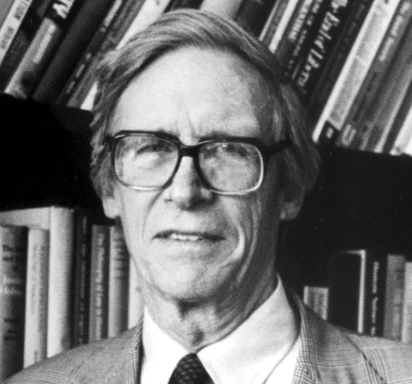
In all sectors of society there should be roughly equal prospects of culture and achievement for everyone similarly motivated and endowed. The expectations of those with the same abilities and aspirations should not be affected by their social class.
▼
Source
source
Chapter II, Section 12, pg. 73
1 month 1 week ago
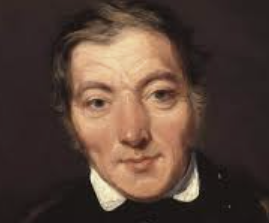
What ideas individuals may attach to the term "Millennium" I know not; but I know that society may be formed so as to exist without crime, without poverty, with health greatly improved, with little, if any misery, and with intelligence and happiness increased a hundredfold; and no obstacle whatsoever intervenes at this moment except ignorance to prevent such a state of society from becoming universal.

1 month 2 days ago
Being a planetary citizen does not need space travel. It means being conscious that we are part of the universe and of the earth. The most fundamental law is to recognise that we share the planet with other beings, and that we have a duty to care for our common home.

2 months ago
No man, not even a doctor, ever gives any other definition of what a nurse should be than this - "devoted and obedient." This definition would do just as well for a porter. It might even do for a horse. It would not do for a policeman.
▼
Source
source
Notes on Nursing
1 month 4 weeks ago
It is we who are the measure of what is strange and miraculous: if we sought a universal measure the strange and miraculous would not occur and all things would be equal.
▼
Source
source
A 26

4 weeks ago
A few centuries from now, if involuntary suffering still exists in the world, the explanation for its persistence won't be that we've run out of computational resources to phase out its biological signature, but rather that rational agents - for reasons unknown - will have chosen to preserve it.
▼
Source
source
The Radical Plan to Phase out Earth's Predatory Species, io9, 30 Jul. 2014

3 months 2 weeks ago
In the Hindoo scripture the idea of man is quite illimitable and sublime. There is nowhere a loftier conception of his destiny. He is at length lost in Brahma himself 'the divine male.' ... there is no grandeur conception of creation anywhere .... The very indistinctness of its theogeny implies a sublime truth.
▼
Source
source
A Tribute to Hinduism, 2008
4 days ago
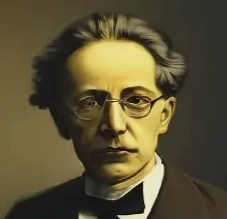
Might is a fine thing, and useful for many purposes; for 'one goes further with a handful of might than with a bagful of right'. You long for freedom? You fools! If you took might, freedom would come of itself. See, he who has might 'stands above the law'. How does this prospect taste to you, you 'law-abiding' people? But you have no taste!
▼
Source
source
Cambridge 1995, p. 151

CivilSimian.com created by AxiomaticPanic, CivilSimian, Kalokagathia