I'm exclusive of those that exclude...


A word is a bud attempting to become a twig. How can one not dream while writing? It is the pen which dreams. The blank page gives the right to dream.
As well as seriously - indeed exhaustively - researching everything that could conceivably go wrong, I think we should also investigate what could go right. The world is racked by suffering. The hedonic treadmill might more aptly be called a dolorous treadmill. Hundreds of millions of people are currently depressed, pain-ridden or both. Hundreds of billions of non-human animals are suffering too. If we weren't so inured to a world of pain and misery, then the biosphere would be reckoned in the throes of a global medical emergency. Thanks to breakthroughs in biotechnology, pain-thresholds, default anxiety levels, hedonic range and hedonic set-points are all now adjustable parameters in human and non-human animals alike. We are living in the final century of life on Earth in which suffering is biologically inevitable. As a society, we need an ethical debate about how much pain and misery we want to preserve and create. How do you break the hedonic treadmill?"

Self-sufficiency is the greatest of all wealth.

An atheist, like a Christian, holds that we can know whether or not there is a God. The Christian holds that we can know there is a God; the atheist, that we can know there is not. The Agnostic suspends judgment, saying that there are not sufficient grounds either for affirmation or for denial. At the same time, an Agnostic may hold that the existence of God, though not impossible, is very improbable; he may even hold it so improbable that it is not worth considering in practice. In that case, he is not far removed from atheism. His attitude may be that which a careful philosopher would have towards the gods of ancient Greece. If I were asked to prove that Zeus and Poseidon and Hera and the rest of the Olympians do not exist, I should be at a loss to find conclusive arguments. An Agnostic may think the Christian God as improbable as the Olympians; in that case, he is, for practical purposes, at one with the atheists.

Rest satisfied with doing well, and leave others to talk of you as they please.
If life can no longer be narrated, wisdom deteriorates, and its place is taken by problem-solving.

If a person is stupid, we excuse him by saying that he cannot help it; but if we attempted to excuse in precisely the same way the person who is bad, we should be laughed at.

Three in the morning. I realize this second, then this one, then the next: I draw up the balance sheet for each minute. And why all this? Because I was born. It is a special type of sleeplessness that produces the indictment of birth.
Broadly stated, the task is to replace the global rationality of economic man with a kind of rational behavior that is compatible with the access to information and the computational capacities that are actually possessed by organisms, including man, in the kinds of environments in which such organisms exist.
Mediocrity in poets has never been tolerated by either men, or gods, or booksellers.
Answers determined by the social division of labor become truth as such.
True poetry is a function of awakening. It awakens us, but it must retain the memory of previous dreams.
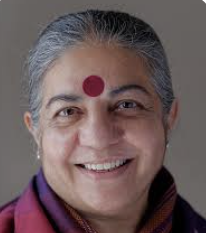
We share this planet, our home, with millions of species. Justice and sustainability both demand that we do not use more resources than we need. Restraint in resource use and living within nature's limits are preconditions for social justice. The commons are where justice and sustainability converge, where ecology and equity meet. The survival of pastures and forests as community property, or of a common good like a stable ecosystem, is only possible with social organizations with checks and controls on the use of resources built into their principles. The breakdown of a community, with the associated erosion of concepts of joint ownership and responsibility, can trigger the degradation of common resources.
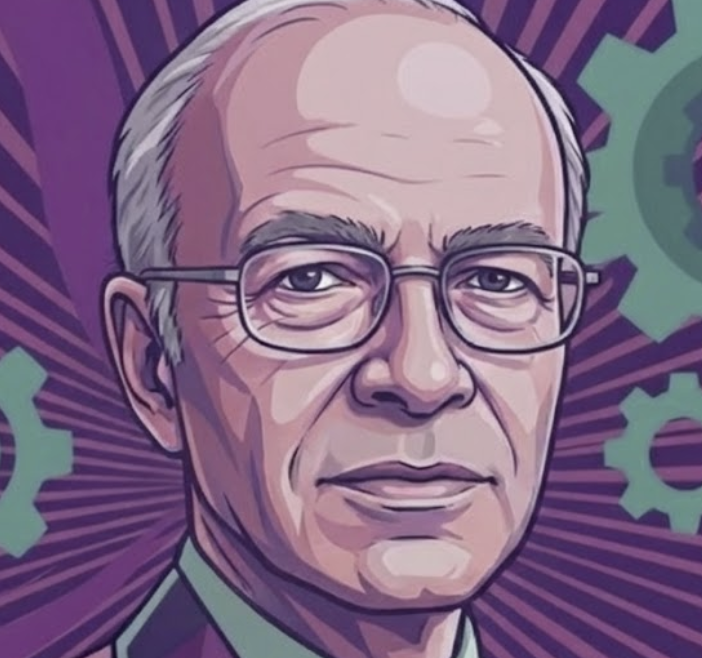
The evidence of our own eyes makes it more plausible to believe that the world was not created by any god at all. If, however, we insist on believing in divine creation, we are forced to admit that the god who made the world cannot be all-powerful and all good. He must be either evil or a bungler.
We believe that the very beginning and end of salvation, and the sum of Christianity, consists of faith in Christ, who by His blood alone, and not by any works of ours, has put away sin, and destroyed the power of death.
We make a ladder of our vices, if we trample those same vices underfoot.

He who receives a benefit with gratitude, repays the first installment of it.

... people only count their misfortunes; their good luck they take no account of. But if they were to take everything into account, as they should, they'd find that they had their fair share of it.

Boldness formerly was not the character of Atheists as such. ... But of late they are grown active, designing, turbulent, and seditious.
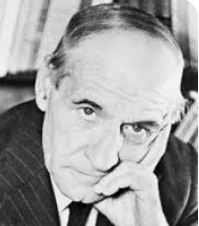
I have never said that human society ought to be aristocratic, but a great deal more than that. What I have said, and still believe with ever-increasing conviction, is that human society is always, whether it will or no, aristocratic by its very essence, to the extreme that it is a society in the measure that it is aristocratic, and ceases to be such when it ceases to be aristocratic. Of course I am speaking now of society and not of the State.
The endeavor of scientific research to see events in their more general connection in order to determine their laws, is a legitimate and useful occupation. Any protest against such efforts, in the name of freefom from restrictive conditions, would be fruitless if science did not naïvely identify the abstractions called rules and laws with the actually efficacious forces, and confuse the probability that B will follow A with the actual effort make B follow A.
There is only one inborn erroneous notion ... that we exist in order to be happy ... So long as we persist in this inborn error ... the world seems to us full of contradictions. For at every step, in great things and small, we are bound to experience that the world and life are certainly not arranged for the purpose of maintaining a happy existence ... hence the countenances of almost all elderly persons wear the expression of ... disappointment.
He that defers his charity 'till he is dead, is (if a man weighs it rightly) rather liberal of another man's, than of his own.
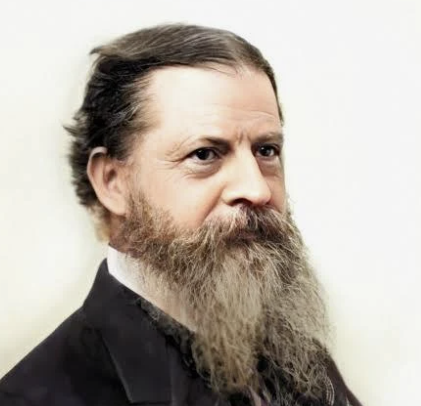
The third argument, enclosing and defending the other two, consists in the development of those principles of logic according to which the humble argument is the first stage of a scientific inquiry into the origin of the three Universes, but of an inquiry which produces, not merely scientific belief, which is always provisional, but also a living, practical belief, logically justified in crossing the Rubicon with all the freightage of eternity.
Late at night. I feel like falling into a frenzy, doing some unprecedented thing to release myself, but I don't see against whom, against what...

Mr. Galton ...in his English Men of Science, has given ...cases showing individual variations in the type of memory... Some have it verbal. Others... for facts and figures, others for form. Most say... [it] must first be rationally conceived and assimilated.
Few people can be happy unless they hate some other person, nation, or creed.

In every part of the universe we observe means adjusted with the nicest artifice to the ends which they are intended to produce; and in the mechanism of a plant, or animal body, admire how every thing is contrived for advancing the two great purposes of nature, the support of the individual, and the propagation of the species.
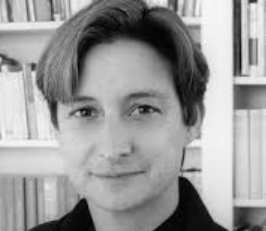
When the world fails us, when we ourselves become worldless in the social sense, the body suffers and shows its precarity; that mode of demonstrating precarity is itself, or carries with it, a political demand and even an expression of outrage. To be a body differentially exposed to harm or to death is precisely to exhibit a form of precarity, but also to suffer a form of inequality that is unjust. So, the situation of many populations who are increasingly subject to unlivable precarity raises for us the question of global obligations. If we ask why any of us should care about those who suffer at a distance from us, the answer is not to be found in paternalistic justifications, but in the fact that we inhabit the world together in relations of interdependency. Our fates are, as it were, given over to one another.
To repeat to yourself a thousand times a day: 'Nothing on Earth has any worth,' to keep finding yourself at the same point, to circle stupidly as a top, eternally...

Art is anything you can get away with.
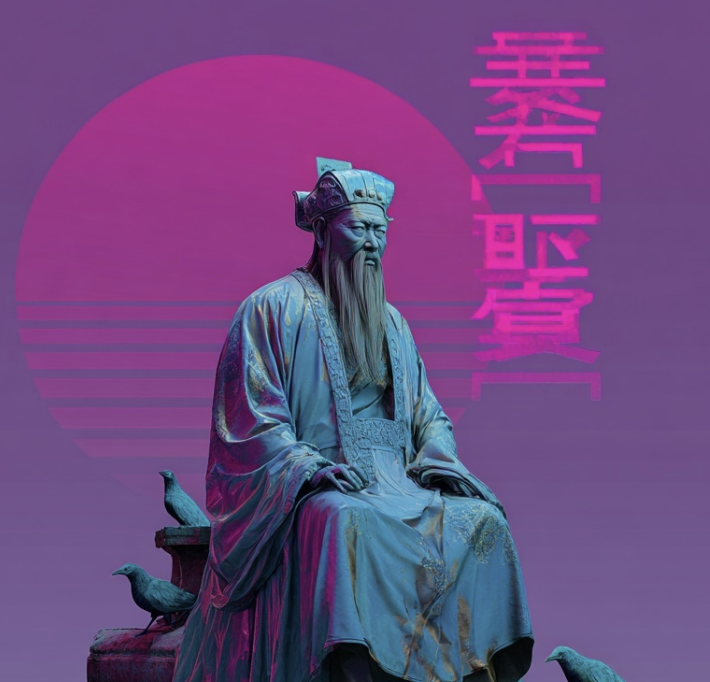
The wise find pleasure in water; the virtuous find pleasure in hills. The wise are active; the virtuous are tranquil. The wise are joyful; the virtuous are long-lived.
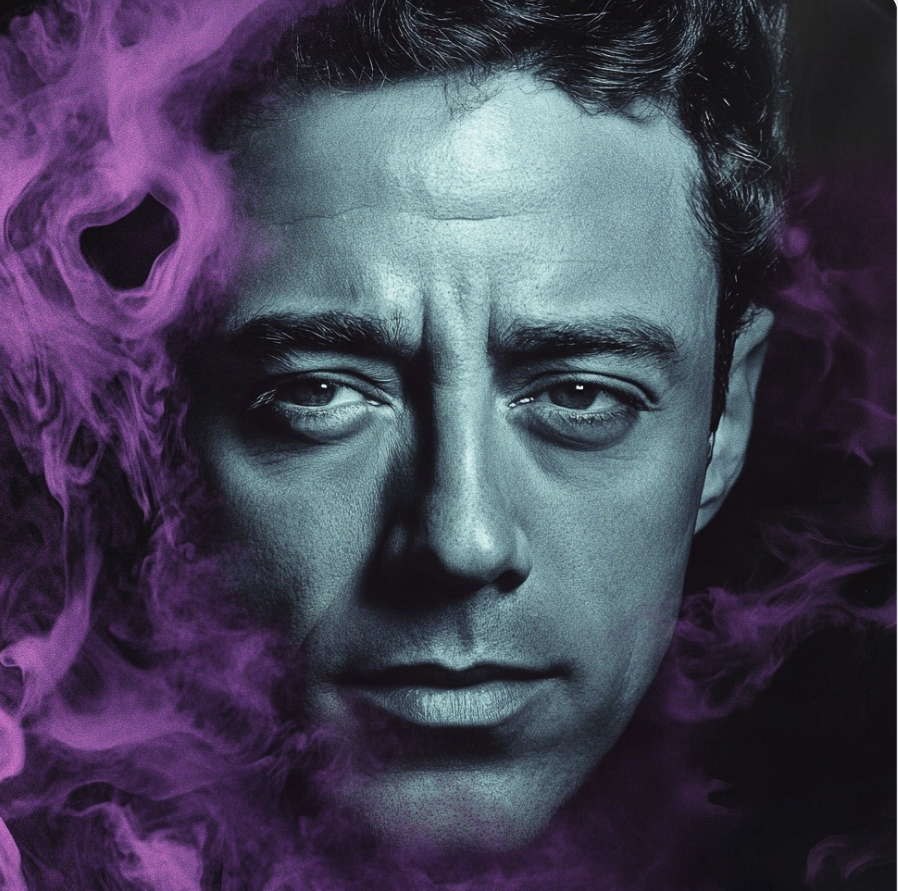
When the imagination sleeps, words are emptied of their meaning: a deaf population absent-mindedly registers the condemnation of a man. ... there is no other solution but to speak out and show the obscenity hidden under the verbal cloak.

Legal and economic equality are absolutely necessary remedies for the Fall, and protection against cruelty.
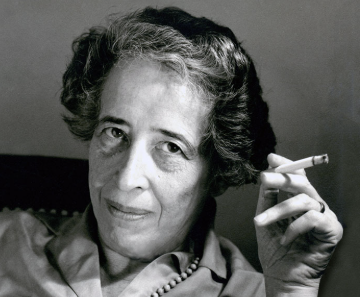
Revolutionaries do not make revolutions! The revolutionaries are those who know when power is lying in the street and when they can pick it up. Armed uprising by itself has never yet led to revolution.
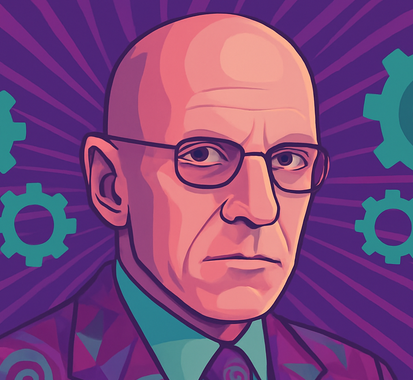
The gesture that divides madness is the constitutive one, not the science that grows up in the calm that returns after the division has been made.
I believe that Communism is necessary to the world, and I believe that the heroism of Russia has fired men's hopes in a way which was essential to the realization of Communism in the future. Regarded as a splendid attempt, without which ultimate success would have been very improbable, Bolshevism deserves the gratitude and admiration of all the progressive part of mankind.

This organization of functional discourse is of vital importance; it serves as a vehicle of coordination and subordination. The unified, functional language is an irreconcilably anti-critical and anti-dialectical language. In it, operational and behavioral rationality absorbs the transcendent, negative, oppositional elements of Reason.
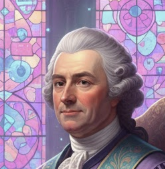
Seeing therefore they are both [heat and pain] immediately perceived at the same time, and the fire affects you only with one simple, or uncompounded idea, it follows that this same simple idea is both the intense heat immediately perceived, and the pain; and consequently, that the intense heat immediately perceived, is nothing distinct from a particular sort of pain.
The archer must know what he is seeking to hit; then he must aim and control the weapon by his skill. Our plans miscarry because they have no aim. When a man does not know what harbour he is making for, no wind is the right wind. Chance must necessarily have great influence over our lives, because we live by chance. It is the case with certain men, however, that they do not know that they know certain things. Just as we often go searching for those who stand beside us, so we are apt to forget that the goal of the Supreme Good lies near us.
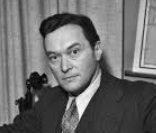
It does not matter whether the right to govern is hereditary or obtained with the consent of the governed. A State is absolute in the sense which I have in mind when it claims the right to a monopoly of all the force within the community, to make war, to make peace, to conscript life, to tax, to establish and dis-establish property, to define crime, to punish disobedience, to control education, to supervise the family, to regulate personal habits, and to censor opinions. The modern State claims all of these powers, and, in the matter of theory, there is no real difference in the size of the claim between communists, fascists, and democrats.
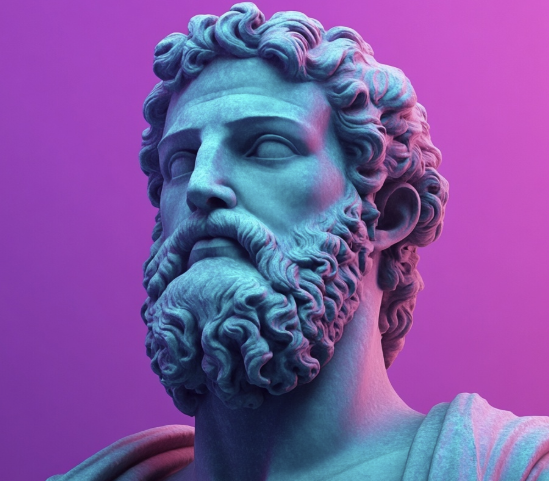
O slavish man! will you not bear with your own brother, who has God for his Father, as being a son from the same stock, and of the same high descent? But if you chance to be placed in some superior station, will you presently set yourself up for a tyrant?

I had never doubted my own abilities, but I was quite prepared to believe that "the world" would decline to recognize them.
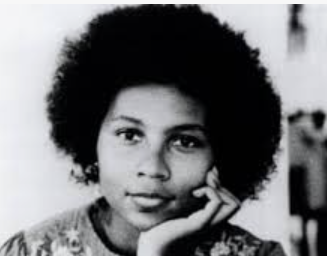
Marcus Garvey, Elijah Muhammad, Malcolm X, Martin Luther King, Stokely Carmichael, Amiri Baraka and other black male leaders have righteously supported patriarchy. They have all argued that it is absolutely necessary for black men to relegate black women to a subordinate position both in the political sphere and in home life.

Yes, Lord, you are innocence itself: how could you conceive of Nothingness, you who are plenitude? Your gaze is light and transforms all into light: how could you know the half-light in my heart?
In the past, there was a small leisure class and a larger working class. The leisure class enjoyed advantages for which there was no basis in social justice; this necessarily made it oppressive, limited its sympathies, and caused it to invent theories by which to justify its privileges.

Behold, a sower went forth to sow; And when he sowed, some seeds fell by the way side, and the fowls came and devoured them up: Some fell upon stony places, where they had not much earth: and forthwith they sprung up, because they had no deepness of earth: And when the sun was up, they were scorched; and because they had no root, they withered away. And some fell among thorns; and the thorns sprung up, and choked them: But other fell into good ground, and brought forth fruit, some an hundredfold, some sixtyfold, some thirtyfold. Who hath ears to hear, let him hear.
The essence of the good is a certain kind of moral purpose, and that of the evil is a certain kind of moral purpose.
CivilSimian.com created by AxiomaticPanic, CivilSimian, Kalokagathia