

3 months 3 weeks ago
If you punish a child for being naughty, and reward him for being good, he will do right merely for the sake of the reward; and when he goes out into the world and finds that goodness is not always rewarded, nor wickedness always punished, he will grow into a man who only thinks about how he may get on in the world, and does right or wrong according as he finds either of advantage to himself.

2 months 3 weeks ago
The best doctor is the one you run for and can't find.
▼
Source
source
As quoted in Selected Thoughts from the French: XV Century - XX Century, with English Translations (1913) by James Raymond Solly, p. 67

3 months 2 weeks ago
I should as soon think of swimming across Charles River when I wish to go to Boston, as of reading all my books in originals when I have them rendered for me in my mother tongue.
▼
Source
source
Books
2 months ago
Just as modern mass production requires the standardization of commodities, so the social process requires standardization of man, and this standardization is called equality.
▼
Source
source
Ch. 2
2 months 1 week ago
I daresay anything can be made holy by being sincerely worshipped.
▼
Source
source
The Message to the Planet (1989) p. 322.
1 month 3 weeks ago
In conclusion, then, no satisfactory interpretation of quantum mechanics exists today. The questions posed by the confrontation between the Copenhagen interpretation and the hidden variable theorists go to the very foundations of microphysics, but the answers given by hidden variable theorists and Copenhagenists are alike unsatisfactory. Human curiosity will not rest until those questions are answered, but whether they will be answered by conceptual innovations within the framework of the present theory or only within the framework of an as yet unforeseen theory is unknown. The first step toward answering them has been attempted here. It is the modest but essential step of becoming clear on the nature and magnitude of the difficulties.
▼
Source
source
A philosopher looks at quantum mechanics

3 days ago
Would not anyone who is a man have his slumbers broken by a war-trumpet rather than by a chorus of serenaders?

1 month 2 weeks ago
Violence, whether spiritual or physical, is a quest for identity and the meaningful.
▼
Source
source
The less identity, the more violence. "Violence in the media." Canadian Forum. Volume 56, 1976, p. 9

2 months 2 weeks ago
When you get over an infatuation, to fall for someone ever again seems so inconceivable that you imagine no one, not even a bug, that is not mired in disappointment.

3 months 2 weeks ago
It is never to be expected in a revolution that every man is to change his opinion at the same moment. There never yet was any truth or any principle so irresistibly obvious that all men believed it at once. Time and reason must cooperate with each other to the final establishment of any principle; and therefore those who may happen to be first convinced have not a right to persecute others, on whom conviction operates more slowly. The moral principle of revolutions is to instruct, not to destroy.

3 months 2 weeks ago
Unlimited exploitation of cheap labour-power is the sole foundation of their power to compete.
▼
Source
source
Vol. I, Ch. 15, Section 8, pg. 520.

4 months 3 weeks ago
This is the mistake which I seem to make eternally, that I imagine the sufferings of others as far greater than they really are. Ever since my childhood, the proposition, my greatest dangers lie in pity, has been confirmed again and again.
3 days ago
Why should I not regard this as desirable-not because the fire, burns me, but because it does not overcome me?
2 weeks 1 day ago
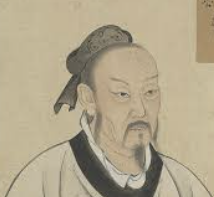
A person who is transformed by the instructions of a teacher, devotes himself to study, and abides by ritual and rightness may become a noble person, while one who follows his nature and emotions, is content to give free play to his passions, and abandons ritual and rightness is a lesser person.
▼
Source
source
Sources of Chinese Tradition (1999), vol. 1, p. 180
4 months 2 weeks ago
Plato... introduces two infinities, because both in increase and diminution there appears to be transcendency, and a progression to infinity. Though... he did not use them: for neither is there infinity in numbers by diminution or division; since unity is a minimum: nor by increase; for he extends number as far as to the decad.

2 months ago
Moral activity? There is scarcely such a thing possible! Everything is sketchy. The world does nothing but sketch.

2 months 5 days ago
These terrible sociologists, who are the astrologers and alchemists of our twentieth century.
▼
Source
source
Fanatical Skepticism

2 months 2 weeks ago
An event has happened, upon which it is difficult to speak, and impossible to be silent.
▼
Source
source
Speech on the sixth article of charge in the impeachment of Warren Hastings (5 May 1789), quoted in The Works of the Right Honourable Edmund Burke, Volume the Tenth (1899), p. 306

1 month 2 weeks ago
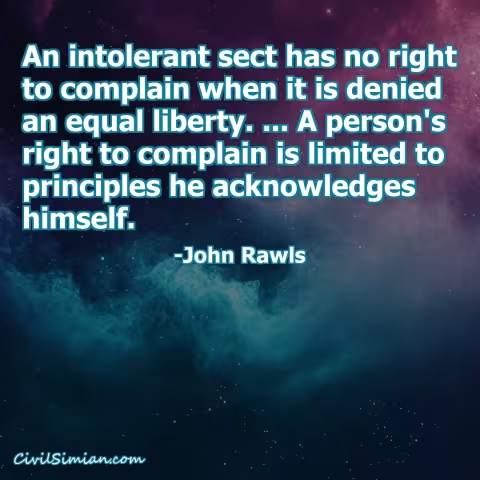
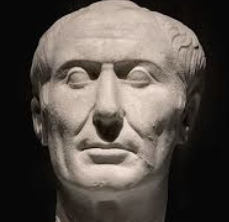
Audacity augments courage; hesitation, fear.
▼
Source
source
Maxim 63 Variant translation: "Valour grows by daring, fear by holding back."
2 months 2 weeks ago
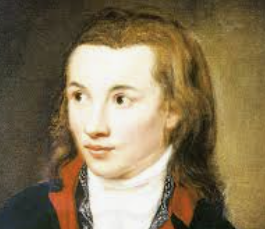
The best thing about the sciences is their philosophical ingredient, like life for an organic body. If one dephilosophizes the sciences, what remains left? Earth, air, and water.
▼
Source
source
Fragment No. 62
1 month 2 weeks ago
My method is vertical rather than horizontal so the scenery does not change but the texture does.
▼
Source
source
Letter to The Listener October 1971, Letters of Marshall McLuhan (1987), p. 318

3 months 2 weeks ago
[My father] impressed upon me from the first, that the manner in which the world came into existence was a subject on which nothing was known: that the question, "Who made me?" cannot be answered, because we have no experience or authentic information from which to answer it; and that any answer only throws the difficulty a step further back, since the question immediately presents itself, "Who made God?"
▼
Source
source
(pp. 42-43)
2 months 1 day ago
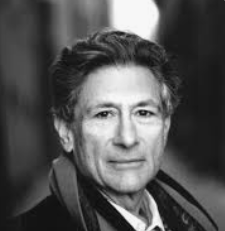
Theory is taught so as to make the student believe that he or she can become a Marxist, a feminist, an Afrocentrist, or a deconstructionist with about the same effort and commitment required in choosing items from a menu.
▼
Source
source
Chap 4, Sect 2

3 months 2 weeks ago
But when they have realized that it [society] rejects them forever, they themselves assume the ostracism of which they are victims so as not to leave the initiative to their oppressors.
▼
Source
source
p. 65-6

3 months 2 weeks ago
Better red than dead.
▼
Source
source
Bertrand Russell, attributes this phrase to 'West German friends of peace' but adopted this slogan for the Campaign for Nuclear Disarmament he helped found William Safire, Safire's Political Dictionary, (2008) p. 49-50

3 months 3 weeks ago
He who establishes his argument by noise and command shows that his reason is weak.
3 months 6 days ago
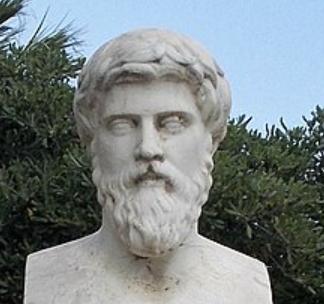
He is a fool who lets slip a bird in the hand for a bird in the bush.
▼
Source
source
Of Garrulity (Tr. Goodwin)

2 months 1 day ago
As man loses touch with his 'inner being', his instinctive depths, he finds himself trapped in the world of consciousness, that is to say, in the world of other people. Any poet knows this truth; when other people sicken him, he turns to hidden resources of power inside himself, and he knows then that other people don't matter a damn. He knows the 'secret life' inside him is the reality; other people are mere shadows in comparison. but the 'shadows' themselves cling to one another. 'Man is a political animal', said Aristotle, telling one of the greatest lies in human history. Man has more in common with the hills, or with the stars, than with other men.
▼
Source
source
p. 170
1 month 3 weeks ago
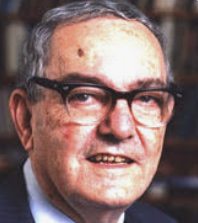
In the process of decision those alternatives are chosen which are considered to be appropriate means of reaching desired ends. Ends themselves, however, are often merely instrumental to more final objectives. We are thus led to the conception of a series, or hierarchy, of ends. Rationality has to do with the construction of means-ends chains of this kind.
▼
Source
source
p. 62.

1 month 2 weeks ago
Each visitor performed the ceremony of greeting this old aunt whom not one of them knew, not one of them wanted to know, and not one of them cared about; Anna Pávlovna observed these greetings with mournful and solemn interest and silent approval. The aunt spoke to each of them in the same words, about their health and her own, and the health of Her Majesty, "who, thank God, was better today." And each visitor, though politeness prevented his showing impatience, left the old woman with a sense of relief at having performed a vexatious duty and did not return to her the whole evening.
▼
Source
source
Bk. I, Ch. II
1 month 3 weeks ago
Truth and falsity are the most fundamental terms of rational criticism, and any adequate philosophy must give some account of these, or failing that, show that they can be dispensed with.
▼
Source
source
"Introduction: Philosophy of language and the rest of philosophy"
2 months 3 weeks ago
On doit exiger de moi que je cherche la vérité, mais non que je la trouve. One may demand of me that I should seek truth, but not that I should find it.
▼
Source
source
No. 29
1 month 2 weeks ago
Bless Madison Ave for restoring the magical art of the cavemen to suburbia.
▼
Source
source
(p. 130)
2 months 2 weeks ago
We are so lonely in life that we must ask ourselves if the loneliness of dying is not a symbol of our human existence.

3 months 1 week ago
By convention sweet is sweet, bitter is bitter, hot is hot, cold is cold, color is color; but in truth there are only atoms and the void.
▼
Source
source
(trans. Durant 1939), Ch. XVI, §II, p. 353; citing C. Bakewell, Sourcebook in Ancient Philosophy, New York, 1909, "Fragment O" (Diels), p. 60
1 month 3 weeks ago
To dissimulate is to pretend not to have what one has. To simulate is to feign to have what one doesn't have. One implies a presence, the other an absence. But it is more complicated than that because simulating is not pretending: "Whoever fakes an illness can simply stay in bed and make everyone believe he is ill. Whoever simulates an illness produces in himself some of the symptoms" (Littré). Therefore, pretending, or dissimulating, leaves the principle of reality intact: the difference is always clear, it is simply masked, whereas simulation threatens the difference between the "true" and the "false," the "real" and the "imaginary."
▼
Source
source
"The Precession of Simulacra," p. 3

2 months 1 week ago
Verily I say unto you, That a rich man shall hardly enter into the kingdom of heaven. And again I say unto you, It is easier for a camel to go through the eye of a needle, than for a rich man to enter into the kingdom of God.
▼
Source
source
19:23-24 (KJV)

2 months 3 weeks ago
All those who seek to destroy the liberties of a democratic nation ought to know that war is the surest and shortest means to accomplish it.
▼
Source
source
Book Three, Chapter XXII.
2 months 3 weeks ago
Muhammad brought down from heaven and put into the Koran not religious doctrines only, but political maxims, criminal and civil laws, and scientific theories. The Gospels, on the other hand, deal only with the general relations between man and God and between man and man. Beyond that, they teach nothing and do not oblige people to believe anything. That alone, among a thousand reasons, is enough to show that Islam will not be able to hold its power long in ages of enlightenment and democracy, while Christianity is destined to reign in such ages, as in all others.
▼
Source
source
Book One, Chapter V.
4 months 1 week ago
Although the Law of Reason is common, the majority of people live as though they had an understanding of their own.
2 months 5 days ago
"And the upshot of all this," so I have been told more than once and by more than one person, "will be simply that all you will succeed in doing will be to drive people to the wildest Catholicism." And I have been accused of being a reactionary and even a Jesuit. Be it so! ...I know very well it is madness to seek to turn the waters of the river back to their source, and that it is only the ignorant who seek to find in the past a remedy for their present ills; but I know too that anyone who fights for any ideal whatever, although his ideal may seem to lie in the past, is driving the world on to the future, and that the only reactionaries are those who find themselves at home in the present. Every supposed restoration of the past is a creation of the future, and if the past which it is sought to restore is a dream, something imperfectly known, so much the better.
3 months 2 weeks ago
The "social contract," in the only sense in which it is not completely mythical, is a contract among conquerors, which loses its raison d'être if they are deprived of the benefits of conquest.
▼
Source
source
Ch. 12: Powers and forms of governments
2 months 5 days ago
To believe in God is to long for His existence and, further, it is to act as if he existed; it is to live by this longing and to make it the inner spring of our action. This longing or hunger for divinity begets hope, hope begets faith, and faith and hope beget charity. Of this divine longing is born our sense of beauty, of finality, of goodness.
1 month 2 weeks ago
I don't think there would be many jokes, if there weren't constant frustration and fear and so forth. It's a response to bad troubles like crime.
▼
Source
source
Interview Public Radio International
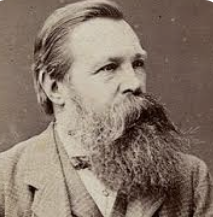
2 months 2 weeks ago
The abolition of private property has become not only possible but absolutely necessary. ... The outcome can only be the victory of the proletariat.
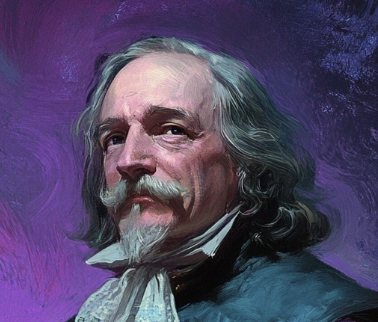
2 months 1 week ago
For he that hath strength enough to protect all, wants not sufficiency to oppresse all.
▼
Source
source
De Cive (1642) Ch. 6
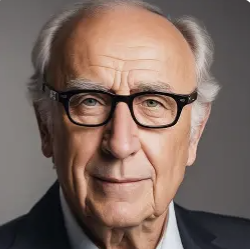
1 week 2 days ago
By now it may be clear that the position I'm developing is a sort of post-Darwinian Kantianism.
▼
Source
source
p. 104; from "The Road since Structure"
3 months 2 weeks ago
These preachers of beauty, which light the world with their admonishing smile.
▼
Source
source
p. 248 (Stars)
CivilSimian.com created by AxiomaticPanic, CivilSimian, Kalokagathia